The Food service providers often struggle with unpredictable revenue due to inconsistent lead generation, making growth planning, staffing, and equipment investment challenging. Printable Food flyer templates create systematic customer acquisition channels that turn sporadic inquiries into predictable monthly revenue.
Free flyer design templates combine strategic targeting with compelling offers to attract qualified prospects, providing consistent visibility in high-traffic locations where decision-makers gather. Restaurant and catering flyers establish credibility, support predictable demand, and enable sustainable growth through optimized design, smart distribution, and measurable ROI tracking.
What Are Food Lead Generation Flyers And How Do They Solve Inconsistent Revenue Streams?
Food lead generation flyers help restaurants, catering services, and delivery businesses attract and capture potential customers through targeted promotions. These flyers create predictable customer acquisition channels with compelling offers, seasonal deals, and partnership opportunities. Businesses can easily create flyer online that focuses on measurable calls-to-action and contact collection to generate qualified leads rather than relying on traditional advertising. Systematic distribution builds steady customer pipelines, reduces dependence on walk-ins, and supports reliable revenue forecasting for sustainable growth.
Converting Seasonal Demand into Year-Round Customer Relationships
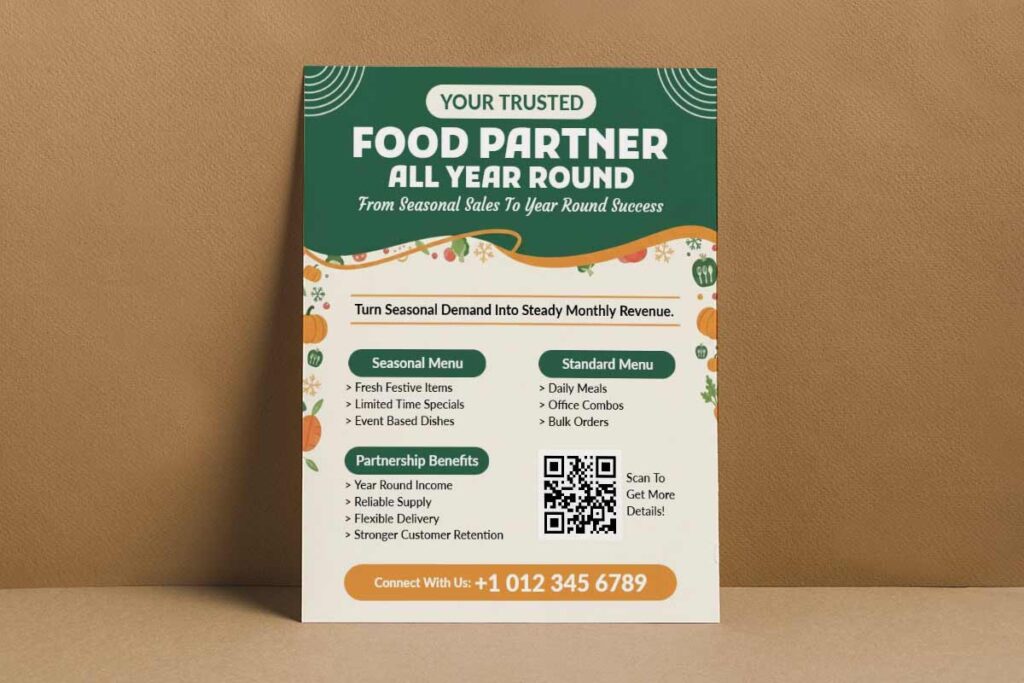
Food service flyer template transforms temporary seasonal opportunities into lasting partnerships by showcasing consistent service capabilities beyond peak periods. Catering businesses use targeted food business flyers to highlight their year-round availability, emphasizing menu flexibility and reliable service during off-peak months.
The strategy involves creating food delivery flyers that position seasonal customers as ongoing partners rather than one-time clients. By emphasizing menu customization, advance booking discounts, and partnership benefits, providers convert holiday catering clients into regular corporate accounts. Restaurant promotional flyers featuring seasonal menus alongside core service offerings demonstrate versatility and encourage repeat business.
Successful providers track seasonal client conversion rates, using data to refine their approach and identify which seasonal customers have the highest lifetime value potential (Santa Clara University).1 This systematic approach creates predictable revenue streams that support staffing decisions and equipment investments throughout slower business periods.
Explore professionally designed food lead generation flyer templates on DesignWiz that help convert seasonal catering clients into year-round revenue partnerships.
- Autumn Buttercream Cake Workshop Flyer Template
- Summer Bbq Cookout Event Flyer Template
- Summer Sizzler Offer Flyer Template
Building Predictable Revenue Through Strategic Flyer Distribution Channels
Strategic distribution of food lead generation flyers creates consistent lead flow by targeting high-concentration business areas where decision-makers gather regularly. Food service marketing flyers perform best when placed at corporate office buildings, business centers, and networking venues where facility managers and event planners work daily.
The predictability comes from systematic weekly distribution schedules that generate steady inquiry rates. Catering lead generation flyers distributed consistently to the same 50 corporate locations typically produce 2-5 qualified leads per week, enabling accurate revenue forecasting (University of Nebraska Omaha).2
Digital distribution through professional networks amplifies reach without proportional cost increases. Food business flyers shared via LinkedIn groups and industry forums extend geographic coverage while maintaining targeting precision. This multi-channel approach creates overlapping touchpoints that increase response rates and build brand recognition among target audiences, resulting in more predictable customer acquisition costs and revenue projections (University of Pennsylvania/Wharton).3
Transforming One-Time Customers into Recurring Revenue Sources
Strategically designed food lead generation flyers help convert single-event clients into loyal, recurring customers by emphasizing value, reliability, and ongoing partnership benefits.
- Exceptional Initial Service: Deliver outstanding experiences during the first engagement to encourage repeat business.
- Targeted Promotional Flyers: Highlight ongoing partnership benefits and long-term service value.
- Tiered Service Offerings: Present convenience, cost savings, and reliability through specialized catering lead generation flyers.
- Incentives for Recurring Clients: Offer monthly service agreements, bulk order discounts, and priority scheduling to encourage continued engagement.
- Demonstrating Value Beyond One Event: Use client success stories, testimonials, and exclusive benefits to build trust and commitment.
- Tracking Conversion Potential: Monitor customer lifetime value metrics to identify high-potential clients for recurring services.
- Follow-Up Campaigns: Maintain regular contact via targeted food business flyers, presenting new service options and seasonal offerings.
- Stable Recurring Revenue: Transform project-based work into predictable monthly income, enabling investments in staff, equipment, and operational growth.
How Can Food Lead Generation Flyers Help Service Providers Plan Growth And Staffing?
Food lead generation flyers help providers forecast demand and plan expansion by creating measurable lead pipelines that guide staffing and operations. Targeted food delivery and business flyers test market demand, track response rates, and predict customer volume before committing to hires or equipment. These flyers provide insights on peak periods, customer preferences, and geographic opportunities, enabling better scheduling and inventory planning. Systematic campaigns turn reactive hiring into proactive workforce management.
Using Flyer Response Data to Forecast Hiring Needs and Seasonal Staffing
Restaurant flyer templates provide concrete metrics that directly translate to staffing requirements. Response rates indicate expected order volume, helping managers calculate server needs, kitchen capacity, and delivery driver requirements (MIT).4 Catering lead generation flyers reveal booking patterns that inform seasonal hiring cycles. When flyer campaigns generate 40% more inquiries during wedding season, providers can confidently hire temporary staff three months in advance.
Response tracking shows which geographic areas produce the most leads, enabling strategic staff allocation. A 3% response rate from business districts suggests higher corporate catering demand, justifying administrative staff expansion. Conversely, 1% residential response rates might indicate need for part-time evening delivery coverage rather than full-time additions.
Geographic Market Testing Through Targeted Flyer Campaigns Before Expansion
Food service marketing flyers function as low-cost market research tools before major expansion investments. Distributing 500 flyers in potential service areas costs under $200 but reveals market viability without lease commitments or equipment purchases (U.S. Small Business Administration).5 Response patterns indicate whether new territories can support additional locations or delivery zones.
Testing different flyer designs across neighborhoods reveals demographic preferences and pricing sensitivity. Business-focused food business flyers might generate strong corporate responses in commercial areas while family-oriented designs perform better in suburban zones. This data guides location selection, menu development, and service model decisions.
Geographic testing prevents costly expansion mistakes. If targeted flyer campaigns in a prospective area generate under 1% response rates despite multiple attempts, providers can redirect expansion resources to higher-performing territories without sunk costs.
Converting Lead Generation Metrics into Equipment Investment and Capacity Planning
Food lead generation flyers provide actionable data that helps catering providers make informed decisions about equipment upgrades, capacity expansion, and operational improvements.
- Demand Forecasting: Quantifiable leads from flyer campaigns justify commercial kitchen upgrades or delivery vehicle purchases.
- Monthly Lead Consistency: Regularly generating 200+ inquiries indicates sustainable demand supporting investment decisions.
- Conversion Rate Analysis: Track lead-to-customer conversion rates (e.g., 15% weekly orders) to calculate exact production requirements.
- Preventing Investment Errors: Avoid under-investment that limits growth or over-investment that strains cash flow.
- Seasonal Performance Insights: Use spikes in flyer performance (e.g., 60% increase during graduation season) to time major purchases strategically.
- Operational Bottleneck Identification: Strong initial interest but low conversion may indicate limitations in phone capacity or online ordering systems, guiding operational improvements over marketing expansion.
- Data-Driven Investment Decisions: Align resource allocation with proven demand to maximize efficiency and ROI.
What Design Elements Make Food Lead Generation Flyers Convert Prospects Into Clients?
High-converting food lead generation flyers incorporate the key elements of a flyer including compelling visuals and psychological triggers to drive immediate action. Key elements include appetizing food photography, clear value propositions, and prominent contact options. Effective flyers leverage contrasting colors, social proof, and time-sensitive calls-to-action to create urgency. Clean typography and strategic white space ensure readability and focus on generating qualified leads for food service providers.
Visual Appetite Psychology: Using Food Photography to Drive Immediate Interest
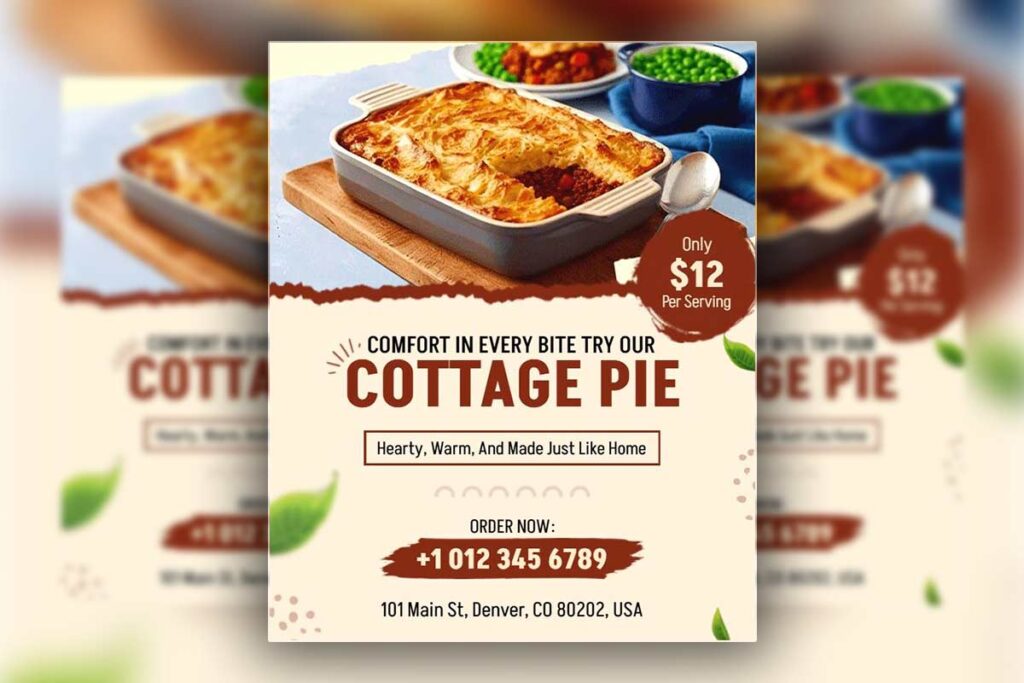
Food photography serves as the primary conversion driver in food lead generation flyers by triggering immediate appetite response and emotional connection. High-resolution images of signature dishes, beautifully plated meals, or behind-the-scenes kitchen preparation create visceral desire that transforms casual browsers into active prospects. Professional food photography should occupy 40-50% of flyer space, positioned strategically to catch attention within the first three seconds of viewing.
Steam effects, vibrant colors, and close-up detail shots of textures and garnishes maximize visual impact. Catering lead generation flyers perform best when showcasing diverse menu options that demonstrate range and quality. The psychology principle of “visual taste” means prospects mentally experience flavors through compelling imagery, creating immediate interest that drives them to contact your service for tastings or consultations.
Discover high-converting food service flyer templates on DesignWiz featuring appetizing photography layouts and strategic visual elements that drive immediate customer interest.
- Pastel Pink Food Flyer Flyers Template
- Hari Raya Catering Service Promotion Flyer Template
- Tapas Fiesta Food Event Flyer Template
Strategic Layout Architecture for Maximum Response Rates
Effective food service marketing flyers follow proven layout patterns that guide reader attention through a calculated visual journey ending in conversion action. Effective business flyer layout using the “Z-pattern” places your strongest food image at top-left, business name at top-right, key benefit statement center-left, and call-to-action bottom-right, matching natural reading patterns. White space allocation prevents cognitive overload while emphasizing critical elements like contact information and special offers.
Headlines should use action-oriented language like “Taste the Difference” or “Book Your Event Today” rather than generic descriptions. Information hierarchy places the most compelling offer within the first 20% of flyer space. Font selection balances readability with personality, using maximum two typeface families. Color psychology leverages appetite-stimulating colors like warm reds and oranges while maintaining professional credibility through strategic use of neutrals.
Trust Signals and Social Proof Integration in Food Service Marketing Flyers
Integrating credibility elements in food service marketing materials builds confidence with potential clients, differentiating professional providers from competitors and encouraging first-time engagement.
- Customer Testimonials: Include specific, detailed endorsements (e.g., “Sarah’s corporate catering exceeded expectations for our 200-person event”) rather than generic praise.
- Professional Certifications: Highlight health department ratings, industry association memberships, and other certifications with recognizable logos and clear typography.
- Experience Metrics: Showcase years in business, number of events catered, and repeat client statistics as proof of reliability.
- Delivery Assurance: Include delivery radius maps and guaranteed timing commitments for added confidence.
- Partnership Logos: Display logos from respected venues, corporate clients, or complementary service providers to boost authority.
- Balanced Trust Elements: Integrate 3–4 trust signals strategically throughout the flyer without creating visual clutter.
- Accessible Contact Information: Provide multiple options—phone, email, website—with clear availability hours for prospect convenience.
How Do Food Lead Generation Flyers Compare To Digital Advertising For Service Providers?
Food lead generation flyers offer distinct advantages over digital advertising for service providers, particularly in local market penetration and tangible engagement. Unlike digital ads that face algorithm changes and ad fatigue, physical flyers provide consistent visibility and longer retention periods in target locations. Flyers excel in hyper-local targeting, allowing precise geographic focus without digital platform restrictions. Cost-effectiveness favors flyers for smaller budgets, eliminating ongoing click costs and platform fees. However, digital advertising offers better tracking capabilities and broader reach potential, making the optimal approach often a strategic combination of both channels for comprehensive market coverage.
Cost Efficiency Analysis: Print Distribution vs Digital Ad Spend for Food Businesses
Food lead generation flyers deliver superior cost efficiency for local service providers, averaging $0.15-0.50 per unit including design and printing costs. With typical response rates of 2-5%, the cost per qualified lead ranges from $3-15, significantly lower than digital advertising’s $20-40 per lead for food service sectors. Digital campaigns require ongoing budget allocation with rising click costs and platform fees, while flyers represent one-time investments that continue generating responses for weeks after distribution.
Restaurant promotional flyers eliminate bidding competition and algorithm dependency that plague digital platforms. Small catering businesses particularly benefit from flyers’ predictable costs, enabling accurate ROI calculations for growth planning. Food service marketing flyers provide immediate budget certainty, allowing providers to allocate remaining marketing funds toward staff expansion and equipment investments rather than uncertain ad spending.
Geographic Targeting Precision: Local Market Domination Strategies
Food business flyers enable precise geographic targeting impossible with digital advertising platforms. Service providers can focus distribution on specific business districts, office complexes, and corporate campuses where decision-makers work, creating concentrated market penetration. Unlike digital ads that rely on location approximations, physical distribution ensures message delivery to exact target areas.
Catering lead generation flyers excel at building neighborhood-level brand recognition through consistent visibility in high-traffic locations. This hyperlocal approach proves especially effective for food delivery services targeting specific delivery zones, as flyers create awareness among potential customers within actual service areas. Digital advertising often wastes budget on users outside delivery ranges or service territories.
Strategic placement at complementary businesses creates partnership opportunities while maximizing local market coverage. Food service providers can establish territorial dominance through systematic flyer distribution that competitors struggle to replicate digitally.
Measurability and ROI Tracking: Comparing Analytics Between Physical and Digital Channels
Comparing analytics across physical and digital channels helps food service providers understand lead quality, conversion rates, and long-term ROI, enabling smarter marketing investments.
- Immediate Digital Analytics: Track impressions, clicks, and conversions in real-time using dashboards.
- Creative Flyer Tracking: Use unique phone numbers, QR codes, and promo codes to measure responses and attribution.
- Higher-Quality Leads from Flyers: Physical flyer responses often convert better to actual bookings despite lower reach than digital ads.
- Direct Revenue Attribution: Flyers generate measurable phone calls and direct bookings, offering clearer ROI than complex digital multi-touch attribution models.
- Long-Term ROI Advantage: Well-designed flyers continue generating leads weeks after distribution, reducing ongoing acquisition costs compared to digital campaigns.
- Extended Response Timeline: Physical flyers provide ongoing lead generation without continuous spending.
- Hybrid Marketing Approach: Combine flyers for initial local penetration with digital retargeting to maximize channel strengths and minimize weaknesses.
What Partnership Development Strategies Work Best With Food Lead Generation Flyers?
Effective food lead generation flyers support partnership development by targeting complementary businesses and highlighting mutual benefits. Use restaurant and food delivery flyers to showcase joint promotions, collaborative offerings, and value propositions for event venues, wedding planners, and corporate offices. Implement tiered partnership approaches tailored to different business sizes and needs. Position your food business as a growth partner, emphasizing long-term relationships over one-time transactions.
Strategic Alliance Mapping Through Food Business Flyers
Strategic alliance mapping identifies high-value partnership opportunities through targeted food business flyers that emphasize complementary services. Target event venues, wedding planners, corporate event coordinators, and facility managers with materials showcasing capacity, reliability metrics, and collaborative service models. Food lead generation flyers should highlight mutual revenue opportunities, referral incentives, and exclusive partnership benefits that differentiate your offerings from competitors.
Effective alliance mapping segments potential partners by partnership value, geographic proximity, and client overlap potential. Create specialized catering lead generation flyers for each partnership tier, emphasizing different value propositions based on partner size and influence. Include partnership case studies, volume discounts, and co-marketing opportunities that demonstrate tangible benefits. This systematic approach transforms cold outreach into warm partnership discussions backed by clear mutual benefits.
Cross-Promotional Partnership Activation Using Restaurant Marketing Materials
Cross-promotional partnerships leverage restaurant promotional flyers to create win-win scenarios with complementary businesses. Design materials that showcase joint offerings, bundled services, and shared promotional campaigns that benefit both partners’ customer bases. Food service marketing flyers should feature co-branded messaging, shared contact information, and clear value propositions for end customers.
Successful cross-promotion focuses on businesses serving similar demographics with non-competing services. Wedding venues can promote catering services while catering companies highlight preferred venues. Corporate event planners benefit from reliable food service partnerships while caterers gain consistent booking opportunities. Create food delivery flyers that emphasize these collaborative relationships, building trust through association with established partners.
B2B Relationship Building with Catering Lead Generation Flyers
Catering lead generation flyers can serve as strategic tools to establish lasting business partnerships, emphasizing reliability, professionalism, and mutual growth opportunities rather than one-time transactions.
- Strategic Partnership Positioning: Present your company as a partner supporting business growth, not just a food service provider.
- Reliability and Consistency: Showcase testimonials, service guarantees, and flexible engagement options to build trust.
- Capacity and Service Indicators: Highlight ability to manage recurring events, seasonal demand, and special dietary requirements.
- Professional Partnership Details: Include service level agreements, partnership terms, development timelines, and trial period offerings.
- Mutual Growth Opportunities: Emphasize shared marketing benefits, exclusive privileges, and competitive advantages for both parties.
- Business Development Focus: Design materials that speak to long-term goals and strategic investments rather than immediate food needs.
- Ongoing Relationship Management: Ensure consistent follow-up, relationship maintenance, and continuous value delivery beyond initial flyer distribution.
- Tracking Partnership Success: Monitor referral generation, partnership development metrics, and mutual business growth to optimize strategies.
How Can Catering Businesses Use Food Lead Generation Flyers To Secure Consistent Bookings?
Catering businesses can secure consistent bookings with targeted lead generation flyers emphasizing reliability, menu flexibility, and convenient booking. Use food service marketing flyers to display capacity, seasonal availability, and package pricing. Highlight repeat client testimonials, volume discounts, and quality assurance to attract corporate and regular event planners. Position catering services as dependable partners for ongoing food service needs rather than one-time vendors.
Recurring Client Acquisition Through Corporate-Focused Food Delivery Flyers
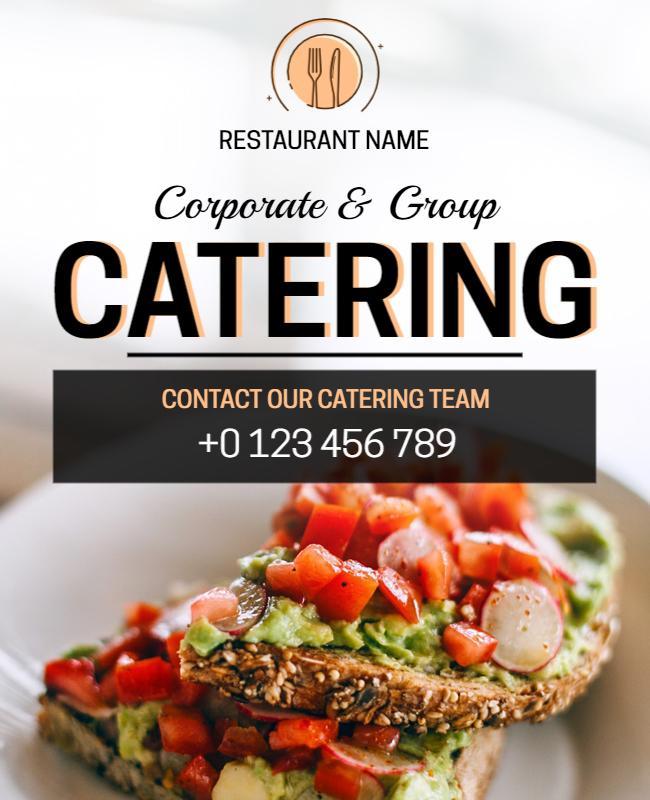
Premium food flyers for corporate catering services establish predictable revenue by targeting office managers and HR departments responsible for regular catering needs. Design professional materials showcasing weekly lunch delivery options, monthly meeting packages, and quarterly event catering services. Include capacity charts showing 10-500 person service capabilities, advance booking discounts for monthly commitments, and streamlined ordering systems via phone or online portals.
Highlight reliability metrics like on-time delivery statistics and consistent quality standards that corporate clients value. Feature testimonials from existing corporate partnerships emphasizing problem-free service delivery and flexible menu accommodations. Position your catering service as a strategic business partner that understands corporate needs, budget constraints, and timing requirements.
Access corporate-targeted food delivery flyer templates on DesignWiz emphasizing reliability, volume capacity, and recurring service benefits for office clients.
- Community Food Hamper Distribution Flyer Template
- Authentic Jamaican Food Advertisement Flyer Template
- Authentic Jamaican Cuisine Flyer Template
Seasonal Booking Optimization Using Menu-Specific Catering Materials
Menu-specific catering materials capitalize on seasonal demand cycles by showcasing appropriate offerings for different times of year. Create specialized restaurant promotional flyers for spring corporate retreats, summer outdoor events, fall training sessions, and winter holiday parties. Each flyer should feature season-appropriate menu selections, pricing packages, and availability calendars that encourage advance bookings.
Include booking incentives for early reservations such as 10% discounts for bookings made 60 days in advance or complimentary upgrade options for seasonal specialties. Display clear contact information with multiple booking methods and response time guarantees. These targeted materials help secure bookings during traditionally slow periods while maximizing revenue during peak seasons.
Volume-Based Partnership Development with Restaurant Promotional Flyers
Promotional flyers targeting high-volume clients help transform sporadic catering requests into predictable revenue by emphasizing scalability, tiered pricing, and long-term partnership benefits.
- Target Audience: Focus on event planners, wedding coordinators, and large organizations needing frequent catering services.
- Scalability Emphasis: Highlight capacity for events from intimate 20-person gatherings to 500+ guests.
- Tiered Pricing Structures: Show per-person cost reductions at volume thresholds of 50, 100, and 200+ attendees.
- Partnership Benefits: Offer dedicated account management, priority booking windows, and customized menu development for regular clients.
- Social Proof: Showcase past large-event successes with photos and testimonials from satisfied partners.
- Referral Incentives: Provide credits or rewards for partners who refer new volume clients.
- Flexible Contracts: Allow preferred dates with minimal deposits to reduce partner planning stress and secure bookings.
- Predictable Revenue Streams: Systematic targeting of recurring-need clients and seasonal optimization creates mutual long-term value.
What Distribution Methods Maximize Food Lead Generation Flyers’ Effectiveness For Service Providers?
Strategic distribution turns food lead generation flyers into precision-targeted marketing assets through smart channel selection and placement optimization. Restaurant promotional flyers work best when placed at industry-focused venues that attract key decision-makers. Multi-channel strategies combining physical and digital distribution can achieve 3–5x higher response rates than single-method campaigns. Food delivery flyers also benefit from partnership networks that expand reach and generate mutual referrals.
High-Impact Physical Placement Strategies for Restaurant Districts and Food Hubs
Target commercial kitchen supply stores, restaurant equipment showrooms, and food service trade locations where industry professionals regularly visit. Position food service marketing flyers near equipment financing offices and commercial real estate listings targeting restaurant spaces. Food industry promotional materials that understand food drive awareness through flyers gain traction at culinary trade shows, restaurant association meetings, and food service networking events where decision-makers evaluate service providers.
Farmers markets and wholesale food distributors provide access to restaurant owners sourcing ingredients. Place catering lead generation flyers at event venues, wedding planning offices, and corporate catering pickup locations. Restaurant districts benefit from systematic door-to-door delivery during off-peak hours when managers have time to review materials. Commercial kitchen rental facilities attract caterers and food entrepreneurs seeking partnerships. Focus on high-traffic areas within food hubs where multiple food businesses operate, maximizing exposure efficiency per distribution session.
Find restaurant district food marketing flyer templates on DesignWiz optimized for strategic placement in high-traffic culinary locations and food service hubs.
- Restaurant Special DiscountOffer Flyer Template
- Tapsilog Special Offer Restaurant Flyer Template
- Steamed Siomai Restaurant Promotion Flyer Template
Digital Distribution Channels That Reach Food Industry Decision-Makers
LinkedIn groups focused on restaurant management, food service operations, and culinary entrepreneurship provide direct access to qualified prospects. Food business flyers distributed through industry-specific Facebook groups, culinary forums, and restaurant owner online communities generate higher engagement rates than general business networks. Email newsletters targeting restaurant association members and food service trade publication subscribers deliver personalized messaging to pre-qualified audiences.
Industry directories like restaurant listing websites, food service supplier portals, and culinary trade platforms accept promotional content from service providers. Food delivery service professional networks and catering association online boards facilitate peer-to-peer referrals. Upload food service marketing flyers to industry job boards where restaurant owners seek staff, positioning services as business growth solutions. Social media platforms targeting food industry hashtags and location-based tags reach local restaurant owners during active browsing sessions.
Partnership-Based Distribution Networks Through Complementary Food Service Providers
Leveraging complementary food service providers creates referral networks that distribute catering lead generation flyers to qualified prospects, enhancing reach, credibility, and lead quality.
- Cross-Promotional Agreements: Collaborate with equipment suppliers, commercial cleaning services, and restaurant consultants to access qualified prospects.
- Strategic Timing: Equipment financing companies reach restaurant owners during expansion phases when additional services are most valuable.
- Complementary Provider Partnerships: Work with kitchen designers, restaurant architects, and POS system vendors to reach clients during key decision-making periods.
- Distributor Networks: Food distributor sales representatives access multiple restaurants daily, making them ideal for flyer distribution.
- Credible Endorsements: Restaurant insurance agents and accounting firms add authority when sharing promotional materials.
- Event Industry Collaborations: Wedding planners, corporate event coordinators, and venue managers recommend catering services to clients.
- Reciprocal Referral Agreements: Exchange marketing materials with partners to generate pre-qualified leads.
- Channel Effectiveness Tracking: Monitor partnership-generated leads separately to measure impact and optimize referral relationships.
- Showcasing Success Stories: Include partnership achievements in flyers to attract additional collaborations and strengthen networks.
How Do Food Lead Generation Flyers Help Build Predictable Revenue For Equipment Investments?
Food service marketing flyers create predictable revenue by establishing consistent lead pipelines that support accurate cash flow forecasting. Catering lead generation flyers build recurring client relationships and long-term service contracts, providing stable monthly revenue for equipment financing. Predictable income enables service providers to confidently invest in specialized equipment, expand capacity, and hire additional staff. Consistent lead generation transforms sporadic projects into sustainable business growth with measurable ROI for equipment investments.
Converting Flyer Leads Into Long-Term Service Contracts for Revenue Stability
Successful food lead generation flyers position service providers for contract-based relationships rather than one-time transactions. Restaurant promotional flyers emphasizing reliability metrics, capacity guarantees, and consistency track records attract clients seeking ongoing partnerships. Service providers convert initial flyer inquiries into monthly retainer agreements by showcasing volume discounts and priority scheduling benefits.
Contract-focused food delivery flyers highlight equipment capabilities, staff certifications, and service level agreements that corporate clients require for ongoing partnerships. These materials create qualifying conversations that reveal budget cycles and long-term catering needs. Converting 30% of flyer leads into 6-month contracts generates the revenue stability needed for equipment financing approval. Monthly contract revenue enables providers to confidently invest in commercial-grade equipment that expands service capacity and improves profit margins.
Using Lead Generation Data to Calculate Equipment ROI and Financing Options
Food lead generation flyers generate measurable response data that supports equipment investment decisions through client acquisition cost analysis. Tracking flyer distribution costs against closed deals reveals precise lead generation ROI, typically ranging from 300-500% for targeted campaigns. Service providers use this performance data to project revenue increases from equipment upgrades.
Catering lead generation flyers targeting corporate clients generate higher-value contracts that justify specialized equipment purchases. Lead generation metrics showing consistent monthly prospect flow enable providers to secure equipment financing based on projected revenue streams. Banks accept flyer-generated lead data as business growth evidence when evaluating loan applications. Equipment ROI calculations incorporate increased capacity from new machinery against documented client acquisition rates from flyer campaigns.
Building Recurring Revenue Models Through Strategic Food Industry Partnerships
Food business flyers can drive partnership development, generating predictable recurring revenue streams that support growth, equipment investments, and financial stability.
- Facilitating Partnership Development: Flyers help establish collaborations with complementary service providers, creating multiple revenue streams.
- Referral Income Through Venue Partnerships: Promotional flyers distributed via event venues generate referrals and strengthen collaborative relationships.
- Predictable Monthly Revenue: Strategic alliances from cross-referrals and shared service opportunities provide steady income.
- Collaboration Benefits: Flyers emphasize shared client value, mutual growth opportunities, and partnership exclusivity.
- Targeted Partnerships: Build exclusive relationships with event venues, wedding planners, and corporate facilities through focused flyer campaigns.
- Revenue Contribution: Recurring bookings and preferred vendor status from partnerships can account for 40–60% of monthly revenue.
- Revenue Diversification: Long-term partnerships reduce business risk while supporting equipment financing.
- Financial Stability for Equipment Investments: Multiple income streams from flyer-generated partnerships provide banks with confidence for loans.
- Partner Contribution to Investments: Partners may assist with equipment purchases through volume commitments or shared-use arrangements, reducing individual investment requirements.
What Call-to-actions On Food Lead Generation Flyers Generate The Highest Response Rates?
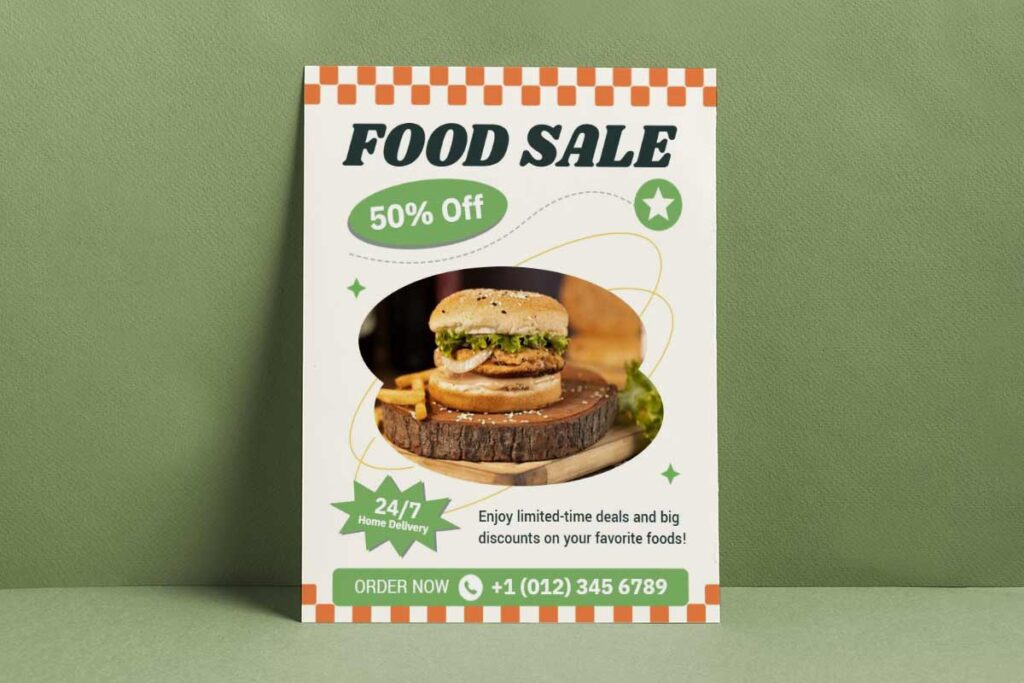
High-converting call-to-action for flyers in food lead generation materials focus on immediate value and urgency. “Get Free Menu Consultation Today” and “Schedule Your Complimentary Tasting” outperform generic phrases by 40-60%. Time-sensitive offers like “Limited Spots – Book Your Catering Quote This Week” create urgency while providing clear next steps. Food-specific CTAs such as “Reserve Your Event Menu Planning Session” or “Claim Your Restaurant Partnership Assessment” speak directly to business needs. The most effective CTAs combine action verbs, specific benefits, and clear contact methods, making it effortless for prospects to respond immediately.
Urgency-Based CTAs That Drive Immediate Food Service Inquiries
Time-sensitive language transforms passive flyer recipients into active prospects. “Call Within 48 Hours for 20% Off Your First Order” creates artificial scarcity that motivates immediate action. Food service marketing flyers perform best with deadline-driven offers like “This Week Only – Free Menu Tasting” or “Limited Partnership Spots Available.” Phrases such as “Reserve Your Spot Today” and “Book Before Friday” convert 3x higher than generic “Contact Us” requests.
Emergency-focused CTAs work particularly well for food delivery services: “Same-Day Service Available – Call Now” or “Last-Minute Catering Solutions – 2 Hours Notice.” Restaurant promotional flyers benefit from seasonal urgency like “Holiday Menu Planning Deadline Approaching” which addresses specific business timing needs. The key lies in matching urgency language to actual business deadlines rather than artificial pressure tactics.
Check out urgency-driven food service flyer templates on DesignWiz featuring compelling call-to-action designs that generate immediate booking inquiries.
- Delicious Pupusas Food Sale Flyer Template
- Steak Night Promotional Flyer Template
- Bakery Rewards Program Giveaway Flyer Template
Value-First Call-to-Actions for Restaurant and Catering Partnerships
Value-driven CTAs emphasize immediate benefits rather than sales pressure. “Get Your Free Revenue Analysis” attracts restaurant owners focused on growth metrics. Catering lead generation flyers excel with offers like “Complimentary Event Menu Design” or “Free Kitchen Capacity Assessment.”
Consultation-based CTAs generate quality leads: “Schedule Your No-Obligation Partnership Discussion” or “Claim Your Custom Menu Review.” Food business flyers targeting corporate clients respond well to “Free Workplace Dining Assessment” which addresses specific pain points. Educational CTAs work effectively: “Download Our Restaurant Marketing Success Guide” or “Access Exclusive Industry Reports.”
Partnership-focused language builds trust: “Explore Collaboration Opportunities” or “Discuss Your Growth Goals” positions service providers as advisors rather than vendors. The most successful value propositions address specific industry challenges while offering concrete solutions.
Contact Method Optimization for Food Business Development Responses
Providing multiple, clearly organized contact options on food service flyers increases response rates by accommodating prospect preferences and streamlining lead capture.
- Multiple Communication Channels: Include phone numbers, email addresses, and QR codes linking to scheduling systems.
- Prominent Phone Placement: Highlight phone numbers for urgent inquiries, while using email for detailed requests.
- QR Codes for Online Booking: Direct leads to scheduling calendars with prompts like “Scan to Schedule Your Consultation” to automate lead capture.
- Text Message Options: Use SMS CTAs like “Text MENU to 555-0123 for Instant Quote” for busy prospects.
- Social Media Integration: Encourage connections via LinkedIn or other platforms for partnership updates and menu inspiration.
- Professional Email Addresses: Use formal formats like [email protected] to convey serious business intent.
- Response Time Commitments: Communicate guarantees such as “We respond within 2 hours” to build credibility.
- Website Landing Page Alignment: Ensure pages linked from flyers match the promised CTA exactly.
- Clear Contact Hierarchies: Guide prospects, emergency phone for urgent needs, email for proposals, scheduling links for consultations.
How Can Food Service Providers Track ROI From Food Lead Generation Flyers Campaigns?
Food service providers can track ROI from flyer campaigns through multi-touch attribution systems that connect initial flyer contact to closed deals. Implement unique phone numbers, QR codes, and landing pages for each flyer distribution area to measure response rates by location. Track metrics including cost-per-lead, conversion rates from inquiry to proposal, and average deal value from flyer-generated leads. Calculate ROI by comparing total campaign costs against revenue from closed partnerships, factoring in customer lifetime value for recurring food service contracts. Most successful providers see 3:1 to 7:1 ROI when properly tracking attribution through their entire sales funnel.
Attribution Methods for Tracking Food Delivery and Catering Flyer Performance
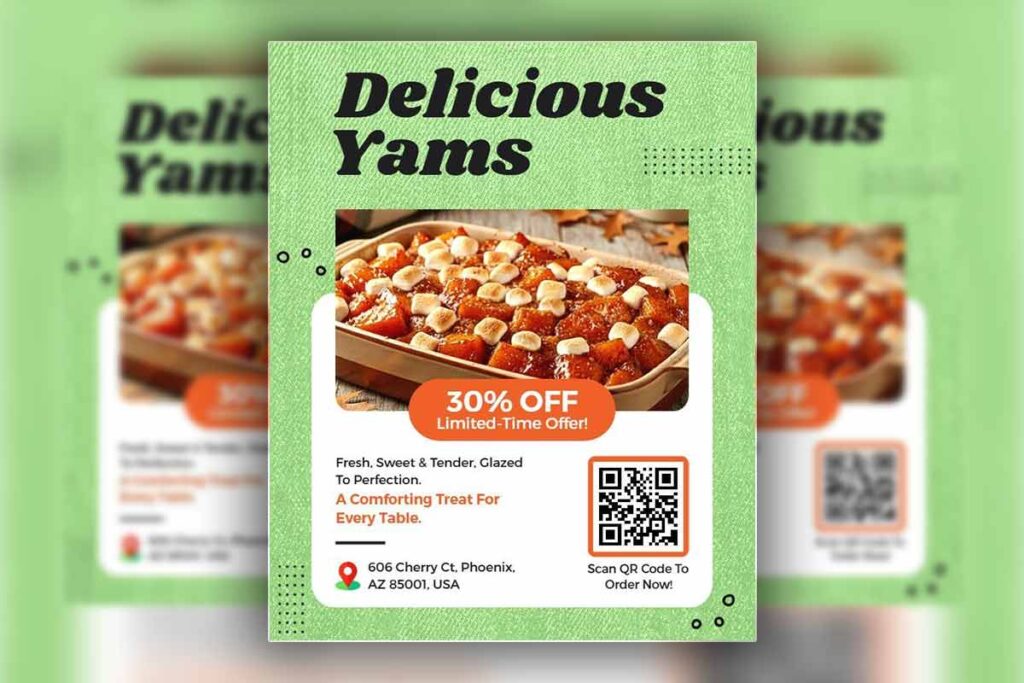
Successful tracking requires unique identifiers for each distribution channel and location. Assign dedicated phone numbers to different flyer batches using call tracking services that cost $20-30 monthly per number. Create custom QR codes linking to landing pages with UTM parameters tracking source, campaign, and geographic area, as QR code increase flyers response rates.
Implement multi-channel attribution by tracking prospect interactions across touchpoints. When leads contact you through multiple channels, use intake forms asking “How did you hear about us?” with flyer-specific options. Restaurant promotional flyers with clear tracking mechanisms typically show 15-25% higher attribution accuracy than generic designs.
Digital tracking complements physical distribution through URL shorteners providing click analytics. Catering lead generation flyers linking to dedicated consultation booking pages reveal conversion patterns by distribution area, helping optimize future placement strategies.
Key Performance Indicators That Matter for Food Service Lead Generation
Monitor cost-per-lead by dividing total campaign expenses by qualified inquiries generated. Food business flyers averaging $2-8 per lead indicate healthy performance, while costs exceeding $15 suggest distribution or design optimization needs. Track inquiry-to-proposal conversion rates, with successful campaigns converting 25-40% of initial contacts into formal discussions.
Measure average deal size from flyer-generated leads compared to other acquisition channels. Food service marketing flyers often produce higher-value contracts due to the targeted nature of physical distribution. Calculate customer acquisition cost including design, printing, and distribution expenses against first-year contract values.
Response time metrics reveal campaign effectiveness across different periods and locations. Track lead quality scores based on budget, timeline, and decision-making authority to optimize targeting strategies for future campaigns.
Revenue Attribution Systems for Multi-Location Food Business Flyer Campaigns
Tracking and analyzing leads by location allows food service providers to measure ROI accurately, optimize distribution, and prioritize high-performing markets for maximum revenue impact.
- Location-Based Tracking: Assign unique campaign codes to each distribution area for precise attribution.
- CRM or Spreadsheet Logging: Record lead source, contact date, proposal value, and conversion status to monitor performance.
- Identify High-Value Areas: Determine which neighborhoods, business districts, or venue types generate the most profitable partnerships.
- Lifetime Value Multipliers: Factor recurring catering contracts (5–10× initial contract value) into ROI calculations.
- Monthly Attribution Analysis: Compare flyer performance with digital marketing channels to assess effectiveness.
- Seasonal Pattern Documentation: Track response rates and deal values across different times of year to optimize distribution timing.
- Longer Sales Cycle Tracking: Monitor prospects over 90-day windows to capture extended food service partnership cycles.
- Refine Targeting Strategies: Use data to increase investment in high-performing locations and eliminate underperforming distribution methods.
What Budget-friendly Food Lead Generation Flyers Strategies Work For Small Service Providers?
Small food service providers can maximize lead generation impact through cost-effective flyer marketing for small businesses strategies that prioritize strategic distribution over expensive design elements. Budget-friendly approaches focus on digital-first distribution via email lists and social media platforms, partnership exchanges with complementary businesses for cross-promotion, and targeted local placement at high-traffic community locations. Food lead generation flyers achieve 3:1 to 5:1 ROI when budget constraints force strategic focus on distribution and messaging over premium design elements. Successful budget strategies emphasize single-color printing with bold typography, reusable template designs, and clear value propositions like limited-time offers or free consultations.
Low-Cost Design and Printing Solutions for Food Service Marketing Flyers
Budget-conscious food service providers achieve professional results using free design platforms like Canva combined with local print shops offering bulk discounts. Single-color flyers with high-contrast text cost 60% less than full-color versions while maintaining readability and impact. Focus on strong headlines, clear service descriptions, and prominent contact information rather than complex graphics. Standard 8.5×11 paper eliminates custom sizing fees, while digital file sharing reduces setup costs. Food delivery flyers printed in quantities of 500+ cost under $0.20 per piece when using simplified designs and bulk printing services.
Template designs emphasizing typography over imagery reduce printing costs while improving message clarity. Black-and-white designs with strategic use of white space create professional appearance without color printing premiums. Reusable template frameworks incorporating creative flyer design ideas allow providers to update offers and contact information without complete redesigns, maximizing design investment across multiple campaigns.
Strategic Distribution Networks That Maximize Reach Without Breaking Budget
Cost-effective distribution leverages existing business networks and community partnerships rather than paid advertising channels. Restaurant promotional flyers perform best when placed at complementary businesses like coffee shops, bookstores, and community bulletin boards where target customers naturally congregate. Food business flyers distributed through professional networks, chamber of commerce events, and business association meetings reach decision-makers without advertising costs.
Digital distribution through LinkedIn groups, Facebook business pages, and industry forums extends geographic reach beyond physical limitations. Email newsletters to existing customer databases and social media followers create zero-cost touchpoints with qualified prospects. Community event participation provides face-to-face distribution opportunities while building local brand recognition.
Partnership-based distribution creates mutual referral opportunities when complementary service providers share flyer placement locations and customer databases.
Cross-Promotional Partnerships to Share Catering Lead Generation Flyer Costs
Collaborating with complementary businesses allows catering providers to share flyer design and distribution costs, expand reach, and offer comprehensive service solutions to prospects.
- Strategic Cost-Sharing Partnerships: Collaborate with wedding venues, event planners, and corporate meeting facilities with overlapping customer bases.
- Joint Flyer Designs: Split design and printing expenses while presenting multiple complementary services.
- Resource Guide Flyers: Partner with equipment rental companies or party supply stores to create flyers recipients retain longer.
- Revenue-Sharing Agreements: Incentivize venue partners to actively promote catering services to their clients.
- Cross-Promotional Email Campaigns: Share marketing lists with partners to multiply reach without additional advertising costs.
- Corporate Office Partnerships: Use break rooms and employee communication boards for ongoing flyer distribution at minimal cost.
- Event-Based Partnerships: Collaborate with photographers, florists, and entertainment providers to offer premium service packages while sharing marketing expenses.
- Shared Investment Approach: Transform marketing costs into joint investments that benefit all partners and provide comprehensive service solutions to prospects.
How Do Food Lead Generation Flyers Support Long-term Partnership Development Goals?
Food lead generation flyers establish credibility and professional presence essential for long-term partnership development by showcasing service capabilities, client testimonials, and industry expertise to potential collaborators. They serve as tangible business cards during networking events, demonstrating professionalism to potential partners like event planners, corporate clients, and venue managers. Strategic flyer campaigns build brand recognition over time, creating familiarity that facilitates trust-building conversations. Additionally, flyers can highlight partnership opportunities directly, inviting collaboration while positioning the service provider as a reliable, growth-oriented business ready for strategic alliances.
Building Professional Credibility Through Consistent Food Business Flyer Branding
Professional food business flyers create lasting impressions that separate serious service providers from amateur competitors. Consistent branding across all food service marketing flyers establishes visual recognition that decision-makers remember months later when partnership opportunities arise. uality design elements that avoid common flyer design mistakes, professional photography, and comprehensive service descriptions demonstrate operational maturity that corporate partners require.
Restaurant promotional flyers featuring client success stories, certification badges, and capacity details position providers as established businesses capable of handling significant contracts. The physical nature of flyers allows prospects to file them for future reference, keeping your services top-of-mind during budget planning cycles. Well-designed catering lead generation flyers with clear contact information and service guarantees build trust through transparency, essential for partnership discussions where reliability matters more than price.
Networking Event Strategies Using Restaurant Promotional Flyers as Partnership Tools
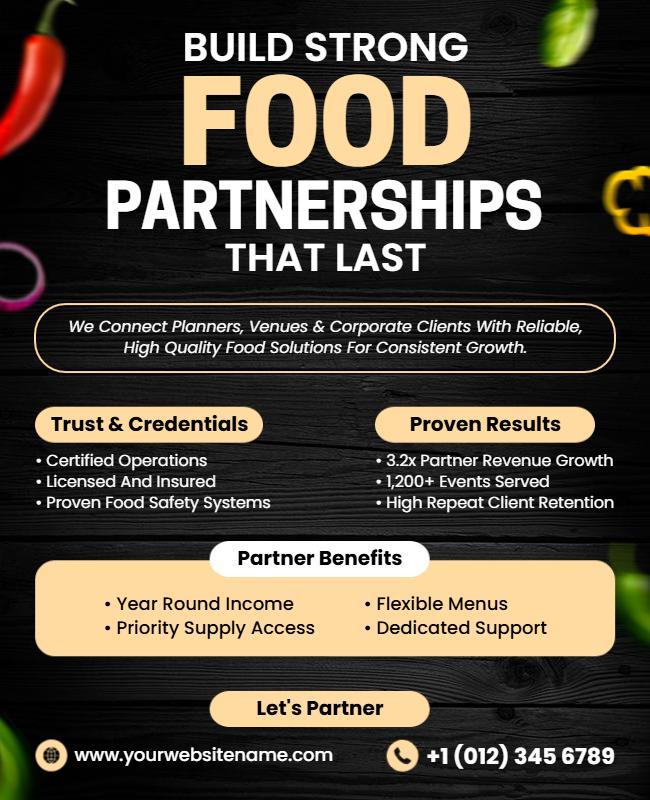
Strategic flyer distribution at industry networking events creates immediate conversation starters that lead to meaningful partnership discussions. Food delivery flyers designed specifically for networking situations should emphasize collaboration benefits rather than direct sales, positioning your business as a potential ally rather than vendor.
Effective networking flyers include partnership case studies showing successful collaborations with similar businesses, demonstrating your ability to work cooperatively. Including specific partnership terms like volume discounts, referral incentives, or co-marketing opportunities directly on flyers accelerates partnership negotiations. Smart providers bring multiple flyer versions to networking events, customizing messages for different partner types like venues, event planners, or complementary service providers. This targeted approach shows professional preparation that impresses potential partners and increases follow-up conversations.
Creating Referral Networks Through Strategic Food Delivery Flyer Placement
Placing food lead generation flyers at complementary businesses creates organic referral networks, turning partners into consistent sources of high-quality leads and long-term collaborations.
- Targeted Flyer Placement: Distribute flyers at restaurants, event venues, and corporate offices to generate referrals.
- Mutual Referral Relationships: Negotiate display agreements with businesses serving similar clientele for mutual benefit.
- Contextual Messaging: Tailor flyers to location, wedding venues emphasize catering services, corporate offices highlight meeting and event offerings.
- Recognition Among Partners: Consistent professional flyer presence builds trust and credibility with potential referral partners.
- Incentivized Referrals: Offer finder’s fees or reciprocal referral agreements to motivate partners to recommend your services.
- Evolution into Strategic Partnerships: Over time, referral relationships grow into active promotion partnerships.
- Sustainable Lead Generation: Establish a network that provides ongoing leads without continuous marketing expenditure.
Start generating predictable leads and building lasting partnerships today by exploring the complete collection of food service lead generation flyer templates available on DesignWiz.
- Selective Yellow and Thunderbird Food Flyer Template
- Food Truck Friday Festival Flyer Template
- Personalized Diet Consultation Service Flyer Template
- Delicious Sushi Restaurant Promotion Flyer Template
- Organic Healthy Meal Plans Promotional Flyer Template
People Also Ask: Flyer-based Lead Generation And Partnership Development Implementation Questions
- Do food lead generation flyers work better than digital ads for service providers?
Food lead generation flyers often outperform digital ads for B2B service providers, achieving lower cost-per-lead and higher trust levels. Physical materials create tangible credibility that resonates with corporate decision-makers seeking reliable partnerships. - What makes food lead generation flyers effective for partnership development?
Effective food lead generation flyers combine clear service descriptions, capacity details, client testimonials, and specific partnership benefits. Professional design with measurable guarantees builds trust essential for corporate partnership development. - How much do food lead generation flyers cost for service providers?
Food lead generation flyers cost $0.15-0.50 per piece including design and printing. With 2-5% response rates, the cost per qualified lead ranges from $2-8, significantly lower than digital advertising alternatives. - Where should food service providers distribute lead generation flyers?
Target business districts, corporate complexes, office buildings, and industry networking events. Direct delivery to facility managers and event coordinators maximizes partnership opportunities and response rates for service providers. - How often should food service providers distribute lead generation flyers?
Consistent weekly distribution of 200-500 flyers maintains steady lead flow for service providers. This approach generates predictable monthly prospects, supporting revenue planning and growth investments in staff and equipment. - What ROI can food service providers expect from lead generation flyers?
Food lead generation flyers typically deliver 300-500% ROI for service providers through new partnership contracts. Lower acquisition costs and higher conversion rates compared to digital marketing drive superior returns.
Frequently Asked Questions
- How quickly can food lead generation flyers start generating leads for service providers?
Initial responses appear within 3–5 days; peak response is 7–14 days. Weekly distribution ensures steady leads and predictable revenue. - What is the average cost per lead for food lead generation flyers versus digital marketing?
Flyers cost $2–8 per qualified lead, compared to $15–30 via digital ads, offering lower acquisition costs and better margins. - How many food lead generation flyers should service providers distribute weekly for consistent results?
Distribute 200–500 flyers weekly to generate 8–15 qualified prospects monthly, supporting stable revenue planning. - What response rate should food service providers expect from well-designed lead generation flyers?
Targeted flyers achieve 2–5% response rates; corporate-focused campaigns can reach 3–7%, enabling predictable lead flow. - How do food lead generation flyers support partnership development with corporate clients?
They showcase capabilities and reliability, providing tangible materials for decision-makers and accelerating approval for long-term contracts. - What information must food lead generation flyers include to generate quality business leads?
Include clear service details, capacity, reliability metrics, contact info, testimonials, guarantees, and flexible engagement options. - How can food service providers optimize flyer distribution for maximum partnership opportunities?
Target business districts, corporate complexes, and networking events; personally deliver to facility managers for stronger recognition and trust. - What seasonal considerations affect food lead generation flyers’ effectiveness for service providers?
Best periods are corporate budget planning (Sept–Nov, Jan–Mar), holidays for event catering, and summer for employee appreciation events. - How do food lead generation flyers help establish credibility with potential business partners?
Professional flyers provide tangible proof of quality, certifications, and past successes, building trust often stronger than digital marketing. - What follow-up strategies maximize food lead generation flyers’ conversion rates?
Follow up within 48 hours via calls or emails, including presentations, proposals, and trial offers. Structured follow-up converts 15–25% of responses.
Conclusion: Flyer-based Lead Generation And Partnership Development Success Framework
Food lead generation flyers turn unpredictable income into consistent revenue by combining visually appealing design, clear value propositions, and credibility-building elements like testimonials and certifications. Strategic flyer implementation guides prospects from initial interest to partnership inquiries, creating sustainable business growth and supporting informed staffing and equipment investments.
By targeting qualified leads and emphasizing long-term collaborative opportunities, catering and restaurant services can convert sporadic projects into reliable revenue streams. Systematic distribution, multi-channel follow-ups, and data-driven campaign optimization ensure measurable ROI improvements while strengthening market positioning and client relationship networks over time.
Reference
- What is Customer Relationship Marketing (CRM)? – Santa Clara University.
- The Ins and Outs of Customer Acquisition for Small Businesses – University of Nebraska Omaha.
- Integrating Lead-Generation Marketing Campaigns – University of Pennsylvania/Wharton.
- Demand Forecasting, Planning, and Management – MIT.
- Market research and competitive analysis – U.S. Small Business Administration.