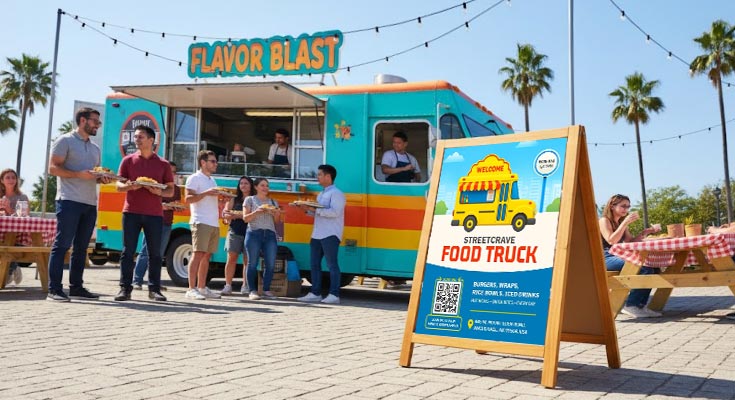
Most food truck flyers fail to stand out because they rely on generic designs rather than strategic positioning in crowded local markets, often triggering price wars and lower profits. Printable food truck flyer templates paired with targeted food truck strategies create immediate differentiation, showcasing signature menus, authentic brand stories, and location-specific messaging. By combining tangible physical marketing with expert design, these flyers drive customer action while reinforcing premium value and credibility.
How Can Food Truck Flyers Help Differentiate Your Business From Competitors in Saturated Markets?
Food truck flyers create tangible brand differentiation through strategic visual storytelling and targeted messaging that cuts through market noise. Unlike generic digital ads, physical flyers, and tools like a flyer maker for business enable unique positioning through authentic photography, distinctive typography, and localized messaging that resonates with specific neighborhoods.
They showcase signature menu items, brand personality, and value propositions in ways competitors can’t easily replicate. Smart flyer design emphasizes what makes your food truck special, whether it’s artisanal ingredients, cultural authenticity, or innovative fusion concepts, while building trust through a professional presentation that establishes credibility in crowded markets.
Signature Menu Showcase Strategies That Highlight Your Culinary Uniqueness
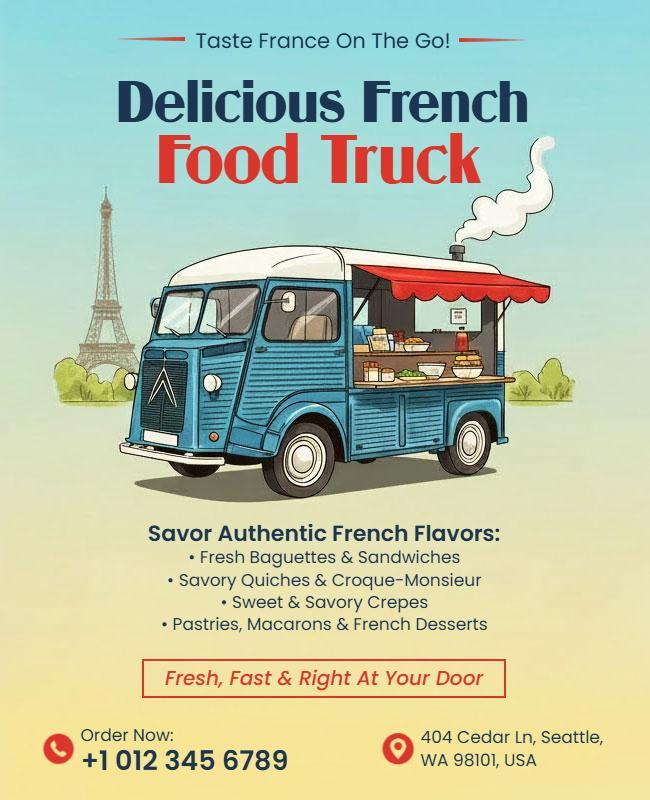
Food truck flyers excel at showcasing signature dishes through high-resolution photography that competitors struggle to match. Professional food styling and custom photography create appetite appeal while highlighting unique ingredients, preparation methods, or plating techniques. Strategic menu positioning focuses on exclusive offerings like “Grandma’s Secret Recipe Tacos” or “Award-Winning BBQ Sauce” that establish proprietary value.
Include ingredient sourcing stories, cooking technique highlights, and chef credentials that competitors cannot replicate. Visual hierarchy guides customers through unique offerings while maintaining brand consistency across all marketing materials.
Brand Story Integration Techniques for Authentic Market Positioning
Authentic storytelling differentiates food trucks through personal narratives, cultural heritage, or family traditions that create emotional connections. Food service flyer templates should feature founder photos, origin stories, and mission statements that humanize the business beyond mere food service. Effective brand positioning emphasizes authenticity markers like “Family Recipe Since 1952” or “Chef-Trained in Italy” that establish credibility and trust.
Visual elements like family photos, chef credentials, or cultural symbols create memorable impressions that distinguish your truck from generic competitors. This approach transforms price-focused competition into value-based differentiation through emotional resonance and authentic positioning.
- Vibrant Food Truck Culinary Experience Fest Flyer Template
- Local Food Truck Coming Soon Flyer Template
- Foodie Festival with Food Trucks Flyer Template
Location-Specific Messaging That Resonates With Local Demographics
Tailoring flyer content to specific neighborhoods and community characteristics through strategic flyer marketing for small businesses increases engagement and differentiates brands from generic competitors. Localized messaging builds authenticity, relevance, and stronger connections with target audiences.
- Community-Relevant Content – Include local landmarks, cultural references, and partnerships with neighborhood organizations to demonstrate market familiarity. Flyers reflecting local terminology and events create a sense of belonging that broad campaigns cannot replicate.
- Demographic-Specific Design – Adjust visual elements, color schemes, and language to match audience preferences. Office districts respond to lunch specials and business-friendly messaging, while family-oriented neighborhoods favor school- and park-centered promotions.
- Competitive Positioning Through Hyperlocal Focus – Strategically place flyers near competitor locations and highlight unique value propositions such as faster service, superior ingredients, or exclusive offerings. Hyperlocal campaigns turn saturated markets into targeted opportunities for engagement and brand differentiation.
Location-specific flyer strategies strengthen community connections, enhance brand recognition, and drive higher local engagement compared to generic marketing efforts.
What Design Elements Make Food Truck Flyers More Effective Than Digital Advertising for Local Competition?
Food truck flyers achieve superior local impact when you understand how to make a flyer using tactile design elements that create lasting impressions digital ads cannot match. High-resolution food photography generates immediate appetite response, while quality paper stock provides physical permanence that outlasts fleeting digital impressions. Strategic typography hierarchy guides customers through essential information—location, hours, signature dishes—without overwhelming them.
Bold color schemes using appetite-stimulating reds and oranges create visual magnetism that catches attention in crowded markets. hese tangible elements generate 3-5x longer engagement times compared to digital ads when considering digital vs print flyers pros cons, enabling deeper brand connection and higher conversion rates in competitive food truck markets.
Photography Composition Techniques That Make Food Irresistibly Appealing
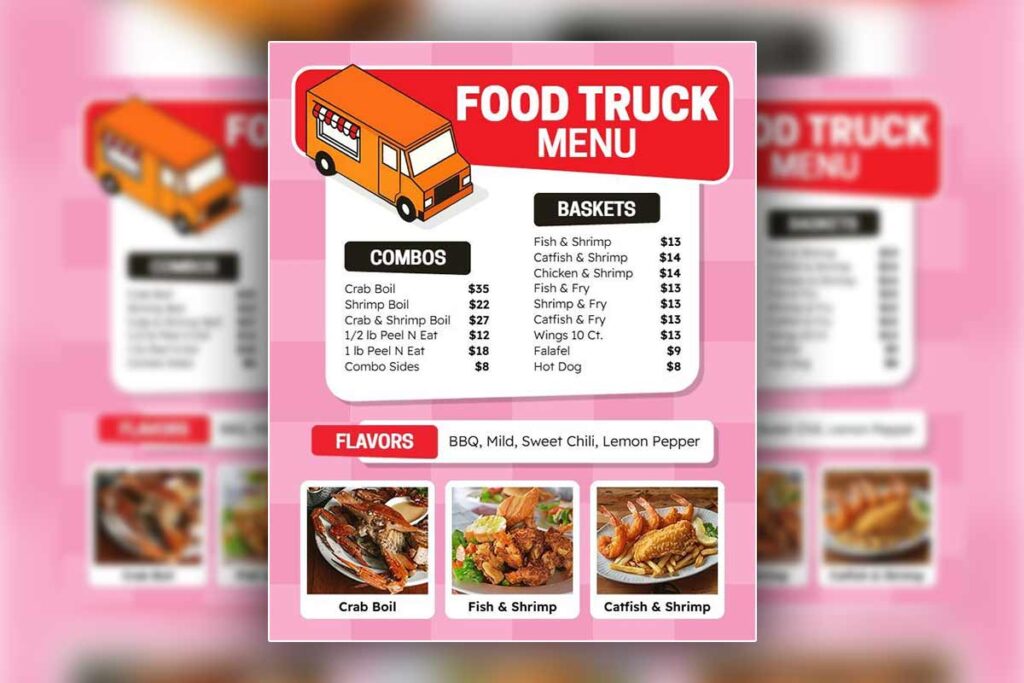
Professional food photography dominates flyer effectiveness through close-up shots that emphasize texture, steam, and fresh ingredients. Use 45-degree angles to showcase depth while maintaining ingredient visibility. Natural lighting creates authentic appeal that fluorescent-lit digital images cannot replicate. Include hands holding food to suggest portion size and eating experience. Action shots such as pouring sauce or grilling meat add movement that static digital ads lack.
Macro photography highlighting unique ingredients—melted cheese pulls, herb garnishes, caramelized surfaces—creates visceral responses digital advertising struggles to achieve. Color contrast between food and background ensures menu items pop off the page. Professional food styling with intentional imperfection suggests handcrafted quality over mass production while avoiding common flyer design mistakes that can diminish visual impact. These photographic elements work together to create immediate hunger response that drives customers to seek out your truck, establishing competitive advantage through authentic visual storytelling that digital formats cannot fully replicate. Storytelling follows food photography tips for marketing.1
Typography and Color Psychology for Maximum Local Market Impact
Strategic typography aligned with current flyer design trends creates instant brand recognition through bold, readable fonts such as Impact or Bebas Neue for headers, paired with clean san-serif fonts for body text ensuring readability in outdoor lighting conditions. Size hierarchy places business name largest, followed by signature dishes, then location details. Color psychology leverages appetite-stimulating combinations—red backgrounds with white text create urgency, while orange accents suggest warmth and comfort food.
Green highlights suggest fresh ingredients and healthy options, appealing to health-conscious customers. Avoid blue entirely as it suppresses appetite naturally. High contrast ratios ensure readability across all lighting conditions, from bright sunlight to evening events. Strategic white space prevents information overwhelm while guiding eye movement toward key messages.
Font consistency across all marketing materials builds brand recognition that helps food truck flyers stand out from digital advertising clutter. These design choices create psychological triggers that influence purchasing decisions more effectively than digital ads competing for screen attention.
- Community Food Truck Festival Flyer Template
- Food Truck Franchise Investment Opportunity Flyer Template
- Vibrant Orange Food Truck Festival Event Flyer Template
Layout Architecture That Optimizes Information Hierarchy and Readability
Professional food truck flyers rely on structured layouts informed by proven flyer design ideas that guide customers’ attention efficiently, making key information easy to locate and act upon. Strategic design choices enhance readability, visual appeal, and overall engagement.
- Hierarchical Information Flow – Highlight signature menu items with large images and bold pricing first, incorporating key elements of a flyer such as location schedule, contact details, and special offers, ensuring the most important content captures attention immediately.
- Grid-Based and Visual Navigation – Use grid layouts following proven business flyer layout principles to separate content logically (menu on the left, location on the right, contact in the footer).Borders, dividers, and geometric shapes (e.g., circles for pricing, arrows for offers) direct focus while white space prevents visual clutter.
- Digital Integration and Engagement Cues – Incorporate QR codes linking to real-time location updates or online menus, demonstrating how QR code flyers increase response rates through seamless digital engagement.
A thoughtfully organized flyer layout ensures customers quickly find essential details, builds trust through professional presentation, and drives immediate actions more effectively than digital-only formats. Formats use brochure tips for effective layout.2
How Do Successful Food Truck Flyers Position Pricing to Avoid Destructive Price Wars?
Successful food truck flyers avoid price wars by emphasizing value propositions rather than lowest prices. They highlight unique ingredients, preparation methods, and dining experiences that justify premium pricing. Strategic positioning focuses on quality markers such as “locally sourced,” “handcrafted,” or “authentic recipes” while presenting prices as investments in superior food experiences. Smart flyer design showcases portion sizes, ingredient quality, and chef expertise to differentiate from competitors rather than competing solely on cost.
Value-Based Messaging Techniques That Justify Premium Food Truck Pricing
Effective food truck flyers position pricing through quality storytelling rather than price comparisons. Professional food business flyer marketing incorporates origin stories about signature recipes, emphasizing family traditions or chef training that competitors cannot replicate. Strategic messaging includes specific quality indicators such as “grass-fed beef,” “24-hour marinated,” or “house-made sauces” that justify higher prices through tangible differentiators.
Food truck marketing materials should highlight awards, certifications, or media recognition that establish credibility beyond price considerations. Successful food service promotional posters avoid displaying competitor prices, instead creating perceived value through professional photography, detailed ingredient descriptions, and customer testimonials that emphasize experience quality over cost savings.
Strategic Price Presentation Methods That Emphasize Quality Over Cost Competition
Professional food truck flyers present pricing as investment in quality rather than expense comparison. Strategic price positioning uses phrases such as “artisan-crafted for $12” instead of “only $12” to frame cost as quality investment. Effective food business advertising flyers bundle pricing with value descriptions, presenting “Hand-pulled barbacoa with house-made tortillas – $14” rather than isolated prices. Menu presentation emphasizes portion sizes, preparation time, or ingredient costs that justify premium pricing structure.
Food truck catering flyer templates integrate pricing within quality narratives, using descriptive menu language that connects cost to culinary value. Professional food service flyer templates avoid price comparison charts, instead focusing on unique value propositions competitors cannot match. Smart pricing presentation includes preparation details such as “slow-cooked 12 hours” or “made fresh daily” that transform price objections into quality appreciation, positioning food trucks as premium experiences rather than budget alternatives.
- Food Truck Menu with Seafood Combos Flyer Template
- Colorful Food Truck Festival with Live Music and Games Flyer Template
- Food Truck Event with Burger and Ice Cream Flyer Template
Competitive Differentiation Through Ingredient Sourcing and Preparation Transparency
Premium food truck flyers leverage transparency to justify pricing and establish market differentiation. Highlighting ingredient sources, preparation methods, and quality standards builds credibility and emotional connection with target customers.
- Ingredient Sourcing Transparency – Showcase local partnerships, organic certifications, and sustainable sourcing practices. Highlighting exclusive suppliers or seasonal ingredients positions offerings as premium and difficult for competitors to replicate.
- Preparation and Culinary Expertise – Include detailed cooking methods, equipment quality, and preparation timelines. Visuals of chefs in action or behind-the-scenes kitchen processes communicate investment in quality and reinforce pricing rationale.
- Quality and Recognition Signals – Display certifications, health ratings, or industry awards to build trust and validate premium positioning. Storytelling around ingredient origin and proprietary techniques shifts conversations from cost to value, emphasizing a superior customer experience.
Transparent sourcing and preparation messaging transforms food truck flyers into tools that justify premium pricing, create emotional brand connections, and attract customers who prioritize quality over the lowest price.
What Psychological Triggers in Food Truck Flyers Convert Browsers Into Paying Customers?
Food truck flyers convert browsers through strategic psychological triggers including scarcity, social proof, and sensory appeal. Limited-time offers create urgency while customer testimonials build trust through social validation. High-quality food photography triggers appetite responses and emotional connections to drive immediate action.
Strategic power words such as “secret recipe” and “award-winning” enhance perceived value, while clear location details and specific times eliminate decision friction. These psychological elements transform casual interest into motivated customers seeking immediate food experiences.
Scarcity and Urgency Elements That Drive Immediate Food Truck Visits
Food truck flyers leverage time-sensitive messaging to create immediate action. “Today only” promotions and “While supplies last” messaging trigger fear of missing out, compelling customers to visit before opportunities disappear. Limited menu items marked as “Chef’s Special” or “Weekend Exclusive” create artificial scarcity that increases perceived value.
Effective food truck marketing materials incorporate countdown elements and exclusive availability windows. “First 50 customers receive free appetizers” combines quantity limits with early-bird incentives. Geographic exclusivity such as “Only at Downtown Location” creates location-based urgency that drives foot traffic to specific areas where competition is highest.
- Food Truck Fest Event Flyer Template
- Park Festival Food Truck Event Flyer Template
- Food Truck Live Music Event Flyer Template
Social Validation Techniques That Build Trust in Mobile Food Service Quality
Food truck flyers build credibility through customer testimonials, popularity indicators, and community endorsements. “Customer favorite since 2018” messaging establishes longevity while “5-star Google reviews” provides third-party validation. Local media mentions and “As featured in [Local Publication]” badges create authority positioning.
Food service flyer templates incorporate visual social proof through customer photos, review snippets, and crowd imagery showing busy service. “Serving 500+ customers weekly” quantifies popularity while “Local firefighters’ choice for catering” targets community trust. Food delivery flyer advertising uses app ratings and delivery statistics to build mobile service credibility.
Sensory Design Psychology That Triggers Appetite and Purchase Decisions
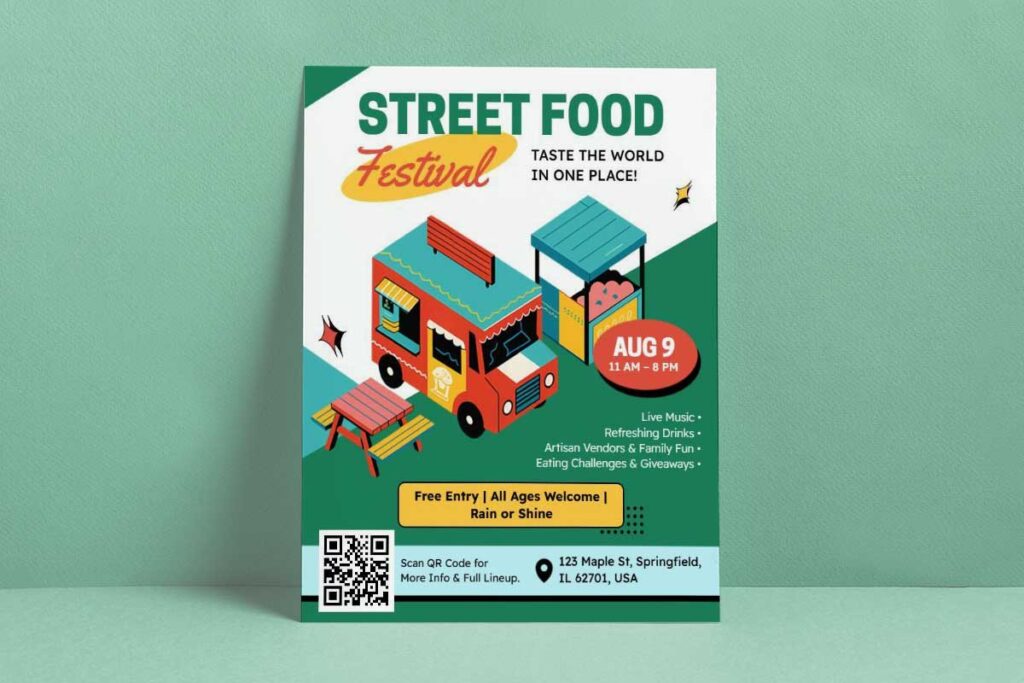
Food truck flyers leverage sensory design and psychological cues to stimulate appetite and motivate immediate purchases. Thoughtful use of color, imagery, typography, and language creates emotional and sensory connections that drive engagement and sales.
- Color and Visual Appetite Triggers – Warm colors such as red and orange increase hunger perception, while high-contrast, close-up food photography emphasizes freshness and texture. Steam, glistening surfaces, and vivid plating create sensory cues that trigger cravings.
- Typography and Descriptive Language – Bold, rustic fonts convey artisanal quality, while clean, modern typefaces suggest health-conscious or premium options. Words such as “sizzling,” “fresh-baked,” and “aromatic” evoke taste and smell, creating mental flavor experiences for the viewer.
- Layout and Emotional Engagement – White space highlights key menu items and prevents visual clutter. Geometric layouts guide eyes from appetizing visuals to pricing and location details, while action-oriented phrases such as “taste the difference” encourage immediate visits. Social proof badges, scarcity headlines, and layered sensory cues further enhance conversion potential.
Strategically combining visual, textual, and layout elements creates food truck flyers that trigger appetite, enhance perceived quality, and drive immediate customer action.
How Can Food Truck Flyers Showcase Unique Value Propositions That Competitors Can’t Replicate?
Food truck flyers can showcase irreplaceable value propositions by highlighting signature menu items with proprietary recipes, emphasizing chef credentials and culinary backgrounds, featuring exclusive partnerships with local suppliers, and showcasing authentic cultural heritage or family traditions. Effective food truck flyer design incorporates visual storytelling through behind-the-scenes imagery, customer testimonials about unique experiences, and certification badges for specialty diets or sustainable practices.
Food service flyer templates should emphasize origin stories, limited-time exclusive offerings, and personalized service elements that larger competitors cannot duplicate, creating emotional connections that transcend price-based competition.
Highlighting Signature Recipes and Proprietary Menu Items in Food Business Flyer Marketing
Showcasing signature recipes and proprietary menu items positions food businesses as unique and memorable in competitive markets. Flyers that tell authentic stories about menu origins or exclusive techniques increase perceived value and customer interest.
- Authentic Recipe Storytelling – Highlight family recipes, proprietary spice blends, or unique fusion dishes that competitors cannot replicate. Include engaging narratives such as “Grandma Rosa’s authentic marinara perfected over 40 years in Naples” to connect emotionally with customers.
- Visual Differentiation – Use professional food photography alongside detailed ingredient lists, preparation methods, and specialty equipment. This visually reinforces the uniqueness of offerings and elevates perceived quality.
- Brand-Centric Menu Presentation – Transform menu items into a narrative by emphasizing exclusive cooking techniques, regional ingredient sourcing, or custom chef modifications. Well-crafted text paired with imagery builds anticipation and positions the food as a premium, signature experience.
Highlighting proprietary recipes and signature menu items in flyer marketing strengthens brand identity, communicates uniqueness, and motivates customers to choose your offerings over competitors.
Leveraging Chef Credentials and Cultural Heritage Through Food Vendor Flyer Promotion
Professional credentials and cultural authenticity provide powerful differentiation that chain restaurants and generic food trucks cannot match. Food vendor flyer promotion should prominently feature chef training, culinary school achievements, restaurant experience, or cultural heritage that validates menu authenticity. Include specific accomplishments such as “Chef Martinez, trained at Le Cordon Bleu, brings 15 years of Mexican restaurant experience.”
Cultural heritage stories create emotional connections through authentic representation. Share immigration stories, family traditions, or regional cooking methods that demonstrate genuine cultural knowledge. Food delivery flyer advertising becomes more compelling when customers understand the personal investment and authentic background behind menu creation.
Professional food service promotional posters should balance credential display with approachable personality, avoiding intimidation while establishing expertise and trust through authentic storytelling.
- Turbo and Turbo Food Flyer Flyers Template
- Playful Orange Food Truck Festival with Live Music Flyer Template
- Food Truck Festival Bbq and Pizza Flyer Template
Showcasing Exclusive Local Partnerships and Sustainable Sourcing Stories
Highlighting local partnerships and sustainable sourcing enhances food vendor credibility, strengthens community connections, and supports premium positioning. Flyers that tell these stories communicate both quality and values, appealing to conscious consumers.
- Exclusive Local Partnerships – Feature specific collaborations with local farms, bakeries, or artisan suppliers using strategies from food drive awareness through flyers to demonstrate authenticity and community engagement.
- Sustainable Sourcing Initiatives – Highlight environmental impact, organic certifications, and waste reduction practices. Flyers can showcase measurable sustainability commitments, building trust with environmentally conscious customers while reinforcing brand integrity.
- Supply Chain Transparency – Use visuals, testimonials, and behind-the-scenes stories to show ingredient origins, delivery schedules, and quality standards. Emphasize seasonal availability and collaborative menu development to create urgency and demonstrate community integration.
Communicating local partnerships and sustainability transparently elevates brand perception, justifies premium pricing, and fosters deeper connections with customers who value authenticity and responsible sourcing.
What Distribution Strategies Maximize Food Truck Flyer Roi in Competitive Local Markets?
Maximizing food truck flyer ROI in competitive markets requires strategic timing and targeted placement. High-impact distribution focuses on event-based marketing during lunch rushes at business districts, strategic partnerships with complementary local businesses, and geo-targeted digital integration through QR codes linking to exclusive offers.
Food delivery flyer advertising succeeds through collaborative cross-promotion with non-competing food vendors, placement at community gathering points such as farmers markets and festivals, and timing distribution around competitor weak spots. Effective food service flyer templates include trackable elements such as unique promo codes, social media integration, and measurable call-to-action incentives that differentiate from standard mass distribution approaches.
Strategic Event-Based Distribution During Peak Local Market Activity
Food truck flyers achieve maximum impact through precise event timing and strategic distribution flyers to reach target audience methods that target hungry audiences when competitors are absent or unprepared. Focus on office buildings between 11:30 AM and 1:30 PM when workers seek convenient dining options.
Target special events such as construction sites during break times, college campuses between classes, and hospital shifts during change periods. Food business flyer marketing succeeds by monitoring competitor schedules and positioning during their downtime. Track foot traffic patterns using simple observation or partner with security guards who understand peak activity windows.
Strategic placement near event entrances, parking areas, and high-traffic walkways ensures maximum visibility. Use weather-resistant materials for outdoor events and include QR codes linking to real-time location updates that keep customers engaged beyond initial contact.
Cross-Promotional Partnerships with Complementary Local Businesses
Cross-promotional partnerships multiply food truck flyer reach without additional distribution costs while building community relationships that competitors struggle to replicate. Partner with coffee shops to distribute breakfast flyers, fitness centers for healthy menu options, and auto repair shops for lunch delivery during service waits.
Successful partnerships involve reciprocal promotion where both businesses benefit equally. Coffee shops display your lunch flyers while you promote their morning beverages to evening customers.
Target complementary service providers such as dry cleaners, beauty salons, and medical offices where customers have predictable wait times. Provide branded flyer holders and restock regularly to maintain professional presentation while avoiding common flyer distribution mistakes that can reduce partnership effectiveness. Track partnership performance using unique promo codes for each location.
Create exclusive partnership offers such as “Show this flyer and receive 10% off” to incentivize cross-business visits and measure partnership effectiveness through trackable redemption rates.
- BBQ Cook for Food Truck Job Opening Flyer Template
- Food Truck Closed Today Flyer Template
- Food Truck Festival with Live Music Flyer Template
Data-Driven Placement Timing to Exploit Competitor Scheduling Gaps
Food truck operators can increase foot traffic and sales by using competitor intelligence to target untapped locations and time slots. Strategic flyer placement maximizes visibility when rivals are absent, converting missed opportunities into revenue.
- Competitor Monitoring and Mapping – Track competitor schedules, social media updates, and regular routes to identify high-traffic locations with gaps in service. Create a detailed map of which trucks occupy specific spots and when, allowing precise timing for flyer deployment.
- Real-Time Opportunity Exploitation – Use location-based apps to monitor competitor presence and weather patterns. Deploy mobile flyer teams to capitalize on unexpected openings, light rain, or extreme heat conditions that affect competitor activity.
- Relationship and Digital Integration – Coordinate with venue managers to understand preferred vendor schedules and secure optimal placement windows. Include QR codes on flyers to provide real-time offers, track engagement, and analyze redemption rates by location and time for continuous optimization.
Data-driven placement strategies allow food trucks to convert competitor absences into measurable sales gains, improving foot traffic conversion rates and overall ROI.
How Do Professional Food Truck Flyers Justify Premium Pricing Over Budget Competitors?
Professional food truck flyers justify premium pricing through strategic value communication that emphasizes quality differentiators, unique ingredients, artisanal preparation methods, and superior customer experience. These flyers showcase premium elements such as locally-sourced ingredients, chef credentials, specialty equipment, and award recognition to establish perceived value.
Effective food truck flyer design uses visual hierarchy to highlight quality indicators, customer testimonials, and exclusive offerings that competitors cannot match. Professional food service flyer templates incorporate premium positioning through sophisticated typography, high-quality photography, and clear value propositions that transform price objections into investment justifications for discerning customers.
Highlighting Artisanal Ingredients and Preparation Methods in Food Truck Flyer Design
Premium food truck flyers leverage ingredient transparency and preparation craftsmanship to communicate quality and justify higher pricing. Visual and textual storytelling conveys authenticity while differentiating offerings from competitors.
- Ingredient Sourcing Stories – Showcase fresh, locally sourced ingredients with high-resolution photography, farm partnership badges, and origin maps. Visual cues communicate investment in quality and reinforce premium positioning.
- Preparation Techniques – Highlight artisanal cooking methods such as “hand-pulled,” “slow-smoked,” or “crafted in small batches” through behind-the-scenes imagery. Flyers can include preparation time indicators and step-by-step visuals that demonstrate care and craftsmanship.
- Certifications and Sustainability Signals – Display organic, certification, or sustainability badges to appeal to quality-conscious customers. Typography hierarchy and subtle competitor comparisons emphasize unique methods, turning higher ingredient costs into clear value propositions.
Emphasizing artisanal ingredients and preparation methods transforms flyers into storytelling tools that justify premium pricing and reinforce the food truck’s superior culinary experience.
- Fresh Fish Food Truck Event Flyer Template
- Neighborhood Birthday Food Truck Festival Celebration Flyer Template
- Food Truck Vendor Wanted Flyer Template
Using Chef Credentials and Awards to Command Higher Prices in Food Service Marketing
Chef credentials and culinary awards provide powerful justification for premium food truck pricing through professional authority and proven excellence. Professional flyers prominently display culinary school certificates, restaurant experience, competition victories, and industry recognition to establish credibility that budget competitors lack.
Visual hierarchy places chef photography and achievement badges in prominent positions, using professional typography and color schemes that convey expertise. Smart flyer design includes brief chef biographies highlighting relevant experience, signature dish development, and culinary philosophy that connects preparation methods to pricing. Award logos, media mentions, and customer testimonials create social proof that supports premium positioning.
This credential-based approach shifts customer focus from price comparison to value assessment, positioning higher costs as investment in proven culinary expertise rather than arbitrary markup. Markup avoided through ethical pricing in small business guides.3
Communicating Unique Equipment and Specialty Techniques Through Food Vendor Flyer Promotion
Highlighting specialty equipment and cooking techniques in food vendor flyers creates a clear rationale for premium pricing while emphasizing operational expertise. Visual and technical storytelling builds credibility and positions investments as customer-focused benefits.
- Showcasing Premium Equipment – Feature wood-fired ovens, specialty smokers, imported tools, and proprietary devices with high-quality photography and concise technical descriptions. Include investment and maintenance details to demonstrate operational commitment that competitors cannot match.
- Visual Storytelling of Techniques – Use process diagrams, temperature/timing charts, and step-by-step visuals to communicate precision and culinary expertise. Highlight how equipment enables superior flavor, consistency, or authenticity, translating technical investments into tangible customer value.
- Technique Differentiation – Compare standard versus premium preparation methods visually to demonstrate the unique benefits of specialty techniques. Simplified benefit statements ensure broader audience understanding while appealing to food enthusiasts with technical details, reinforcing the justification for higher pricing.
Professional flyers that emphasize unique equipment and specialized techniques turn operational investments into compelling value propositions, helping customers appreciate and accept premium pricing.
What Call-to-action Techniques in Food Truck Flyers Drive Immediate Customer Acquisition?
Effective call-to-action statergy for flyers techniques in food truck materials drive immediate customer acquisition through urgency-based messaging, exclusive offers, and clear next steps that reduce decision friction. Successful food business flyer marketing incorporates time-sensitive promotions, limited availability messaging, and social proof elements that compel immediate action.
Professional food delivery flyer advertising uses location-specific calls-to-action, mobile-optimized contact methods, and reward-based incentives to convert prospects instantly. These techniques leverage psychological triggers such as scarcity, social validation, and immediate gratification to transform casual browsers into active customers who visit the truck or place orders within hours of receiving the flyer.
Time-Sensitive Promotions That Create Urgency in Food Business Flyer Marketing
Time-sensitive promotions create urgency through countdown elements, limited-time offers, and exclusive early-bird specials that expire within 24-48 hours. Food truck flyers benefit from phrases such as “Today Only,” “Next 3 Hours,” or “While Supplies Last” combined with specific expiration times that prevent procrastination. Flash sales with percentage discounts (“25% Off Until 3 PM”) or bonus items (“Free Drink with Any Entree – Today Only”) generate immediate response rates.
Digital integration through QR codes linking to exclusive mobile offers amplifies urgency by requiring immediate action to access deals. Weather-triggered promotions (“Hot Day Special – 50% Off Cold Drinks”) capitalize on real-time conditions that drive immediate need. Limited quantity messaging (“First 50 Customers Only”) creates scarcity that motivates quick decision-making.
- Colorful Food Truck Festival Celebration Flyer Template
- Vibrant Teal Food Truck Culinary Celebration Flyer Template
- Bold Yellow Food Truck Festival Admission Flyer Template
Location-Based Incentives for Immediate Foot Traffic Generation
Location-based incentives drive immediate foot traffic through proximity rewards, check-in bonuses, and neighborhood-specific offers tailored to local demographics. Food truck flyers succeed with geo-targeted promotions such as “Show This Flyer at Corner of 5th & Main for 20% Off” or GPS-triggered mobile discounts that activate when customers approach the truck.
Community-focused incentives (“Show Your Employee Badge for Discount”) target specific buildings or business districts during lunch hours. Real-time location sharing through social media check-ins rewards with exclusive menu items or priority service. Collaborative promotions with nearby businesses create cross-referral opportunities that benefit both parties while driving immediate traffic.
Social Proof Integration to Accelerate Customer Decision-Making in Food Delivery Flyer Advertising
Incorporating social proof into food delivery flyers builds trust and encourages quicker purchase decisions. Testimonials, popularity indicators, and authoritative endorsements validate service quality while reducing hesitation among potential customers.
- Customer Testimonials and Ratings – Feature review snippets, star ratings, and customer photos directly on flyers. Statements such as “10,000+ Customers Served” or “Voted #1 Food Truck” establish credibility and demonstrate proven satisfaction.
- Real-Time and Authoritative Validation – Include dynamic social feeds, awards, certifications, or local publication endorsements to reinforce trustworthiness. Authentic user-generated content, such as photos of happy customers enjoying menu items, resonates strongly with local audiences.
- Extended Social Media Integration – Use hashtags, photo contests, and influencer partnerships to amplify flyer messaging online. This approach fosters community engagement, drives repeat business, and creates multi-channel reinforcement of the flyer’s social proof elements.
Strategic integration of social proof in food delivery flyers enhances credibility, accelerates decision-making, and strengthens both immediate and long-term customer engagement. Engagement uses endorsement guides for truthful marketing.4
How Can Seasonal Food Truck Flyers Maintain Customer Interest When Competition Intensifies?
Seasonal food truck flyers maintain customer interest during intense competition by leveraging seasonal urgency, exclusive limited-time offerings, and strategic timing. Effective food truck flyer design emphasizes scarcity-driven messaging such as “Fall flavors ending soon” combined with loyalty incentives such as punch cards or early-bird specials.
Food business flyer marketing should highlight unique seasonal ingredients, weather-appropriate comfort foods, and festival tie-ins that competitors cannot easily replicate. Success depends on creating emotional connections through nostalgic seasonal themes while maintaining consistent brand visibility across multiple touchpoints throughout each season’s peak periods.
Scarcity-Based Seasonal Messaging That Creates Urgency
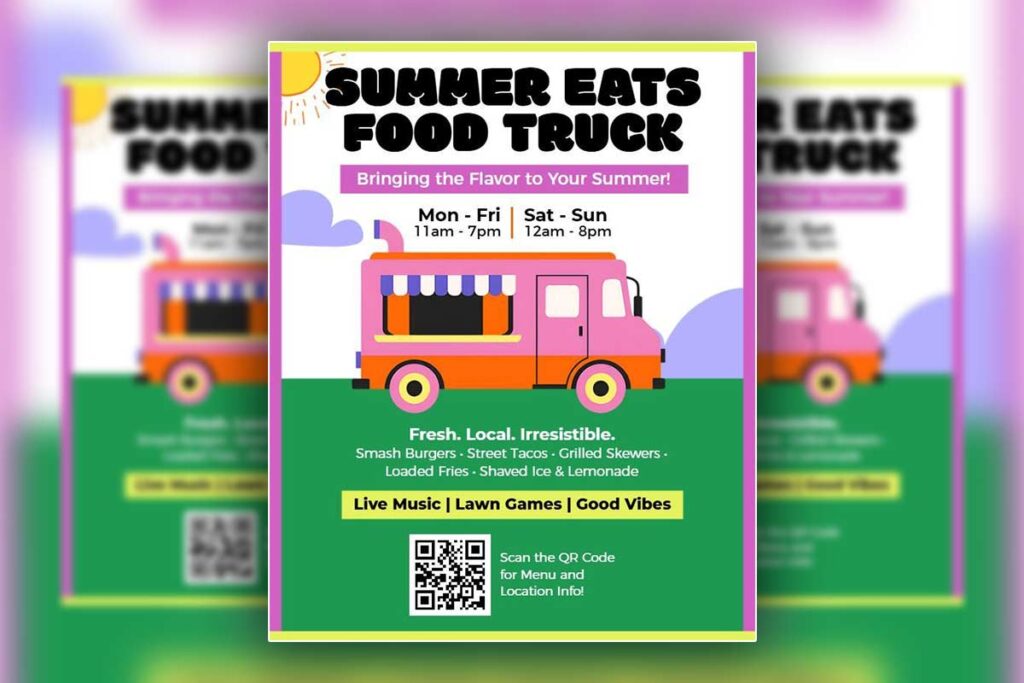
Food truck flyers excel through deadline-driven seasonal positioning that creates immediate action triggers. Phrases such as “Pumpkin spice fusion – October only” or “Summer BBQ specials end Labor Day” establish clear urgency boundaries competitors struggle to match. Food vendor flyer promotion succeeds by highlighting ingredient availability windows—”Fresh corn harvest specials while supplies last” connects seasonal authenticity with scarcity psychology.
Effective seasonal messaging combines ingredient storytelling with time constraints. “Hand-picked apple cider donuts – weekends through Halloween” positions offerings as artisanal and fleeting. This approach transforms seasonal ingredients from mere menu changes into exclusive experiences customers fear missing, driving immediate visits over delayed decisions.
Weather-Responsive Menu Positioning and Comfort Food Appeals
Weather-driven menu positioning allows food truck flyers to capture comfort food demand competitors overlook. Cold weather messaging emphasizes warming elements: “Hot loaded nachos perfect for chilly nights” or “Steam-fresh soup combos – winter warmth guaranteed.” Food service flyer templates should showcase temperature-appropriate offerings prominently.
Summer positioning flips to refreshing appeals: “Ice-cold smoothie bowls beat the heat” or “Grilled fresh – no hot kitchen needed.” Food business promotional flyer ideas work by connecting menu items directly to weather conditions customers experience. This creates immediate relevance traditional restaurants cannot achieve through static indoor positioning.
- Soul Food Truck Event Flyer Template
- Annual Food Truck Festival Event Flyer Template
- Playful Vintage Food Truck Festival Event Flyer Template
Festival Circuit Integration and Event-Specific Promotions
Integrating food truck marketing with festival circuits enhances flyer effectiveness by linking seasonal offerings to high-traffic community events. Event-specific messaging generates urgency and positions offerings as unique experiences, not generic options.
- Event-Specific Offerings – Highlight festival-exclusive items, e.g., “County Fair Special – deep-fried seasonal treats” or “Harvest Festival Bundle – try three autumn favorites.” This creates immediate relevance and encourages on-site purchases.
- Customer Engagement Through Promotions – Use loyalty programs such as “Jazz Festival loyalty card – collect stamps all weekend” to incentivize multiple visits. Event-focused promotions strengthen recurring relationships and maximize festival foot traffic.
- Strategic Partnerships and Credibility – Collaborate with event organizers through co-branded flyers, positioning food trucks as official participants. Third-party validation supports premium pricing and builds customer trust.
Connecting seasonal timing, scarcity messaging, and festival-specific promotions ensures food truck flyers capture attention, drive sales, and create memorable customer experiences in highly competitive event environments.
What Targeting Approaches Help Food Truck Flyers Reach Underserved Market Segments?
Food truck flyers reach underserved market segments through demographic-specific design elements, multilingual content, and strategic distribution in overlooked locations. Effective food service flyer templates incorporate culturally relevant imagery, appropriate color psychology, and accessibility features such as larger fonts or QR codes for menu translations.
Food vendor flyer promotion succeeds by identifying gaps in competitor coverage such as office complexes during lunch hours, senior communities, or late-night worker shifts. Food delivery flyer advertising should target apartment complexes, student housing, and suburban areas where traditional restaurants have limited reach, using localized messaging and community-specific offers.
Demographic-Specific Design Elements and Cultural Relevance
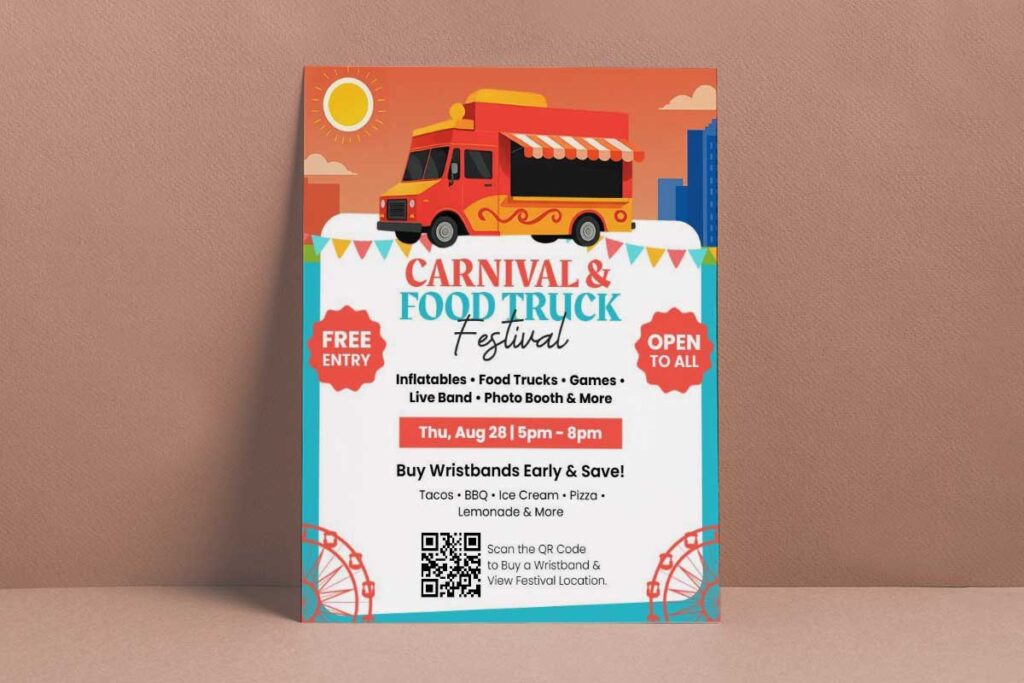
Targeted flyer design increases engagement when cultural preferences, visual cues, and economic expectations align with the audience. Authentic representation and thoughtful layout choices help food trucks connect with diverse communities effectively.
- Cultural Color and Symbol Usage – Apply colors and motifs that resonate with specific communities, such as warm reds and golds for Asian neighborhoods, vibrant blues and greens for Hispanic audiences, or natural earth tones for health-focused segments. Subtle inclusion of local landmarks or cultural symbols reinforces relevance.
- Typography and Readability – Choose bold, legible fonts for older demographics to improve clarity, while modern sans-serif fonts appeal to younger, urban professionals. Font hierarchy should guide attention to key menu items, pricing, and calls-to-action.
- Community Representation and Pricing Strategy – Include images of people from the target demographic enjoying the food, creating authentic connection. Highlight pricing options that match local economic expectations, such as value meals in budget-conscious areas or premium ingredients for affluent neighborhoods seeking quality experiences.
Demographic-specific flyer design strengthens cultural relevance, enhances brand connection, and improves both engagement and sales conversion for food trucks.
Geographic Gap Analysis and Untapped Location Strategies
Successful food truck flyer design targets geographic areas competitors systematically ignore. Industrial districts during shift changes, medical complexes during lunch rushes, and suburban office parks represent high-opportunity zones traditional restaurants can’t serve effectively. Food business promotional flyer ideas work best when distributed during competitor downtime—early morning coffee service near transit stations or late-night dining near entertainment districts.
Distribution strategies should focus on apartment complexes, student housing, and senior living facilities where residents have limited transportation options.
Food service flyer templates perform better with hyperlocal elements—mentioning specific street intersections, nearby businesses, or local events. This geographic specificity builds trust and demonstrates community commitment. Target areas within 2-3 miles of regular parking spots where walking distance makes food truck visits convenient for residents without vehicles.
Accessibility Features and Multilingual Content Integration
Designing food truck flyers with accessibility and multilingual content ensures outreach to diverse and underserved communities, improving customer engagement and inclusivity. Clear visual hierarchy, culturally relevant language, and practical accessibility information make promotional materials usable and welcoming for all potential patrons.
- Visual Accessibility – Use high-contrast color schemes, minimum 14-point fonts for key details, and clear typography hierarchy. Include QR codes linking to audio menus or expanded digital content to assist users with vision impairments.
- Multilingual Communication – Prioritize languages common in target neighborhoods, such as Spanish, Vietnamese, Arabic, or Chinese. Ensure translations are accurate and culturally sensitive by having native speakers review content. Include universal symbols for dietary restrictions (gluten-free, halal, vegan) to make menus intuitive across languages.
- Practical Accessibility Information – Clearly indicate wheelchair-accessible service windows, available payment options (cash, EBT, mobile), and other accommodations. Highlight community partnerships with local nonprofits, schools, or cultural organizations to build trust and encourage word-of-mouth recommendations.
Accessibility and multilingual integration broaden food truck marketing reach, foster inclusivity, and strengthen community trust, ultimately enhancing foot traffic and customer loyalty.
People Also Ask:
- What makes food truck flyers more effective than social media advertising?
Food truck flyers provide tangible reminders customers can keep, work without internet connectivity, and often have higher retention rates. They’re perfect for targeting specific geographical areas where your competitors operate. - How much do professional food truck flyers cost to design and print?
Professional design ranges $200-500, with printing costs of $0.10-0.30 per flyer depending on quantity and paper quality. Bulk orders of 1,000+ significantly reduce per-unit costs while maintaining professional appearance. - What information must be included on food truck flyers for legal compliance?
Include business name, contact information, operating permits if required locally, and accurate pricing. Some jurisdictions require health department ratings or licensing information to be displayed on all promotional materials. - Where can food truck owners distribute flyers for maximum customer reach?
Target high-traffic areas such as office complexes, college campuses, community centers, and local events. Partner with complementary businesses for cross-promotion and focus on areas where competitors have less presence. - How do food truck flyers compare to traditional restaurant marketing methods?
Food truck flyers offer more flexibility and lower costs than restaurant advertising, can target mobile audiences effectively, and work well for event-based marketing where traditional restaurants can’t compete. - What design templates work best for food truck flyer conversion rates?
Clean layouts with prominent food images, clear contact information, and strong calls-to-action perform best. Use appetite-stimulating colors and ensure key information remains visible even in outdoor lighting conditions.
Frequently Asked Questions:
- How much should I budget for professional food truck flyers versus DIY options?
Professional food truck flyers typically cost $200-500 for design plus $0.10-0.30 per print, while DIY options using Canva or similar tools cost $15-30 monthly. Professional designs often generate 40% higher response rates, making the ROI favorable for competitive markets where differentiation matters most. - What paper quality and size work best for food truck flyers in outdoor environments?
Use 14pt cardstock or heavier for durability in outdoor conditions. Standard 8.5×11 inches provides maximum information space, while 5.5×8.5 inches offers portability. Glossy finish resists moisture and fingerprints, crucial for food truck flyers that get handled frequently at festivals and markets. - Should food truck flyers include QR codes to bridge offline and online marketing?
Yes, QR codes increase engagement by 35% when linking to exclusive mobile offers or real-time location updates. Place them prominently with clear instructions like ‘Scan for Todays Specials. This helps food truck flyers compete with tech-savvy competitors while capturing customer data for retention. - How can I track the effectiveness of my food truck flyers against competitors?
Use unique promo codes, dedicated phone numbers, or QR codes linking to trackable landing pages. Monitor redemption rates, foot traffic increases, and average order values. Successful food truck flyers typically generate 3-8% response rates, with premium positioning often achieving higher conversion values. - What legal considerations apply to food truck flyer distribution in different locations?
Check local permits for flyer distribution, especially near competitors locations. Many cities require permits for door-to-door distribution or posting on public property. Always include required business licensing information and accurate contact details to maintain professional credibility in competitive markets. - How often should I update my food truck flyers to stay competitive?
Update food truck flyers every 3-6 months or when launching new menu items, seasonal offerings, or promotional campaigns. Frequent updates prevent competitors from copying your strategies while keeping your brand fresh in customers’ minds during peak competition periods. - What color psychology works best for food truck flyers to stimulate appetite?
Red and orange stimulate appetite and urgency, while green suggests freshness and healthy options. Yellow conveys warmth and happiness, perfect for comfort foods. Avoid blue, which suppresses appetite. Use high contrast between text and background for readability in various lighting conditions at outdoor events. - How can food truck flyers effectively target corporate catering clients?
Focus on professional design with business-appropriate colors, emphasize convenience and reliability, include testimonials from other corporate clients, and highlight catering packages with clear pricing. Distribute directly to office buildings, business parks, and corporate event planners rather than general consumer locations.
Conclusion:
Effective food truck flyers turn market challenges into opportunities by emphasizing strategic differentiation and authentic brand storytelling. By showcasing signature menus, highlighting artisanal ingredients, and integrating high-quality photography with compelling typography, these flyers convey value beyond price, allowing vendors to avoid destructive price wars. Incorporating psychological triggers such as scarcity messaging, social proof, and sensory appeals ensures that potential customers are converted into loyal patrons while reinforcing premium positioning. Thoughtful calls-to-action and clear visual hierarchy further drive immediate engagement, establishing a strong foothold in competitive local markets.
Moreover, targeted distribution strategies, location-specific messaging, and event-based promotions optimize ROI and amplify competitive advantages. Flyers that emphasize cultural heritage, proprietary recipes, and exclusive local partnerships create irreplaceable value propositions, while multilingual and accessibility-focused designs broaden reach. Seasonal and festival-specific promotions maintain sustained engagement, ensuring that food trucks thrive even in oversaturated markets by converting standard promotions into distinctive, profitable customer acquisition opportunities.
Reference:
- How to sell through wholesale & direct marketing channels. Retrived from Cornell University.
- Creating brochures. Retrived from University of Kansas, Community Toolbox.
- Marketing and sales. Retrived from U.S. Small Business Administration.
- Guides concerning the use of endorsements and testimonials in advertising. Retrived from Federal Trade Commission.