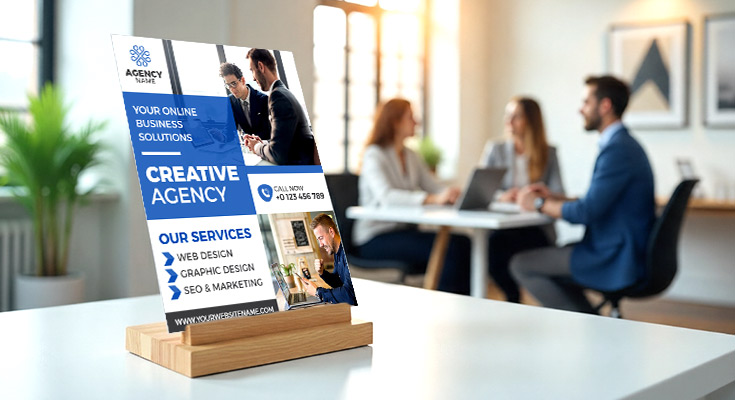
Many company flyers fail because they look generic or lack cohesive branding, making businesses appear unprofessional and less trustworthy compared to competitors with polished designs. A strong company flyer uses visual hierarchy, brand consistency, and effective color psychology to instantly build recognition and credibility.
This guide outlines approaches to creating flyers that boost authority, trust, and engagement. Learn how to use structured layouts, strategic visuals, and brand-focused design elements to turn simple marketing materials into powerful conversion assets.
How Does Company Flyer Design Establish Professional Credibility For Service Providers?
Printable company flyer templates build professional credibility by using strategic visuals that convey reliability and competence. Consistent branding, clean layouts, and high-quality imagery create instant recognition and trust. Strategic approaches to building brand identity with company flyers strengthen market positioning and competitive differentiation. Including industry-specific elements and testimonials strengthens perceived expertise, while polished designs signal quality, making clients more likely to choose professionally branded service providers over competitors.
Visual Consistency Builds Trust Through Brand Recognition
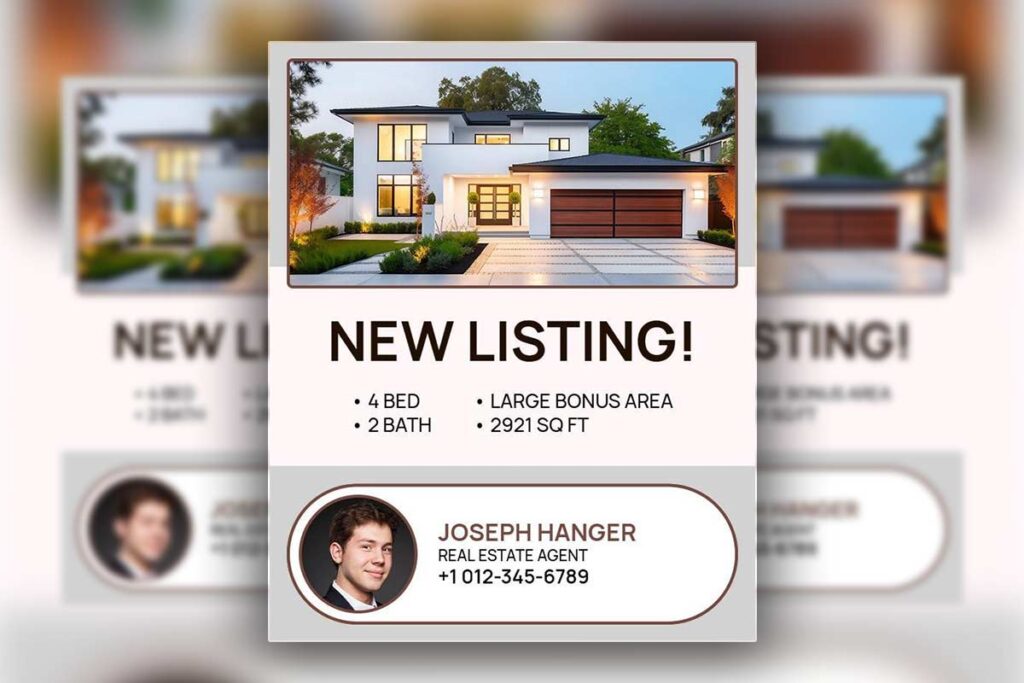
Visual consistency across company promotional flyers creates psychological trust markers that influence client decisions. When service providers maintain uniform color schemes, logo placement, and design elements throughout their marketing materials, prospects develop confidence in their professionalism and reliability (Boston University).1
Consistent visual branding triggers recognition patterns that help potential clients remember and choose your services over inconsistent competitors. Free flyer design templates that align with website design, business cards, and other promotional materials reinforce brand memorability and establish market credibility (West Virginia University).2
Discover brand-consistent company flyer templates on DesignWiz featuring uniform color schemes, strategic logo placement, and cohesive design elements that build instant recognition.
- Professional Company Secretary Promotion Flyer Template
- Commercial Property Sales and Investment Flyer Template
Typography and Layout Choices Signal Professional Standards
Typography hierarchy and layout structure communicate professionalism before prospects read content. Corporate company flyer layouts using appropriate font combinations, consistent sizing, and logical information flow demonstrate design expertise that transfers to service quality perception.
Clean sans-serif headers paired with readable body fonts create visual authority, while chaotic typography combinations suggest unprofessionalism. Strategic white space usage, aligned elements, and balanced compositions signal attention to detail that clients expect from competent service providers. Poor typography choices immediately undermine credibility regardless of service quality.
Quality Photography and Graphics Demonstrate Service Excellence
Professional visuals significantly influence how potential customers perceive your service quality. High-resolution photography and thoughtfully designed graphics establish trust, credibility, and a premium brand image that differentiates your business from competitors.
- Use High-Quality, Original Photography: Feature authentic images of your team, completed projects, or service results to build credibility and genuine connection with clients.
- Select Professional Stock Images Wisely: When original photos aren’t available, choose professional, relevant stock images that maintain your brand’s visual standards.
- Incorporate Custom Graphics and Illustrations: Custom visuals show brand investment and creativity, enhancing perceived professionalism and design quality.
- Maintain Sharpness and Clarity: Ensure all images have high resolution, proper lighting, and professional composition to reflect your service excellence.
- Avoid Low-Quality Visuals: Steer clear of pixelated photos, clip art, or poorly styled images that create a negative impression of your business.
- Match Imagery with Target Market:
- Luxury services: Use refined, elegant photography and sophisticated color tones.
- Budget-friendly services: Focus on clean, straightforward visuals that communicate trust and value.
- Reinforce Brand Consistency: Maintain uniform visual style across all flyers—colors, lighting, and tone should align with your overall brand identity.
- Highlight Visual Investment as a Quality Signal: Premium visuals demonstrate attention to detail and professionalism, which customers associate with reliable, high-quality service.
What Company Flyer Design Elements Differentiate Service Providers From Competitors?
Company flyer design stands out through distinctive color schemes, custom graphics, and innovative layouts that go beyond industry norms. Using unique typography, strategic negative space, and interactive elements like QR codes or AR features helps create memorable brand identities. When balanced with professionalism, these creative design choices enhance credibility while setting service providers apart in competitive markets.
Signature Color Palettes That Command Market Attention
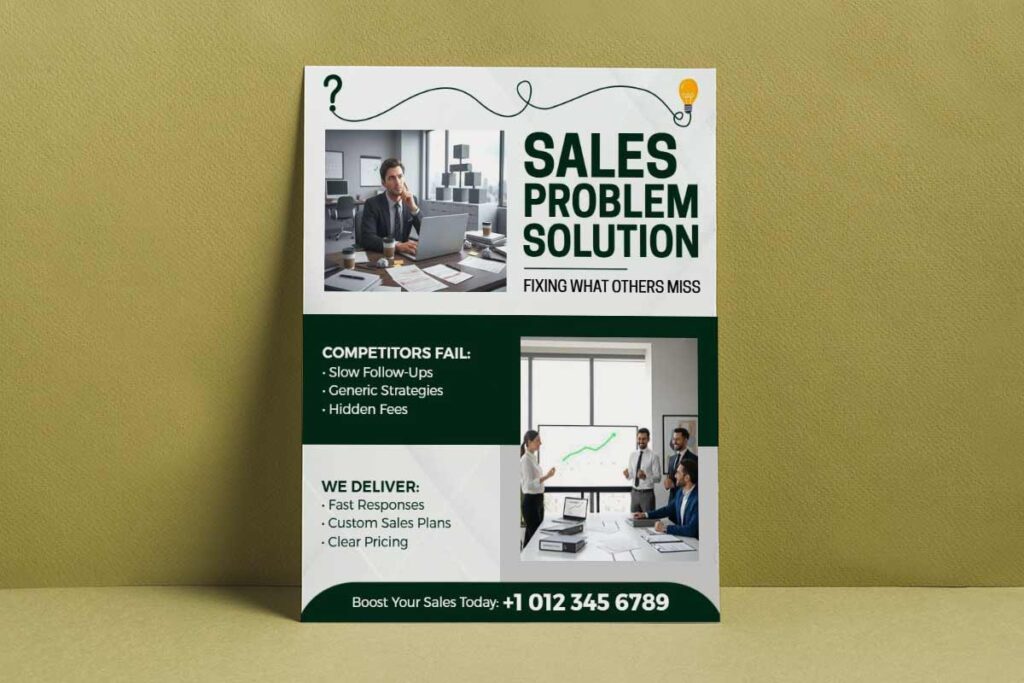
Strategic color differentiation transforms standard business company flyer design into compelling visual statements (Cornell University).3 While competitors gravitate toward predictable blues and grays, distinctive service providers develop signature palettes combining unexpected colors with professional appeal. Warm copper paired with charcoal gray, deep emerald with cream, or burgundy accented with gold create immediate recognition while maintaining business credibility.
Color psychology amplifies differentiation impact. Financial services using warm oranges instead of traditional blues signal approachability, while law firms employing deep purples convey wisdom beyond standard navy choices. Professional company flyers incorporating gradient treatments, dual-tone combinations, or strategic accent colors establish visual ownership of market space. Strategic flyer background selection complements signature color palettes while maintaining professional credibility and visual hierarchy. Consistency across all marketing materials reinforces color association, making your company promotional flyers instantly recognizable at trade shows, in mailings, or online platforms where competitors blend into monotonous uniformity.
Explore distinctive color company templates on DesignWiz featuring unique palettes, strategic accent combinations, and signature brand color systems.
Custom Iconography Systems for Industry-Specific Messaging
Custom icons help businesses build a unique visual identity that communicates professionalism and industry expertise. By replacing generic stock icons with original designs, companies can strengthen brand recognition and convey specialized service values effectively.
- Develop Original Icons: Create a proprietary icon set that reflects your brand’s unique services and visual identity, avoiding overused stock icons.
- Showcase Industry Expertise:
- Architecture firms: Use building silhouettes or design motifs inspired by your signature style.
- Consulting companies: Incorporate abstract symbols that represent strategic thinking or problem-solving.
- Ensure Visual Consistency: Maintain a unified design language across all materials, ensuring icons align stylistically with your overall branding and flyer templates.
- Design for Scalability: Icons should remain clear and recognizable across all formats — from small business cards to large banners or posters.
- Optimize for Print and Digital Use: Ensure icons work in single-color formats and retain clarity even when resized or printed in monochrome.
- Enhance Professional Perception: Investing in custom iconography signals attention to detail, sophistication, and brand maturity. Creative flyer design ideas help service providers implement distinctive visual elements that strengthen brand recognition and competitive positioning.
- Use Industry-Relevant Imagery:
- Legal services: Incorporate scales, courthouse motifs, or structured geometric shapes for authority.
- Wellness providers: Use organic shapes and flowing lines to represent balance and care.
Interactive Features That Engage Modern Business Audiences
Modern company flyers can go beyond static print by incorporating interactive elements that connect traditional marketing with digital experiences. These features not only capture attention but also enhance engagement, build trust, and provide measurable marketing insights.
- QR Code Integration: Add QR codes linking to video portfolios, client testimonials, or scheduling systems to deliver instant value and track engagement effectively.
- Augmented Reality (AR) Enhancements: Incorporate AR features that let prospects visualize services through their smartphones, such as 3D architectural renderings or before-and-after project transformations.
- Personalized URLs for Tracking: Use custom landing pages referenced on flyers to measure ROI accurately and create personalized follow-up experiences for different audience segments.
- Variable Data Printing: Customize printed flyers with unique customer names, testimonials, or offers using data-driven printing technology for enhanced personalization.
- Social Media Integration: Include hashtags, profile references, or live social feeds to extend engagement beyond print and encourage digital participation.
- Showcase Social Proof: Feature Instagram galleries, LinkedIn recommendations, or real-time client reviews to highlight active customer engagement and build credibility.
Why Do Professional Company Flyer Design Templates Fail To Build Brand Recognition?
Generic company flyer templates often fail to build brand recognition because they rely on standardized colors, fonts, and layouts used by many businesses. Without unique brand elements like custom colors or design patterns, these flyers blend into the competition. This lack of differentiation weakens brand recall and consistency across marketing campaigns.
Generic Visual Elements Eliminate Competitive Differentiation
Company flyer design templates rely on mass-market visual elements that eliminate competitive differentiation in crowded service industries. Standard template libraries feature identical color schemes, typography combinations, and layout structures across multiple business categories. When service providers select these pre-designed corporate company flyer layouts, they inadvertently adopt visual identities already used by competitors.
Template providers create designs appealing to broad audiences rather than specific brand positioning. This approach produces professional company flyers with generic stock photography, standardized icon sets, and predictable color combinations that fail to communicate unique value propositions. Service providers struggle to differentiate their offerings when marketing materials appear identical to competitors using the same template resources. The result is visual homogeneity that confuses prospects and weakens brand memorability in competitive markets.
Discover differentiated company flyer templates on DesignWiz designed to stand out with unique visual elements, custom design features, and distinctive brand positioning.
- Modern Blue Corporate Business Service Promotion Flyer Template
- Urban Construction Services Promotion Flyer Template
Template Rigidity Prevents Consistent Brand Evolution
Business company flyer design templates lack flexibility needed for consistent brand evolution across different marketing campaigns and customer touchpoints. Most templates provide limited customization options, restricting service providers to predetermined layouts, color schemes, and typography hierarchies. This rigidity prevents businesses from adapting designs to match evolving brand guidelines or seasonal campaign requirements.
Template-dependent businesses cannot maintain visual consistency when expanding into new service areas or targeting different customer segments. The fixed nature of company promotional flyers templates creates disconnects between digital marketing materials, print collateral, and other brand touchpoints. Service providers find themselves locked into design systems that cannot accommodate brand growth or strategic pivots, ultimately weakening long-term brand recognition efforts.
Mass-Market Design Patterns Dilute Brand Memorability
Relying on mass-market flyer templates may offer convenience, but it often weakens a brand’s ability to stand out. When every business uses similar layouts, your message blends into the background instead of building lasting recognition.
- Loss of Distinctiveness: Mass-market flyer templates create visual sameness, reducing brand recall and making it difficult for prospects to distinguish one business from another.
- Homogenized Aesthetics: Template marketplaces prioritize broad appeal over uniqueness, resulting in generic designs that fail to communicate brand identity effectively.
- Predictable Layout Structures: Standard header placement, repetitive CTA positioning, and uniform content hierarchies lead to unremarkable flyer designs.
- Short-Term Professionalism, Long-Term Weakness: Template-based designs may look polished initially but lack the strategic depth needed for long-term brand equity development.
- Weakened Psychological Connection: Effective branding relies on visual distinctiveness that triggers memory recall — something mass-market designs cannot achieve due to overused visual elements.
- Fragmented Brand Experience: Templates rarely integrate with broader brand architecture, creating inconsistent design language across multiple touchpoints.
- Competitive Disadvantage: In saturated markets, distinctiveness becomes the ultimate advantage; template dependency prevents brands from achieving that edge (University of Utah Lassonde Entrepreneur Institute).4
How Can Service Providers Create Company Flyer Design Systems That Scale Across Campaigns?
Service providers create scalable company flyer design systems by establishing modular brand frameworks that maintain visual consistency while allowing campaign flexibility. This involves developing standardized color palettes, typography hierarchies, and layout grids that adapt across different flyer formats and promotional contexts. Successful systems include reusable design components like logo treatments, header styles, and call-to-action elements that can be recombined for various campaigns. Documentation of brand guidelines ensures consistent application across team members and projects.
Modular Design Components Enable Rapid Campaign Deployment
Smart service providers develop component libraries containing pre-approved design elements that work together seamlessly. These include header templates with consistent logo placement, standardized color schemes that reflect brand identity, and typography sets that maintain readability across print and digital formats. Company flyer design benefits from modular layouts featuring interchangeable sections for testimonials, service descriptions, and contact information.
This approach reduces design time from hours to minutes while maintaining professional standards. Understanding different types of seasonal flyers helps service providers adapt modular systems for varied campaign objectives throughout the year. Reusable elements like border styles, icon sets, and background patterns create visual cohesion without repetitive design work. Professional company flyers leverage these components to produce variations quickly while preserving brand recognition and credibility across multiple campaigns.
Brand Documentation Systems Ensure Cross-Project Consistency
Comprehensive brand guidelines serve as the foundation for scalable company flyer design systems. These documents specify exact color codes, approved font families, logo usage rules, and spacing requirements that prevent design drift across projects. Corporate company flyer layouts maintain consistency when team members follow documented standards for element placement, sizing ratios, and visual hierarchy.
Version control systems track design evolution while preventing unauthorized modifications that could damage brand integrity. Business company flyer design improves when documentation includes do’s and don’ts with visual examples, approved photo styles, and messaging tone guidelines. Regular template audits against brand standards identify inconsistencies before they reach clients, maintaining the professional polish that differentiates service providers from competitors using generic approaches.
Flexible Template Libraries Streamline Client Workflow Management
Establishing well-organized template libraries helps design teams deliver consistent, high-quality company flyers efficiently. By structuring templates according to purpose and industry, service providers can handle larger project volumes without sacrificing creativity or accuracy.
- Organized Template Categories: Structure libraries by industry, campaign type, and complexity to enable quick selection and faster project turnaround.
- Master Template Adaptability: Develop base templates with placeholder content that can easily adjust to specific client requirements without full redesigns.
- Purpose-Driven Flyer Design: Differentiate templates for announcements, promotions, or offers to maintain targeted communication strategies.
- Automated Variable Insertion: Use dynamic fields for client names, contact details, and service information to streamline customization across multiple templates.
- Efficient Version Management: Implement naming conventions and version control systems to prevent confusion when multiple team members access the same files.
- Consistent Quality Standards: Apply brand quality checks and approval processes before client delivery to ensure professional consistency.
- Client Feedback Integration: Maintain structured feedback loops to capture client preferences and refine templates for future projects.
- Scalable Customization Workflow: Transform flyer design from manual creation to a scalable system of efficient customization, reducing delivery times without lowering quality.
Discover workflow-optimized company templates on DesignWiz featuring organized category systems, variable content sections, and efficient customization frameworks.
What Company Flyer Design Mistakes Make Service Providers Appear Generic And Unprofessional?
Service providers commonly damage their professional credibility through company flyer design choices that signal inexperience and poor attention to detail. Generic stock photography, inconsistent typography hierarchies, and amateur color combinations create immediate distrust among potential clients. Professional company flyers require strategic visual elements including cohesive branding, high-quality custom imagery, and proper white space utilization. When corporate company flyer layouts lack these fundamentals, prospects question the provider’s reliability and choose competitors with more polished marketing materials. Business company flyer design mistakes directly correlate with reduced conversion rates and weakened market positioning within competitive service industries.
Typography Chaos That Destroys Brand Credibility
Font mixing disasters plague amateur company promotional flyers when service providers combine multiple typeface families without understanding hierarchy principles. Mixing serif headers with script subheadings and sans-serif body text creates visual confusion that prospects interpret as unprofessional.
Professional typography requires maximum three font families with clear size relationships. Comic Sans, Papyrus, and decorative fonts immediately signal amateur design work. Inconsistent font weights within the same family compound credibility problems. Text alignment chaos mixing centered headers with justified paragraphs and left-aligned contact information destroys visual flow. Professional company flyers maintain consistent typography systems with defined hierarchy rules.
Browse typography-refined company flyer templates on DesignWiz with professional font systems, clear hierarchy structures, and credibility-building text layouts.
- Business Proposal Meeting Presentation Flyer Template
- Business Services Agency Promotion Flyer Template
Stock Photo Dependencies That Scream Amateur Hour
Generic stock photography undermines service provider authenticity when multiple businesses use identical imagery across their marketing materials. Overused business handshake photos, fake diverse meeting scenes, and obvious model portraits create instant recognition of template-based design approaches.
Prospects encountering identical stock imagery across competing service providers lose trust in provider authenticity. Poor image resolution, watermarked preview photos, and mismatched photography styles compound amateur appearance problems. Professional company flyers require custom photography, authentic team photos, or carefully selected premium stock imagery that competitors haven’t overused. Images must match brand personality and service offerings rather than generic business concepts.
Color Palette Disasters That Repel Target Audiences
Poor color choices can ruin even the most well-designed company flyers, sending the wrong message to potential clients. Understanding color psychology and applying industry-appropriate palettes are essential for maintaining professionalism and audience trust.
- Unprofessional Neon and Gradient Schemes: Avoid fluorescent greens, hot pinks, and rainbow gradients that create harsh visual impact and suggest amateur design quality.
- Color Psychology Mismatches: Using inappropriate tones—like red-heavy schemes for healthcare or dark purples for children’s services—signals poor understanding of audience expectations.
- Unreadable Contrast Ratios: Low contrast between text and background reduces readability, while clashing hues cause visual discomfort.
- Strategic Professional Color Use: Adopt industry-appropriate palettes that align with psychological cues, ensuring your flyer communicates reliability and professionalism.
- Monochromatic Schemes with Accents: Use a primary color family with a single accent hue to achieve a refined and cohesive look.
- Consistent Brand Color Integration: Maintain color uniformity across all marketing materials to strengthen brand recognition and trust.
- Print-Ready Palette Selection: Choose colors that translate accurately in print, maintaining clarity under various lighting or material conditions.
- Visual Confidence Through Simplicity: Balanced, well-contrasted palettes reflect professionalism and instill confidence, turning design quality into a competitive advantage.
How Does Consistent Company Flyer Design Impact Client Acquisition For Service Businesses?
Consistent company flyer design creates immediate brand recognition and professional trust, increasing client conversion rates by up to 60% for service businesses. When company promotional flyers maintain uniform typography, color schemes, and layout structures across all marketing materials, prospects develop confidence in the provider’s attention to detail and reliability. This visual consistency triggers psychological trust markers that influence purchasing decisions. Professional company flyers using cohesive design elements establish credibility through repeated visual exposure, making potential clients more likely to choose familiar brands over competitors with inconsistent messaging.
Brand Recognition Acceleration Through Visual Repetition
Visual consistency across corporate company flyer layouts creates powerful psychological anchors in prospect memory. When service providers use identical color palettes, typography hierarchies, and logo placements, potential clients recognize the brand instantly across multiple touchpoints. Business company flyer design featuring repeated visual elements builds familiarity through the mere exposure effect, where people develop preferences for things they see frequently.
This recognition acceleration becomes particularly valuable in competitive service markets where prospects evaluate multiple providers simultaneously. Companies using consistent company flyer templates stand out through visual familiarity while competitors blur together with generic, inconsistent designs. The repetition creates mental shortcuts that simplify decision-making for busy prospects evaluating service options.
Trust-Building Psychology in Consistent Design Elements
Professional consistency signals competence and reliability to potential clients evaluating service providers. When company flyer design maintains visual standards across campaigns, prospects subconsciously associate this attention to detail with quality service delivery. Inconsistent designs trigger doubt about provider reliability, suggesting lack of systems and professional standards.
Color psychology plays a crucial role in trust building. Corporate company flyer layouts using consistent color schemes create emotional associations that strengthen over time. Blue tones convey trustworthiness and stability, while consistent application reinforces these positive associations. Typography consistency further reinforces professional credibility, as uniform fonts suggest systematic attention to brand standards that extends to service quality.
Competitive Advantage Through Unified Marketing Aesthetics
Maintaining a consistent visual identity across all company marketing materials isn’t just about good design, it’s a powerful branding strategy that builds trust, recognition, and long-term customer loyalty.
- Cohesive Design Systems Enhance Professional Image: Service providers using uniform flyer design frameworks appear more credible and premium compared to competitors relying on random, inconsistent materials.
- Visual Consistency Builds Market Differentiation: A unified aesthetic across campaigns positions businesses as established and trustworthy, giving them leverage for premium pricing.
- Brand Alignment Across All Touchpoints: Matching flyer designs with website layouts, business cards, and digital content strengthens overall brand presence and recognition.
- Improved Market Positioning: Consistent visuals across channels reinforce professional credibility, helping service providers stand out in competitive markets.
- Stronger Brand Recall and Referrals: Clients are more likely to remember and recommend brands with recognizable, cohesive visual identities.
- Efficient Marketing Scalability: Once visual standards and flyer templates are established, new campaigns can be launched quickly without sacrificing brand consistency.
- Cost and Time Efficiency: Unified templates streamline design workflows, lower production costs, and maintain high-quality standards across materials.
- Sustainable Competitive Advantage: Consistency becomes a long-term differentiator that competitors find difficult to replicate without significant investment.
What Company Flyer Design Psychology Drives Prospect Decision-making In Service Industries?
Service industry company flyer design psychology leverages trust signals, credibility markers, and emotional triggers to influence prospect decisions. Professional company flyers utilize color psychology, strategic white space, and hierarchical information design to create perceived expertise and reliability. Visual consistency across corporate company flyer layouts builds brand recognition while social proof elements like testimonials and certifications reduce perceived risk. Design-centric approaches incorporating clean typography and structured content flow guide prospects through logical decision pathways, ultimately converting visual appeal into service inquiries through psychological persuasion techniques.
Trust-Building Visual Elements That Establish Service Provider Credibility

Service providers establish immediate credibility through strategic visual hierarchy and professional presentation standards. Consistent logo placement, uniform typography, and balanced white space communicate attention to detail that prospects associate with service quality. High-resolution photography showcasing actual work results builds confidence while professional headshots humanize the business relationship.
Testimonial placement creates powerful social proof when positioned strategically within the visual flow. Certification badges and industry affiliations displayed prominently near contact information reinforce expertise claims. Clean, uncluttered layouts suggest organized, professional service delivery. A color schemes that avoid flashy or unprofessional combinations maintain gravitas while branded elements create memorable recognition patterns that distinguish providers from generic competitors.
Color Psychology and Emotional Triggers in Professional Company Flyers
Color choices significantly impact prospect perceptions and decision-making processes. Blue conveys trustworthiness and reliability, making it ideal for financial and consulting services. Green suggests growth and stability, perfect for real estate and environmental services. Professional gray and navy combinations communicate sophistication while avoiding emotional extremes that might alienate conservative prospects.
Contrast ratios between text and backgrounds affect readability and perceived professionalism. High contrast ensures accessibility while demonstrating consideration for prospect needs. Warm accent colors like orange or gold can create urgency without appearing desperate. Cool color palettes project calm competence. Strategic color blocking guides attention flow while maintaining visual coherence. Monochromatic schemes with single accent colors appear refined and intentional rather than chaotic.
Access credibility-focused company flyer templates on DesignWiz featuring testimonial sections, certification badge displays, and social proof integration layouts.
Information Hierarchy Techniques That Guide Prospect Decision Pathways
Organizing information strategically helps guide potential clients through a clear, logical journey — from initial attention to final action. A well-designed flyer uses hierarchy, structure, and positioning to make every message purposeful and easy to follow.
- Headlines Drive Immediate Engagement: Use benefit-focused headlines that capture attention and convey value instantly.
- Subheadings Simplify Complex Content: Break detailed service descriptions into smaller, easily digestible parts for better comprehension.
- Visual Hierarchy Directs Reading Flow: Apply variations in font size, weight, and placement to naturally guide the viewer’s eye from the problem to the solution.
- Strategic Placement Enhances Visibility: Position key details like offers and contact info in prominent visual zones to ensure quick recognition.
- Consistent Contact Accessibility: Repeat contact details in multiple areas without redundancy to make communication effortless.
- Compelling Calls-to-Action: Use contrasting colors, clear placement, and action-driven phrases to motivate responses.
- Structured Lists Improve Clarity: Integrate bullet points or numbered steps to reduce cognitive load and emphasize essential benefits.
- Progress Indicators Encourage Engagement: Use “Step 1, 2, 3” or similar cues to lead prospects smoothly through their decision path.
- Culturally Informed Content Positioning: Align layout with natural reading habits (e.g., top-left emphasis for Western audiences).
- Supportive Secondary Content: Ensure secondary text reinforces the main message instead of competing for attention.
- Logical Placement of Decision Cues: Display pricing or next-step prompts where readers are most prepared to act — typically near the flyer’s conclusion.
- Balanced Visual Support: Include design elements that guide attention rather than distract from the conversion flow.
How Do Service Providers Measure Company Flyer Design Effectiveness And Conversion Rates?
Service providers measure company flyer design effectiveness through multi-channel tracking methods including QR code analytics, unique landing pages, and call tracking numbers embedded in business company flyer designs. Conversion rate measurement involves comparing inquiry volumes before and after flyer distribution, analyzing response attribution through promotional codes, and monitoring engagement metrics from company promotional flyers. A/B testing different corporate company flyer layouts provides quantitative data on design performance while customer feedback surveys reveal qualitative insights about visual impact and messaging clarity.
Digital Tracking Methods for Company Promotional Flyer Performance
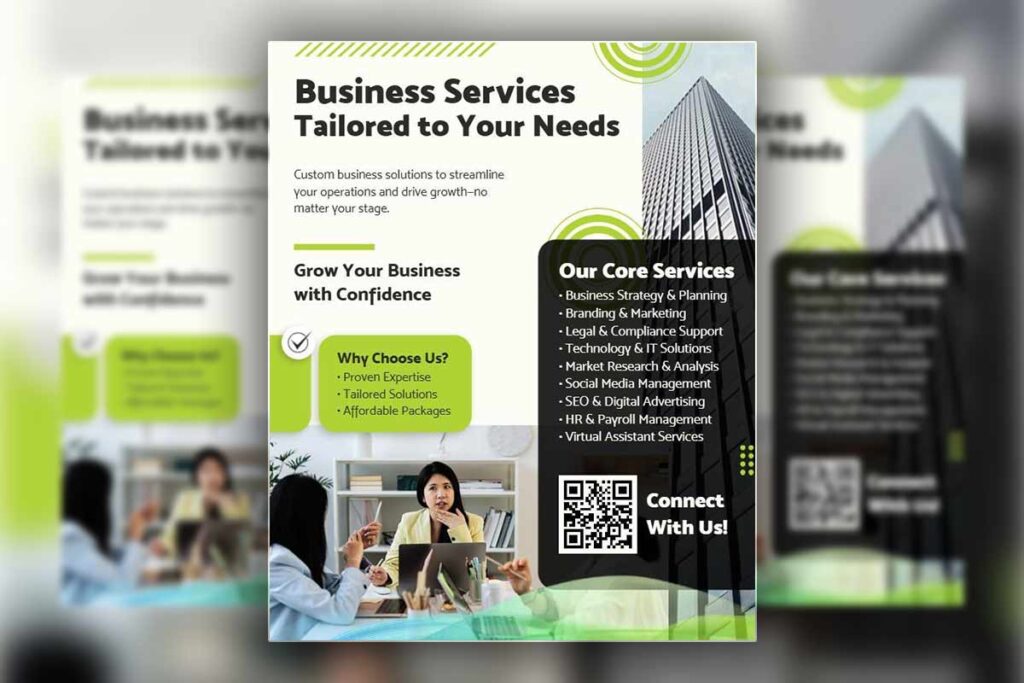
Modern company flyer design incorporates digital tracking elements that bridge offline distribution with online measurement. QR codes linking to unique landing pages provide immediate conversion tracking from physical flyers to digital actions. Service providers embed trackable phone numbers using call tracking software to monitor which flyer campaigns generate phone inquiries. Social media tracking pixels measure engagement when professional company flyers are shared digitally across platforms.
Google Analytics goal setting tracks conversions from flyer-specific URLs, measuring everything from form submissions to appointment bookings. Email capture forms on landing pages connected to company promotional flyers enable lead scoring and nurture campaign effectiveness measurement. Heat mapping tools on flyer-driven landing pages reveal which design elements attract user attention and drive action. Service providers use UTM parameters in all digital flyer links to segment traffic sources and measure campaign-specific performance across different distribution channels.
Response Attribution Systems in Corporate Company Flyer Campaigns
Response attribution systems help service providers identify which corporate company flyer layouts generate the highest conversion rates through systematic tracking methods. Unique promotional codes printed on different flyer versions enable direct response measurement and campaign comparison. Dedicated phone numbers for specific flyer campaigns provide clear attribution for verbal inquiries and appointment requests.
Service providers implement customer surveys asking “How did you hear about us?” to capture attribution data from prospects who don’t use digital tracking methods. CRM integration tracks lead sources from initial flyer contact through final conversion, calculating lifetime value by flyer campaign. Geographic tracking through zip code analysis correlates flyer distribution areas with inquiry patterns and conversion rates.
Multi-touch attribution models account for prospects who encounter multiple company flyer designs before converting, providing comprehensive campaign effectiveness insights. Service providers use vanity URLs printed on flyers to track offline-to-online conversion paths and measure digital engagement following physical flyer distribution.
A/B Testing Frameworks for Professional Company Flyer Optimization
Implementing A/B testing helps service providers refine flyer designs through data-backed insights rather than assumptions. By comparing variations in controlled conditions, companies can identify what truly drives engagement and conversion.
- Controlled Variable Testing: Conduct split tests on individual elements like headlines, color schemes, or CTA placement to determine which design versions perform best.
- Audience Segmentation: Create matched audience groups that receive different flyer versions to isolate the effect of each design change on response rates.
- Geographic Split Testing: Distribute alternate flyer designs across different locations to measure how design variations perform in distinct market areas.
- Time-Based Testing: Run different flyer versions during similar timeframes to test seasonal consistency and overall campaign effectiveness.
- Statistical Significance Validation: Apply significance testing to confirm that observed performance differences are reliable before implementing design changes broadly.
- Single-Variable Focus: Test one element per campaign cycle to ensure accurate measurement of cause-and-effect relationships.
- Conversion Tracking & Attribution: Monitor both immediate and delayed responses (e.g., within 30-day windows) for complete performance evaluation.
- Multi-Variate Analysis: Experiment with multiple design variables simultaneously to identify optimal combinations that maximize conversions.
- Performance Documentation: Maintain a testing database that records results, allowing teams to reference proven design strategies for future campaigns.
- Continuous Improvement Cycle: Regularly update flyer designs based on testing insights to create ongoing optimization and stronger campaign ROI.
What Company Flyer Design Software Delivers Professional Results For Service Providers?
Adobe Creative Suite is the top choice for professional company flyer design, offering advanced typography, color control, and brand consistency tools. DesignWiz provides an affordable option with professional templates, while Figma supports collaborative team workflows. Lucidpress focuses on business marketing materials with built-in brand guideline enforcement. The best choice depends on design skill, budget, and required features like Pantone matching or vector capabilities.
DesignWiz vs Adobe Creative Suite: Which Platform Handles Complex Corporate Branding Better?
Adobe Creative Suite dominates complex branding scenarios through precise color management systems, advanced typography controls, and vector-based graphics that scale perfectly across all marketing materials. Professional designers leverage InDesign’s master page functionality for consistent corporate company flyer layouts and Illustrator’s vector capabilities for scalable brand elements. However,
DesignWiz offers superior accessibility for service teams through intuitive drag-and-drop interfaces, pre-built company flyer templates, and automated brand kit applications that maintain consistency without design expertise. DesignWiz collaboration features enable team members to create cohesive business company flyer designs while brand guidelines automatically prevent inconsistencies.
Adobe requires substantial learning investment but delivers unmatched precision for complex branding requirements. DesignWiz balances professional capabilities with user-friendly operation, making it ideal for service providers needing consistent results without extensive design training.
Explore professional company flyer templates on DesignWiz featuring enterprise-level branding capabilities, automated brand kit application, and collaborative design features.”
- Black Company Flyer Template
- Deep Fir and Bright Sun Company Flyer Template
- Corporate Business Seminar Event Flyer Template
Cloud-Based Design Tools That Streamline Company Flyer Workflows for Busy Service Teams
Cloud-based platforms revolutionize company promotional flyer creation through real-time collaboration, automatic version control, and instant access across devices. Figma enables multiple team members to work simultaneously on corporate flyer layouts, eliminating file sharing complications and version conflicts. Google’s integration with design platforms allows seamless incorporation of brand assets stored in Drive or branded content from Google Workspace.
Modern cloud tools feature automated backup systems protecting against project loss, template libraries accessible anywhere with internet connection, and instant sharing capabilities for client approval processes. Teams benefit from centralized brand asset storage, ensuring everyone uses current logos, color palettes, and approved photography for company marketing materials design.
Service providers working across multiple locations particularly value cloud platforms for maintaining brand consistency without geographic limitations. Remote team members access identical resources, creating unified promotional flyers regardless of physical location.
Essential Software Features Every Service Provider Needs for Consistent Brand Implementation
To maintain consistent branding and streamline flyer design workflows, service providers need software equipped with advanced tools and automation features. The right platform ensures professional quality, brand alignment, and operational efficiency across all marketing materials.
- Comprehensive Brand Kit Functionality: Store and apply approved color palettes, typography, logo variations, and style guidelines to maintain consistent branding.
- Automated Brand Enforcement: Prevent unauthorized color or font usage to ensure uniform corporate identity across all flyers and marketing assets.
- Template Library Management: Build standardized templates for various promotional campaigns while allowing easy customization for specific client or event needs.
- Version Control Systems: Track design changes, manage revisions, and restore previous versions when necessary.
- Optimized Export Tools: Ensure high-quality output for both print and digital channels with export settings tailored to each medium.
- Color Profile Management: Handle CMYK conversions for professional printing while maintaining RGB fidelity for digital use.
- Integration Capabilities: Connect seamlessly with project management, client approval, and marketing automation platforms for smoother workflows.
- Scalability and Performance: Support higher design volumes and larger teams without lag or performance loss as the business grows.
- Advanced Design Tools: Access extensive font libraries, high-end image editing, and precision layout controls for enterprise-level flyer quality.
- Competitive Advantage: Use professional-grade software to compete effectively against larger agencies with more resources through efficient, brand-consistent output.
How Can Small Service Providers Achieve Enterprise-level Company Flyer Design On Tight Budgets?
Small service providers can achieve enterprise-level company flyer design by applying fundamental flyer marketing strategies for small businesses through strategic resource allocation, leveraging free design tools, and implementing consistent brand systems rather than expensive software or agencies. Professional company flyer design requires systematic color schemes, typography hierarchy, and strategic template customization that costs under $200 monthly when executed correctly. Focus budget on professional photography, consistent brand guidelines, and premium design assets that create lasting impact across all corporate company flyer layouts. Success comes from mastering design fundamentals and maintaining visual consistency rather than purchasing expensive design services.
Strategic Budget Allocation: Where to Invest Your Limited Design Dollars for Maximum Impact
Invest 40% of design budget in professional brand photography that showcases actual services, creating authentic visual content that enterprise competitors cannot replicate. Professional headshots and service documentation photographs provide immediate credibility enhancement. Allocate 30% toward premium font licenses and brand color palette development, establishing consistent visual identity across all business company flyer design materials. Reserve remaining 30% for strategic template purchases from established marketplaces, focusing on customizable designs that support long-term brand consistency.
Avoid expensive monthly design software subscriptions by purchasing perpetual licenses for essential tools. Single one-time investments in quality templates and brand assets deliver better ROI than recurring monthly expenses that drain operational budgets without building lasting design infrastructure.
Free and Low-Cost Resources That Elevate Your Corporate Flyer Layouts to Professional Standards
Google Fonts provides enterprise-quality typography options including Montserrat, Open Sans, and Roboto that create professional appearance without licensing costs. Unsplash and Pexels offer high-resolution photography that matches enterprise design standards when selected strategically to align with brand messaging. DesignWiz free tier includes sufficient design tools for creating consistent company promotional flyers when combined with brand guidelines documentation.
GIMP provides advanced photo editing capabilities matching Adobe Photoshop functionality for detailed image customization. Figma’s free tier supports collaborative design workflows and maintains design consistency across team members. These platforms enable professional-quality corporate company flyer layouts without monthly subscription expenses that strain tight budgets.
Access affordable company flyer templates on DesignWiz offering enterprise-quality designs at small-business prices with professional-grade features and customization.
DIY Brand Development Techniques That Create Cohesive Company Promotional Materials
Small businesses can achieve professional, cohesive branding without large design budgets by establishing structured visual systems and reusable design frameworks. Understanding how to make a professional flyer provides the foundation for implementing these DIY brand development techniques effectively. These techniques help maintain brand integrity across all promotional materials while improving efficiency.
- Establish Comprehensive Brand Guidelines: Define color codes (hex values), font combinations, and logo usage rules to maintain consistent visual identity across all campaigns.
- Create Modular Design Systems: Use reusable headers, footers, and call-to-action sections that maintain design coherence while allowing quick customization for new materials.
- Document Typography Hierarchy: Limit font styles to three sizes—headlines (24–36pt), subheadings (18–24pt), and body text (12–16pt)—for clarity and professional structure.
- Develop a Signature Color Palette: Build a distinct combination of primary, secondary, and accent colors to differentiate your flyers from generic competitors.
- Batch-Create Design Assets: Produce logo variations, background patterns, and graphic elements in dedicated design sessions to build a versatile asset library for future use.
- Maintain Design Consistency with Templates: Create pre-approved flyer layouts and content structures that team members can easily adapt without breaking brand standards.
- Operate Efficiently Within Budget: Use systematic branding and templating methods to achieve enterprise-level consistency while staying within small business resources.
People Also Ask: Flyer Design And Visual Branding Mastery Implementation Questions
- What makes a company flyer design look professional?
Professional company flyer design features consistent branding, clean typography hierarchy, balanced white space, high-quality images, and clear call-to-action. Proper alignment, readable fonts, and strategic color usage establish credibility for service providers. - How much should service providers spend on company flyer design?
Service providers typically invest $200-800 for professional company flyer design, depending on complexity and customization needs. DIY templates cost $10-50 monthly, while custom designs range $500-2000 for comprehensive brand systems. - What company flyer design size works best for service businesses?
Standard 8.5×11 inch company flyer design offers versatility for service providers, fitting standard folders and mailings. Half-page 5.5×8.5 inches reduces printing costs while maintaining readability for targeted campaigns. - Can service providers use company flyer design templates effectively?
Service providers can use company flyer design templates successfully by customizing colors, fonts, and imagery to match brand identity. Quality templates provide professional structure while allowing personalization for credible marketing materials. - What fonts work best for company flyer design in service industries?
Service providers should use professional fonts like Helvetica, Arial, or Montserrat for company flyer design headers, with readable body fonts like Open Sans or Lato ensuring clear communication across all marketing materials. - How do service providers distribute company flyer designs effectively?
Service providers distribute company flyer designs through direct mail, trade shows, networking events, door-to-door campaigns, and digital channels. Strategic placement in high-traffic locations and targeted audience segments maximizes visibility and response rates.
Frequently Asked Questions
- What are the essential company flyer design elements that build trust with prospects?
Use consistent brand colors, clear typography, authentic testimonials, and professional imagery. Keep layouts clean, contact info visible, and maintain white space for a credible, polished look. - How often should service providers update their company flyer design templates?
Refresh quarterly to stay relevant. Major updates align with new services or campaigns, while minor edits like testimonials or contact info can be monthly. - What company flyer design mistakes instantly reveal unprofessional service providers?
Avoid inconsistent fonts, poor color choices, clutter, low-quality images, and typos. Outdated details or weak CTAs instantly reduce professionalism. - How can service providers optimize company flyer design for both print and digital distribution?
Use vector graphics, CMYK for print, RGB for digital, and readable fonts. Ensure proper contrast, working QR codes, and layouts adaptable to all formats. - What company flyer design layouts generate the highest conversion rates for B2B services?
Use strong headlines, benefit-driven subheadings, social proof, and a clear CTA. Apply Z- or F-pattern layouts with strategic white space and visible contact details. - How do service providers create company flyer design systems that maintain brand consistency?
Develop brand guidelines—colors, typography, logos, and spacing rules. Use modular templates for easy customization while keeping visual consistency. - What company flyer design tools offer professional results without expensive software subscriptions?
DesignWiz, Adobe Express, and GIMP deliver pro-quality designs affordably. Free versions of DesignWiz work well for small businesses starting out. - How can service providers measure company flyer design effectiveness and ROI accurately?
Track results with QR codes, unique URLs, or promo codes. Measure responses, conversions, and ROI, and use A/B testing for optimization. - What company flyer design specifications ensure optimal printing quality for service providers?
Use 300 DPI resolution, 0.125-inch bleed, CMYK colors, and vector graphics. Submit PDFs with embedded fonts and understand paper types to avoid reprints. - How do service providers adapt company flyer design for different target audiences without losing brand identity?
Adjust messaging, imagery, and layout per audience while keeping core brand colors, fonts, and logo placement consistent.
Conclusion: Flyer Design And Visual Branding Mastery Success Framework
Professional company flyer design plays a vital role in building brand credibility and client trust. When service providers apply consistent visual branding, through cohesive color schemes, typography, and layout structure, they communicate professionalism that differentiates them from generic competitors. Such flyers not only attract attention but also reinforce brand recognition and reliability in every client interaction.
Sustainable success comes from systemized flyer design practices supported by measurable performance tracking and consistent brand identity. By aligning design quality with business strategy, service providers can strengthen their market position, enhance customer confidence, and achieve long-term growth through visually compelling and professionally branded marketing materials.
Reference
- Building a Strong Personal Brand: The Complete Guide – Boston University.
- Building Brand Consistency Across Channels – West Virginia University.
- Brand Differentiation and Visual Identity Systems – Cornell University.
- Why Consistent Branding Matters (and How to Establish Your Brand) – University of Utah Lassonde Entrepreneur Institute.