Most marketing teams struggle with machine flyer design because they treat print and digital campaigns separately, missing chances for stronger brand recognition and higher conversions. Effective strategies combine strategic template selection with integrated workflows. Using customizable machine flyer templates, agencies can streamline design, customize layouts, and maintain brand consistency across channels. This approach reduces production time, enhances operational efficiency, and delivers measurable marketing results through multi-channel optimization.
How Can Machine Flyer Design Integrate With Digital Marketing Campaigns for Better ROI?
Machine flyer design integration maximizes ROI by creating cohesive visual messaging across print and digital channels. Strategic alignment involves synchronizing machine promotional flyers with email campaigns, social media ads, and website content using consistent branding elements, color schemes, and messaging frameworks. Businesses can simplify this process using an online flyer maker, which ensures brand consistency while reducing design time across multiple platforms.
This unified approach reinforces brand recognition, increases message frequency, and creates multiple touchpoints for customer engagement. By leveraging free printable flyer templates, businesses can quickly adapt designs for different audiences while maintaining brand consistency. Data-driven design decisions based on digital campaign analytics further optimize flyer effectiveness, while QR codes and trackable URLs bridge offline-to-online customer journeys, enabling comprehensive performance measurement and campaign attribution across all marketing channels.
Cross-Platform Visual Consistency Strategies for Machine Marketing Flyers
Effective machine flyer design maintains brand consistency by standardizing color palettes, typography, and visual hierarchy across all marketing materials. Machine marketing flyers should mirror digital campaign aesthetics through identical logo placement, consistent font families, and synchronized imagery styles. This creates immediate brand recognition when customers encounter multiple touchpoints.
Successful integration requires establishing comprehensive brand guidelines that translate seamlessly between print and digital formats, ensuring professional machine flyer templates maintain visual coherence whether displayed on screens or printed materials. Marketing teams benefit from creating modular design elements that adapt across platforms while preserving brand identity and messaging impact.
- Business Vending Machine Service Flyer Template
- High Performance Printing Services Flyer Template
- Xerox Machine Promotional Flyer Template
Data-Driven Design Optimization Using Digital Campaign Analytics
Digital campaign data drives machine flyer design optimization through performance metrics analysis and user behavior insights. Click-through rates, engagement patterns, and conversion data from email campaigns inform color choices, headline structures, and call-to-action placement for machine product flyers. A/B testing results from social media ads reveal which visual elements generate highest response rates, directly informing print design decisions.
Heat map analysis from landing pages identifies optimal content placement for machine advertising flyers, while demographic data ensures design resonates with target audiences. This systematic approach eliminates guesswork, replacing intuition with measurable performance indicators that consistently improve campaign effectiveness and maximize marketing spend efficiency across integrated channels. Harvard Business School research indicates that organizations using data-driven marketing measurement strategies achieve 15-20% higher ROI compared to those relying on traditional metrics alone.1
Trackable Offline-to-Online Customer Journey Integration Methods
Integrating offline Thanksgiving flyers with digital tracking systems allows providers to measure marketing effectiveness and optimize campaigns. QR codes, PURLs, and phone tracking link physical materials to online engagement, creating a comprehensive view of customer behavior.
- QR Codes and Personalized URLs – Assign unique QR codes or PURLs to each flyer, directing recipients to campaign-specific landing pages. Track conversions, engagement, and interactions to evaluate which distribution methods drive the highest ROI.
- Phone and Social Media Tracking – Use unique phone numbers for different flyer batches to monitor call volume and lead quality by location. Encourage social sharing with hashtags to generate user-driven amplification and capture additional engagement metrics.
- Lead Nurturing and Analytics – Collect emails through landing pages to engage prospects with automated sequences, extending campaign impact. This integrated ecosystem provides granular performance insights, enabling data-driven optimization for future offline-to-online campaigns.
Trackable offline-to-online integration transforms Thanksgiving flyers into measurable marketing tools, providing detailed analytics, improving ROI, and enhancing future campaign strategies.
Read more: Professional Machine Flyers for Service Companies
What Machine Flyer Design Templates Work Best for Multi-channel Marketing Providers?
Multi-channel marketing providers benefit most from modular machine flyer templates that maintain brand consistency while adapting across various distribution channels. Effective templates feature scalable design elements, flexible layout grids, and standardized color palettes that translate seamlessly from print to digital formats.
Machine product flyers with integrated QR codes, social media handles, and website CTAs perform best for comprehensive marketing solutions. Templates incorporating variable data fields allow personalization at scale, while maintaining design integrity across different client campaigns and seasonal promotions for integrated marketing companies.
Modular Template Architecture for Scalable Machine Marketing Campaigns
Best machine flyer templates download systems utilize component-based frameworks where headers, product showcases, and contact sections function independently while maintaining visual cohesion. This approach enables marketing agencies to swap equipment imagery, adjust messaging blocks, and modify layouts without redesigning entire pieces. Professional machine advertising flyer design incorporates standardized spacing systems, typography hierarchies, and brand element positioning that work across construction, manufacturing, and agricultural sectors.
Successful modular systems include interchangeable background patterns, flexible product placement zones, and adaptable call-to-action blocks. These elements ensure machine promotional flyers maintain professional appearance regardless of content variations. Marketing teams can efficiently customize templates for different equipment types while preserving brand recognition across client portfolios.
- Ice Machine Repair Services Flyer Template
- Sewing Machine Product Promotion Flyer Template
- Landscaping Blowers Promotional Event Flyer Template
Variable Data Integration Techniques for Personalized Machine Product Flyers
Advanced machine flyer design software free solutions support database integration for personalized marketing campaigns. Variable data printing capabilities enable automatic population of client names, specific equipment models, pricing information, and regional contact details. This personalization increases response rates while reducing manual design time for marketing agencies managing multiple accounts.
Machine leaflet creation systems with variable data support typically include field mapping interfaces, preview generation tools, and batch processing capabilities. Marketing teams can create thousands of personalized machine advertising flyers from single template designs. Integration with CRM systems enables automatic updates of contact information, pricing schedules, and product availability across entire flyer inventories.
Seasonal Adaptation Frameworks for Year-Round Campaign Consistency
Seasonal adaptation frameworks enable machine promotional flyers and brochures to remain timely while preserving core brand identity. Modular design systems allow marketing teams to update seasonal messaging efficiently without compromising consistency or quality.
- Modular Seasonal Templates – Use interchangeable banners, flexible promotional blocks, and adaptable imagery zones. Templates can be updated quickly for peak buying periods, trade shows, or industry-specific seasonal cycles, reducing production time while maintaining professional standards.
- Integrated Seasonal Messaging – Align flyer content with industry buying patterns: spring preparation for construction equipment, planting and harvest cycles for agricultural machinery. Pre-designed template libraries ensure messaging remains relevant without altering core brand elements.
- Consistent Brand Frameworks – Combine evergreen product information with seasonal graphics and adaptable color schemes. Modular systems maintain brand consistency across multi-channel campaigns while allowing personalization and seasonal customization for diverse industrial sectors.
Seasonal adaptation frameworks streamline machine promotional flyer production. In addition, they balance timely messaging with brand consistency, thereby enhancing campaign efficiency and ultimately supporting year-round marketing success.
Read more: Machine Lead Generation Flyers for Emergency Services
How Do Integrated Marketing Companies Scale Machine Flyer Design Across Client Campaigns?
Integrated marketing companies scale machine flyer design through standardized template libraries, automated design workflows, and cross-campaign asset management systems. They develop modular machine flyer templates that accommodate different equipment categories while maintaining brand consistency across clients.
By implementing design automation tools and establishing reusable component libraries for machine promotional flyers, agencies can efficiently customize layouts, swap product imagery, and adjust messaging while preserving visual coherence. Studies from Park University demonstrate that standardized template systems can reduce marketing production time by 40-60% while maintaining brand consistency across campaigns.2 This systematic approach enables rapid deployment of machine advertising flyers across multiple client accounts while reducing design time and maintaining quality standards.
Modular Template Architecture for Multi-Client Machine Campaigns
Modular template architecture streamlines machine flyer design by enabling scalable, customizable layouts that serve multiple clients efficiently. Interchangeable components allow rapid adaptation while maintaining consistent brand presentation and professional quality.
- Interchangeable Design Components – Templates include modular headers, product showcase sections, technical specification blocks, and call-to-action areas. Agencies can mix and match modules to suit different equipment types and industry requirements.
- Efficient Customization and Brand Consistency – Flexible grid systems and color palette libraries ensure brand integrity while allowing for client-specific imagery and messaging. Design adjustments can be made without rebuilding layouts from scratch, saving time and resources.
- Scalable Multi-Client Deployment – Modular architecture supports simultaneous campaigns for multiple manufacturing clients. Agencies can deliver tailored, professional flyers quickly, maintaining high-quality standards across diverse portfolios and target audiences.
Modular template systems increase operational efficiency, therefore reducing design turnaround times and in turn enabling agencies to provide consistent, client-specific machine marketing flyers at scale. Additionally, these systems support rapid customization while maintaining brand integrity across multiple campaigns.
Automated Workflow Systems for High-Volume Flyer Production
Professional machine flyer design software enables agencies to streamline production through automated workflows and batch processing capabilities. These systems integrate with client brand asset libraries, automatically applying logos, color schemes, and typography standards to machine promotional flyers during the design process. Advanced platforms feature template versioning, approval workflows, and collaborative editing tools that eliminate production bottlenecks.
According to industry trends reports for machine flyer design, automated systems reduce revision cycles by 40% through real-time client collaboration features and standardized approval processes. Marketing teams can simultaneously produce multiple machine advertising flyers using variable data integration, where product specifications, pricing information, and contact details populate automatically from client databases. This automation ensures consistency across campaigns while enabling rapid deployment of machine sales flyer examples across different market segments and seasonal promotions.
- Eye Examination Service Promotion Flyer Template
- Money Counting Machine Promotional Flyer Template
- Business Vending Machine Placement Flyer Template
Cross-Campaign Asset Libraries and Brand Consistency Management
Centralized digital asset libraries ensure consistent branding across all Thanksgiving flyer campaigns while streamlining design workflows. By maintaining approved imagery, typography, messaging frameworks, and version control, marketing teams can deliver cohesive, professional materials efficiently.
- Centralized Asset Management – Maintain libraries with approved images, fonts, design elements, and brand guidelines. Version control prevents outdated materials from being used, ensuring all flyers reflect current branding and product information.
- Strategic Organization for Efficiency – Include photography libraries, technical templates, and pre-approved messaging aligned with marketing objectives. Teams can quickly combine standardized elements while retaining flexibility for campaign-specific adaptations.
- Automated Brand Compliance – Implement quality control systems that flag inconsistencies before production. Regular asset audits maintain alignment with evolving product details, pricing, and brand standards, ensuring consistent messaging and visual identity across all campaigns.
Cross-campaign asset libraries support brand consistency, accelerate flyer production, and reinforce recognition, enabling marketing teams to manage multiple campaigns effectively while maintaining quality and cohesion.
What Visual Elements Make Machine Flyer Design Effective for Equipment Launch Campaigns?
Effective machine flyer design for equipment launches combines high-resolution product photography with technical specification callouts and clear value propositions. Strategic use of contrasting colors highlights key machine features while maintaining professional aesthetics that appeal to industrial buyers.
Typography hierarchy guides readers through product benefits, technical details, and contact information in logical sequences. Machine product flyers leverage white space effectively to prevent visual clutter while incorporating brand elements that reinforce company credibility.
High-Impact Product Photography and Technical Visualization Techniques
Product photography forms the foundation of successful machine flyer design by showcasing equipment from multiple angles that highlight key features and operational benefits. High-resolution images reveal construction quality, component accessibility, and operational interfaces that decision-makers evaluate during purchase considerations.
Technical visualization through cutaway views, exploded diagrams, and component close-ups communicates engineering excellence and build quality. Annotated photography pointing to specific features reduces cognitive load while providing immediate visual reference for technical specifications.
Professional lighting techniques emphasize metal finishes, precision components, and operational controls that industrial buyers associate with quality equipment. Background removal or neutral industrial settings prevent visual distractions while maintaining professional presentation standards that align with B2B purchasing environments.
Typography Hierarchy and Information Architecture for Industrial Audiences
Industrial audiences scan for technical specifications, performance metrics, and operational benefits through predictable information patterns. Research from the Small Business Administration shows that B2B industrial buyers spend 67% more time reviewing technical specifications when information is presented in standardized, hierarchical formats.4 Consequently, primary headlines communicate core equipment benefits using bold, sans-serif typefaces that remain readable across both print and digital formats. In addition, consistent formatting and clear hierarchy ensure that critical information is easily accessible to decision-makers.
Secondary headings organize technical specifications, feature lists, and performance data into scannable sections. Body text maintains 11-12 point sizing with sufficient line spacing for detailed specification reading under various lighting conditions common in industrial environments.
Information architecture follows the inverted pyramid structure, presenting critical benefits first, followed by technical specifications, then supporting details. Callout boxes highlight key performance metrics, efficiency improvements, or cost savings that influence purchasing decisions.
Consistent spacing between text blocks creates visual breathing room while maintaining information density requirements for comprehensive equipment documentation. Contact information receives prominent placement with larger font sizes and contrasting backgrounds for immediate visibility.
- Modern Purple Money Counting Machine Features Flyer Template
- Advanced Food Production Machinery Flyer Template
- Flour Mill Machine Promotional Flyer Template
Color Psychology and Brand Integration Strategies for Equipment Marketing
Strategic use of color in industrial marketing conveys reliability, precision, and brand professionalism while improving information clarity. Thoughtful palette selection and consistent application enhance scanning efficiency, guide attention, and reinforce brand identity.
- Industrial Palette Selection – Use blues and grays to communicate trust, technological sophistication, and precision. Accent colors highlight key features, performance metrics, or safety information without distracting from technical content.
- Brand Consistency Across Materials – Apply primary brand colors in headers, logos, and callouts while using secondary colors to support hierarchy and navigation. Consistent application ensures recognition while respecting industrial design aesthetics.
- Contrast and Color Coding for Readability – Maintain high-contrast text-background combinations for varied lighting environments. Use color coding to organize specifications, features, or model variations, and apply standardized safety colors (red for warnings, yellow for cautions, green for confirmations) to align with protocols.
Color psychology and brand integration in equipment marketing improve visual clarity, support safe interpretation of technical details, and reinforce brand credibility for engineering and procurement audiences.
How Can Machine Flyer Design Complement Social Media Marketing for Manufacturing Clients?
Machine flyer design creates visual consistency across digital and print channels, amplifying manufacturing clients’ marketing impact through coordinated messaging. Professional machine promotional flyers provide tangible materials that reinforce social media campaigns, while shared design elements ensure brand recognition across platforms.
This integrated approach allows marketing agencies to repurpose visual assets, maintain consistent branding, and create multi-touchpoint customer journeys. By aligning machine advertising flyers with social content, agencies deliver comprehensive solutions that enhance client visibility, improve message retention, and generate higher engagement rates through synchronized offline and online marketing efforts.
Visual Asset Synchronization Between Print and Digital Campaigns
Synchronizing visual assets across print and digital campaigns reinforces brand recognition and ensures consistent messaging. Using shared design elements between machine flyers and online content creates cohesive marketing experiences that strengthen credibility and engagement.
- Master Asset Libraries – Maintain centralized collections of product photography, color palettes, typography, and logo treatments. These assets translate seamlessly from print flyers to social media posts, email headers, and digital ads, ensuring consistent brand presentation.
- Modular Design Systems – Develop flexible flyer templates that can be adapted for multiple digital platforms while maintaining core brand elements. This allows marketing teams to quickly produce graphics for Instagram, LinkedIn, and other channels without compromising visual integrity.
- Strategic Visual Consistency – Apply identical product angles, specifications, and design themes across all touchpoints. Repeated exposure to unified visuals reinforces brand recognition, highlights equipment capabilities, and enhances company credibility among prospects.
Visual asset synchronization ensures that both print and digital campaigns work together cohesively, amplifying brand awareness, improving recall, and driving more effective multi-channel marketing outcomes.
Brand Consistency Strategies for Multi-Platform Manufacturing Promotion
Multi-platform brand consistency requires standardized design guidelines that govern machine flyer templates across all marketing channels. Manufacturing marketing agencies develop comprehensive brand books detailing color codes, font selections, logo placement, and messaging frameworks that apply equally to machine promotional flyers and social media content. This systematic approach ensures machine marketing flyers maintain identical brand voice and visual treatment as corresponding LinkedIn company updates and YouTube video thumbnails.
Quality control protocols verify that machine flyer design software free implementations preserve brand standards while allowing platform-specific optimizations. Teams establish approval workflows requiring brand alignment verification before publishing any machine advertising flyers or social content. Consistent messaging architecture connects print flyer headlines with social media post copy, creating reinforced value propositions that strengthen equipment positioning. Strategic brand consistency builds cumulative recognition effects where each marketing touchpoint amplifies previous exposures, resulting in stronger brand recall and improved conversion rates across manufacturing client campaigns.
- Sewing Machine Sale Promotional Flyer Template
- Automotive Diagnostic Testing Services Flyer Template
- Washing Machine and Refrigerator Service Flyer Template
Cross-Channel Message Reinforcement Through Coordinated Flyer Distribution
Coordinated multi-channel strategies amplify the impact of Thanksgiving or industrial flyers by synchronizing print and digital campaigns. Repeated exposure across channels strengthens brand awareness, builds trust, and drives higher engagement and conversion rates.
- Synchronized Print and Digital Campaigns – Time flyer distribution to coincide with social media posts, email sequences, or event launches. Previewing content online before print campaigns generates anticipation and increases engagement with physical materials.
- Strategic Timing and Retargeting – Release flyers during peak engagement periods and use digital retargeting for audiences who interacted with the campaign online. This extends the campaign lifecycle and reinforces key messages across multiple touchpoints.
- Consistent Multi-Channel Messaging – Coordinate email sequences, social posts, and flyer visuals to ensure uniform messaging. Repetition across channels increases recall, builds familiarity, and improves lead quality and conversion outcomes.
Cross-channel message reinforcement ensures flyer campaigns deliver higher visibility and impact, creating cohesive customer journeys that strengthen brand recognition and drive measurable results.
Read more: Connect with Potential Machinery Buyers Using Effective Flyers
What Machine Flyer Design Software Helps Marketing Agencies Streamline Operations?
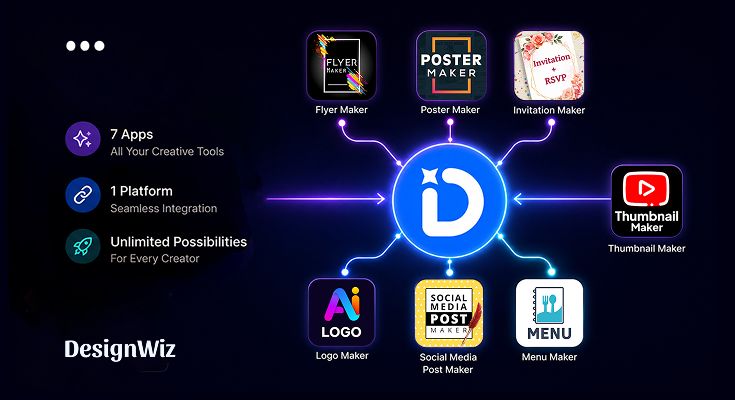
Professional design platforms such as DesignWiz, FlyerWiz Suite and specialized automation tools enable marketing agencies to efficiently create machine marketing flyers at scale. These software solutions offer template libraries, batch processing capabilities, and client collaboration features that reduce production time while maintaining quality.
Advanced platforms provide API integrations, brand asset management, and automated resizing functions that streamline workflow for multiple manufacturing clients. By utilizing machine flyer templates within these systems, agencies can standardize processes, ensure consistent output, and allocate more resources to strategic campaign development rather than repetitive design tasks.
Template Library Management Systems for Scalable Machine Flyer Production
Modern design software platforms enable agencies to build centralized template libraries that maintain brand consistency across clients while accelerating production workflows. Systems such as FlyerWiz Cloud Libraries and DesignWiz’s Brand Kit allow teams to store approved machine flyer design elements, color palettes, and typography schemes that automatically sync across projects. These platforms support version control, ensuring teams always access current brand guidelines and approved machine promotional flyers layouts.
Advanced library systems integrate with project management tools, enabling automatic template deployment based on client specifications and campaign requirements. Smart categorization features help designers quickly locate relevant templates by industry, machine type, or campaign objective, reducing search time and improving project efficiency.
Automation Features That Reduce Design Time and Client Approval Cycles
Automation capabilities significantly reduce manual design work through batch processing, dynamic content replacement, and automated formatting functions. Platforms such as DesignWiz bulk creation tools allow agencies to generate multiple machine advertising flyers variations from single templates, automatically populating product specifications, pricing, and contact information from spreadsheets or databases.
Smart automation features include automatic image resizing, color scheme application, and text formatting that maintains design integrity across different content lengths.
Client approval workflows benefit from automated review systems that track changes, maintain revision histories, and streamline feedback collection. These systems reduce approval cycles from weeks to days by providing clear visual comparisons, comment threading, and automated notifications that keep projects moving efficiently through client review processes.
Collaborative Workflow Tools for Multi-Client Manufacturing Campaign Management
Integrated workflow platforms streamline multi-client manufacturing marketing campaigns by connecting design software, project tracking, and client communication systems. These tools improve collaboration, maintain timelines, and ensure consistent quality across machine flyer projects.
- Centralized Project Management – Platforms such as Monday.com, Asana, or specialized design project managers integrate with Creative Suite, enabling real-time collaboration, task tracking, and budget management across multiple client campaigns.
- Client-Specific Portals and Role-Based Permissions – Provide clients with dedicated portals to review, request changes, and approve designs without affecting other workflows. Role-based access ensures team members see only relevant projects while protecting confidential information.
- Automated Reporting and Quality Control – Track productivity, client satisfaction, and campaign profitability through dashboards and automated reports. Built-in design checks verify brand compliance, image resolution, and print specifications, reducing revision cycles and maintaining high professional standards.
Cloud-based collaboration lets distributed teams manage multiple manufacturing clients efficiently. In addition, it protects data and ensures consistent, high-quality flyer production. Consequently, teams can maintain brand standards while scaling operations across clients.
Read more: DesignWiz vs PosterMyWall: Choosing the Best Flyer Design Tool
How Do You Measure Machine Flyer Design Effectiveness in Integrated Marketing Campaigns?
Measuring machine flyer design effectiveness requires comprehensive analytics across digital and print touchpoints using attribution modeling, conversion tracking, and brand recognition metrics. Successful measurement involves QR code analytics, campaign-specific landing pages, and cross-channel customer journey mapping. Machine promotional flyers achieve optimal ROI when measurement frameworks capture both direct response metrics and brand awareness improvements across multiple channels.
Cross-Channel Attribution Models for Machine Marketing Flyers Performance Tracking
Attribution modeling connects machine flyer distribution with digital campaign performance through unique tracking mechanisms. QR codes in machine advertising flyers allow precise tracking of offline-to-online customer journeys. Campaign-specific phone numbers measure direct response rates. Multi-touch attribution platforms track how machine promotional flyers affect later digital interactions. Monash University research on multimedia advertising effectiveness reveals that coordinated print and digital campaigns generate 23% higher conversion rates than isolated channel strategies.3 They measure assisted conversions, where flyers generate initial awareness that leads to online purchases.
Advanced attribution models weight flyer touchpoints based on temporal proximity to conversion events. First-touch attribution credits machine flyer design for initial customer engagement, while time-decay models assign higher value to recent flyer interactions. Marketing automation platforms link flyer scan data with email and social media interactions. This creates complete customer journey maps that help optimize future machine flyer campaigns.
Brand Recognition Lift Analysis Through Integrated Flyer and Digital Touchpoints
Brand recognition measurement compares awareness levels before and after integrated campaigns featuring machine product flyers alongside digital advertising. Survey methodologies track aided and unaided brand recall among target audiences exposed to coordinated messaging across channels. Recognition lift studies analyze how machine flyer design elements reinforce digital creative assets, measuring recall improvements when consistent visual branding appears across touchpoints.
Digital analytics reveal search volume increases for branded keywords following machine promotional flyers distribution in specific geographic markets. Social media mention tracking identifies conversations generated by flyer campaigns, measuring share-of-voice improvements during integrated campaign periods. Professional machine advertising flyer design creates memorable visual associations that amplify digital campaign effectiveness. Cross-channel frequency analysis determines optimal exposure levels where machine marketing flyers enhance rather than duplicate digital messaging, ensuring cost-effective brand building through strategic message reinforcement across integrated marketing channels.
- Coffee Machine Clearance Sale Discount Flyer Template
- Industrial Drilling Machine Promotion Flyer Template
- Home Vacuum Cleaner Product Promotion Flyer Template
Conversion Funnel Optimization Using Machine Product Flyers Analytics Integration
Conversion funnel analysis evaluates how customers progress from initial flyer interaction to final purchase, revealing optimization opportunities at each stage. By integrating offline and online data, marketers can refine flyer design, messaging, and targeting for maximum impact.
- Engagement and Layout Optimization – Analyze which flyer elements drive the highest engagement using metrics such as heat maps for QR codes and call-to-action placement. Iterative design improvements based on these insights increase response rates.
- Customer Journey Mapping and Attribution – Connect flyer interactions to email opens, website visits, and purchases. Unique promo codes enable precise conversion tracking and incentivize immediate action, while A/B testing compares design variations for statistically significant improvements.
- Segmented Follow-Up and Analytics Integration – Use marketing automation to nurture leads generated via flyers, and apply cohort analysis to compare conversion and lifetime value against other channels. Integrating offline and online behavioral data creates unified customer profiles to guide future campaign targeting and creative development.
Conversion funnel analysis transforms flyer campaigns into data-driven initiatives. As a result, it optimizes engagement, thereby improving conversions and informing continuous design and targeting improvements. Furthermore, this approach enables marketers to make iterative adjustments that enhance overall campaign effectiveness.
What Machine Flyer Design Strategies Work for Trade Show and Digital Campaign Integration?
Successful machine flyer designs for trade shows focus on visual consistency across channels. They are also optimized for digital environments. Trade show machine flyers need bold headlines and QR codes linking to landing pages. They should also maintain brand colors and match digital ad messaging.
Effective integration involves creating modular design systems where machine marketing flyers feature expandable content online, personalized follow-up sequences, and social media amplification hooks. Strategic placement of digital call-to-actions on physical flyers creates seamless customer journeys from booth interactions to online engagement and conversion.
Modular Visual Identity Systems for Machine Flyer Templates Across Physical and Digital Channels
Machine flyer design excellence requires modular template systems that maintain brand consistency while adapting to different distribution formats. Create core visual elements that translate seamlessly from physical handouts to email headers, social media posts, and website banners. Establish standardized color palettes, typography hierarchies, and logo placements that work across print specifications and digital screen resolutions.
Machine promotional flyers benefit from flexible grid systems where product imagery, technical specifications, and contact information can be repositioned without losing visual coherence. Professional machine marketing flyers use consistent graphic elements such as borders, icons, and call-out boxes that reinforce brand recognition whether viewed on mobile devices or trade show literature racks. Design frameworks should accommodate variable content lengths while preserving visual hierarchy, enabling quick customization for different equipment categories and campaign objectives.
QR Code Integration Strategies Connecting Trade Show Machine Promotional Flyers to Digital Funnels
Strategic QR code placement transforms static machine advertising flyers into dynamic digital touchpoints that capture qualified leads and track campaign performance. Position QR codes prominently in the upper-right corner of flyers, sized at minimum 1-inch square for reliable smartphone scanning from 3-4 feet away. Link codes to campaign-specific landing pages featuring expanded product demonstrations, downloadable specification sheets, and lead capture forms pre-populated with trade show data.
Machine flyer templates should include trackable phone numbers alongside QR codes, enabling multi-channel response measurement and lead attribution analysis. Create urgency through time-sensitive offers accessible only via QR codes, such as “Scan for exclusive trade show pricing valid through date.” Advanced integration involves dynamic QR codes that route visitors to personalized content based on scanning time, geographic location, or previous digital interactions. As a result, this approach maximizes conversion potential from physical touchpoints. Furthermore, it enables marketers to gather actionable data and refine campaigns in real time.
- BBQ Smoker Grill Rental Services Flyer Template
- Claw Machine Rental Service Flyer Template
- Washing Machine Discount Offer Flyer Template
Post-Event Digital Retargeting Using Machine Advertising Flyers Audience Segmentation Data
Post-event retargeting leverages trade show interactions to create personalized digital campaigns that reinforce flyer messaging. In addition, segmenting audiences based on engagement and interest ensures targeted follow-ups, thereby boosting lead conversion and ROI. Furthermore, this strategy enables marketers to optimize campaign efficiency and strengthen long-term relationships with potential clients.
- Audience Segmentation and Targeting – Categorize booth visitors by flyer engagement, product interest, and demographics. Upload these segments to platforms such as Facebook Custom Audiences and Google Ads. This ensures campaigns match the original flyer’s visual style and messaging.
- Multi-Channel Retargeting – Send email sequences that reference machine models discussed at the booth. Run LinkedIn ads targeting relevant job titles and company sizes. Add pixel tracking to landing pages linked from the flyers. This ensures continuous engagement throughout the extended B2B sales cycle.
- Attribution and Adaptive Messaging – Include unique tracking URLs on flyers to connect trade show activity to digital conversions. Retargeting sequences adjust messages based on user engagement. They provide detailed technical content to highly qualified leads while keeping general awareness messaging for early-stage prospects.
Post-event digital retargeting transforms machine flyers into measurable lead-nurturing tools. As a result, it extends campaign impact, thereby boosting conversion rates and connecting trade show investments directly to sales results. Furthermore, this approach enables marketers to track ROI with greater precision and optimize future campaigns.
Read more: Flyer Marketing for Small Businesses
How Can Machine Flyer Design Templates Be Customized for Different Industrial Sectors?
Machine flyer design templates require sector-specific customization to address unique industrial requirements and regulatory standards. Manufacturing sectors need templates that emphasize technical specifications and safety certifications. Healthcare equipment, on the other hand, requires compliance-focused layouts highlighting sterilization and patient safety features. Construction machinery templates should showcase durability metrics and operational efficiency data.
Agricultural equipment flyers perform best when integrated with seasonal campaigns and environmental messaging. Service providers can use modular template systems to maintain brand consistency while adapting imagery, terminology, colors, and regulatory details for each industrial sector. This approach supports comprehensive marketing across various machine categories.
Industry-Specific Regulatory Compliance Integration
Industrial sectors demand strict adherence to regulatory frameworks that directly impact machine flyer design templates. Healthcare equipment flyers must incorporate FDA compliance badges, sterilization certifications, and patient safety protocols prominently within template layouts. Manufacturing machinery templates require OSHA safety standards, ISO quality certifications, and environmental compliance indicators. Construction equipment flyers necessitate CE marking displays, emissions standards documentation, and operator safety certifications.
Effective machine promotional flyers integrate these compliance elements without compromising visual appeal. Templates feature dedicated compliance sections with standardized placement for certification logos, regulatory numbers, and safety warnings. Color-coded compliance indicators help users quickly identify relevant standards while maintaining professional aesthetics that appeal to industrial buyers.
Sector-Tailored Visual Elements and Technical Specifications
Each industrial sector requires distinct visual approaches reflecting operational environments and buyer priorities. Manufacturing templates emphasize precision engineering through clean lines, technical diagrams, and specification callouts highlighting performance metrics. Healthcare equipment designs prioritize sterile aesthetics with medical-grade imagery, patient outcome statistics, and clinical validation data.
Construction machinery flyers showcase rugged durability through high-impact photography, thereby demonstrating equipment performance in challenging environments. Similarly, agricultural templates incorporate seasonal imagery, environmental sustainability messaging, and productivity enhancement data, which in turn reinforces their relevance to farming operations. Furthermore, both flyer types leverage visuals and data to communicate value effectively to their respective audiences.
Machine product flyers use industry-specific color palettes: whites and blues for healthcare, grays and oranges for construction, and earth tones for agriculture. Typography selections reflect sector conventions while maintaining readability across technical documentation requirements.
- Powerful Drill Machine Promotional Flyer Template
- Currency Note Sorting Machine Advertisement Flyer Template
- Cookie Drop Machine Promotional Flyer Template
Multi-Vertical Brand Consistency Frameworks
Brand consistency frameworks help machine flyer templates maintain their core identity while adapting to the needs of various industrial sectors. Consequently, this approach reinforces recognition and credibility across diverse markets, while ensuring that design coherence is not sacrificed. In addition, it allows brands to communicate a unified message across multiple channels.
- Modular Design Systems – Keep logos, primary colors, and typography consistent. Adjust secondary design elements to fit sector-specific contexts, compliance rules, and visual standards.
- Template Guidelines for Sector Adaptation – Establish clear brand parameters that allow imagery, messaging, and layout variations tailored to each industry. This ensures flyers communicate relevant content while maintaining a unified brand presence.
- Variable Data and Scalable Deployment – Incorporate fields for automated customization, enabling rapid generation of sector-specific flyers without compromising design integrity. Preset configurations streamline production while supporting compliance and visual effectiveness.
Multi-vertical brand consistency frameworks help marketing teams quickly create industry-specific flyers while maintaining brand standards. This approach enhances recognition, credibility, and scalability across different industrial markets.
Read more: Machine Flyer Distribution Analysis for Service Providers
What Are the Key Differences Between Machine Flyer Design and Digital Banner Formats?
Machine flyer design and digital banner formats differ fundamentally in layout orientation, content depth, and engagement strategies. Machine promotional flyers utilize vertical layouts with comprehensive product information, detailed specifications, and call-to-action hierarchies suitable for extended reading periods.
Digital banners employ horizontal formats optimized for quick visual impact, limited text, and immediate click-through responses. Flyers accommodate extensive technical documentation and multi-product showcases, while banners focus on single-message delivery with animated elements and real-time personalization capabilities across integrated marketing campaigns.
Layout Orientation and Content Hierarchy Distinctions
Machine flyer design prioritizes vertical orientation allowing detailed product presentations with multiple sections for specifications, benefits, and contact information. This format supports comprehensive machine marketing flyers with technical diagrams, feature callouts, and extensive copy blocks that guide readers through purchasing decisions.
Digital banners require horizontal constraints optimizing for banner ad placements across websites and social platforms. Banner formats limit content to essential headlines, minimal supporting text, and prominent call-to-action buttons designed for instant recognition within web page layouts. Machine flyer templates accommodate multiple information layers while banner formats demand simplified messaging hierarchies focused on immediate response generation.
Technical Specification Display Methods
Machine promotional flyers excel at presenting detailed technical specifications through organized charts, bullet-pointed feature lists, and comprehensive comparison tables that industrial buyers require for equipment evaluation. Print formats allow high-resolution imagery showcasing machine components, operational diagrams, and certification badges essential for B2B decision-making processes.
Digital banner specifications focus on simplified metrics, therefore highlighting key differentiators through abbreviated text, icons, and visual elements optimized for quick scanning. Moreover, banner formats emphasize emotional appeals over technical depth, which in turn engages audiences more effectively in fast-paced digital environments. For example, they utilize color psychology and typography to create immediate brand recognition, whereas machine advertising flyers focus on comprehensive information delivery.
- Sewing Machine Sale Promotional Flyer Template
- Farm Machinery Sale Promotional Flyer Template
- Business Vending Machine Placement Flyer Template
Interactive Elements Versus Static Information Architecture
Machine flyer design traditionally relies on static information architecture, therefore providing consistent, brand-aligned layouts across print and distribution channels. However, digital formats enable interactive elements that increase engagement, allow real-time performance tracking, and support dynamic content personalization. In addition, these digital capabilities facilitate targeted messaging and improved user experiences.
- Static Flyer Advantages – Print-based flyers maintain standardized formatting across trade shows, direct mail, and sales presentations. Consistency ensures brand integrity, reliable reading experiences, and long-term attribution tracking to evaluate campaign impact.
- Interactive Digital Capabilities – Digital banners support hover effects, animated transitions, video integration, and personalized content based on user behavior. Real-time A/B testing, click-through tracking, and retargeting enhance campaign measurement and optimization.
- Strategic Campaign Integration – Choose the format based on objectives, audience preferences, and analytics needs. Combining static print flyers with interactive digital banners allows maximum reach, engagement, and measurable results across multiple touchpoints.
Combining static flyer design with interactive digital elements creates cohesive branding. It also boosts engagement and enables measurable marketing results.
People Also Ask:
- What software is best for machine flyer design?
DesignWiz offers advanced customization for professional machine flyer design, while photoadking provides efficient template-based solutions. Lucidpress excels at brand management for marketing agencies handling multiple clients. - How much does machine flyer design cost for marketing agencies?
Machine flyer design costs range from $50-200 for template-based designs to $500-2000 for custom professional layouts. Marketing agencies typically charge 25-40% markup on design costs for client projects. - What size should machine flyer design be for trade shows?
Standard machine flyer design for trade shows uses 8.5×11 inch format for easy handling, with 8.5×14 inch for detailed specifications. Pocket-sized 4×9 inch versions work well for quick distribution. - How long does professional machine flyer design take?
Professional machine flyer design typically requires 3-5 business days for custom work, including client revisions. Template-based designs can be completed within 24-48 hours for marketing agencies with established workflows. - What makes machine flyer design effective for B2B marketing?
Effective B2B machine flyer design focuses on technical specifications, ROI calculations, case studies, and clear contact information. Professional imagery and industry-specific terminology build credibility with decision-makers. - Can machine flyer design integrate with digital marketing campaigns?
Machine flyer design integrates with digital campaigns through QR codes, trackable URLs, consistent branding, and coordinated messaging. This multi-channel approach improves brand recognition and conversion rates significantly.
Frequently Asked Questions:
- How do integrated marketing companies coordinate machine flyer design with digital campaigns?
Successful integrated marketing companies synchronize machine flyer design elements with digital assets by maintaining consistent brand messaging, visual themes, and call-to-actions across all channels. They create unified campaign timelines where flyer distribution aligns with email marketing, social media posts, and digital advertising to maximize message reinforcement and improve conversion rates through coordinated touchpoints. - What machine flyer design elements improve multi-channel campaign performance?
Effective machine flyer design for multi-channel campaigns includes QR codes linking to digital content, consistent brand colors matching online materials, trackable phone numbers or URLs, and visual elements that translate well across print and digital formats. These design choices enable seamless customer journey transitions between physical and digital touchpoints while maintaining campaign cohesion. - How can marketing agencies scale machine flyer design production efficiently?
Marketing agencies scale machine flyer design through template libraries with modular components, automated design tools that maintain brand consistency, standardized approval workflows, and cloud-based collaboration platforms. This systematic approach allows agencies to quickly customize flyers for multiple clients while ensuring quality control and reducing production time for integrated campaigns. - What machine flyer design metrics should integrated marketing companies track?
Key machine flyer design metrics include response rates from unique tracking codes, website traffic from flyer-specific URLs, lead generation through dedicated phone numbers, and conversion attribution analysis. Integrated marketing companies also measure brand recognition lift, campaign reach amplification when combined with digital efforts, and cost-per-acquisition improvements from multi-channel engagement. - How do you optimize machine flyer design for different industrial equipment types?
Machine flyer design optimization involves showcasing relevant technical specifications, using industry-appropriate imagery, highlighting sector-specific benefits, and including compliance certifications. For construction equipment, emphasize durability and safety features. For manufacturing machinery, focus on efficiency metrics and ROI calculations. Tailor messaging to each industry’s decision-making priorities and technical requirements. - What machine flyer design software works best for marketing service providers?
Professional marketing service providers typically use FlyerWiz Suite for advanced customization, DesignWiz for template-based efficiency, or specialized tools such as Lucidpress for brand management. The best choice depends on design complexity needs, team collaboration requirements, client brand guideline management, and integration capabilities with existing marketing technology stacks. - How can machine flyer design support lead nurturing in integrated campaigns?
Machine flyer design supports lead nurturing through progressive information architecture, where initial flyers create awareness and subsequent versions provide deeper technical details. Include scannable codes linking to video demonstrations, downloadable spec sheets, or consultation booking forms. This creates multiple engagement opportunities that feed into digital marketing automation sequences. - What machine flyer design best practices ensure print-digital consistency?
Maintain consistent brand guidelines across all materials, use color profiles that translate well between print and digital formats, ensure typography remains readable in both mediums, and design layouts that adapt to various sizes. Create master brand assets that work universally, and establish approval processes that verify consistency before campaign deployment. - How do integrated marketing companies handle machine flyer design revisions efficiently?
Efficient revision management involves structured approval workflows with clear stakeholder responsibilities, version control systems that track changes, deadline-driven review cycles, and collaborative platforms enabling real-time feedback. Establish revision limits per project phase, maintain template libraries for quick iterations, and use project management tools that integrate with design software. - What machine flyer design elements drive highest engagement for equipment sales?
High-engagement machine flyer design elements include compelling headlines addressing specific pain points, high-quality equipment photography, clear value propositions with quantifiable benefits, prominent contact information, and strategic use of white space for readability. Include customer testimonials, certification badges, and limited-time offers to create urgency and establish credibility.
Conclusion:
Agencies leveraging professional machine flyer templates and design software achieve measurable marketing ROI by integrating print and digital campaigns. Standardized template libraries can cut production time by up to 60%. They also maintain consistent branding across client accounts, improving efficiency for agencies handling high-volume projects. By adding QR codes, trackable URLs, and other digital features, machine promotional flyers effectively link offline and online channels. Consequently, this approach allows precise performance tracking and thereby enhances customer engagement metrics. Moreover, free machine flyer design tools provide a cost-effective solution for agencies and marketers looking to implement these capabilities. Professional platforms, however, offer advanced automation and customization, which is especially useful for agencies managing complex, multi-client campaigns.
To maximize results, marketing providers should treat flyer marketing as part of a multi-channel strategy. In addition, aligning flyers with social media, trade show materials, and digital campaigns reinforces branding, improves recognition, and boosts conversions. Furthermore, strategic workflows that consider regulatory compliance, client brand guidelines, and sector-specific requirements ensure scalable, professional, and consistent marketing outputs.
Reference:
- How to Measure Marketing Effectiveness. Retrived from Harvard Business School Online.
- 10 Effective Marketing Strategies. Retrived from Park University.
- Comparing the relative effectiveness of advertising channels. Retrived from Monash University Research Repository.
- Marketing and Sales Guide for Industrial Businesses. Retrived from U.S. Small Business Administration.