Solo evangelism practitioners often face credibility challenges compared to established ministries. Professionally designed seasonal evangelism flyers help overcome these barriers by combining consistent branding, spiritual authenticity, and strategic seasonal messaging. Using high-quality free evangelism flyer templates, independent ministers can present their work with professionalism and trustworthiness, achieving the visual and communicative impact of larger organizations while maintaining cost-effective outreach that strengthens long-term community engagement.
How Can Seasonal Evangelism Flyers Establish Professional Credibility for Solo Ministry Practitioners?
Seasonal evangelism flyers establish professional credibility for solo practitioners by showcasing consistent branding elements, denominational affiliations, and structured ministry programming. An online flyer maker can be used by ministries to create professional designs with clear contact information, ministry credentials, and organized event schedules, effectively demonstrating legitimacy to communities.
High-quality printing and strategic distribution timing around religious seasons signals established operations rather than temporary efforts. Leveraging customizable flyer templates that incorporate testimonials, ministry experience, and partnership endorsements helps build trust with potential congregants and community leaders, positioning solo practitioners as credible alternatives to larger established organizations.
Ministry Credentials and Denominational Endorsements in Gospel Evangelism Promotional Flyers
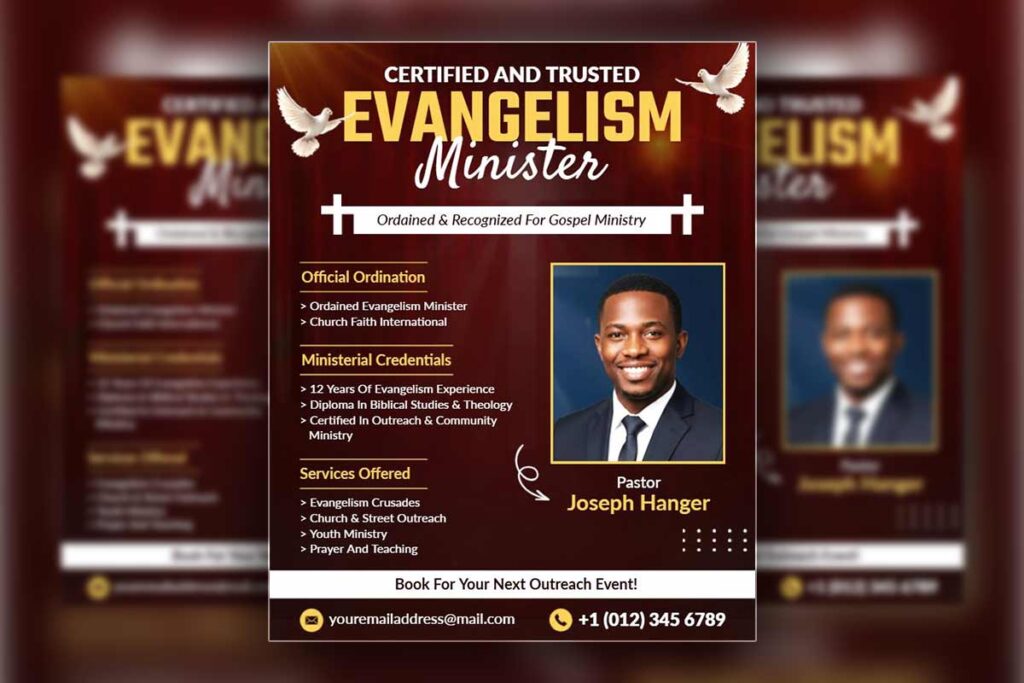
Ministry credentials create immediate authority through visible ordination certificates, theological training, and years of service displayed prominently on seasonal evangelism flyers. Include seminary education, pastoral certifications, and denominational endorsements with official logos to demonstrate legitimacy. Using professionally designed evangelism marketing flyers for solo ministry trust can visually highlight these credentials, immediately signaling legitimacy to potential congregants.
Feature continuing education credits, specialized evangelism training, and community involvement to showcase ongoing commitment.
Partnership endorsements from established churches, community organizations, and ministry networks provide third-party validation. Display testimonials from church leaders, community officials, and previous event participants with specific metrics and outcomes. Include professional headshots alongside credentials to create personal connection while maintaining authority.
Strategic Seasonal Distribution Patterns That Build Community Recognition
Consistent seasonal presence creates recognition through repeated exposure across Christmas, Easter, back-to-school, and harvest seasons. Distribute church evangelism flyers at community centers, libraries, and local businesses six weeks before each season to establish planning cycles. For ministries seeking maximum reach, consulting the evangelism flyer distribution competitive edge guide provides insights on strategic placement to capture community leaders’ attention. Target decision-makers through direct mail to church leadership and community organization boards.
Build relationships with complementary service providers such as event planners, caterers, and venues who can refer clients during seasonal peaks. Create seasonal messaging that addresses specific community needs during each period while maintaining consistent visual branding.1 Track distribution effectiveness through unique contact methods for each season to optimize future seasonal evangelism flyers placement.
- Strategic Evangelism Seminar Church Event Flyer Template
- Church Street Evangelism Event Flyer Template
Professional Contact Information Architecture for Ongoing Ministry Relationships
A structured contact system strengthens credibility and streamlines communication for ministry operations. Clear, professional channels ensure accessibility while maintaining boundaries and demonstrating reliability.
- Dedicated Professional Channels – Use ministry-specific phone lines, email addresses, and PO Box or office locations instead of personal contact information. Include website URLs, social media handles, and online portfolios to provide multiple points of access.
- Automated and Structured Response Systems – Implement automated email replies, voicemail greetings referencing seasonal campaigns, and structured follow-up sequences. Establish emergency contact protocols and consultation booking systems via online calendars to ensure timely and organized responses.
- Multiple Communication Preferences and Commitments – Offer phone, email, text, and video options tailored to community member needs. Communicate response time commitments, such as a “24-hour response guarantee,” and clearly define availability windows for different types of ministry requests.
A professional contact information architecture enhances ministry accessibility, builds trust with the community, and ensures efficient, reliable communication for ongoing engagement.
What Design Elements Make Seasonal Evangelism Flyers Compete With Established Organizations?
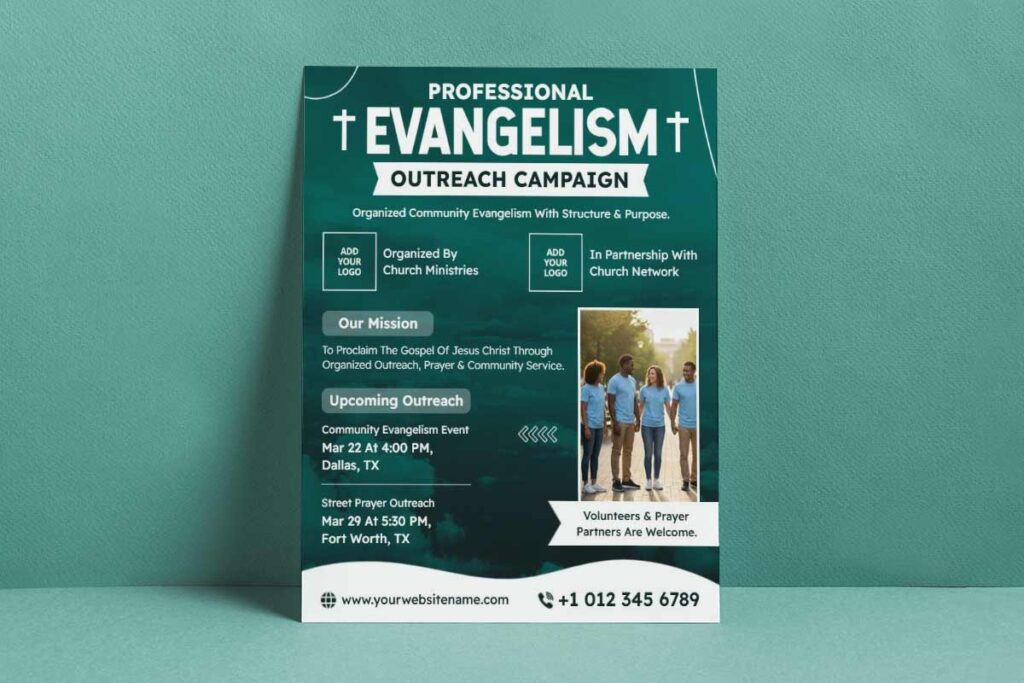
Competitive seasonal evangelism flyers require institutional-grade design elements including consistent logo systems, professional typography hierarchies, and structured information layouts that mirror established church communications. Quality paper stock, coordinated color schemes, and minimalist design approaches create visual parity with larger organizations.
Strategic use of white space, clear event categorization, and professional photography elevates perceived organizational size. Incorporating QR codes, social media integration, and digital-print coordination demonstrates technological sophistication that matches established ministry competitors while maintaining authentic evangelistic messaging.
Logo Systems and Brand Architecture for Christian Evangelism Flyer Templates
Professional logo placement anchors credibility through strategic positioning and consistent sizing across seasonal campaigns. Effective Christian evangelism flyer templates incorporate ministry logos at standard institutional proportions – typically 1.5-2 inches wide for 8.5×11 formats. Brand architecture requires establishing visual hierarchy through primary ministry identification paired with secondary denominational affiliations. Color consistency maintains recognition across Christmas, Easter, and summer outreach materials.
Logo integration succeeds through coordinated placement patterns that mirror established church communications. Primary logos occupy upper-left positioning with supporting denominational marks placed in lower corners. Sacred imagery balances professional presentation with spiritual authenticity. Consistent typography pairings between logo elements and body text create cohesive brand systems that compete visually with larger ministry organizations.
- Evangelism Midday Worship Church Flyer Template
- Church Evangelism Event Flyer with Host Speaker Template
Typography and Layout Strategies That Mirror Institutional Church Communications
Typography hierarchies establish professional credibility through structured information presentation matching established church marketing materials. Primary headings utilize serif fonts at 24-28 point sizes, with secondary headings at 18-20 points creating clear content organization. Body text maintains 11-12 point sizing for optimal readability across age demographics within congregations.
Layout strategies employ three-column structures reflecting traditional church bulletin formats that community members recognize and trust. Information categorization separates event details, ministry credentials, and contact information into distinct visual zones. Strategic white space allocation prevents overcrowded appearances that signal amateur production quality.
Professional spacing ratios maintain visual balance through consistent margin applications and element positioning. Header sections occupy 25% of total flyer space with content areas utilizing rule-of-thirds principles for professional presentation that matches established organizational communications.
- Church Planting and Evangelism Conference Flyer Template
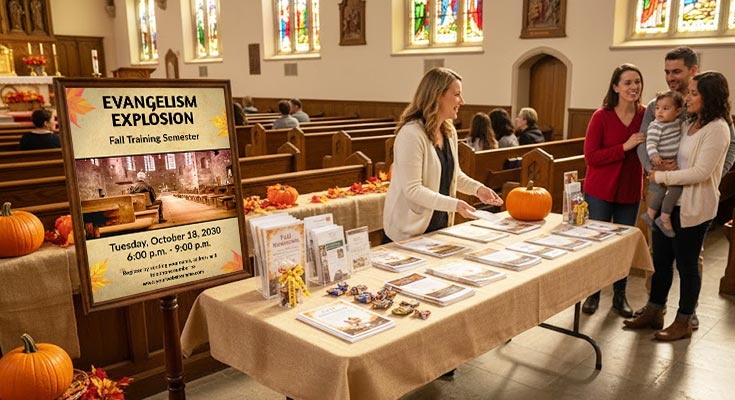
- Evangelism Training Fall Semester Flyer Template
Premium Printing Specifications and Material Choices for Church Evangelism Flyers
High-quality printing materials and finishes enhance the credibility of church evangelism campaigns, signaling professionalism and ministry investment.
- Paper and Finishes – Use 100–130gsm coated paper with glossy or UV-coated finishes for durability and vibrant color. Rounded corners and perforated tear-offs add polish and functionality.
- Printing Quality – Maintain 300 DPI with CMYK color profiles for accurate full-color reproduction. Scored edges for bulletin inserts improve usability and presentation.
- Cost-Effective Approaches – Online printing with ministry discounts and bulk orders reduces costs, while template standardization ensures consistent design across campaigns.2 Before committing to print runs, reviewing how to make a flyer ensures seasonal evangelism materials maintain professional design standards while remaining cost-effective. Local print partnerships support reliable seasonal production.
Premium printing choices help evangelism flyers convey professionalism, reinforce credibility, and optimize outreach effectiveness.
How Do Seasonal Evangelism Flyers Overcome the ‘Temporary Ministry’ Perception Problem?
Seasonal evangelism flyers overcome temporary ministry perceptions by incorporating consistent branding elements across different seasonal campaigns, demonstrating long-term community commitment through year-round messaging, and showcasing ongoing ministry activities beyond single events. Professional Christian evangelism flyer templates establish visual continuity while seasonal adaptations prove sustained presence.
Strategic use of testimonials, ministry milestones, and future planning statements in evangelism outreach flyers builds credibility. Solo practitioners can leverage seasonal transitions to highlight their permanent community investment rather than event-focused approaches, transforming seasonal messaging from temporary promotions into evidence of established, continuous gospel ministry.
Establishing Visual Brand Consistency Across Multiple Seasonal Campaigns
Creating recognizable visual identity across Christmas, Easter, and summer outreach campaigns establishes ministry permanence. Professional seasonal evangelism flyers should maintain consistent logo placement, typography choices, and color schemes while incorporating seasonal elements. The same ministry contact information, website, and physical address appearing across multiple seasons signals established operations.
Professional design elements such as consistent header layouts and footer information create recognition patterns that distinguish established ministries from temporary volunteers. Quality printing standards maintained across seasons demonstrate investment in long-term community presence.3 Visual brand guidelines ensure each seasonal campaign reinforces rather than contradicts previous messaging, building cumulative community recognition and trust over time.
Communicating Long-Term Ministry Commitment Through Strategic Seasonal Messaging
Messaging that references past seasonal events and announces future programs demonstrates ongoing ministry commitment. Phrases such as “Our third annual Easter sunrise service” or “Join us again for summer outreach” establish historical presence and future planning. Gospel evangelism promotional flyers should include testimonials from previous seasonal events and mention multi-year community relationships.
Language emphasizing “ongoing ministry” rather than “special events” positions seasonal activities as regular programming rather than one-time occurrences. References to denominational affiliations, ministry training, and established partnerships provide institutional credibility. Strategic messaging connects seasonal celebrations to year-round ministry activities, showing how Christmas outreach supports ongoing discipleship programs and Easter celebrations connect to regular worship services.
- Community Street Evangelism Event Flyer Template
- Street Evangelism Church Event Flyer Template
- Church Evangelistic Event Announcement Flyer Template
Leveraging Seasonal Transitions to Demonstrate Permanent Community Investment
Seasonal transitions can be highlighted in church evangelism flyers to show ongoing community engagement, positioning ministries as stable, long-term contributors rather than one-off event organizers. Demonstrating continuity across multiple seasons reinforces credibility and trust among community members.
- Multi-Season Programming Narratives – Reference how each seasonal program builds on previous initiatives, such as “spring outreach continues winter relationship-building” or “summer programs extend Easter connections.” This communicates sustained involvement and strategic planning.
- Documented Community Partnerships – Highlight ongoing collaborations, e.g., “Partnering with local schools since 2019” or “Third consecutive year with the community center.” Verification of long-term partnerships establishes authority and reliability in community service.
- Forward-Looking Engagement and Feedback – Include seasonal planning for upcoming programs, volunteer team highlights, and participant recognition. Collecting feedback and showcasing evaluation efforts demonstrates commitment to continuous improvement and strengthens community ownership.
Integrating seasonal milestones into evangelism materials positions solo practitioners as dedicated community facilitators, reinforcing trust, continuity, and long-term ministry impact.
What Seasonal Themes in Evangelism Flyers Build Trust With Potential Ministry Clients?
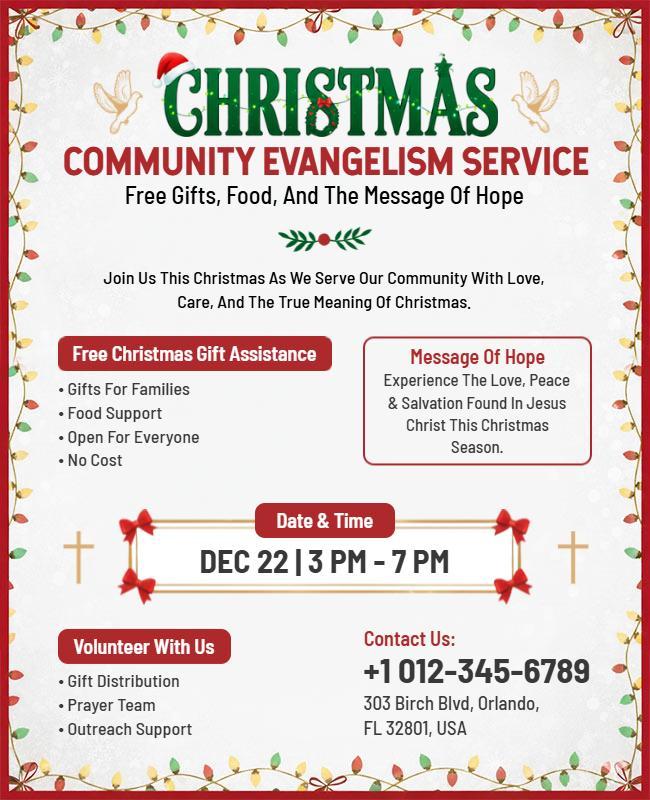
Trust-building seasonal themes in evangelism flyers include community service integration during holidays, family-focused messaging that addresses seasonal struggles, and authentic local cultural connections. Gospel evangelism promotional flyers gain credibility through themes of hope during difficult seasons, practical support offerings, and transparent ministry approaches.
Church evangelism flyers succeed with themes emphasizing accessibility, non-judgmental invitation, and genuine care for community needs. Incorporating the key elements of a flyer from design guidelines helps communicate trust and clarity to recipients. Professional seasonal campaigns balance celebration with sensitivity, addressing real seasonal challenges such as loneliness, financial stress, or family tensions while offering spiritual solutions. These themes position solo evangelism practitioners as trusted community resources rather than opportunistic outsiders.
Community Service Integration: Building Credibility Through Seasonal Acts of Service
Seasonal evangelism flyers establish trust by highlighting tangible community support alongside faith-based messaging. Demonstrating real impact through service projects and outreach initiatives reinforces credibility and reflects organizational values.
- Concrete Service Examples – Feature initiatives such as Thanksgiving food drives, Christmas gift-wrapping for single parents, or Easter events in underserved neighborhoods.4 Showcasing real-life examples through evangelism community flyers for service providers reinforces authenticity and demonstrates tangible community impact. Showcase past accomplishments with photos and testimonials to illustrate genuine community investment.
- Faith-Aligned, Non-Transactional Messaging – Present service opportunities as natural expressions of faith rather than marketing tactics. Include volunteer coordination contacts and clear expectations, avoiding language that implies attendance at religious events is required.
- Authenticity Through Visuals and Testimonials – Highlight real community members benefiting from outreach efforts. Professional yet warm design elements convey reliability while maintaining the approachability necessary to foster trust in seasonal evangelism campaigns.
Integrating community service into promotional flyers reinforces credibility, strengthens relationships, and positions faith organizations as genuinely invested in their local communities.
Addressing Authentic Seasonal Struggles with Gospel-Centered Solutions
Trust develops when seasonal themes acknowledge real community challenges without exploiting vulnerability. Winter depression, holiday financial stress, back-to-school anxiety, and summer childcare gaps represent authentic seasonal struggles that gospel-centered messaging can address compassionately.
Effective evangelism outreach flyers avoid superficial positivity in favor of honest recognition of seasonal difficulties paired with practical spiritual resources. Holiday loneliness campaigns offering community dinner invitations, financial stress messages providing budgeting workshops with spiritual counsel, or transition anxiety themes featuring support groups demonstrate genuine understanding.
Marketing collateral succeeds by presenting faith as practical support system rather than escape mechanism. Include specific resource offerings such as counseling services, support groups, or practical assistance programs. Avoid promising unrealistic outcomes while emphasizing community support and spiritual encouragement. Professional branding maintains credibility while personal testimonials from community members who experienced seasonal struggles add authenticity and relatability.
- Community Evangelism Walk Event Flyer Template
- Evangelism Sunday Church Event Flyer Template
- Church Evangelism Event Announcement Flyer Template
Creating Accessible Ministry Messaging That Resonates with Local Cultural Contexts
Ministry outreach succeeds when seasonal messaging reflects local cultural, economic, and community contexts. Tailored communication builds trust, fosters inclusivity, and strengthens engagement by connecting meaningfully with specific audiences.
- Culturally Attuned Seasonal Themes – Adapt messaging to reflect local traditions, holiday practices, and community rhythms. Incorporate regional landmarks, reference community events, and use language aligned with local communication patterns rather than generic seasonal phrases.
- Inclusive and Accessible Design – Use imagery representing community demographics, provide multi-language options, large print versions, and disability-friendly descriptions. These features ensure materials are welcoming and usable by diverse populations.
- Economically Sensitive Messaging – Align content with community economic realities. Emphasize practical support and spiritual enrichment in less affluent areas while offering sophisticated thematic elements for wealthier audiences, maintaining visual appeal without alienating attendees.
Accessible, culturally aware ministry messaging positions seasonal outreach as a trusted gateway for ongoing community support and spiritual engagement, fostering long-term relationships beyond single events.
How Should Solo Practitioners Brand Seasonal Evangelism Flyers for Maximum Impact?
Solo practitioners should establish consistent visual identity through professional logos, cohesive color schemes, and readable typography that reflects their ministry’s personality. Personal branding elements such as headshots, testimonials, and ministry credentials build trust and recognition. Seasonal messaging should balance timely relevance with evergreen gospel truths, incorporating local community connections and clear contact information.
Quality design communicates professionalism and permanence, distinguishing independent ministers from temporary outreach efforts. Strategic use of white space, hierarchy, and consistent brand elements across all evangelism outreach flyers creates memorable recognition that competes effectively with established church evangelism campaigns.
Visual Identity Systems That Build Ministry Recognition
Create cohesive ministry branding through consistent logo placement, professional color palettes, and standardized typography across all seasonal evangelism flyers. Your ministry logo should appear prominently in the same position on every flyer, establishing visual recognition that builds over time. Choose professional color schemes that reflect your ministry personality while remaining readable and appropriate for seasonal themes. Typography selection impacts credibility significantly – select clean, professional fonts that remain legible at various sizes and printing qualities.
Brand consistency extends beyond visual elements to include contact information formatting, ministry taglines, and layout structures that create familiarity. Professional presentation through consistent spacing, margins, and visual hierarchy signals established ministry operations rather than temporary volunteer efforts.
Personal Credibility Elements for Independent Evangelists
Independent ministers must leverage personal credentials strategically to compete with organizational backing. Include professional headshots that convey approachability and authority, positioning yourself as the ministry face rather than hiding behind generic religious imagery. Display relevant certifications, ordination credentials, and ministry experience prominently but tastefully. Years of service statements such as “Serving the community since 2018” establish longevity and permanence.
Testimonials from previous ministry work, community partnerships, and measurable outreach results provide social proof that builds trust. Contact information should appear professional through dedicated ministry phone lines, professional email addresses, and established ministry addresses rather than personal information.
- Personal Evangelism Seminar Church Event Flyer Template
- Open Air Evangelism Crusade Promotion Flyer Template
- Sunday Evangelical Church Service Flyer Template
Seasonal Messaging Balance Between Timely and Timeless Content
Effective seasonal messaging combines event-specific relevance with enduring spiritual truths, ensuring evangelism materials remain meaningful beyond the immediate holiday. This balance strengthens engagement while maintaining long-term ministry impact.
- Timely yet Enduring Content – Connect holiday themes such as Christmas or Easter to core gospel principles. Avoid overly specific dates or ephemeral references that limit material usability, focusing instead on messages of hope, resurrection, and salvation that resonate year-round.
- Local Community Integration – Reference area traditions, local events, and service initiatives to create contextual relevance. Address seasonal emotional needs, such as loneliness during holidays or New Year reflections, with compassionate, solution-oriented spiritual guidance.
- Message Hierarchy and Design – Lead with seasonal hooks to capture attention, then transition to timeless spiritual truths. Use seasonal colors and imagery as accents rather than dominant themes, ensuring core ministry branding remains prominent and professional.
Balancing seasonal and timeless messaging ensures evangelism flyers engage communities effectively, maintain lasting spiritual relevance, and position solo practitioners as credible, consistent ministry resources.
What Cost-effective Printing Options Make Seasonal Evangelism Flyers Viable for Independent Ministers?
Independent ministers can leverage digital printing services offering small-batch runs starting at 100-500 copies, eliminating large minimum orders. Local print shops often offer ministry discounts and quick turnaround for gospel materials.
Print-on-demand services allow testing different designs before larger investments. Cost-effective paper weights (70-80gsm) balance quality with affordability, while standard sizes (8.5×11, 5.5×8.5) reduce cutting costs. Digital file preparation and template standardization minimize design fees, making professional flyer production accessible for solo practitioners’ limited budgets.
Small-Batch Digital Printing Services for Ministry Budgets
Digital printing revolutionizes ministry marketing by eliminating traditional offset requirements of 1,000+ copies. Services such as PrintPlace, UPrinting, and local FedEx Office locations offer runs starting at 50 copies for $15-25. Vistaprint provides seasonal promotions reducing costs to $0.03 per flyer during off-peak periods.
Quality remains professional with 300-dpi printing on standard 80gsm paper. Turnaround times of 2-3 business days accommodate last-minute seasonal outreach needs. Many providers offer ministry discounts ranging from 10-25% with proper documentation. Online proofing eliminates revision fees while maintaining design control.
- Evangelism Conference Church Event Flyer Template
- National Evangelism Week Church Event Flyer Template
- Church Strategic Evangelism Seminar Flyer Template
Online Platform Pricing Strategies and Ministry Discounts
Strategic timing maximizes printing budgets through promotional cycles. Major platforms run quarterly sales offering 30-50% discounts during slow periods. DesignWiz Print integrates design and printing, reducing overall project costs by eliminating separate design fees. GotPrint specializes in religious materials with dedicated ministry pricing tiers.
Volume breaks occur at 250, 500, and 1,000 copies with significant per-unit reductions. Combining multiple seasonal designs in single orders achieves volume discounts while maintaining design variety. Many providers offer loyalty programs providing cumulative discounts for repeat ministry customers. Non-profit pricing requires 501(c)(3) documentation but can reduce costs by 15-20%.
Paper Selection and Size Standards That Maximize Value
Choosing the right paper size, stock, and finish balances professional appearance with cost efficiency for flyers. Strategic decisions in material selection reduce expenses while maintaining readability and brand presentation.
- Standard Sizes and Stock – 8.5×11-inch paper eliminates cutting fees and provides a professional look. Use 70–80gsm stock for durability without incurring the higher costs of heavier paper. Glossy finishes add 25–40% in cost with minimal benefit for text-heavy designs.
- Cost-Efficient Printing Methods – Bulk purchasing through networks enables wholesale pricing for DIY printing. Desktop printers handle small batches on quality inkjet paper ($0.08–0.12 per sheet) while maintaining consistent color and clarity.
- Alternative Formats and Color Strategies – Half-sheet (5.5×8.5) or folded tri-fold formats maximize content density and reduce material usage. Limiting color palettes to two primary colors preserves visual appeal while controlling expenses. Seasonal template standardization further reduces design time and costs. Exploring creative approaches from flyer design ideas ensures that even standardized templates remain visually appealing and effective.
Selecting optimal paper sizes, stock, and formats ensures flyers remain professional, visually effective, and cost-efficient, supporting both small-scale and bulk production campaigns.
How Can Seasonal Evangelism Flyers Showcase Ministry Expertise Without Organizational Backing?
Solo evangelism practitioners can establish credibility through strategic flyer design that emphasizes personal qualifications, theological training, and ministry experience. Effective seasonal evangelism flyers should feature professional headshots, relevant certifications, testimonials from previous outreach efforts, and clear contact information. Include specific metrics from past evangelism campaigns, biblical study credentials, and community involvement.
Use high-quality printing and minimalist design to convey professionalism. Incorporate seasonal themes that demonstrate cultural awareness and relevance. Personal branding elements such as consistent color schemes and typography across all evangelism outreach flyers help create recognition and trust within target communities.
Building Personal Ministry Authority Through Visual Credentials and Testimonials
Personal credentials become your organizational backing when presented professionally. Include ministry certifications, seminary training, ordination status, and years of active evangelism service prominently on seasonal evangelism flyers. Position testimonials from community members, past event attendees, or local business partners to build social proof. Including strong, measurable calls to action as detailed in call to action for flyers transforms testimonials and credentials into actionable engagement opportunities.
Display quantifiable results such as “Led 50+ community members to faith” or “Organized 12 seasonal outreach events annually.” Create dedicated space for professional headshots that convey approachability and trustworthiness. Avoid amateur photography or generic stock images that undermine credibility. Church evangelism flyers should feature consistent biographical information across all seasonal campaigns, establishing recognition and reliability within your target community.
Leveraging Seasonal Messaging to Demonstrate Cultural Competence and Relevance
Seasonal themes prove your understanding of community rhythms and spiritual needs throughout the year. Address specific seasonal challenges such as holiday loneliness, back-to-school stress, or summer family dynamics with gospel-centered solutions. Christian evangelism flyer templates should balance celebration with sensitivity, acknowledging real seasonal struggles while offering hope.
Reference local cultural events, community traditions, or regional seasonal patterns to demonstrate deep community connection. Use authentic language that reflects your target audience’s seasonal experiences rather than generic religious phrases. Position yourself as someone who understands both spiritual truth and seasonal human experiences, building trust through demonstrated cultural awareness and practical relevance.
- Youth Evangelism Training Event Flyer Template
- Street Evangelism Event Flyer Template
- Open Air Evangelism Crusade Flyer Template
Creating Professional Brand Consistency Across Multiple Evangelism Campaign Materials
Consistent branding across evangelism campaigns reinforces ministry credibility and demonstrates ongoing presence in the community. Standardized design elements ensure each seasonal flyer reflects a unified identity and professional approach.
- Visual Continuity – Maintain consistent logo placement, color schemes, and typography across all gospel outreach materials. Standardize contact information, ministry taglines, and recurring design elements to reinforce recognition.
- Seasonal Messaging and Documentation – Reference past events and future commitments to communicate continuity. Consistent seasonal content, combined with professional printing quality, signals reliability and permanence to your audience.
- Template Systems for Efficiency – Develop adaptable flyer templates that accommodate seasonal updates without compromising brand recognition. This allows rapid deployment of new materials while maintaining visual and messaging consistency across multiple campaigns. Following principles from business flyer layout allows ministries to maintain consistent spacing and hierarchy across multiple seasonal flyers while streamlining production.
Establishing professional brand consistency transforms individual evangelism efforts into a cohesive, credible presence that builds community trust and reinforces the ministry’s long-term mission.
What Distribution Strategies Help Seasonal Evangelism Flyers Reach Decision-makers Effectively?
Effective seasonal evangelism flyers reach decision-makers through strategic placement at professional venues during peak hours, digital-physical integration targeting community leaders, and systematic tracking to optimize distribution ROI. Focus on locations where influential residents congregate such as business districts, coffee shops near corporate centers, and community centers.
Partner with established businesses for display opportunities and attend civic events where decision-makers gather. Timing distribution 6-8 weeks before seasonal events maximizes planning impact while digital amplification through local Facebook groups and Nextdoor platforms extends reach to community influencers who make ministry partnership decisions. Integrating methods from distribution flyers to reach target audience ensures that both physical and digital placements effectively connect with decision-makers.
Strategic Location Targeting for Maximum Decision-Maker Exposure and Engagement
Professional evangelists target high-traffic venues where community leaders maintain regular presence. Coffee shops near business districts capture morning decision-maker routines, while libraries and community centers reach civic-minded residents during peak afternoon hours. Banking lobbies, medical office waiting areas, and local government buildings provide captive audiences of established residents with decision-making influence.
Personal relationship building amplifies flyer effectiveness. Introduce yourself to business owners, explaining your ministry approach and seasonal campaign goals. Request permission for bulletin board placement rather than guerrilla posting, which builds trust and ensures longer display duration. Chamber of Commerce meetings and Rotary Club gatherings offer direct access to community leaders who influence ministry partnerships and event approvals.
Digital-Physical Hybrid Approaches for Comprehensive Community Penetration
Combine physical distribution with digital amplification to maximize decision-maker reach across multiple touchpoints. Post flyer images in local Facebook groups, Nextdoor neighborhoods, and community bulletin boards online. QR codes on physical flyers bridge to digital landing pages with detailed ministry information and contact forms.
Email distribution to local business owners, community organization leaders, and municipal contacts extends reach beyond foot traffic limitations. Municipal websites often maintain community event calendars where seasonal evangelism campaigns gain visibility among decision-makers researching local activities. LinkedIn outreach to local business leaders introduces ministry services through professional networking rather than cold contact methods. Strategic posting in community Facebook groups during peak engagement hours increases decision-maker visibility when they’re actively monitoring local discussions.
Performance Tracking Methods to Optimize Distribution ROI and Response Rates
Systematic performance tracking converts flyer distribution from guesswork into measurable, data-driven campaigns. Monitoring both physical and digital engagement helps identify the most effective locations, timing, and channels to maximize response and ROI.
- Unique Tracking Assignments – Use QR codes or dedicated phone numbers for each distribution location. This enables precise measurement of responses by venue type, revealing which placements generate the highest engagement from target decision-makers.
- Location- and Timing-Specific Metrics – Maintain spreadsheets detailing distribution dates, quantities, and responses. Compare results from different areas or timing windows (e.g., 6-week vs. 4-week advance placement) to align campaigns with decision-maker planning and improve overall effectiveness.
- Digital Engagement Integration – Complement physical tracking with website analytics, social media insights, and email engagement metrics. Monitor click-throughs, post interactions, and demographic data to identify responsive segments and optimize targeting strategies for future campaigns.
Consistent performance tracking enables evangelism teams to refine distribution strategies, improve decision-maker targeting, and achieve measurable ROI while maintaining sustainable outreach growth
How Do Professional Seasonal Evangelism Flyers Differentiate Solo Practitioners From Volunteers?
Professional seasonal evangelism flyers distinguish solo practitioners through strategic visual hierarchy, credential displays, and service-oriented language that positions them as established ministry professionals rather than community volunteers. Unlike volunteer-focused materials that emphasize participation and general outreach calls-to-action, professional flyers showcase individual expertise, ministry qualifications, and specific service offerings.
Key differentiators include professional headshots, ministry experience timelines, specialized training certifications, and clear contact information for booking services. Design elements such as premium typography, consistent branding, and polished layouts signal established practice rather than temporary volunteer efforts, helping independent evangelists compete with larger ministry organizations through perceived professionalism and credibility.
Credential Positioning and Ministry Experience Showcases
Professional seasonal evangelism flyers prominently feature ministry credentials, ordination certificates, and theological education to establish authority that volunteers cannot match. Solo practitioners include specific qualifications such as “Licensed Minister since 2015” or “Master of Divinity, Seminary Graduate” positioned prominently near professional headshots. Ministry experience timelines showcase years of service, successful campaigns, and community impact metrics that differentiate established practitioners from temporary volunteers.
Testimonials from previous evangelism efforts, speaking engagements, and pastoral references provide social proof that volunteer flyers typically lack. Professional practitioners also display denominational affiliations, continuing education certifications, and specialized evangelism training that volunteers rarely possess, creating clear professional distinction through documented expertise and established ministry background.
Service-Based Language Versus Community Participation Appeals
Professional evangelism flyers use service-oriented language that positions ministry as a professional consultation rather than volunteer community activity. Instead of volunteer-focused phrases such as “join us” or “help spread the word,” professional flyers employ business terminology such as “ministry services,” “evangelism consultation,” and “professional outreach solutions.” Contact sections emphasize booking appointments, ministry consultation, and professional availability rather than general participation invitations.
Professional practitioners describe deliverable outcomes and measurable results, using phrases such as “proven evangelism strategies” and “documented community impact” that volunteers cannot credibly claim. This language positions solo evangelism practitioners as ministry professionals offering specialized expertise rather than enthusiastic volunteers seeking participation, creating clear service differentiation that appeals to churches and organizations seeking established professional support.
Visual Branding Elements That Signal Professional Practice
Seasonal evangelism flyers achieve professional credibility through consistent and high-quality visual branding that mirrors established organizational standards. Thoughtful design signals legitimacy, permanence, and competence, positioning solo practitioners alongside larger ministry organizations.
- Consistent Logo Systems and Typography – Use structured layouts, premium fonts, and coordinated color schemes to convey professionalism. High-quality paper stock and minimalist design reinforce credibility and create a polished visual identity.
- Strategic Visual Hierarchy – Guide readers from credentials to services to contact information using white space to prevent clutter. Professional headshots and consistent branding across seasonal campaigns signal continuity and institutional reliability.
- Integrated Digital Elements – Incorporate QR codes, social media links, and digital-print coordination to demonstrate technological sophistication. Adding scannable features as shown in how qr code flyers increase response rates bridges physical and digital engagement seamlessly within seasonal evangelism flyers. These elements enhance accessibility and position solo practitioners as capable, modern alternatives to established ministries.
Professional visual branding elevates evangelism materials, creating trust, authority, and a perception of permanence that overcomes size disadvantages and strengthens solo practitioner presence.
What Messaging on Seasonal Evangelism Flyers Positions Independent Ministers as Established Professionals?
Professional messaging on seasonal evangelism flyers establishes credibility through strategic language that positions independent ministers as legitimate ministry consultants rather than temporary volunteers. Effective positioning combines credentials, proven results, and service-oriented language that commands respect from church leadership and community decision-makers.
Professional seasonal evangelism flyers should emphasize ministry tenure, specialized training, and measurable impact through testimonials and success metrics rather than generic spiritual appeals.
Authority-Building Titles and Professional Designations
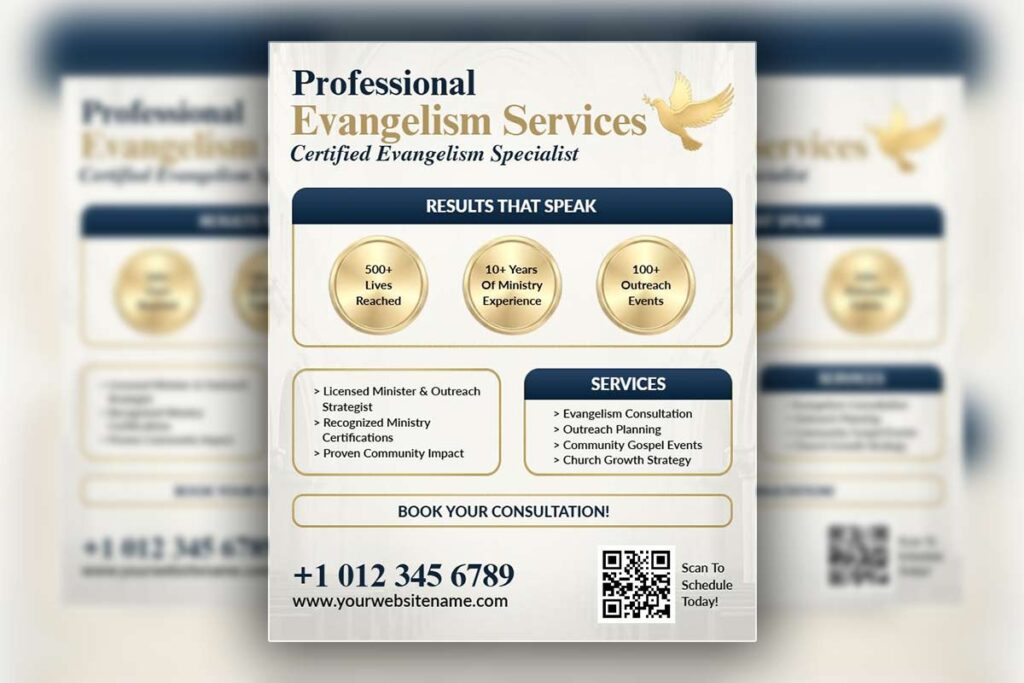
Professional credentialing language transforms perception from volunteer to consultant. Use titles such as “Ordained Minister and Evangelism Specialist,” “Certified Ministry Consultant,” or “Licensed Evangelism Director” prominently in headers. Include educational credentials: “Master of Divinity, Southwestern Seminary” or “Certified in Biblical Counseling.” Professional designations create instant authority recognition that distinguishes independent practitioners from casual volunteers.
Years of service establish longevity: “Serving communities since 2015” or “Over 8 years of evangelism ministry experience.” Avoid generic titles such as “minister” or “evangelist” without qualification. Denominational affiliations add credibility: “Licensed Baptist Minister” or “Ordained Presbyterian Pastor.” Professional language should mirror business consultant terminology while maintaining spiritual authenticity.
Include ministry license numbers when applicable and reference ongoing professional development such as conferences attended or continuing education completed.
Results-Driven Testimonials and Community Impact Metrics
Quantifiable achievements demonstrate professional effectiveness beyond spiritual platitudes. Include specific metrics: “Led 150+ individuals to salvation decisions in 2023” or “Conducted evangelism training for 25+ churches.” Community impact numbers build credibility: “Reached 5,000+ residents through seasonal outreach campaigns” or “Partnered with 15 local businesses for community events.”
Professional testimonials should come from church leadership, not just congregation members. Include pastor endorsements: “Rev. Johnson has transformed our outreach effectiveness” or “Increased our visitor retention by 40%.” Business leader testimonials add secular credibility: “Mayor Smith endorses our community partnerships.”
Use specific time frames and measurable outcomes rather than emotional testimonials. Reference repeat engagements: “Invited back for third consecutive year” or “Expanding partnership to include quarterly events.”
Service Portfolio Language That Commands Professional Respect
Professional evangelism service descriptions position ministries as expert consultants rather than general service providers. Carefully crafted language emphasizes specialization, clearly defines deliverables, and conveys credibility while maintaining spiritual authenticity.
- Specialized Service Terminology – Use precise, professional terms such as “Evangelism Strategy Development,” “Community Outreach Consulting,” or “Seasonal Campaign Management.” Describe tangible deliverables such as “Comprehensive outreach plan with timeline and metrics” or “Custom evangelism materials and training protocols.”
- Professional Pricing and Boundaries – Present services as structured investments: “Ministry investment packages available” or “Consultation rates based on scope and duration.” Include scope and scheduling boundaries such as “Advanced booking required” and “Limited seasonal availability” to reinforce professionalism and reliability.
- Credibility and Assurance – Highlight expertise through guarantees and evidence-based methodologies: “Results-oriented approach with measurable outcomes,” “Ministry satisfaction guarantee,” or “Proven community engagement frameworks.” Define service scope clearly to prevent misunderstandings while demonstrating accountability.
Using professional language in service portfolios establishes authority, instills client confidence, and communicates expertise while preserving the authentic mission and heart of ministry work.
People Also Ask:
- Best seasonal evangelism flyer templates for independent ministers
Professional templates on DesignWiz, Adobe Express, and Template.net offer seasonal evangelism flyers specifically designed for ministry use. Choose templates with clean layouts, seasonal color schemes, and space for ministry branding to establish credibility. - How to distribute seasonal evangelism flyers effectively in communities
Target community centers, libraries, coffee shops, and local businesses six weeks before seasonal events. Partner with complementary service providers and use direct mail to church leadership for maximum seasonal evangelism flyer impact. - Cost-effective printing options for seasonal evangelism flyers
Online services such as Vistaprint, PrintPlace, and local print shops offer bulk seasonal evangelism flyers from $0.05 each. Use 100gsm paper minimum and order 500+ copies for professional quality at competitive pricing. - Professional design elements for seasonal evangelism flyers
Include ministry logo, consistent color schemes, high-quality seasonal imagery, clear contact information, and testimonials. Professional seasonal evangelism flyers use readable fonts, balanced layouts, and premium paper stock to compete with established organizations. - Seasonal themes that increase evangelism flyer response rates
Christmas hope, Easter renewal, back-to-school fresh starts, and harvest thanksgiving themes resonate strongly. Seasonal evangelism flyers should align with local community celebrations and cultural events for maximum engagement and response rates. - How to brand seasonal evangelism flyers for solo ministry practitioners
Create consistent ministry identity with professional logo, signature colors, and unique value proposition. Seasonal evangelism flyers should emphasize expertise, experience, and personalized service to differentiate from larger organizational competitors.
Frequently Asked Questions:
- How can solo evangelism practitioners use seasonal flyers to appear more established?
Professional seasonal evangelism flyers with consistent branding, quality printing, and strategic messaging create organizational credibility. Include ministry credentials, testimonials, and contact information that mirrors established organizations. Use high-quality paper stock and professional design elements to compete visually with larger ministry groups while highlighting your specialized seasonal outreach expertise. - What budget-friendly options exist for professional seasonal evangelism flyers?
Online printing services offer bulk seasonal evangelism flyers starting at $0.05 per piece. Use free design tools like DesignWiz with premium templates, print on 100gsm paper minimum, and order 500+ copies for better pricing. Consider local print shops for rush orders and establish relationships for ongoing seasonal campaigns throughout the year. - How should independent ministers brand their seasonal evangelism flyers?
Create a consistent ministry logo, use professional color schemes matching seasonal themes, and include ministry name prominently. Seasonal evangelism flyers should feature your unique value proposition, years of experience, and specific seasonal expertise. Avoid generic church imagery instead use personalized branding that reflects your individual ministry approach and seasonal specialization. - What seasonal themes work best for solo practitioner evangelism flyers?
Christmas, Easter, back-to-school, and community harvest themes resonate strongly. Seasonal evangelism flyers should align with local community events and cultural celebrations. Focus on hope, renewal, and community connection messages that showcase your understanding of seasonal spiritual needs while positioning yourself as the local expert for seasonal outreach campaigns. - How can seasonal flyers showcase ministry credibility without organizational support?
Include ministry certifications, years of experience, successful campaign statistics, and community testimonials on seasonal evangelism flyers. Feature before/after photos from previous seasonal outreach, media mentions, or partnerships with local businesses. Present yourself as an established ministry consultant rather than a temporary volunteer through professional presentation and proven results. - What distribution methods maximize seasonal evangelism flyer impact for solo practitioners?
Target decision-makers through direct mail to church leadership, community center bulletin boards, and local business partnerships. Hand-deliver seasonal evangelism flyers to key influencers with personal introductions. Focus on quality over quantity by researching target recipients and timing distribution 6-8 weeks before seasonal events for maximum planning impact. - How do professional seasonal flyers help compete with established ministry organizations?
High-quality seasonal evangelism flyers level the playing field by showcasing professionalism equal to larger organizations. Use premium design, strategic messaging, and clear calls-to-action that demonstrate expertise and reliability. Professional presentation overcomes size disadvantages by focusing on specialized seasonal knowledge and personalized service that large organizations cannot match. - What contact information should solo practitioners include on seasonal evangelism flyers?
Include professional email address, dedicated ministry phone line, website URL, and physical mailing address for credibility. Seasonal evangelism flyers should feature social media handles and online portfolio links. Avoid personal cell numbers or home addresses; instead use Google Voice numbers and PO boxes to maintain professional boundaries while ensuring accessibility.
Conclusion:
Successful flyer-based branding transforms solo evangelism practitioners from temporary volunteers into credible ministry professionals. By implementing Seasonal Evangelism flyers with consistent visual identity, minimalist design, and premium printing, independent ministers can mirror the professionalism of established organizations. Strategic branding elements—logos, typography, and quality materials—signal long-term ministry commitment and help build lasting community trust.
To sustain credibility, solo evangelists must integrate testimonials, ministry credentials, and targeted distribution strategies that connect with community leaders and decision-makers. Seasonal messaging should blend local relevance with gospel-centered authenticity, addressing emotional and spiritual needs through visually consistent campaigns. When combined with cost-effective printing and professional design templates, these evangelism flyers empower solo practitioners to stand out, attract engagement, and establish enduring ministry relationships built on excellence, trust, and authentic community service.
Reference:
- Seasonal outreaches. Retrived from Cru.
- Planning your evangelistic outreach. Retrived from Billy Graham Evangelistic Association.
- Envisioning and implementing a servant/event evangelism strategy. Retrived from Liberty University.
- Brand Attachment to Specific Technology Products. Retrived from ERIC.