
New evangelism ministries often face community skepticism and limited reputation, making evangelism marketing flyers essential for establishing trust and connecting with potential congregants. Using Customizable evangelism flyer templates, solo practitioners can create visually credible, transparent messaging that overcomes resistance and demonstrates legitimacy. This guide explores designing effective materials, authentic communication strategies, and cost-efficient distribution techniques, helping ministries turn hesitant communities into engaged congregations while maximizing limited resources.
What Are Evangelism Marketing Flyers and How Do They Build Ministry Credibility?
Evangelism marketing flyers are professionally designed promotional materials that communicate a ministry’s mission, services, and values to potential congregants and community members. An online flyer maker allows churches to create flyers with consistent branding, include images of ministry leaders, provide contact information, and share member testimonials, which can support credibility and outreach efforts.
They showcase the ministry’s commitment to excellence through clean typography and thoughtful design, helping new evangelism ministries appear established and trustworthy. Presenting organized service schedules, community outreach programs, and religious offerings in a clear, polished format allows these evangelism outreach flyers to demonstrate professionalism that helps overcome initial skepticism about newer ministries.
Visual Elements That Establish Ministry Authority and Professional Presence
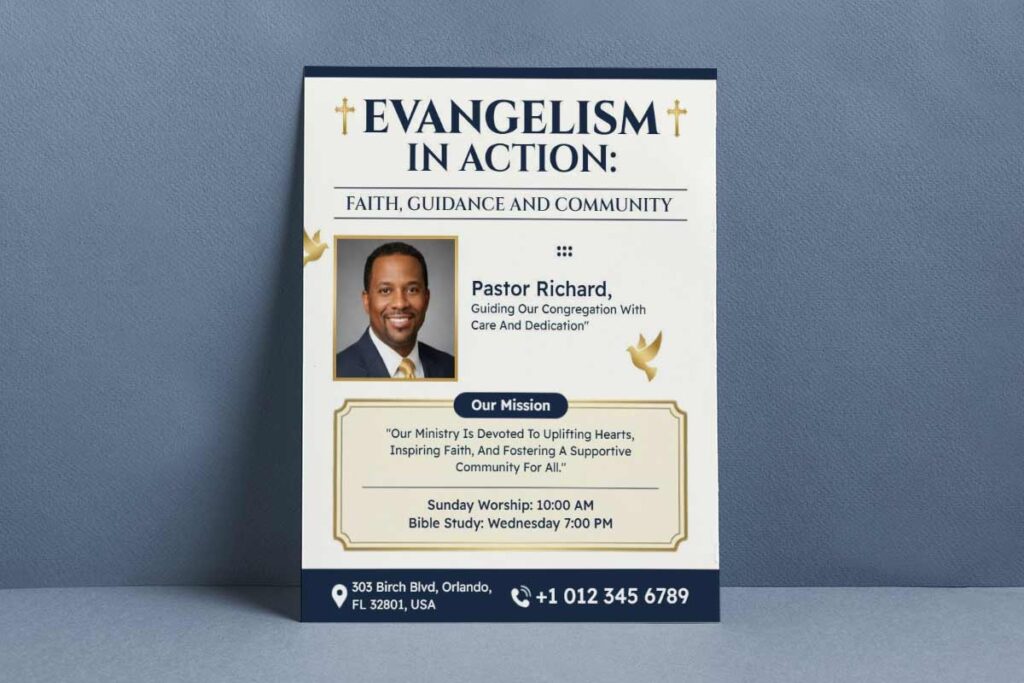
Professional headshots create immediate credibility by putting a face to the ministry, allowing potential congregants to connect personally with leadership before their first visit. High-quality photography conveys serious commitment while clean typography using readable fonts signals organizational competence and attention to detail. Color schemes incorporating traditional religious elements such as crosses, doves, or warm earth tones establish spiritual authority without appearing overly commercial.
Consistent branding elements including ministry logos, standardized fonts, and coordinated color palettes demonstrate established operations rather than temporary ventures. White space usage prevents cluttered appearances that suggest disorganization, while balanced layouts guide readers through key information systematically. Quality paper stock for printed materials reinforces the impression of financial stability and long-term community commitment. Exploring diverse creative flyer design approaches can help ministries develop unique visual identities that resonate with their target communities.
Content Strategies for Communicating Ministry Mission and Core Values
Mission statements positioned prominently communicate purpose beyond simple attendance growth, emphasizing community service and spiritual guidance. Core values presented through specific examples rather than generic statements demonstrate authentic commitment to stated principles. Service descriptions detail practical benefits such as counseling support, educational programs, or charitable initiatives that address real community needs.
Testimonial integration from current members provides third-party validation while scripture references establish biblical foundation and theological grounding. Testimonial integration from current members provides third-party validation while scripture references establish biblical foundation and theological grounding.1 Contact information includes multiple communication methods showing accessibility and transparency. Clear service schedules with specific times and locations eliminate barriers to initial participation while community involvement examples document tangible local impact.
Program highlights showcase educational opportunities, youth activities, or support groups that serve broader community interests beyond traditional worship services, positioning the ministry as valuable community resource rather than insular organization. Crafting effective calls to action encourages potential congregants to take meaningful next steps in engaging with ministry programs.
- Strategic Evangelism Seminar Church Event Flyer Template
- Church Street Evangelism Event Flyer Template
- Evangelism Midday Worship Church Flyer Template
Design Components That Signal Trustworthiness to Potential Congregants
Physical and visual cues in ministry marketing materials communicate credibility, reliability, and accessibility to potential congregants. Thoughtful flyer design helps establish confidence in leadership and organizational integrity before first contact.
- Transparency and Accessibility – Prominently display the physical address, emergency contact information, and multiple communication channels. These elements convey permanence, openness, and pastoral availability.
- Leadership and Institutional Credibility – Include educational background, ordination details, years of ministry experience, and denomination affiliation logos. Highlight community partnerships and charitable initiatives to demonstrate local engagement and accountability.
- Professionalism and Quality Assurance – Ensure flawless proofreading, consistent formatting, and accurate information. Incorporate certifications, continuing education achievements, and social media links to showcase ongoing ministerial excellence and transparency.
Clear, credible design elements build trust, making potential congregants feel confident in engaging with the ministry while understanding the steps to get involved.
How Can Evangelism Marketing Flyers Overcome Community Skepticism for New Ministries?
Christian evangelism marketing flyers overcome community skepticism by featuring established pastor credentials, denominational affiliations, and community partnership logos that provide external validation. Street evangelism flyers and evangelism event flyers should highlight transparent leadership backgrounds, include verifiable contact information, and showcase early community involvement through volunteer activities or charitable work.
New ministries can leverage testimonials from community leaders, display professional certifications, and use year-round campaigns that demonstrate consistency and commitment.2 By incorporating holiday seasons messaging and emphasizing local community connections, these flyers help skeptical residents see the ministry as a legitimate, beneficial addition to their neighborhood.
Incorporating Third-Party Endorsements and Community Partnership Validation
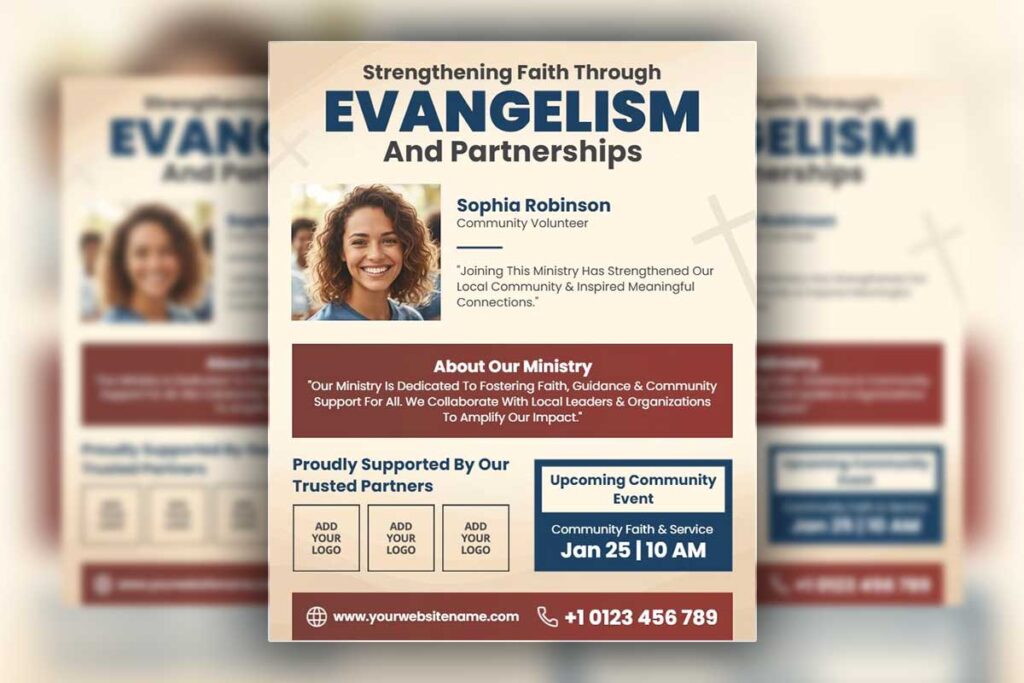
Leveraging credible external support builds trust and addresses skepticism by showing that respected organizations and leaders actively endorse your ministry. Thoughtful inclusion of third-party validation reinforces legitimacy and demonstrates tangible community impact.
- Community Partnership Logos and Affiliations – Feature recognizable local organizations such as food banks, community centers, or interfaith councils. Prominently display denominational connections to convey institutional credibility that new ministries may otherwise lack.
- Endorsements from Respected Leaders – Include testimonials from pastors, business owners, or community leaders with full names and titles. Highlight specific collaborative projects, such as neighborhood food drives or charity programs, to show concrete contributions.
- Demonstrated Impact Over Generic Praise – Use statements that clearly connect your ministry’s efforts to measurable community benefits. For example, “Pastor Johnson helped establish our neighborhood food distribution program” provides credibility and tangible proof of your ministry’s positive influence.
Incorporating endorsements and partnership validations transforms skepticism into confidence, showing that your ministry is respected, effective, and deeply connected to the local community.
Transparency Techniques That Address Common Concerns About New Religious Organizations
Transparency directly counters common fears about new religious organizations through complete disclosure of leadership, finances, and intentions. Display pastor credentials including seminary education, ordination details, and previous ministry experience with verifiable contact information for references. Include physical addresses, not just P.O. boxes, to demonstrate permanent community presence.
Address financial transparency by mentioning voluntary donation policies and community service focus rather than fundraising emphasis. List specific community services offered without charge, such as counseling, food assistance, or educational programs that benefit residents regardless of religious affiliation.
Include clear mission statements that emphasize service over conversion, addressing concerns about aggressive proselytizing. Provide multiple contact methods including social media, website, and phone numbers that skeptical community members can use to verify information independently. Feature upcoming public events such as community service projects where residents can observe your ministry’s actual activities and character before making judgments based on assumptions or unfounded concerns about new religious organizations.
- Church Evangelism Event Flyer with Host Speaker Template
- Church Planting and Evangelism Conference Flyer Template
- Evangelism Training Fall Semester Flyer Template
Seasonal Messaging Strategies That Demonstrate Long-Term Community Commitment
Effective seasonal messaging conveys a ministry’s consistent presence and investment in the community over time. By aligning communications with recurring local events and seasonal needs, organizations can showcase genuine long-term engagement rather than short-term visibility.
- Year-Round Community Alignment – Develop messaging calendars tied to local events, school schedules, and municipal activities. Regular presence across multiple cycles demonstrates deep neighborhood integration and awareness of community priorities.
- Seasonal Program Highlights – Tailor campaigns to seasonal needs: holidays for interfaith partnerships or volunteer projects; spring for community gardens and cleanup efforts; summer for youth programs and safety initiatives; back-to-school for educational support or supply drives. Highlight measurable milestones such as “25 neighborhood service projects completed” to reinforce impact.
- Documented Outcomes and Recurring Partnerships – Use before-and-after stories, recurring event participation, and ongoing partnerships to illustrate sustained contribution. Emphasizing continuity and evolving relationships builds credibility and reduces skepticism about temporary efforts.
Seasonal messaging that consistently reflects active community engagement strengthens trust, highlights ministry impact, and positions your organization as a reliable, long-term contributor to local welfare.
What Design Elements Make Evangelism Marketing Flyers Trustworthy for Solo Practitioners?
Trustworthy evangelism marketing flyers for solo practitioners require professional headshots that convey warmth and authenticity, clean typography using readable fonts such as Arial or Times New Roman, and established religious imagery such as crosses or doves. Consistent branding with ministry name, contact information, and credentials builds credibility.
Quality paper stock and balanced white space demonstrate professionalism, while testimonials or endorsements from community leaders add legitimacy. Clear messaging about services, experience, and mission statements helps overcome skepticism. These elements work together to establish authority and approachability for new ministries seeking community trust. Incorporating essential flyer design components ensures all critical trust-building elements work harmoniously in evangelism materials.
Professional Photography Standards for Solo Ministry Credibility
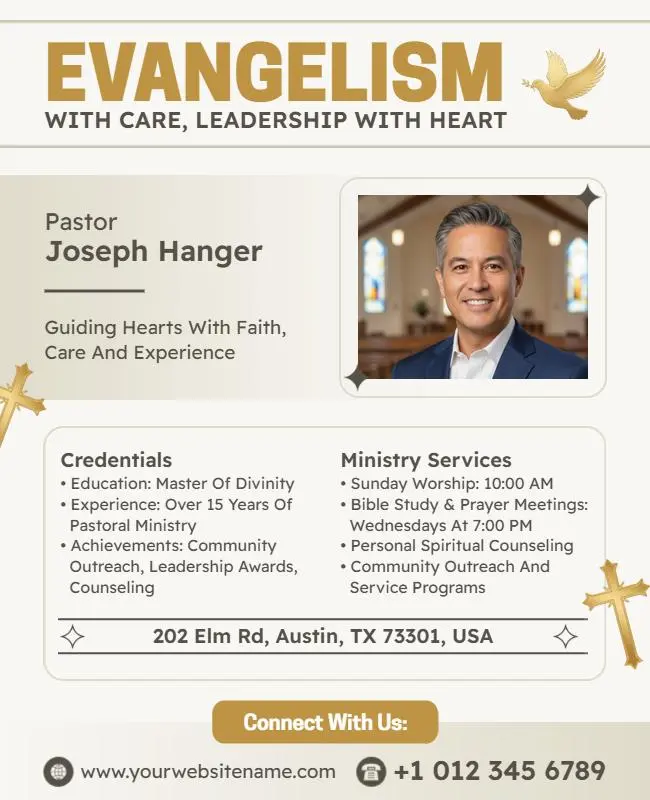
Professional headshots establish immediate credibility for solo evangelism practitioners by showing authentic pastoral presence. High-quality portraits should feature natural lighting, appropriate religious attire, and genuine expressions that communicate approachability rather than authority. Include full-color professional photos rather than casual snapshots, positioning them prominently in the upper third of flyers to create immediate personal connection.
Avoid overly formal corporate styling that creates distance from community members. Instead, choose portraits that balance professionalism with warmth, showing pastors in comfortable ministry settings such as prayer spaces or community areas. Include ministry credentials and educational background beneath photos to establish qualifications without appearing boastful. Professional photography investments typically cost $200-400 but provide lasting credibility returns across multiple marketing materials. Consider group photos with community members to demonstrate existing relationships and social proof of ministry acceptance within local areas.
Typography and Color Psychology That Builds Spiritual Authority
Clean typography using traditional fonts such as Times New Roman, Garamond, or Georgia conveys established religious authority while maintaining readability across age groups. Avoid trendy or decorative fonts that appear casual or temporary. Use consistent font hierarchy with larger headers and organized information flow that guides reader attention naturally.
Color psychology plays crucial roles in building spiritual trust. Deep blues communicate stability and divine connection, while warm golds suggest hope and prosperity. Traditional combinations such as navy blue headers with black body text create professional appearance without overwhelming design elements. Burgundy accents add dignity and gravitas appropriate for religious contexts.
Limit color palettes to three colors maximum to maintain sophisticated appearance. White space prevents cluttered designs that suggest disorganization or unprofessionalism. Headers should be 2-3 sizes larger than body text, with consistent spacing between sections. Bold text should highlight only essential information such as contact details and service times to avoid overwhelming potential congregants. Applying professional flyer layout principles to evangelism materials ensures information hierarchy guides readers naturally through key messaging.
- Evangelism Conference Church Event Flyer Template
- Open Air Evangelism Crusade Promotion Flyer Template
- Church Strategic Evangelism Seminar Flyer Template
Testimonial Placement Strategies for Overcoming Community Skepticism
Strategic testimonial placement can transform skepticism into trust by showcasing credible, verifiable endorsements. Thoughtful positioning and contextual relevance enhance perceived legitimacy while reinforcing ministry effectiveness.
- Prominent, Credible Placement – Position testimonials in high-visibility areas such as the upper-right corner or sidebars where readers’ eyes naturally gravitate. Include full names, photos, and community roles to maximize authenticity and avoid anonymous endorsements.
- Diverse Community Voices – Feature testimonials from local business owners, educators, and long-term residents, not just church members. Highlight specific interactions and outcomes—e.g., “Pastor Johnson provided counseling during our family crisis”—to build tangible credibility.
- Consistent Formatting and Seasonal Rotation – Use quotation marks, attribution lines, and professional headshots for uniformity. Place endorsements near relevant service descriptions for contextual reinforcement, and rotate testimonials seasonally to show ongoing community engagement rather than past achievements.
Strategically placed, credible testimonials reduce skepticism, validate ministry services, and demonstrate active community involvement, making outreach flyers more persuasive and trustworthy.
How Do Evangelism Marketing Flyers Compare to Digital Outreach for Building Initial Trust?
Evangelism marketing flyers offer unique trust-building advantages over digital outreach through tangible credibility and personal connection. Physical flyers create lasting impressions through quality paper stock and professional design that recipients can hold and reference repeatedly. Unlike digital content that can appear temporary or spam-like, church evangelism flyers demonstrate investment and commitment to the community.
They enable face-to-face distribution during street evangelism or community events, allowing personal interaction that builds immediate rapport. However, digital outreach offers broader reach and cost efficiency, making a combined approach most effective for establishing credibility among skeptical communities. Evaluating trade-offs between print and digital marketing enables ministries to allocate resources strategically for maximum community impact.
Tangible Credibility Advantages of Physical Evangelism Outreach Flyers
Physical flyers provide immediate credibility through professional presentation quality that digital content cannot match. Recipients evaluate ministry legitimacy through paper stock, printing quality, and design sophistication. Quality materials signal established ministry resources and long-term community commitment. Face-to-face distribution allows personal introduction, answering immediate questions and addressing skepticism directly.
Recipients retain physical materials for future reference, creating ongoing ministry presence in homes and offices. Street evangelism flyers handed personally carry emotional connection digital ads lack. Physical materials resist deletion or blocking, maintaining visibility until recipient chooses disposal. Professional headshots and clean typography on quality materials establish pastoral authority more effectively than social media profiles or email signatures.
Cost-Effectiveness Analysis: Print vs Digital Evangelism Marketing Strategies
Print costs for evangelism event flyers range $0.10-0.50 per flyer depending on quantity and quality, while digital outreach costs $0.05-2.00 per targeted impression with uncertain engagement rates. Local printing partnerships reduce costs significantly for bulk orders. Digital campaigns require ongoing monthly spend for sustained visibility, while printed materials provide one-time investment with extended shelf life. However, digital reaches broader audiences instantly with precise targeting capabilities.
Print distribution requires volunteer time and strategic location planning, adding labor costs digital automation eliminates. Digital provides detailed analytics tracking engagement and conversion, while print success measurement relies on response tracking through phone calls or website visits. Christian evangelism marketing flyers excel in local community penetration where personal relationships matter most, while digital dominates broader regional outreach efforts. Adapting small-scale flyer marketing strategies to ministry contexts enables resource-limited organizations to compete effectively with established churches.
Hybrid Approaches: Combining Street Evangelism Flyers with Online Ministry Presence
Effective ministry outreach leverages both physical and digital channels to build trust, credibility, and sustained engagement. Street-distributed flyers create local awareness, while digital platforms nurture relationships beyond initial encounters.
- Seamless Physical-to-Digital Integration – QR codes on flyers link directly to ministry websites or landing pages, allowing recipients to access service schedules, pastoral information, and community involvement updates. Understanding QR code optimization strategies helps ministries maximize digital engagement from physical evangelism materials. This integration ensures physical engagement translates into measurable digital interactions.
- Social Proof and Follow-Up Systems – Flyers reference social media profiles, online testimonials, and video recordings of services to validate ministry impact. Digital follow-ups capture contact information, enabling systematic relationship building and ongoing engagement that print alone cannot achieve.
- Targeted Digital Nurturing – Landing pages and automated email sequences provide personalized content for flyer recipients, including service reminders, devotionals, or volunteer opportunities. Video testimonials and recorded services reinforce credibility while maintaining engagement between physical encounters.
Combining street evangelism flyers with a strong online ministry presence creates a hybrid outreach model that maximizes immediate trust-building while supporting long-term digital relationship growth.
What Messaging Strategies Work Best on Evangelism Marketing Flyers for Reputation Building?
Effective evangelism marketing flyers build reputation through authentic testimonial integration, clear ministry credentials display, and community-focused messaging that emphasizes service over sales. Successful street evangelism flyers feature pastoral headshots with certifications, highlight years of ministry experience, and showcase community partnership logos.
Church evangelism flyers should include specific ministry achievements, volunteer program highlights, and transparent contact information.3 Christian evangelism marketing flyers perform best when they balance spiritual messaging with professional presentation, incorporating local community references and establishing credibility through documented outreach success stories and pastoral endorsements.
Authentic Testimony Integration and Community Impact Stories
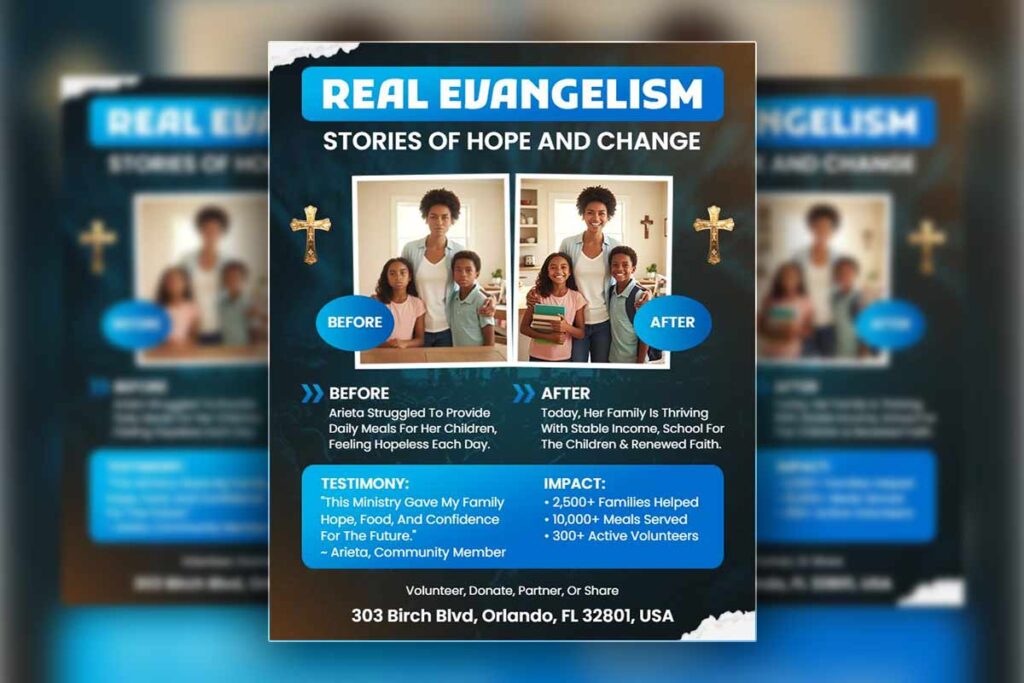
Real testimonials from community members create immediate credibility for new ministries struggling with skepticism. Feature specific transformation stories with permission, including names and photos when possible. Document measurable community improvements through your ministry’s involvement – food bank contributions, volunteer hours, or successful counseling outcomes.
Use quotes that highlight practical benefits rather than spiritual language alone: “Pastor Johnson helped our family through foreclosure with practical budgeting advice and emotional support.” Include statistics that demonstrate community impact: “Served 200 families last year” or “Provided 1,000 volunteer hours to local schools.” Position testimonials prominently with professional formatting to ensure readability and credibility.
Professional Credential Display and Ministry Experience Highlighting
Display pastoral credentials prominently including seminary education, ordination dates, and denominational affiliations to establish legitimate authority. List specific experience markers such as years in ministry, previous church positions, and specialized training in counseling or community outreach. Include professional certifications in areas such as grief counseling, youth ministry, or financial guidance that demonstrate practical skills beyond theological training.
Feature membership in recognized ministerial associations or community leadership roles that provide third-party validation. Add continuing education achievements and recent training that shows commitment to excellence and growth. Present this information clearly without overwhelming the flyer’s primary message about community service and availability.
- Personal Evangelism Seminar Church Event Flyer Template
- Sunday Evangelical Church Service Flyer Template
- Church Evangelism Event Announcement Flyer Template
Trust-Building Through Transparency and Local Partnership Showcases
Building trust for new religious organizations requires proactive transparency and visible community engagement. Flyers that clearly communicate credibility and local involvement help overcome skepticism while positioning the ministry as reliable and invested in the community.
- Complete Contact and Operational Transparency – Include physical address, phone number, website, and regular service schedules to demonstrate permanence, accountability, and accessibility. Financial transparency, such as 501(c)(3) registration and publicly available reports, reinforces credibility.
- Local Partnership Highlights – Showcase collaborations with schools, food banks, community centers, or other churches. Display partner logos (with permission) and brief project descriptions to validate the ministry’s legitimacy and community integration.
- Endorsements and Community Validation – Feature quotes or endorsements from community leaders, local business owners, or other pastors. These testimonials provide external validation, addressing potential skepticism and reinforcing trust before personal engagement.
Transparent communication combined with visible local partnerships strengthens credibility, reassures the community, and encourages engagement with new ministry initiatives.
How Can Solo Ministry Practitioners Distribute Evangelism Marketing Flyers Effectively?
Solo ministry practitioners maximize evangelism marketing flyers effectiveness through strategic community placement, relationship building, and systematic distribution approaches. Successful distribution combines high-traffic locations with permission-based outreach and digital integration. Street evangelism flyers gain traction through local business partnerships and consistent weekly schedules that build community familiarity and trust over time.4 Implementing strategic flyer distribution methods ensures evangelism materials reach receptive community members most likely to engage.
Strategic Community Hub Placement and High-Traffic Location Targeting
Focus evangelism outreach flyers placement on locations where people make thoughtful decisions rather than impulse areas. Community centers, public libraries, coffee shops, and local businesses offer receptive audiences who spend time reading materials. Position flyers near bulletin boards, waiting areas, and information kiosks where residents naturally pause.
Establish weekly placement schedules to maintain consistent presence and track which locations generate inquiries. Partner with sympathetic business owners who support community outreach efforts. Avoid aggressive placement that appears pushy or invasive, which increases skepticism about ministry motives and reduces trust-building effectiveness. Recognizing typical flyer distribution mistake helps solo practitioners maintain respectful community presence while maximizing outreach effectiveness.
Personal Relationship Leveraging and Cross-Ministry Partnership Development
Build distribution networks through existing relationships with other pastors, community leaders, and established ministries. Connect with denominational partners who can provide established distribution channels and credibility endorsements. Attend local ministerial associations and community service events to develop authentic relationships that support flyer placement.
Exchange distribution opportunities with other ministries serving different demographics. Focus on serving community needs rather than competing for members, which creates collaborative rather than competitive relationships that benefit long-term ministry establishment.
- National Evangelism Week Church Event Flyer Template
- Street Evangelism Event Flyer Template
- Church Evangelistic Event Announcement Flyer Template
Systematic Neighborhood Canvassing with Digital Integration Follow-Up
Effective religious outreach combines targeted physical distribution with digital follow-up systems to maximize engagement while respecting community receptiveness. Strategic planning ensures resources focus on neighborhoods most open to ministry efforts.
- Targeted Physical Distribution – Develop consistent door-to-door schedules in receptive neighborhoods. Use clearly branded flyers and maintain a relationship-focused approach rather than aggressive solicitation to encourage positive community interactions.
- Digital Integration and Follow-Up – Include QR codes linking to ministry websites, event pages, or email signup forms. Track engagement metrics such as QR scans, website visits, and email signups to measure effectiveness and identify areas for deeper follow-up.
- Data-Driven Optimization – Record household responses, inquiry levels, and event attendance to refine messaging and distribution schedules. Combine flyer efforts with localized social media promotion to reinforce outreach and sustain ongoing community engagement.
Systematic canvassing paired with digital follow-up builds meaningful connections, improves community acceptance, and ensures ministry outreach efforts are efficient, measurable, and relationship-focused.
What Common Mistakes Should New Ministries Avoid With Evangelism Marketing Flyers?
New ministries often create evangelism marketing flyers that overwhelm readers with excessive text, unclear messaging, and unprofessional design elements. Common pitfalls include using generic stock imagery instead of authentic ministry photos, cramming information without clear hierarchy, and failing to establish credibility through testimonials or pastoral credentials. Additionally, using aggressive or exclusionary language creates barriers rather than building bridges with potential congregants in diverse communities.
Avoiding Design Overload in Church Evangelism Flyers
Cluttered layouts overwhelm recipients and appear unprofessional. New ministries frequently use multiple fonts, excessive religious imagery, and cramped spacing that makes flyers difficult to read. Successful church evangelism flyers feature clean typography, balanced white space, and focused messaging.
Limit designs to two fonts maximum, choose readable sizes above 12pt, and maintain consistent color schemes. Avoid bright, neon colors that appear amateur. Professional appearance signals established ministry credibility, reducing skepticism from potential congregants. Quality paper stock and balanced composition demonstrate investment in community outreach. Learning about common flyer design pitfalls helps new ministries avoid credibility-damaging errors in their outreach materials.
Building Credibility Without Established Ministry History
New ministries struggle to demonstrate legitimacy without extensive track records. Include pastor credentials, denominational affiliations, and community partnership logos for external validation. Feature professional headshots with brief background information about ministry leadership.
Showcase early community involvement through volunteer activities or charitable partnerships. Display any certifications, training, or experience relevant to ministry work. Testimonials from community leaders or early supporters provide third-party validation that overcomes initial skepticism about new religious organizations.
- Community Evangelism Walk Event Flyer Template
- Serene Spiritual Sunday Church Worship Gathering Flyer Template
- Youth Evangelism Training Event Flyer Template
Creating Inclusive Messaging for Street Evangelism Outreach
Inclusive messaging in street evangelism fosters trust and engagement by prioritizing community benefit over doctrinal pressure. Thoughtful language and visual representation help ministries reach diverse audiences while maintaining a welcoming presence.
- Community-Focused Language – Highlight practical services such as food assistance, counseling, or educational programs. Use humble, service-oriented wording that demonstrates genuine care, avoiding language that pressures conversion or implies judgment.
- Visual Diversity and Accessibility – Include imagery representing varied cultural and demographic backgrounds. Ensure flyer design is approachable and accessible, reflecting the inclusive nature of ministry programs.
- Non-Dogmatic Calls-to-Action – Encourage participation in community events rather than immediate religious commitment. Phrases such as “join us for a free community meal” or “attend our neighborhood support session” create low-pressure opportunities for engagement.
By emphasizing service, inclusivity, and community investment, street evangelism flyers can engage a broader audience, build trust, and demonstrate authentic ministry presence without alienating recipients.
How Do You Measure the Trust-building Success of Evangelism Marketing Flyers?
Measuring trust-building success in evangelism outreach flyers requires tracking both immediate engagement metrics and longer-term relationship indicators. Key measurements include response rates to flyer contact information, attendance at evangelism events promoted through flyers, and follow-up conversations initiated by community members.
Successful Christian evangelism marketing flyers generate inquiries about services, requests for pastoral visits, and increased participation in community outreach programs. Additionally, monitoring community feedback through social media mentions, word-of-mouth referrals, and partnership opportunities with local organizations provides insight into reputation building and trust establishment over time.
Tracking Community Response Rates to Evangelism Event Flyers
Direct response tracking measures immediate trust indicators through quantifiable actions. Monitor phone calls, email inquiries, and website visits originating from specific flyer campaigns by using unique contact information or promotional codes. Track attendance at evangelism events advertised through flyer distribution, comparing turnout rates across different community locations and demographics.
Calculate response rates by dividing total inquiries by flyer distribution numbers, establishing baseline metrics for future campaigns. Survey new attendees about how they discovered your ministry, specifically asking about flyer encounters and their initial impressions. Document which flyer design elements and messaging approaches generate higher response rates, focusing on visual trust signals such as professional headshots, clear contact information, and community partnership logos.
Measuring Long-term Relationship Building Through Flyer Campaigns
Long-term trust measurement focuses on relationship development beyond initial contact. Track repeat engagement from individuals who first encountered your ministry through flyer distribution, monitoring their progression from initial inquiry to regular participation. Document partnership requests from community organizations that reference your flyers as their introduction to your ministry’s work and credibility.
Monitor retention rates of new members who initially connected through flyer outreach, comparing their long-term engagement levels with those recruited through other methods. Track community leadership invitations, speaking opportunities, and collaborative project requests that indicate growing trust and recognition. Measure social media engagement and online reviews mentioning flyer encounters, particularly noting positive testimonials about professional presentation and community-focused messaging.
- Open Air Evangelism Crusade Flyer Template
- Street Evangelism Event Flyer Template
- Evangelism Conference Church Event Flyer Template
Analyzing Feedback Quality from Evangelism-Specific Flyer Distribution
Collecting and analyzing qualitative feedback from flyer recipients helps ministries understand trust-building effectiveness and community engagement. Detailed insights reveal how design, messaging, and presentation influence credibility and long-term relationships.
- Credibility and Design Evaluation – Gather community impressions regarding professional design quality, transparency, and perceived ministry stability. Note specific elements that enhance trust, such as pastor credentials, partnerships, or clearly communicated service offerings.
- Pattern Analysis and Segmentation – Identify recurring strengths and skepticism triggers across different community segments. Track changes over time to measure perception improvements as flyer campaigns establish consistent presence. Monitor negative feedback to address unclear messaging, unprofessional visuals, or overly aggressive language.
- Systematic Feedback Collection – Use brief surveys distributed with flyers or during follow-ups, asking about clarity, credibility, and willingness to recommend the ministry. Compare results across flyer designs and distribution methods to optimize trust-building and maximize sustained community engagement.
Analyzing qualitative feedback ensures evangelism flyer campaigns effectively communicate credibility, strengthen community relationships, and continuously improve ministry outreach strategies.
What Templates Work Best for Evangelism Marketing Flyers on Limited Budgets?
Budget-friendly evangelism marketing flyers require strategic template selection that maximizes credibility while minimizing costs. Successful street evangelism flyers and church evangelism flyers use templates with high contrast ratios for readability, simplified color schemes for affordable printing, and standardized dimensions that reduce production waste.
Templates optimized for evangelism outreach campaigns should include flexible text areas, consistent branding elements, and print-ready specifications that maintain quality across different budget constraints. Understanding fundamental flyer creation principles helps ministries maximize template effectiveness while maintaining professional credibility.
Free Platform Templates That Build Ministry Credibility on Zero Budget
Canva offers professionally designed religious templates featuring scripture verses, cross imagery, and pastoral photography sections that establish immediate credibility. Free platforms such as GIMP and Canva provide access to high-quality fonts, religious symbols, and layout structures specifically designed for Christian evangelism marketing flyers.
These platforms include templates with built-in photo placeholders for pastoral headshots, testimonial sections, and contact information blocks that address skepticism through transparency. Staying informed about current visual trends helps ministries create contemporary designs that resonate with younger demographics while maintaining traditional credibility. Templates featuring clean backgrounds, readable fonts such as Arial or Helvetica, and balanced white space create professional appearance without design experience. Most free platforms offer templates specifically categorized for religious organizations, including evangelism event announcements, community outreach programs, and ministry introduction materials.
Print-Optimized Layouts That Reduce Production Costs Without Sacrificing Quality
Black-and-white optimized templates maintain visual hierarchy through typography weight and strategic use of white space rather than color differentiation. Print-efficient designs use standard paper sizes, avoid bleeds that require professional cutting, and incorporate designs that look professional in home printer quality.
Templates with solid backgrounds rather than gradients prevent ink streaking, while designs using single-color schemes ensure consistent reproduction across different printer types. Layouts featuring standard margins, readable font sizes above 12pt, and high contrast elements perform well on budget printing equipment. Templates designed with printer limitations in mind include backup text versions, simplified graphics, and layouts that work effectively in both color and grayscale printing modes.
Modular Design Systems for Multiple Evangelism Campaign Variations
Modular template systems enable ministries to maintain consistent branding while adapting content for diverse evangelism outreach campaigns. This approach streamlines design, ensures professional presentation, and allows rapid deployment for time-sensitive events.
- Interchangeable Content Sections – Base templates feature flexible zones for scripture verses, event details, and partner logos. Standardized headers and footers preserve ministry branding and contact information, creating cohesive visual identity across campaigns.
- Seasonal and Audience Adaptations – Templates accommodate holiday outreach, community events, and demographic-specific messaging. Color scheme variations, typography hierarchies, and scalable design elements ensure professional presentation for every audience segment.
- Rapid Customization and Consistency – Modular components allow ministries to quickly tailor flyers for urgent outreach without sacrificing quality. Consistent layout and design standards reinforce credibility and build community trust.
Using modular systems for evangelism campaigns ensures professional, flexible, and consistent communication across multiple outreach efforts, enhancing ministry reach and engagement.
How Can Evangelism Marketing Flyers Establish Partnerships With Local Organizations?
Evangelism marketing flyers facilitate local partnerships by incorporating collaborative messaging, shared branding elements, and community-focused content that appeals to secular organizations. Design flyers that emphasize community service rather than purely religious messaging, include partnership logos and co-sponsor recognition, and highlight shared values such as helping families or supporting youth.
Create templates with flexible branding sections for partner organizations, testimonial spaces from community leaders, and clear calls-to-action for joint events. Focus on flyers that showcase measurable community impact, volunteer opportunities, and interfaith dialogue initiatives to attract diverse organizational partnerships.
Co-Branding Strategies That Attract Non-Religious Community Partners
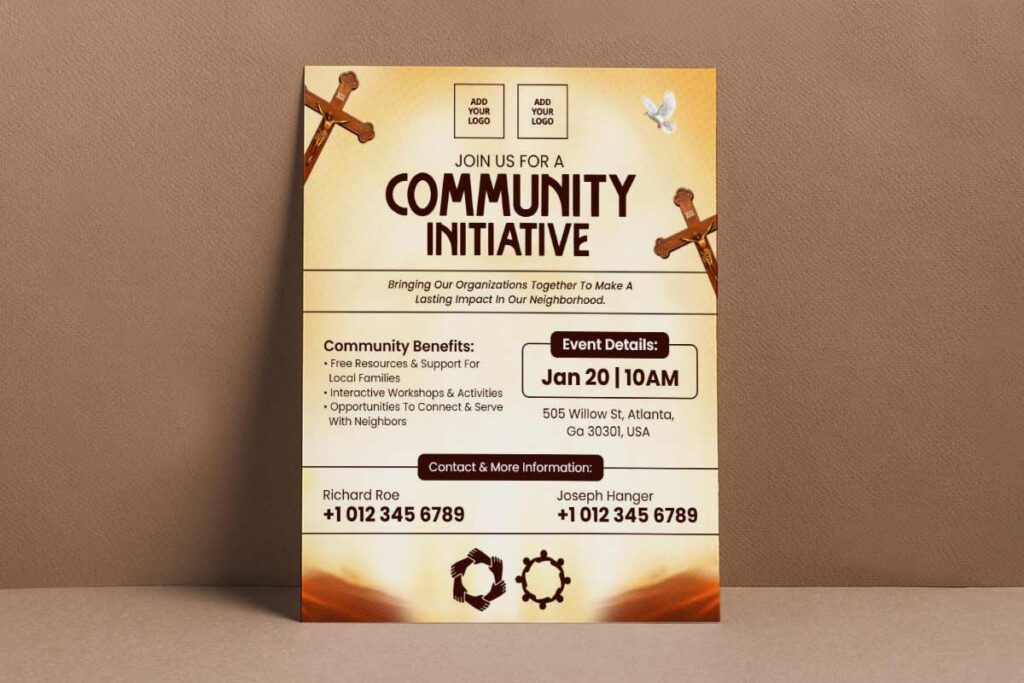
Evangelism marketing flyers can engage secular organizations through thoughtful co-branding that emphasizes shared community goals rather than religious messaging. Clear visual balance, neutral language, and transparent collaboration details help establish trust and appeal to diverse partners.
- Balanced Visual Hierarchy – Place partner logos alongside ministry branding with equal prominence. Avoid religious dominance in design, ensuring all organizations feel represented and respected.
- Community-Focused Messaging – Use headlines and copy emphasizing neighborhood improvement, family support, and youth development. Highlight tangible benefits such as shared resources, volunteer expansion, and cross-promotional opportunities to make participation appealing.
- Transparent Collaboration and Testimonials – Include testimonials from previous secular partners describing positive experiences. Clearly outline responsibilities, contributions, and mutual benefits to demonstrate professionalism and accountability.
Co-branding flyers that prioritize community impact, equal representation, and transparent partnerships attract secular organizations while preserving your ministry’s authentic identity.
Community Impact Messaging That Resonates Beyond Church Walls
Effective evangelism marketing flyers showcase tangible community benefits that attract diverse organizational partnerships. Highlight specific outcomes such as “fed 200 families monthly” or “tutored 50 students” rather than abstract spiritual concepts. Use data-driven messaging that demonstrates measurable impact through food distribution programs, educational support, senior care services, and youth mentorship initiatives.
Frame your ministry’s work in terms of addressing shared community challenges such as hunger, education gaps, isolation, and social services needs. Include infographics showing program results, volunteer statistics, and community reach. Use language that emphasizes collaboration: “working with local partners to address” rather than “our ministry provides.”
Incorporate quotes from community members and local leaders praising your organization’s practical contributions. Avoid religious jargon in favor of universally understood terms such as “compassionate service,” “community wellness,” and “neighbor helping neighbor.” This messaging approach attracts partnerships with schools, nonprofits, civic organizations, and businesses seeking authentic community impact rather than theological alignment.
Joint Event Promotion Templates for Interfaith and Secular Collaborations
Interfaith and secular partnership events require flyer templates that balance multiple organizational identities while emphasizing shared community outcomes. Flexible, neutral layouts ensure professionalism, equal representation, and clarity for diverse audiences.
- Balanced Multi-Partner Design – Design sections for each partner’s branding, messaging, and contact information without creating visual competition. Use consistent typography, spacing, and hierarchy to maintain cohesion while highlighting each partner equally.
- Community-Focused Messaging – Emphasize shared event benefits rather than individual promotion. Headlines such as “Community Health Fair” or “Neighborhood Safety Workshop” prioritize the collective impact. Include standardized sections for event details, volunteer opportunities, partner contributions, and follow-up information.
- Culturally Inclusive and Flexible Templates – Incorporate multi-language options, neutral symbols, and adaptable layouts for diverse faiths, schools, businesses, or healthcare organizations. Ensure design works across distribution channels including social media, bulletin boards, and direct community handouts.
Structured templates for joint events streamline production, enhance partner credibility, and maximize community engagement while maintaining a professional, inclusive presentation for all participating organizations.
People Also Ask:
- How to make evangelism marketing flyers that build community trust?
Focus on professional design, include credentials and contact information, highlight community service, and use welcoming language. Show transparency through testimonials and partnership affiliations to establish credibility. - What makes evangelism marketing flyers effective for new ministries?
Clear messaging about community benefits, professional appearance, authentic testimonials, and transparent contact information. Effective flyers address practical needs while demonstrating ministry legitimacy and stability. - Best distribution locations for evangelism marketing flyers in skeptical communities?
Target community centers, local businesses, coffee shops, and libraries where residents spend thoughtful time. Avoid aggressive distribution methods that increase suspicion about ministry motives. - How do evangelism marketing flyers overcome religious skepticism?
Emphasize community service and practical benefits rather than theological messaging. Use humble, service-focused language and showcase real community involvement to demonstrate genuine care beyond conversion goals. - Cost-effective evangelism marketing flyer designs for solo practitioners?
Use simple black-and-white layouts, optimize for home printing, and focus on clear typography over complex graphics. Professional simplicity beats expensive designs for trust-building effectiveness. - Essential elements for credible evangelism marketing flyers?
Include ministry name, pastor credentials, physical address, phone number, mission statement, and community service examples. Transparency and accountability information directly address legitimacy concerns from skeptical audiences.
Frequently Asked Questions:
- How do evangelism marketing flyers help solo practitioners establish credibility?
Evangelism marketing flyers provide tangible proof of ministry legitimacy through professional presentation and clear contact information. They showcase your mission, values, and community commitment, helping skeptical audiences see your ministry as established and trustworthy rather than temporary or questionable. - What essential information should evangelism marketing flyers include for trust building?
Include your ministry name, pastor credentials, physical address, phone number, website, and testimonials. Add your mission statement, community service history, and partnership affiliations. This transparency demonstrates accountability and permanence, directly addressing concerns about legitimacy that new ministries face. - How can solo evangelism practitioners design flyers that look professionally established?
Use consistent branding with quality fonts, professional colors, and clear layout hierarchy. Include your photo, credentials, and ministry timeline to show stability. Avoid overly busy designs that appear amateur. Professional appearance signals established ministry, reducing initial skepticism from potential congregants. - Where should new ministries distribute evangelism marketing flyers for maximum trust impact?
Target community centers, local businesses, coffee shops, and public bulletin boards where residents gather regularly. Focus on locations where people make thoughtful decisions rather than high-traffic impulse areas. Community presence builds familiarity and trust over time. - What messaging tone works best for evangelism marketing flyers when facing community doubt?
Use welcoming, humble language that emphasizes service over conversion. Highlight community benefits such as free counseling, food assistance, or educational programs. Avoid aggressive religious language that triggers defensiveness. Focus on meeting practical needs to demonstrate genuine care. - How can evangelism marketing flyers showcase ministry authenticity to skeptical audiences?
Include real testimonials, community service photos, and partnership logos from established organizations. Show your involvement in local events and charitable work. Authentic stories and visible community engagement prove your ministrys genuine commitment beyond just religious messaging. - What design mistakes make evangelism marketing flyers appear unprofessional or suspicious?
Avoid cluttered layouts, multiple fonts, excessive religious imagery, and poor-quality printing. Dont use aggressive headlines or promise unrealistic outcomes. Unprofessional appearance reinforces skepticism about ministry credibility and reduces trust-building effectiveness among potential congregants and partners. - How do evangelism marketing flyers help establish partnerships with other organizations?
Professional flyers demonstrate your ministry’s legitimacy to potential partner organizations. They show your commitment, professionalism, and clear communication abilities. Well-designed materials make partnership discussions easier by providing tangible evidence of your ministry’s stability and community focus.
Conclusion:
New evangelism ministries often face skepticism and the challenge of establishing credibility in their communities. Effective flyer marketing addresses these hurdles by combining professional design with authentic messaging. Integrating clear ministry achievements, testimonials, and transparent contact information signals trustworthiness, while professional headshots and clean typography enhance visual authority. By using consistent branding and quality materials, flyers communicate stability and commitment, helping solo practitioners and new ministries present themselves as credible, community-focused organizations rather than solely promotional entities.
A strategic implementation framework ensures that flyer distribution aligns with both ministry outreach and relationship-building objectives. Targeting high-traffic locations, leveraging customizable templates, and highlighting partnerships or community service initiatives allow evangelists to connect meaningfully with potential congregants. This approach transforms marketing challenges into opportunities for trust-building and sustainable growth, enabling ministries to foster genuine community engagement, expand their outreach, and achieve measurable, long-term impact.
Reference:
- The impact of new media communications in the church. Retrived from Liberty University.
- Planning your evangelistic outreach. Retrived from Billy Graham Evangelistic Association.
- Effective strategies for the evangelism and ongoing discipleship of young adults. Retrived from Asbury Theological Seminary.
- Consumer analysis of branding effectiveness of First Hattiesburg. Retrived from University of Southern Mississippi.