


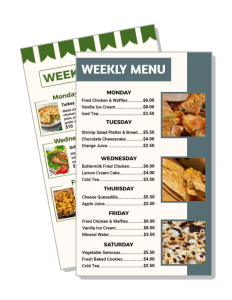
Weekly Menu Templates
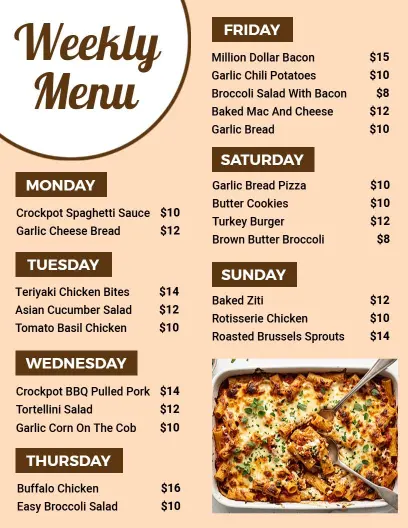
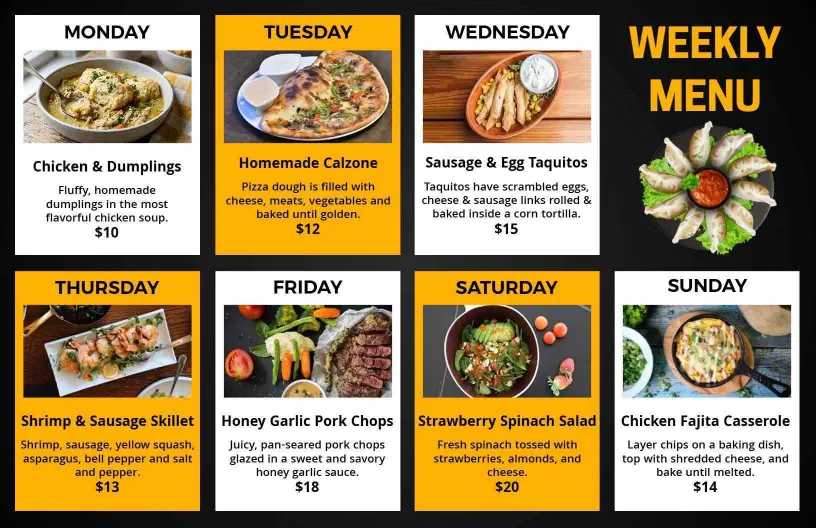
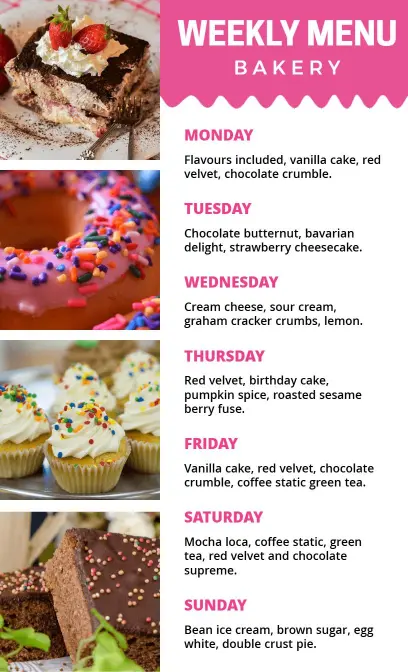
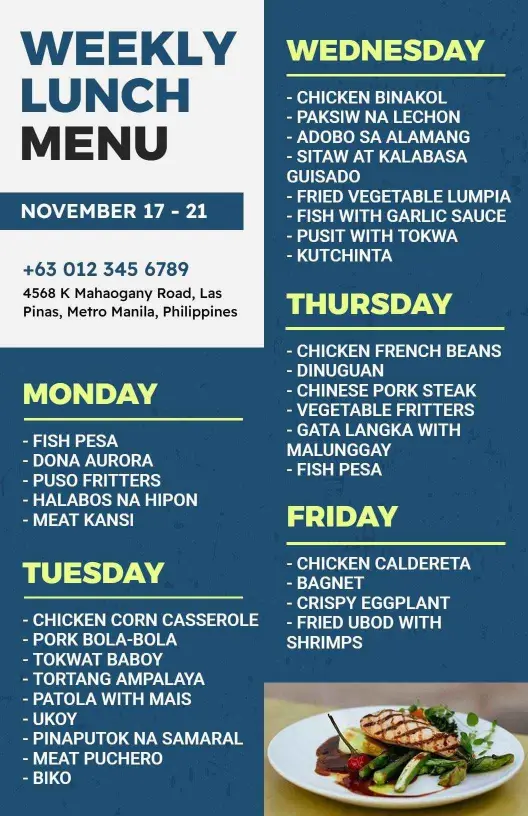
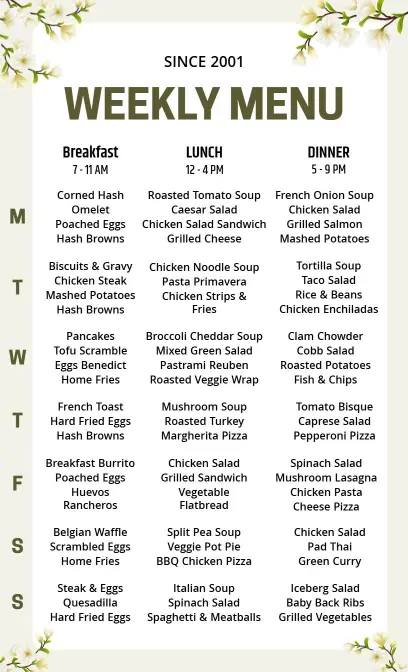
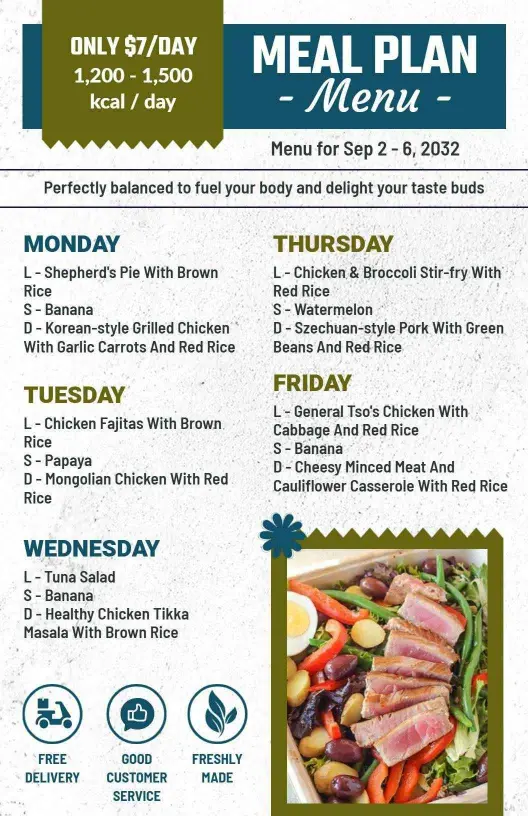
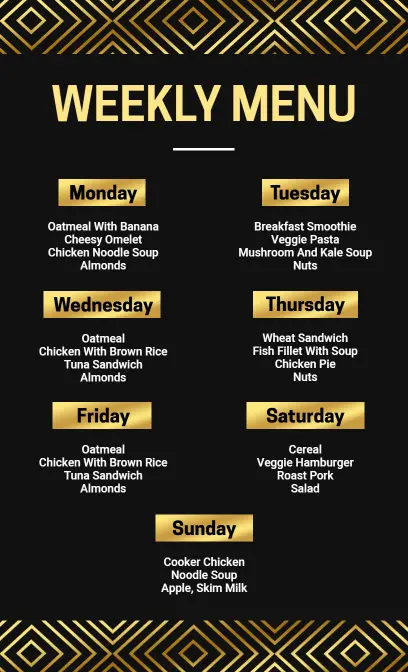
Weekly Menu templates help families, meal planners, and kitchen teams organize breakfasts, lunches, dinners, and prep notes in one clear layout. Use them to plan ahead, reduce daily decision-making, and keep the week easier to manage at home, in school settings, or in shared kitchens.
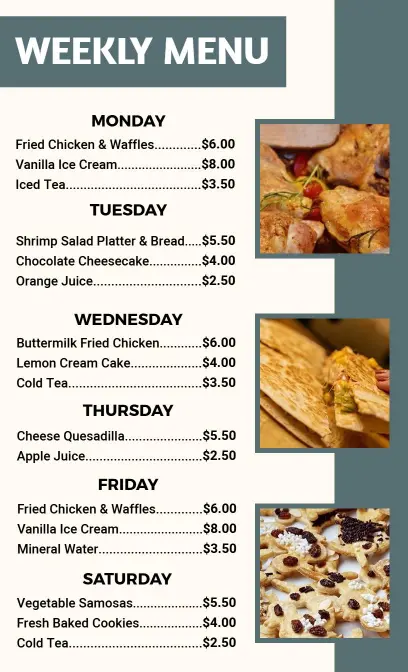
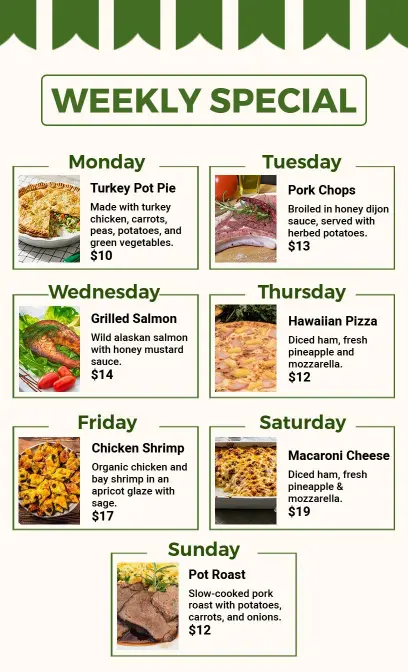
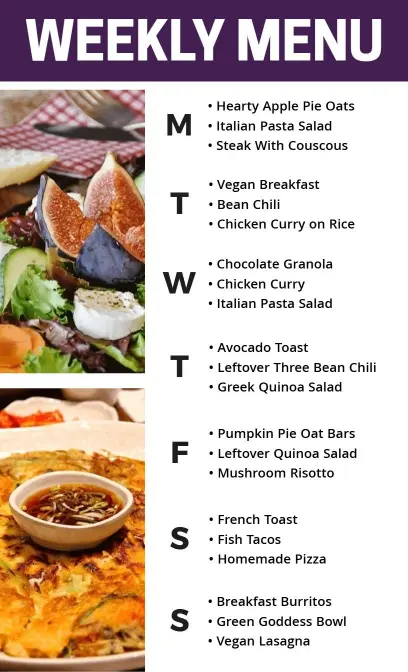
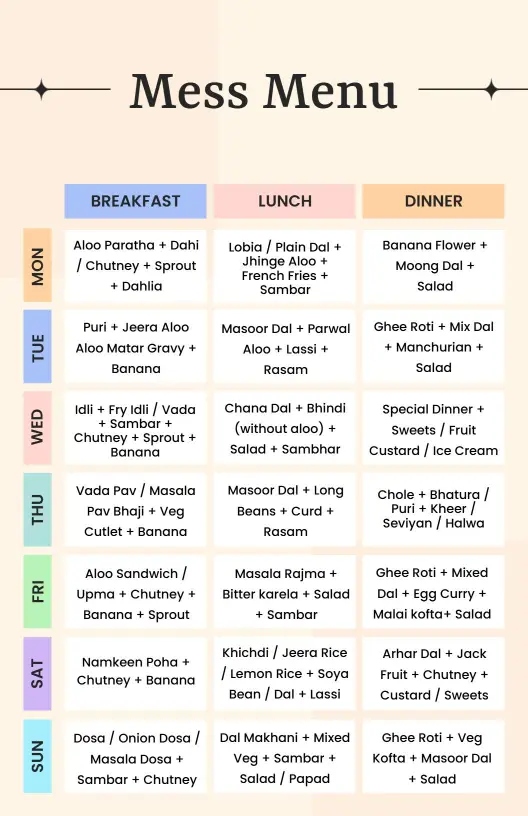
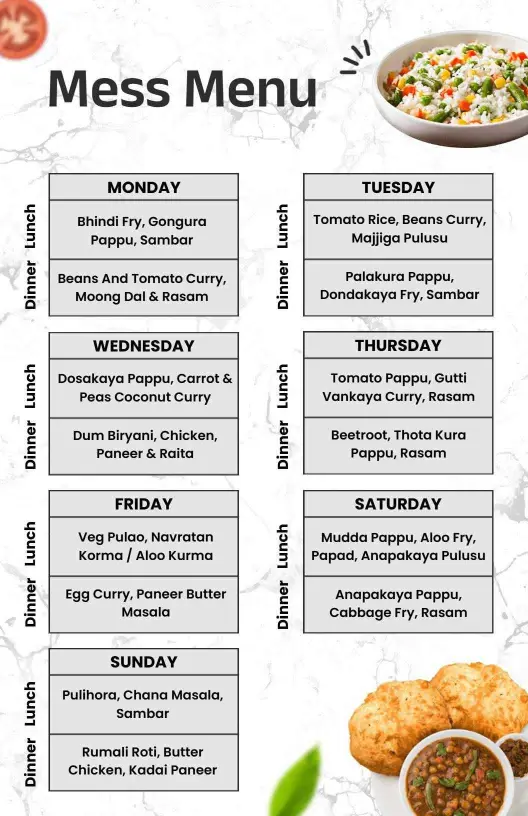
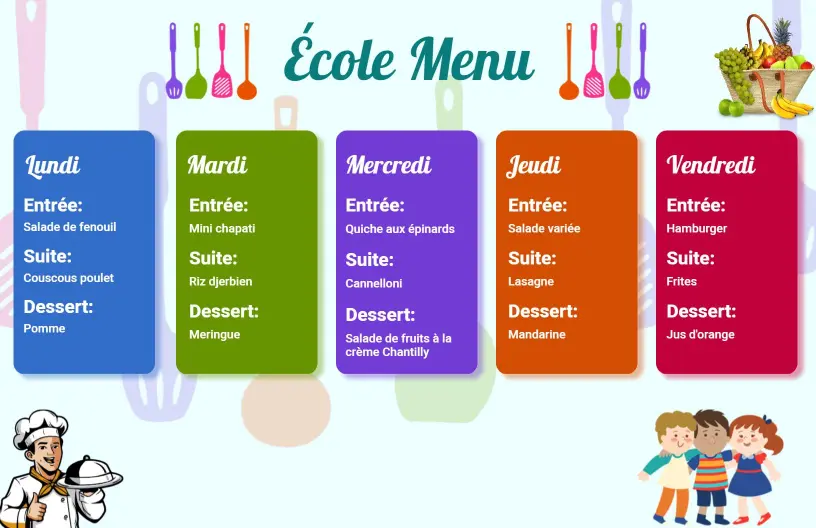
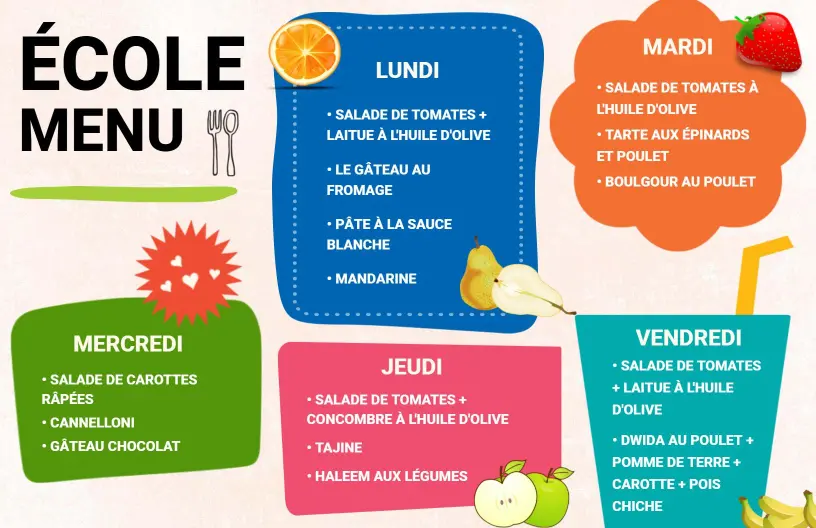

How to plan a weekly menu
Start with the meals you repeat most often, then build a schedule that makes planning, shopping, and prep easier throughout the week.
1. Pick the weekly structure
Start by deciding whether the menu should follow days, meal types, or themes. A clear structure makes it easier to plan ahead and keeps the week readable at a glance.
2. Add the meals you already know
Fill in the meals you repeat often first, then place new recipes or special dishes around them. This keeps the plan realistic and reduces the effort needed to update it later.
3. Include notes for prep and groceries
Add short notes for prep time, leftovers, or ingredients so the menu supports shopping and cooking together. Keep notes brief so they help without crowding the layout.
4. Check the layout at a glance
Preview the menu on paper or on a phone and make sure the text, spacing, and labels are still easy to read. If the page feels busy, simplify it before exporting.
5. Save and reuse the plan
Export a printable version and a digital copy, then reuse the same structure next week with updated meals. A repeatable format makes planning faster the second time.
Trusted by Thousands
 Tata Consultancy Services
 Boston Consulting
 AT&T
AT&T
 Avelo Airlines
 Procter & Gamble
 Ministry Of Health, Malaysia
 Veterans Affairs
 Detroit Government
 New York University
 Texas A&M University
 Decathlon America
 Warby Parker
Tata Consultancy Services
Boston Consulting
AT&T
Avelo Airlines
Procter & Gamble
Ministry Of Health, Malaysia
Veterans Affairs
Detroit Government
New York University
Texas A&M University
Decathlon America
Warby Parker
Warby Parker
Tata Consultancy Services
Boston Consulting
AT&T
Avelo Airlines
Procter & Gamble
Ministry Of Health, Malaysia
Veterans Affairs
Detroit Government
New York University
Texas A&M University
Decathlon America
Warby Parker



Other Menu templates
Weekly menu templates for families, meal prep, and shared kitchens
Weekly menu templates make it easier to plan meals without rebuilding the schedule every day. Keep the layout focused on the meals you repeat most often, then add short notes for prep time, leftovers, or dietary swaps so the plan stays practical.
Meal plans that reduce daily decision fatigue
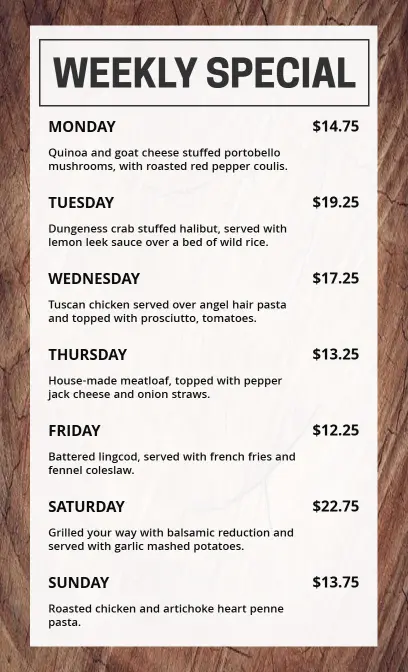
When the week gets busy, a simple menu layout helps you decide what to cook before the rush starts. Group meals by day or by meal type so the plan stays readable and easy to update when schedules change. The Minimalist Weekly Specials Menu Template works well when you want a clean structure with very little visual noise.
Family menus that fit everyday routines
Family meal planning works best when breakfast, lunch, and dinner are easy to see at a glance. Use clear section breaks so parents or caregivers can spot what is planned for each day without scanning through long notes. The Classic White Weekly Menu Template is a strong fit when you want a bright, simple layout that stays easy to read on the fridge or counter.
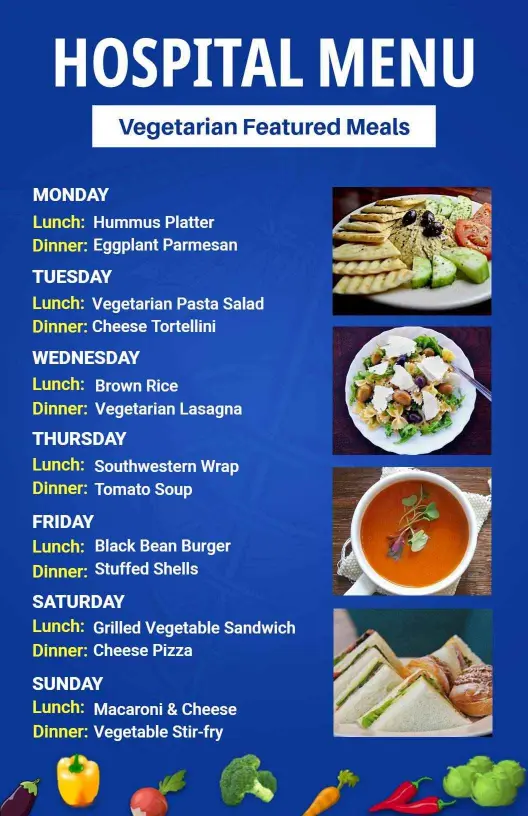
Vegetarian and flexible weekly plans
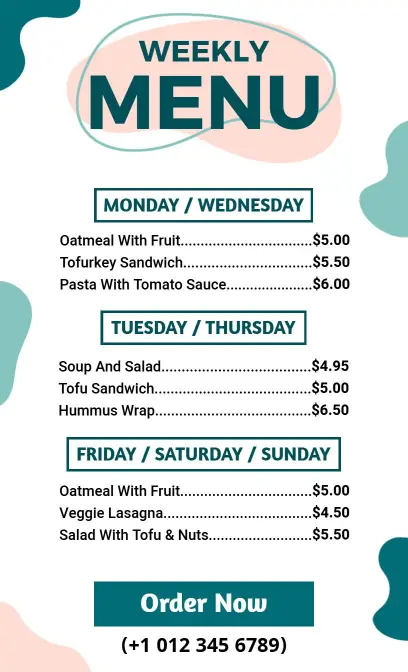
If the week includes vegetarian meals, meatless days, or lighter options, the menu should make those choices obvious. Keep the plant-based dishes in their own section so the plan supports shopping, prep, and substitutions without confusion. The Tasty Vegetarian Selections for Every Day Weekly Menu Template is useful when the plan needs room for recurring plant-forward meals.
Soup nights and simple make-ahead routines
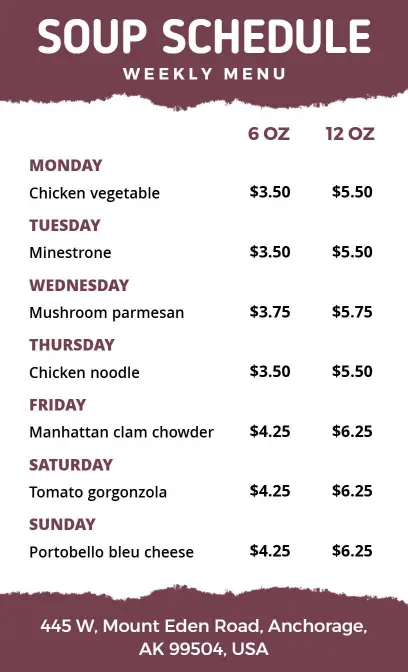
Some weeks run better when the menu includes easy soups, leftovers, or batch-cooked meals. A layout that keeps those items together can help you plan shopping and prep in a way that saves time later in the week. The Classic Weekly Soup Specials Menu Template is a good option when your routine includes comfort meals that are easy to repeat.
A useful weekly menu should lower stress, keep the plan realistic, and make it easier to adjust meals when the week changes.