

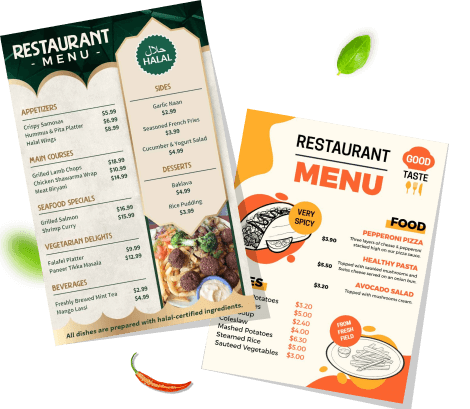
A menu card is a physical or digital document that lists food, beverage items, and specific services along with their prices and descriptions. They are designed to organize offerings clearly, improve the customer experience, and visually represent the brand.
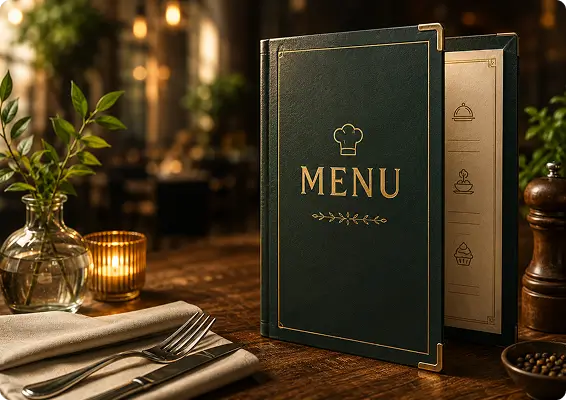
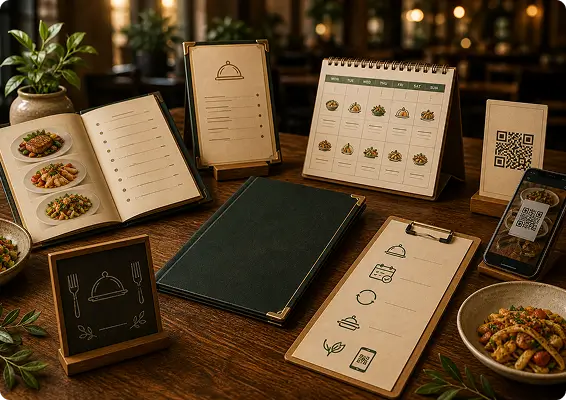
There are many benefits of using a menu as an effective marketing tool, because they can:
Clear sections and structured layouts help customers quickly find what they want and place orders faster.
Menu design helps you showcase popular dishes, combos, or special offers to attract more attention.
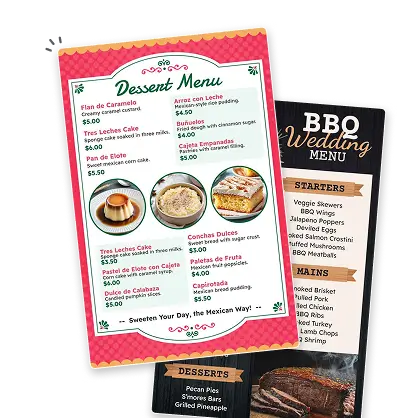
A well-designed menu organizes your items clearly & makes it easier for customers to explore your offerings.
Consistent colors, fonts, and layout help your menu reflect your brand style and create a professional impression.
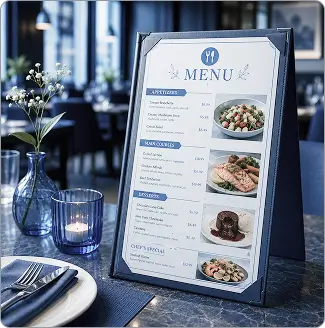
Use menu cards to present food items, prices, and special dishes in an organized way for dine-in customers.
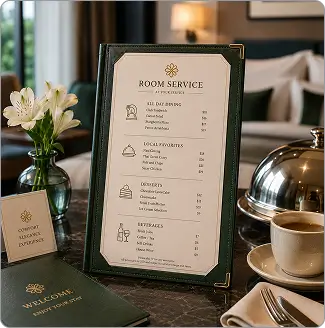
Provide menus for restaurants, room service, and specialty dining experiences.
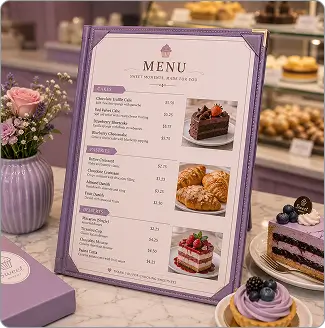
Showcase cakes, pastries, and sweet items with descriptions and pricing, making ordering smoother.
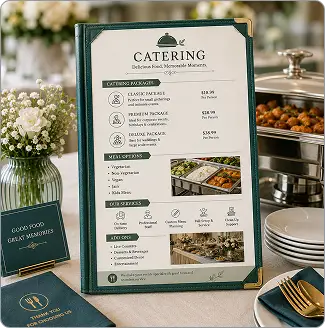
Present catering packages, meal options, service offerings, and add ones for events and gatherings.
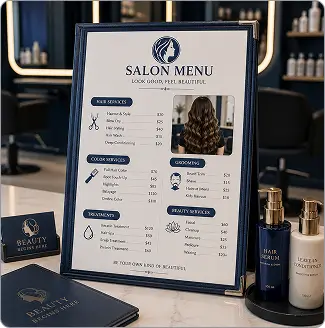
Display service menus for haircuts, styling, coloring, grooming, and beauty treatments with clear pricing, helping clients choose services easily.
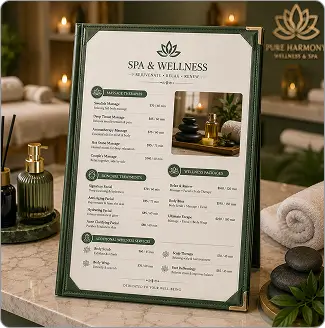
Showcase massage therapies, skincare treatments, relaxation packages, and wellness services with detailed descriptions and pricing for a premium experience.
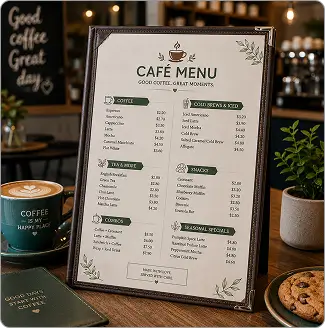
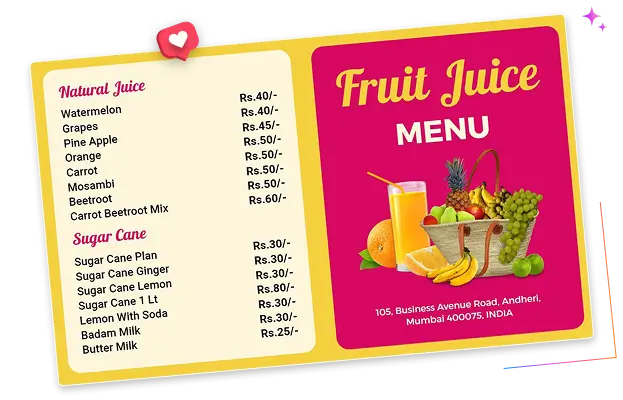
Display beverage menus, snacks, combos, and seasonal specials with pricing, helping customers quickly decide what to order
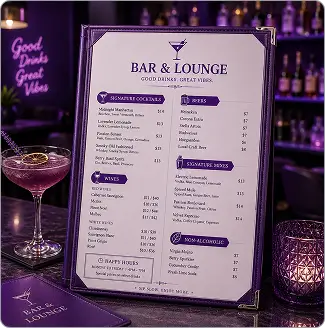
Showcase drink menus including cocktails, wines, beers, and signature mixes with pricing and descriptions for a better guest experience.
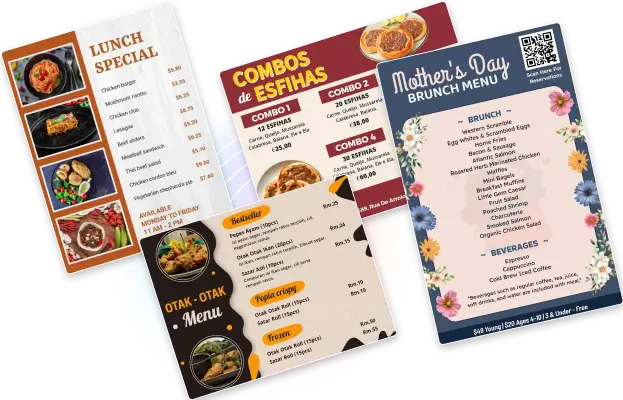
First, define your business concept and the audience you want to attract. Ensure that a menu reflects the style of dining and aligns with the expectations of your customers.
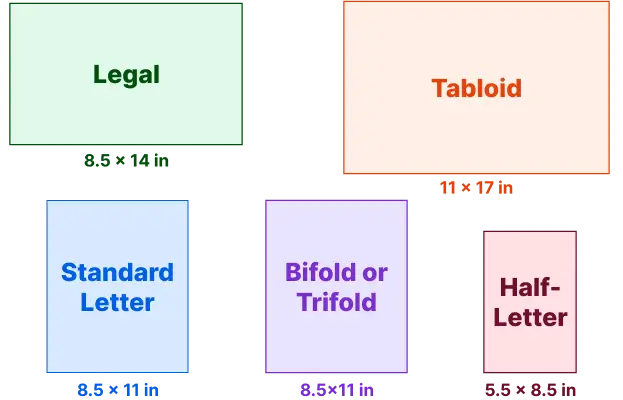
Pick the format that fits your service style. A4 for full sit-down menus, DL for bar cards, A5 for compact café menus.
A well-structured menu speeds up decisions and reduces order confusion at the table. Group each item you offer logically, and sequence naturally.
Use clear section headers, consistent spacing, and a visual hierarchy that draws the eye to your best-sellers first.
Choose the color and typography that reflect your brand identity, grab attention, and set the mood.
Keep descriptions short but sensory - one or two lines that make the item sound irresistible. Place prices consistently without using currency symbols that draw too much attention.
A single great photo of an item increases orders for that item by up to 30%. Use high-resolution images and keep them consistent in style.
Proofread each detail twice, and check the real-time preview before publishing or sending it to the printing services.
Create a clear and well-structured menu using professionally designed templates tailored to your needs. Easily customize layouts, colors, and content to present your offerings in a polished and visually appealing way.
Stay updated with menu card design trends, tips, and practical guidance.