Whether you are launching a product, promoting an event, or introducing your business to new customers, a well-designed brochure can do the heavy lifting. But with so many types of brochures available in 2026 – from simple bi-folds to elaborate die-cuts – how do you know which one is right for your needs?
This guide walks you through every major type of brochure, what each format does best, and a clear framework to help you choose the right one for your goals, audience, and budget.
Different Types of Brochures Explained
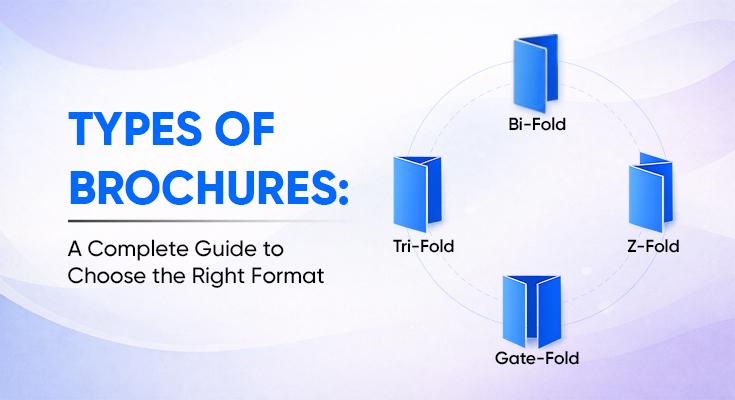
Understanding the different brochure formats starts with how they fold. Each fold determines how many panels you get and how readers engage with your content. Here is a breakdown of the major types of brochures.
1. Bi-Fold Brochure (Half-Fold)
A bi-fold brochure is created by folding a single sheet of paper in half, giving you four panels: a front cover, two inside panels, and a back cover. It is one of the simplest and most widely used formats.
Best for: Product showcases, company profiles, event invitations, and detailed presentations where you want large visuals and clean layouts.
Panels: 4
Complexity: Low
Why choose it: The generous panel size makes bi-folds ideal when you want your imagery to breathe. Think high-quality photography, product comparisons side by side, or a bold brand statement. Since the format is straightforward, readers know exactly how to navigate it.
Common use cases: Real estate listings, corporate presentations, restaurant menus, and spa service guides.
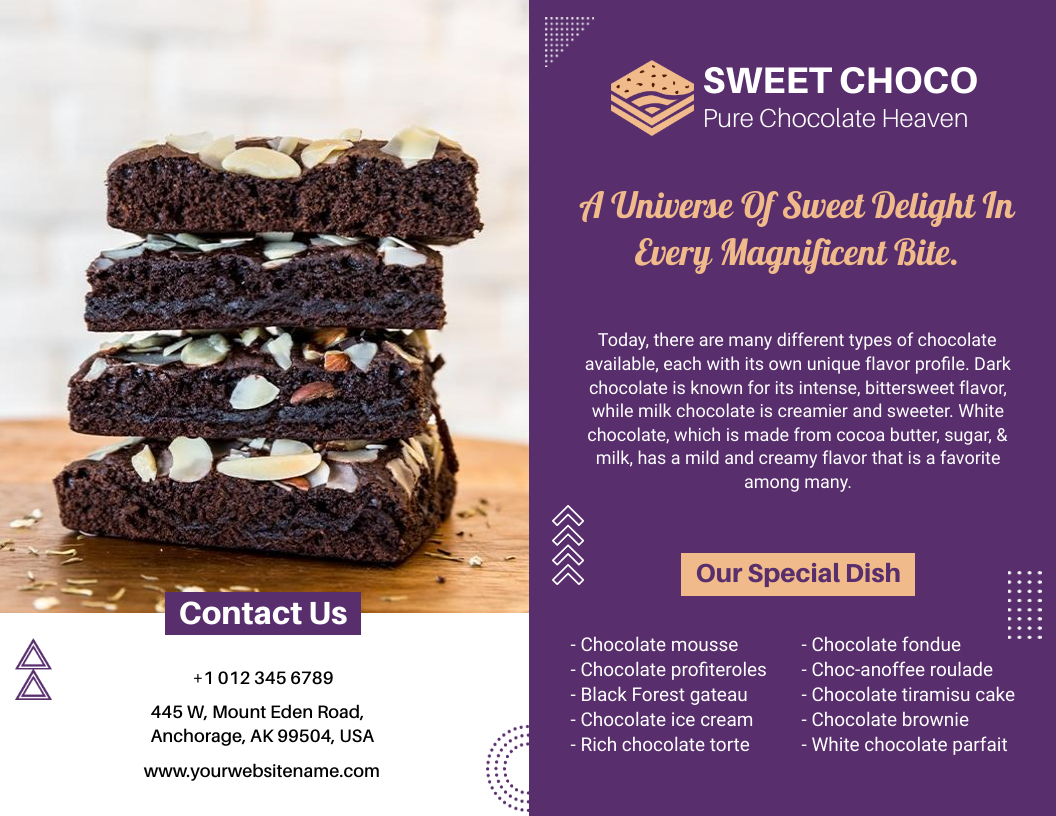
Plum purple Chocolate Bi-Fold Brochure
2. Tri-Fold Brochure (Letter Fold / C-Fold)
The tri-fold is the most popular brochure format in the world and for good reason. A single sheet is folded into three equal panels, creating six sections (three on each side). The right panel tucks underneath the left panel when closed.
Best for: General marketing, service menus, travel guides, nonprofit outreach, and any situation where you need to present information in a logical, sequential order.
Panels: 6
Complexity: Low to medium
Why choose it: The tri-fold’s structure naturally guides readers through your content — cover draws them in, interior panels tell the story, and the final panel delivers the call to action or contact details. It is compact enough to fit in display racks and standard envelopes, making it ideal for trade shows, reception desks, and direct mail.
Common use cases: Travel agency promotions, healthcare service guides, restaurant takeaway menus, event programmes, and nonprofit fundraising materials.
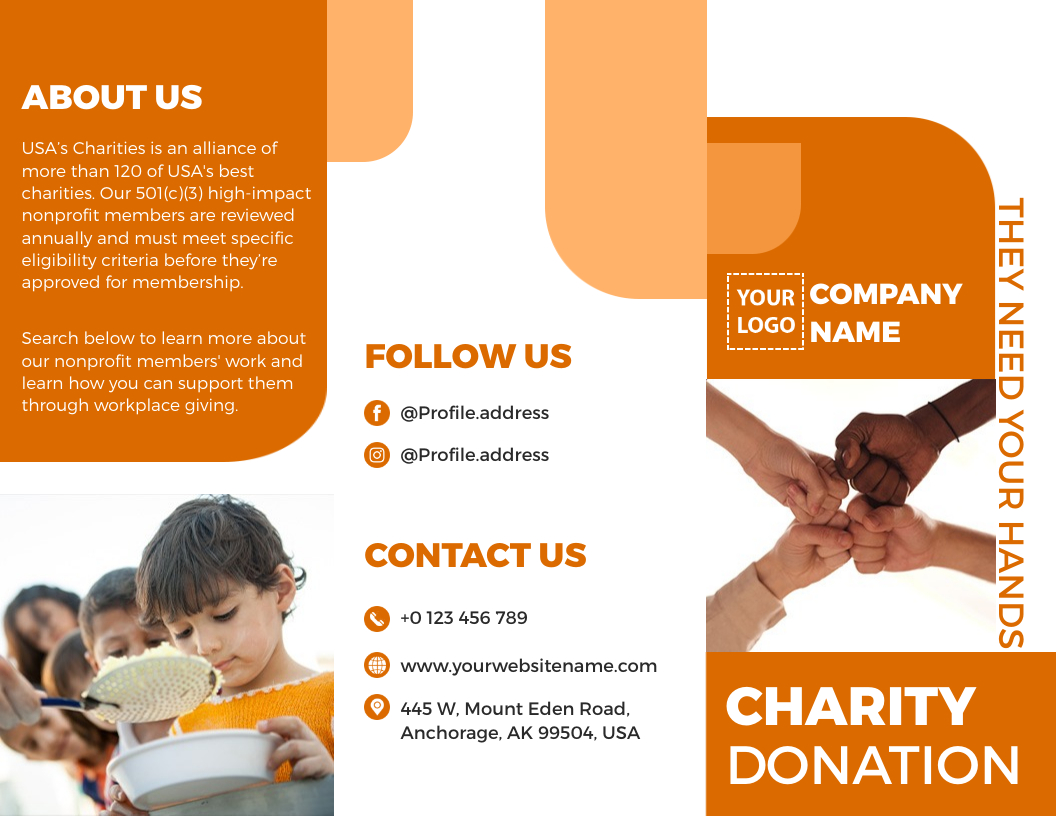
Charity Donation Tri-Fold Brochure
3. Z-Fold Brochure
The Z-fold (also called the zigzag fold) divides a sheet into three equal panels that fold in alternating directions, forming a Z or S shape when viewed from the side. Unlike a tri-fold, each panel unfolds independently in sequence.
Best for: Step-by-step guides, timelines, maps, panoramic images, and any content that benefits from a linear, left-to-right reveal.
Panels: 6
Complexity: Medium
Why choose it: The zigzag pattern means each panel is revealed one at a time, creating a sense of discovery. This makes it excellent for storytelling, process explanations, or when you have a panoramic image or map that spans multiple sections. It also stands upright on its own, making it great for tabletop displays.
Common use cases: Tourist maps, step-by-step product instructions, event schedules, and educational guides.

Blue Summer Camp Z-Fold Brochure
4. Gate Fold Brochure
A gatefold brochure has a large central panel with two smaller side panels that fold inward from both sides to meet in the middle like a pair of gates opening to reveal the interior. It is one of the most visually impressive formats available.
Best for: Premium product launches, luxury brand promotions, high-end real estate listings, wedding stationery, and any scenario where making a strong first impression matters.
Panels: 4 to 6 (depending on variation)
Complexity: High
Why choose it: The dramatic reveal when the “gates” open creates a moment of anticipation. It signals luxury and premium quality before anyone reads a single word. The large central spread is perfect for a bold visual or headline that anchors your entire message.
Common use cases: High-end product catalogues, luxury hotel brochures, gala event invitations, premium real estate marketing, and annual report covers.

Gate Fold Coffee Shop Brochure
5. Accordion Fold Brochure
An accordion fold brochure is made by folding a sheet back and forth in alternating directions, much like the musical instrument it is named after. This typically creates four to six panels per side.
Best for: Tutorials, timelines, portfolios, event itineraries, and businesses with multiple services or product lines.
Panels: 8 to 12
Complexity: Medium to high
Why choose it: The accordion format gives you the most usable space of any single-sheet brochure. Each panel can act as its own mini-section, which makes it ideal for showcasing multiple items, a step-by-step process, or a long timeline. It is also interactive – readers physically unfold the brochure, which increases engagement time.
Common use cases: Museum exhibition guides, product line catalogues, customer success stories, and conference or festival schedules.

Catskill White Business Accordion Fold Brochure
6. Roll Fold Brochure
A roll fold is created by folding each panel on top of the previous one in the same direction, rolling inward. This usually produces eight panels and results in a very compact finished piece.
Best for: Businesses with a large amount of content that needs to be presented in a small, portable format ideal for mailing and display racks.
Panels: 8
Complexity: Medium
Why choose it: The roll fold minimizes the footprint of information-dense content. It fits standard envelope sizes easily, making it one of the best brochure types for direct mail campaigns. The sequential unfolding encourages readers to follow your content in the exact order you intended.
Common use cases: Travel brochures, healthcare patient information leaflets, product guides, and promotional mailers.
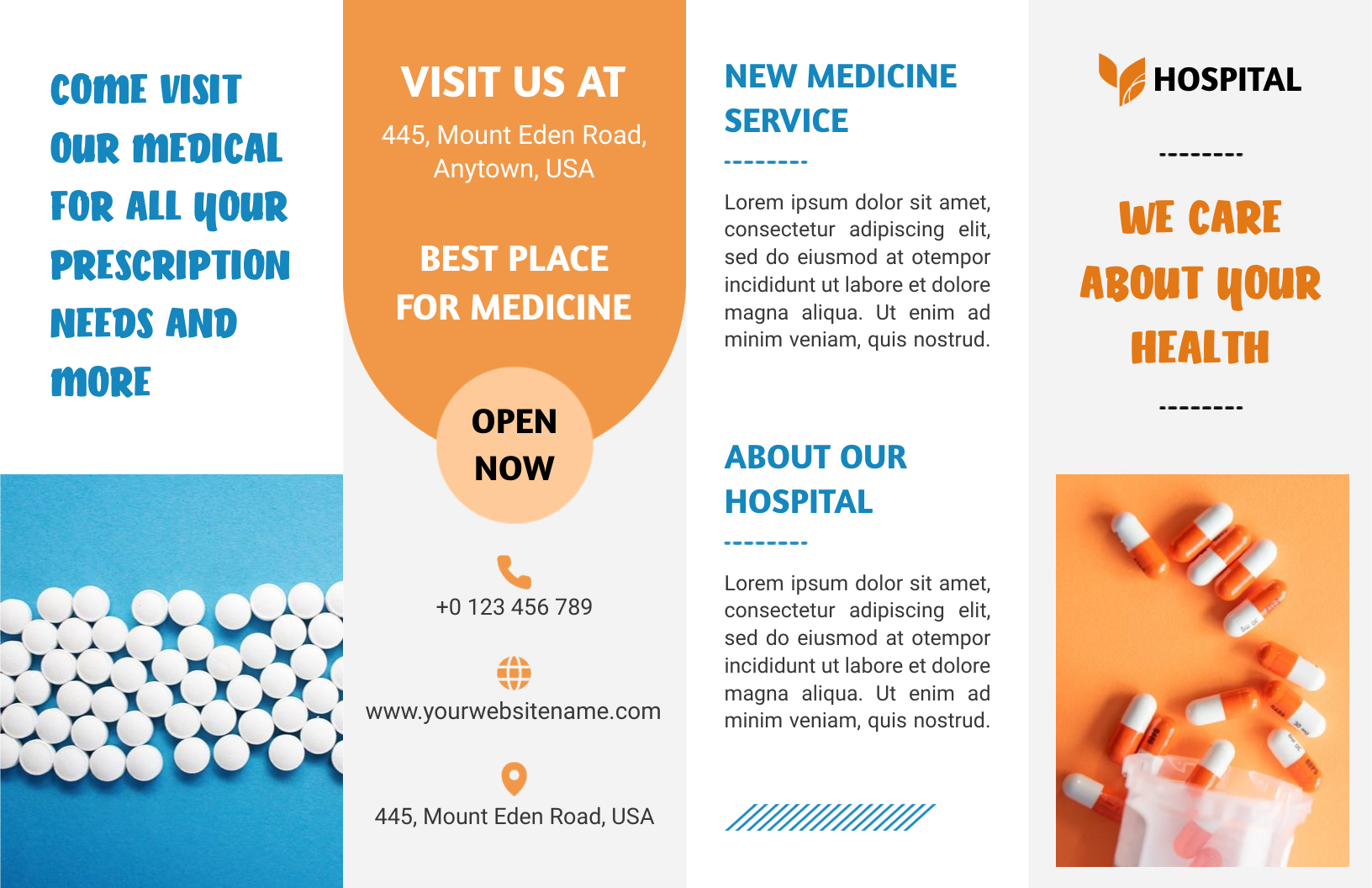
Alabaster Hospital Pharmacy Roll Fold Brochure
7. Double Parallel Fold Brochure
A double parallel fold is created by folding a sheet in half lengthwise, then folding it in half again in the same direction. This creates eight slim, stacked panels arranged in two columns.
Best for: Conference agendas, technical specifications, multi-section training materials, and content that can be naturally divided into separate categories.
Panels: 8
Complexity: Medium
Why choose it: The double parallel fold is excellent for highly segmented content. The two-column structure allows readers to compare information side by side or navigate independently to each section. It is less common than tri-folds or bi-folds, which can make your brochure stand out in a stack.
Common use cases: Event programmes with multiple tracks, product comparison guides, and technical or educational reference materials.
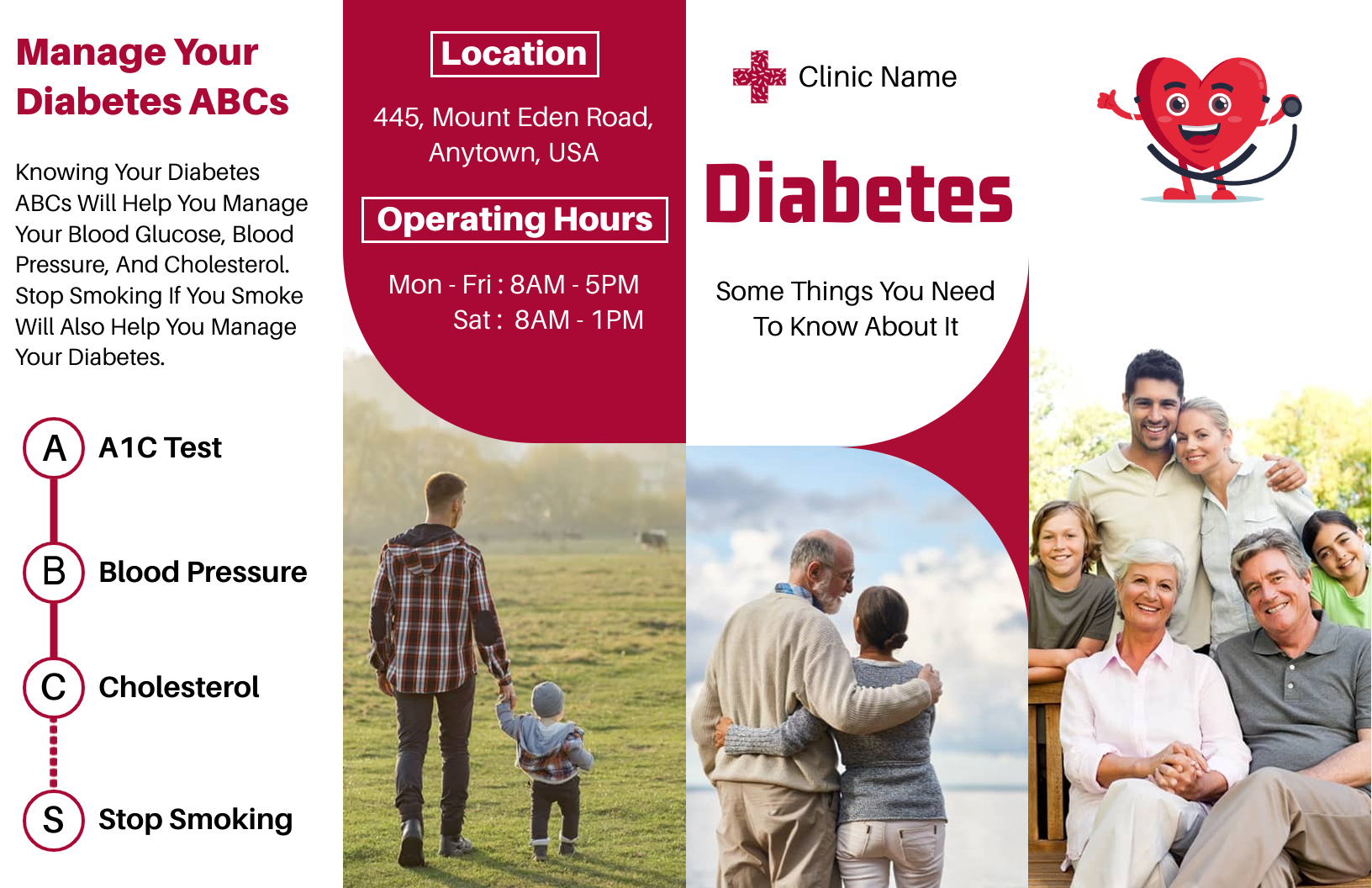
Health Care Mediacal Double Parallel Fold Brochure
8. French Fold Brochure
A French fold is made by first folding a sheet in half horizontally, then folding it in half again vertically. This creates a compact four-panel layout that, when fully unfolded, reveals a small poster-sized spread on the inside.
Best for: Special announcements, event maps, pocket-sized guides, and premium direct mail pieces.
Panels: 4 (with a large interior spread)
Complexity: Medium
Why choose it: The French fold’s interior surprises with a full spread that unfolds into something much larger than expected, creating a memorable experience. The format works especially well when you have a single strong visual or message you want to expand dramatically.
Common use cases: Concert and theatre programmes, special event announcements, pocket travel maps, and art gallery invitations.
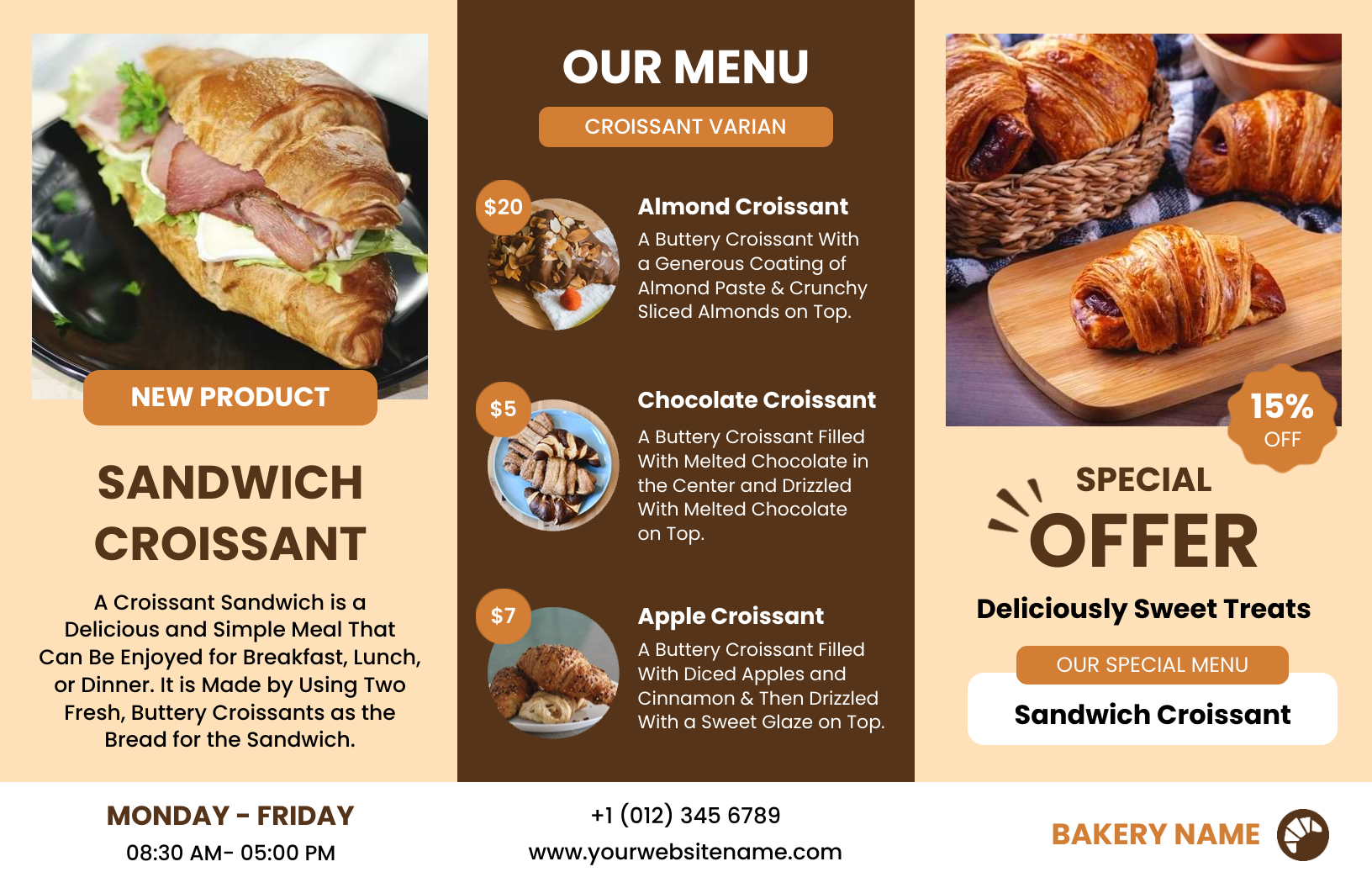
Croissant Special Offer Bakery French Fold Brochure
9. Die-Cut Brochure
A die-cut brochure uses a specialised cutting tool to trim paper into a custom shape rather than a standard rectangle. The brochure can take any form, a dog bone for a pet brand, a house shape for real estate, or a bottle for a beverage company.
Best for: Brands that want to make an extremely memorable impression and are willing to invest in premium production.
Panels: Variable
Complexity: Very high
Why choose it: Nothing stops a reader in their tracks like a brochure shaped like the product it is promoting. Die-cuts work as a powerful brand statement and are particularly effective at trade shows and product launches where standing out from a table full of rectangular brochures matters.
Common use cases: Product launches, premium brand campaigns, trade show giveaways, and retail packaging inserts.
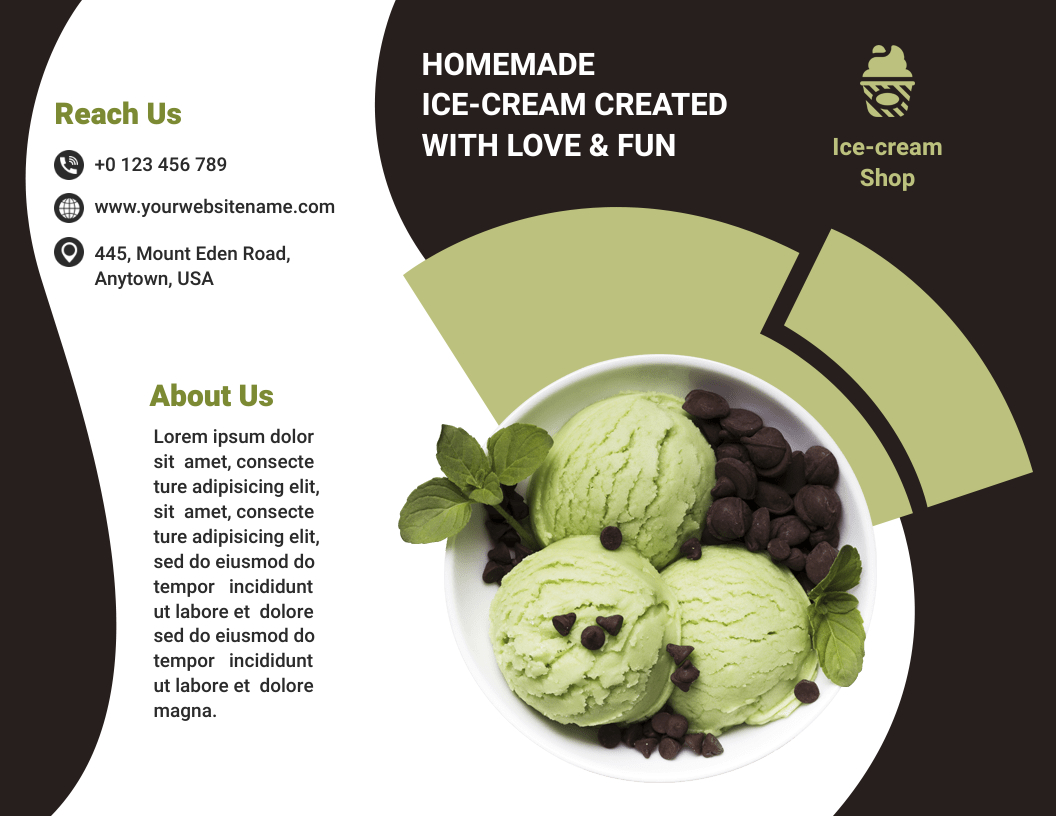
Cocoa Brown Ice-cream Die-cut Brochure
10. Booklet / Multi-Page Brochure
A booklet is not folded from a single sheet but assembled from multiple pages, typically saddle-stitched (stapled through the fold) or perfect-bound like a paperback. Page count is usually 8 to 36 pages.
Best for: Detailed product catalogues, annual reports, company portfolios, training guides, and any content that simply requires more space than a single-sheet format can provide.
Panels: 8+ pages
Complexity: High
Why choose it: When your content genuinely demands more space, a booklet is the professional answer. It reads like a magazine or small book, which signals depth and authority to your audience. Booklets are also effective in digital form as e-brochures or interactive PDFs.
Common use cases: Annual reports, product catalogues, franchise information packs, university prospectuses, and corporate capability statements.
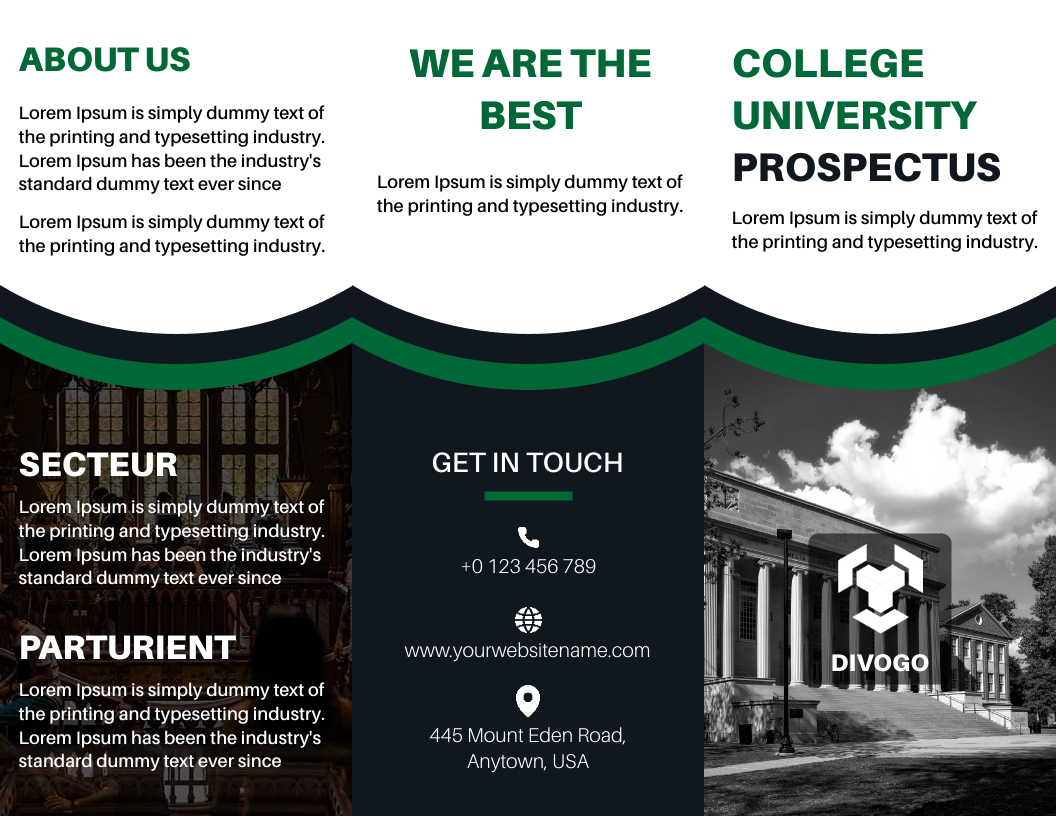
Mine Shaft and Cod Gray Prospectus Booklet Brochure
Types of Brochures at a Glance
| Type | Panels | Best For | Cost Level |
|---|---|---|---|
| Bi-fold | 4 | Product showcases, profiles | Low |
| Tri-fold | 6 | General marketing, events | Low |
| Z-fold | 6 | Timelines, step-by-step guides | Low–Medium |
| Gate fold | 4–6 | Luxury, premium launches | Premium |
| Accordion fold | 8–12 | Portfolios, multi-service brands | Moderate |
| Roll fold | 8 | Mailers, information-dense content | Moderate |
| Double parallel fold | 8 | Technical specs, agendas | Moderate |
| French fold | 4 (large spread) | Announcements, maps | Moderate |
| Die-cut | Variable | Brand stunts, trade shows | Premium |
| Booklet | 8+ pages | Catalogues, annual reports | Higher |
Digital Brochures: A Note on Format
Beyond printed brochures, digital formats are increasingly popular, especially for brands that distribute content online or by email. Digital brochures come in several forms:
- Interactive PDFs – Standard brochure layouts converted to PDF with clickable links and embedded multimedia.
- Flipbook brochures – PDFs converted to page-flip digital formats, mimicking the feel of a physical booklet.
- HTML / web brochures – Fully responsive, browser-based brochures that can include animations, videos, and embedded forms.
Digital formats follow the same structural logic as printed ones (bi-fold, tri-fold, booklet), but without the constraints of paper or printing costs. They are ideal for reaching online audiences, tracking engagement, and updating content without reprinting.
Learn more: Avoid common brochure design mistakes when choosing layouts and formats
Brochure Design Ideas & Examples
Regardless of which types of brochures you choose, a few design principles apply universally.
Industry-Specific Brochure Design Ideas
Real Estate:
A gate fold or bi-fold is the go-to choice for real estate marketing. Here is what to include:
- Full-bleed property photography on the cover
- Key specs – bedrooms, bathrooms, and price – in a clean sidebar
- Agent bio with a headshot for a personal touch
- QR code linking to a virtual tour or 360° walkthrough
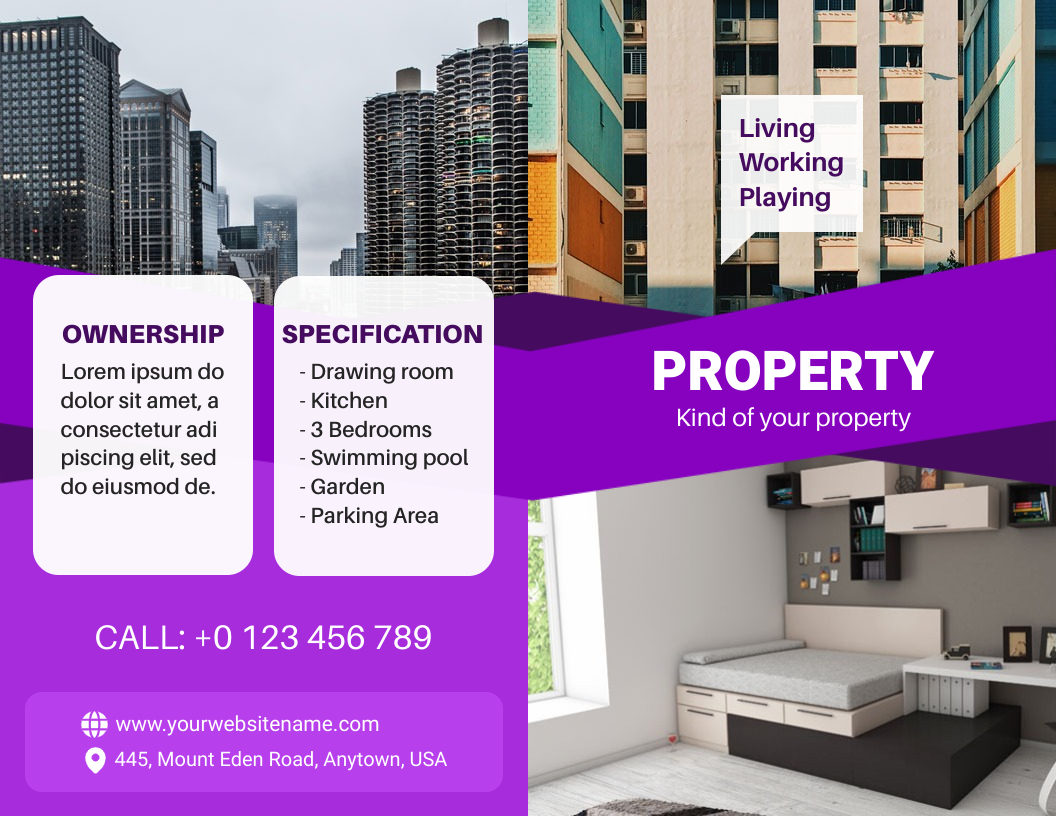
Purple Real Estate Brochure
Travel:
Tri-fold or accordion fold formats work beautifully for travel promotions. Here is what to include:
- Vivid, aspirational destination imagery on the cover
- Panel-by-panel breakdown of itinerary, inclusions, and pricing
- A “what’s included” section to build trust
- Booking contact or website on the back panel
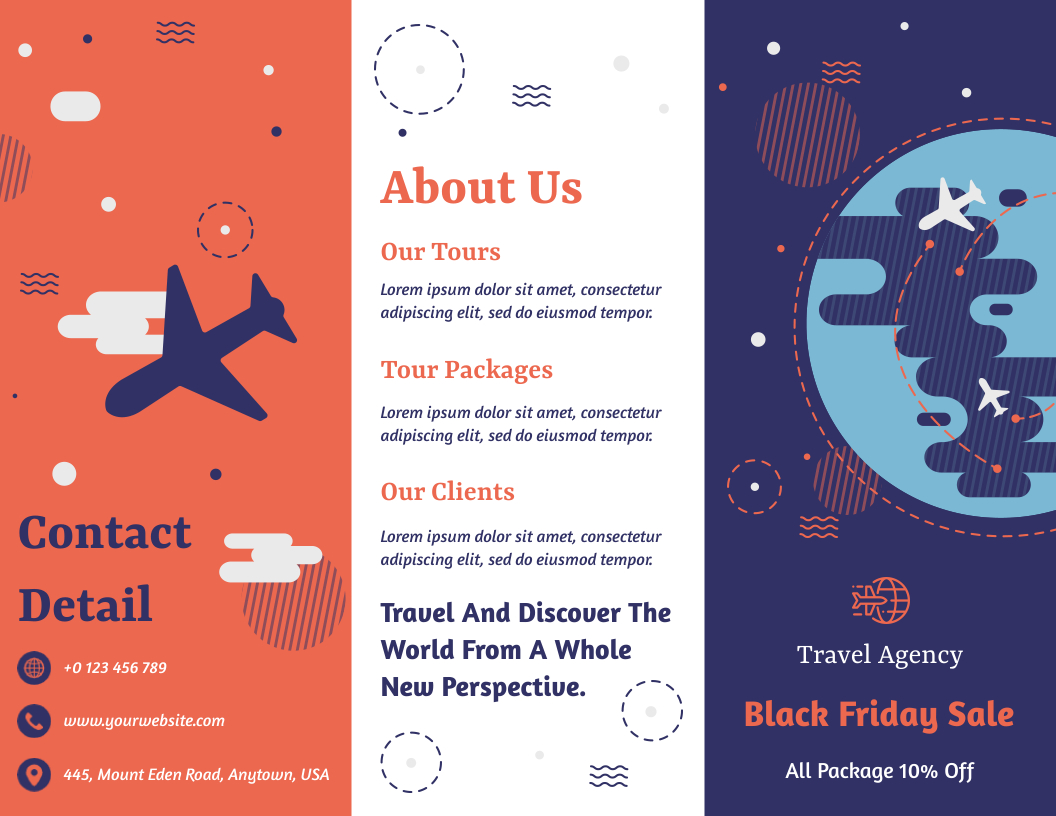
Glacier and Rhino Travel Brochure
Healthcare:
Tri-fold or roll fold brochures are the ideal choice for healthcare providers. Here is what to include:
- Clean, open layout with plain and friendly language
- Brief introduction to the practice or service
- A clear list of treatments or specialties
- Clinic hours and contact information prominently displayed
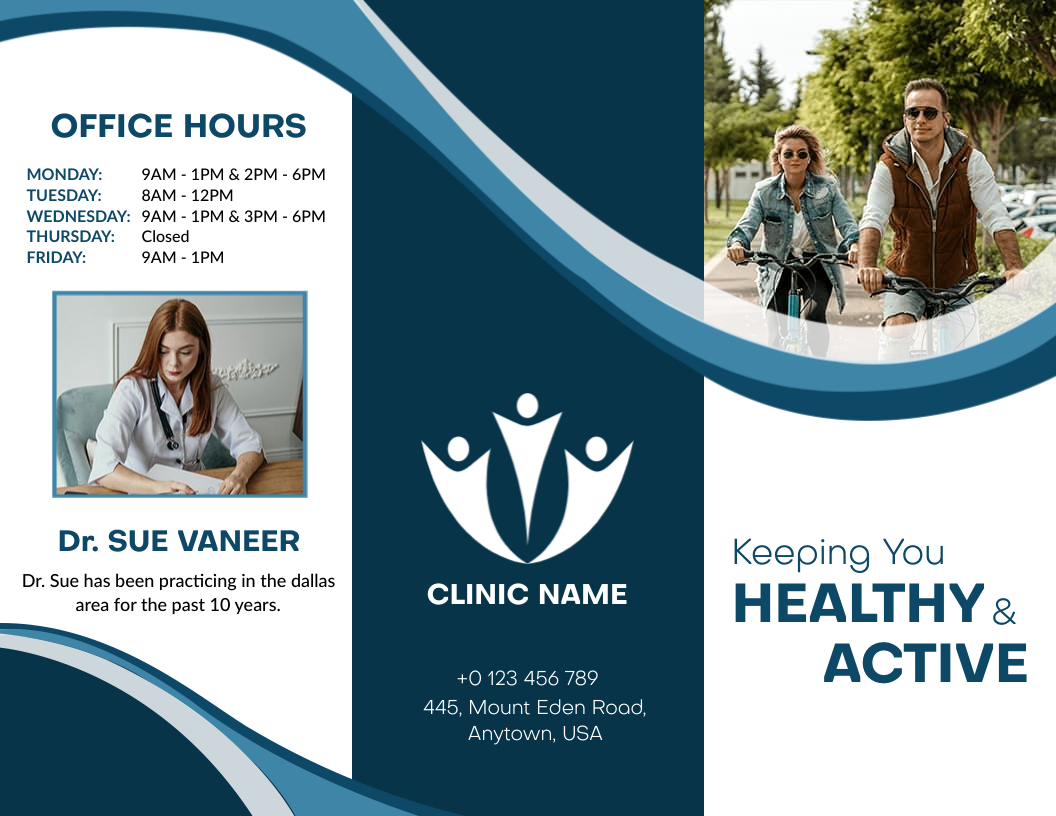
White Chiropractic healthcare Brochure
Restaurant:
Bi-fold or booklet formats work best for restaurant menus and promotions. Here is what to include:
- High-quality food photography covering at least 40% of the layout
- Clear menu categories with short, appetising dish descriptions
- Opening hours, address, and reservation contact
- Social media handles on the back pane
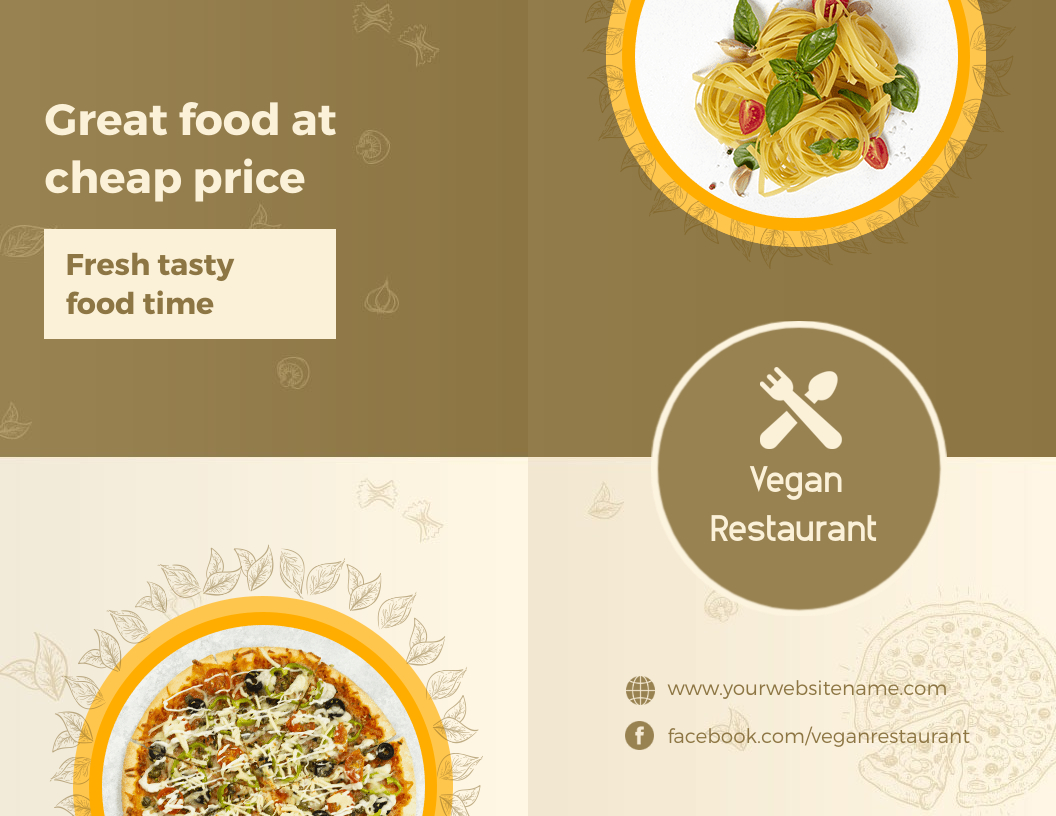
Vegan Restaurant Brochure
Event:
Z-fold or accordion fold brochures are perfect for events and conferences. Here is what to include:
- Numbered panels for a clear, easy-to-follow schedule
- Full programme or agenda across the panels
- Venue map or floor plan for easy navigation
- Speaker or performer highlights with colour-coded sections

Memphis Webinar Brochure
How to Choose the Right Brochure Type?
With so many types of brochures available, choosing the right format comes down to four key factors.
1. How Much Content Do You Have?
A bi-fold works perfectly when your message can be communicated in a few sentences and two or three images. For layered information across multiple sections – services, pricing, testimonials, FAQs – a tri-fold or accordion fold gives you the structure you need. And when your content genuinely requires 10 or more pages, a booklet is the professional answer.
2. What Is the Purpose?
Think about what action you want the reader to take after seeing your brochure:
- Generate awareness → Tri-fold or bi-fold (easy to distribute, compact)
- Drive a premium purchase → Gate fold or die-cut (impression-first formats)
- Educate or inform → Accordion fold, roll fold, or booklet (structured, detailed)
- Guide through a process → Z-fold or accordion fold (sequential reveal)
- Mail to prospects → Roll fold or tri-fold (fits standard envelopes)
3. Who Is Your Audience?
Match the brochure format to your audience’s expectations. A corporate board of directors expects something polished and restrained – a clean bi-fold or gate fold with muted colours. Festival-goers expect something energetic and quick to read – a Z-fold or single-panel accordion. Healthcare patients need clarity and accessibility – tri-folds with large type and a simple layout.
4. What Is Your Budget?
Simpler folds cost less to print in bulk. Tri-folds and bi-folds are the most cost-effective options for high-volume printing. Accordion folds and roll folds require more precise scoring and are moderately more expensive. Gate folds, die-cuts, and booklets have higher production costs and are best reserved for campaigns where the audience and purpose justify the investment.
Quick Decision Framework
| If You Need… | Choose This Format |
|---|---|
| A simple overview | Bi-fold |
| A structured multi-section layout | Tri-fold |
| A step-by-step or sequential reveal | Z-fold |
| A dramatic first impression | Gate fold |
| Maximum space on one sheet | Accordion fold |
| A compact, mailable format | Roll fold |
| A segmented reference piece | Double parallel fold |
| An unexpected interior reveal | French fold |
| An unmissable brand statement | Die-cut |
| Deep, detailed content | Booklet |
Learn more: Compare AI vs traditional brochure design methods to create the perfect brochure
FAQs
The three most common types of brochures are the bi-fold, the tri-fold, and the booklet. The tri-fold is the most widely used due to its compact size, six-panel layout, and affordability.
The terms are often used interchangeably, but technically, a pamphlet is a short, unbound document focused on a single subject, often used for public information or advocacy. A brochure is a more structured marketing or promotional document, typically with more design attention and a clear commercial purpose.
Yes. Despite the growth of digital marketing, physical brochures remain one of the most effective marketing tools for in-person contexts – trade shows, reception areas, direct mail, and retail environments. Studies consistently show that tangible print materials are processed more deeply than digital content, leading to stronger brand recall. Digital brochures, in flipbook or interactive PDF format, extend this effectiveness into online channels.
Z-fold and accordion fold brochures work particularly well for events because their sequential panels are ideal for schedules, maps, and step-by-step guides. Tri-folds are also a strong choice for general event promotion and handout materials.
The most common paper size for brochures is 8.5″ × 11″ (US letter) or A4. Legal (8.5″ × 14″) and tabloid (11″ × 17″) sizes are used for formats that require more panel space, such as accordion folds and double parallel folds.
Final Thoughts
Choosing the right types of brochures comes down to three things: your purpose, your content, and your budget. Whether you go with a simple tri-fold or a premium gate fold, the format should always serve your message. The best brochure is not the most elaborate one; it is the one that gets read, remembered, and acted upon.