


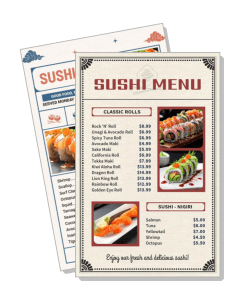
Sushi Menu Templates
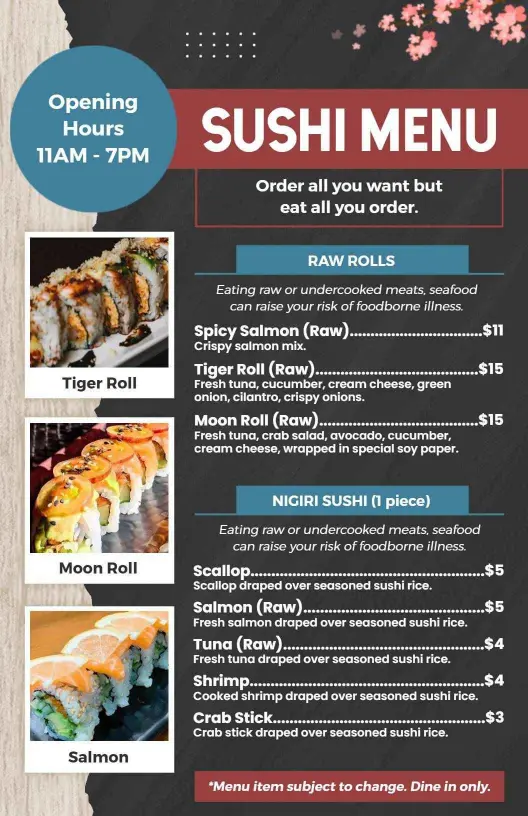
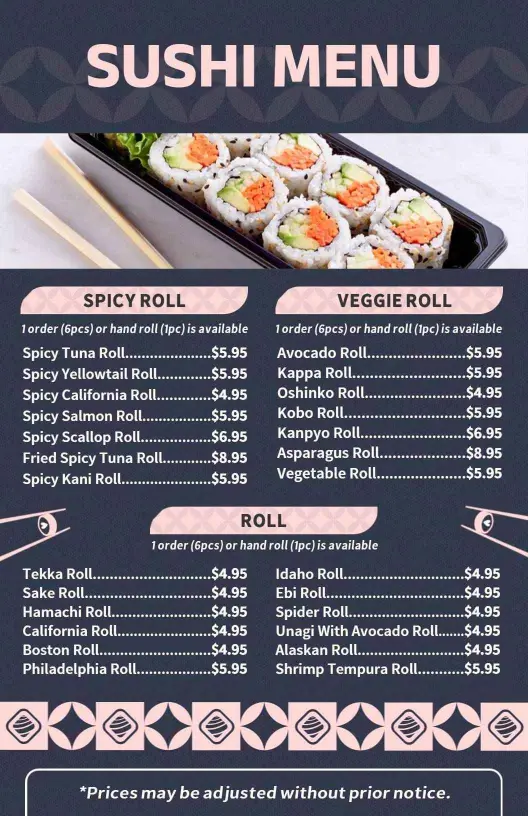
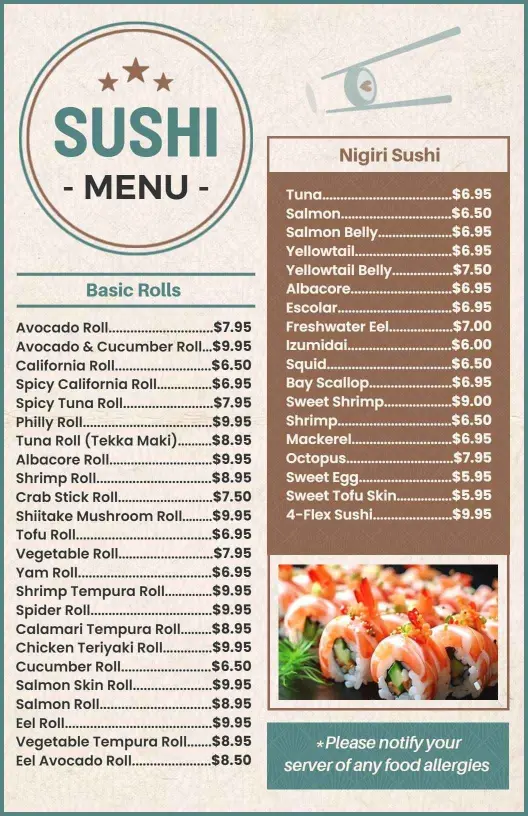
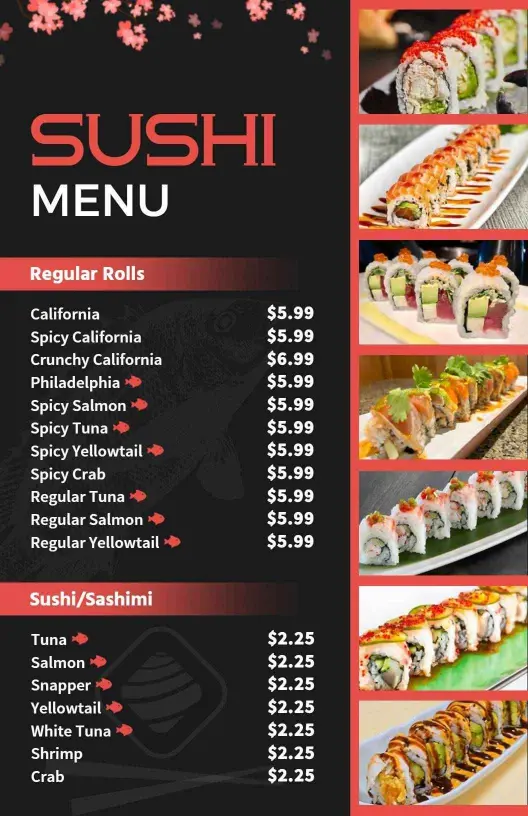
Sushi menu templates for sushi bars, Japanese restaurants, omakase-style service, and takeout counters. Build a clean menu for rolls, nigiri, sashimi, and platters, then print or share a file that is easy to scan on the table or on a phone.
How to make a sushi menu
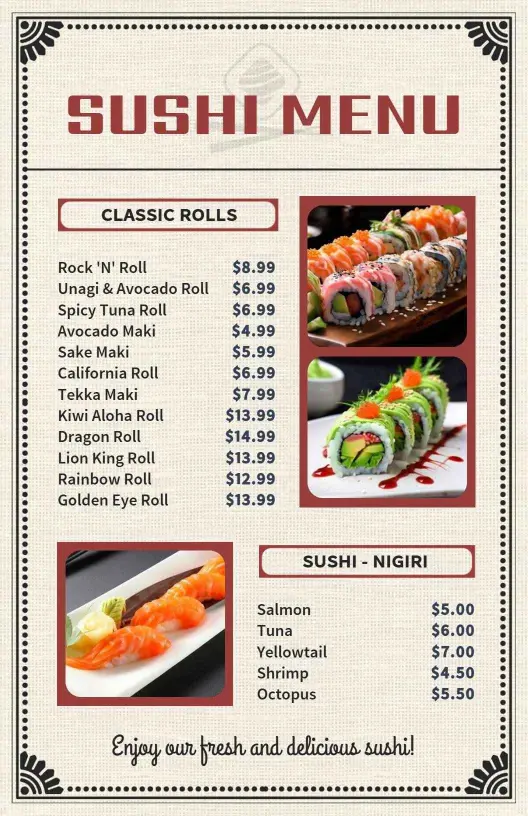
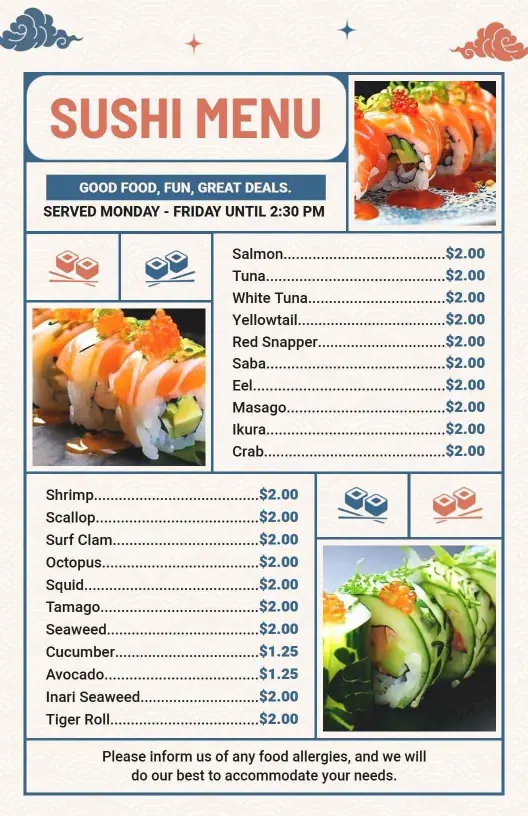
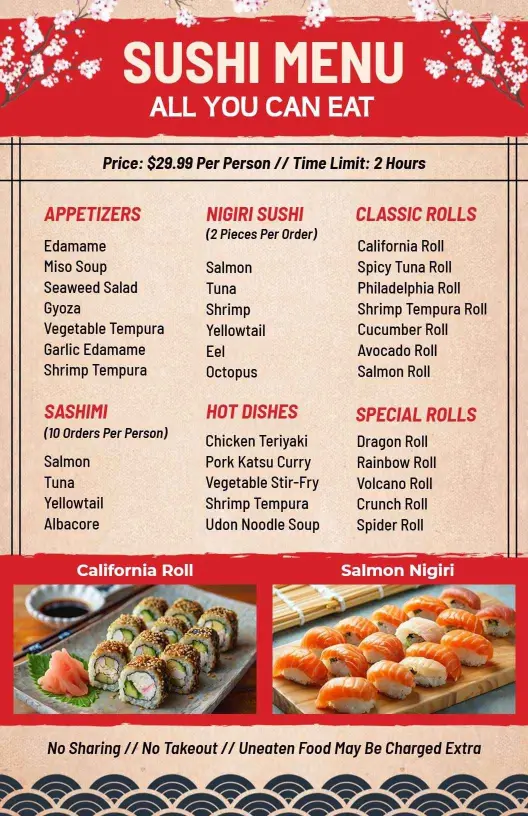
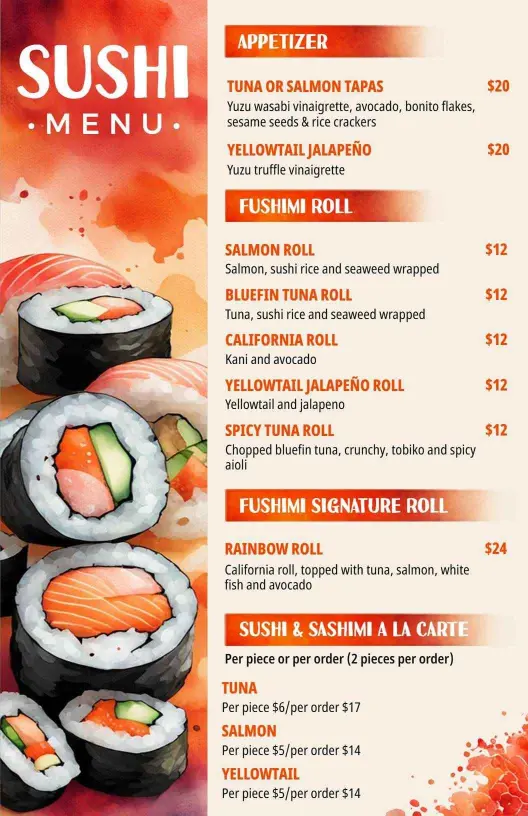
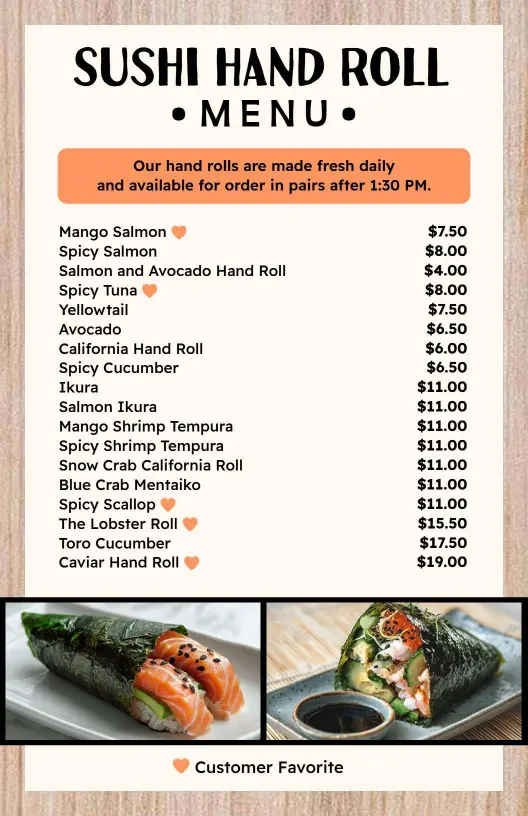
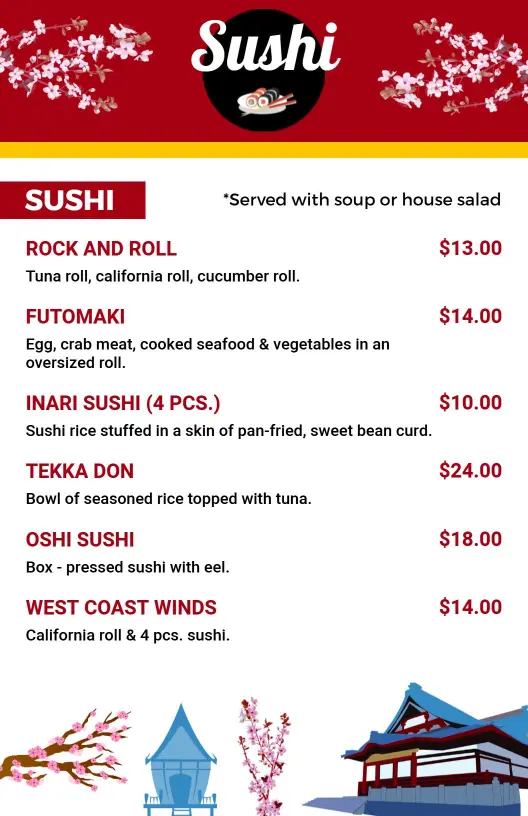
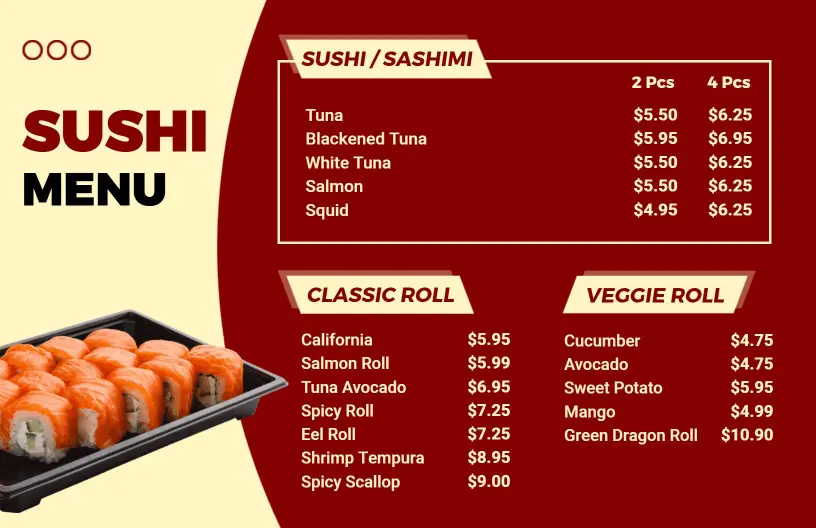
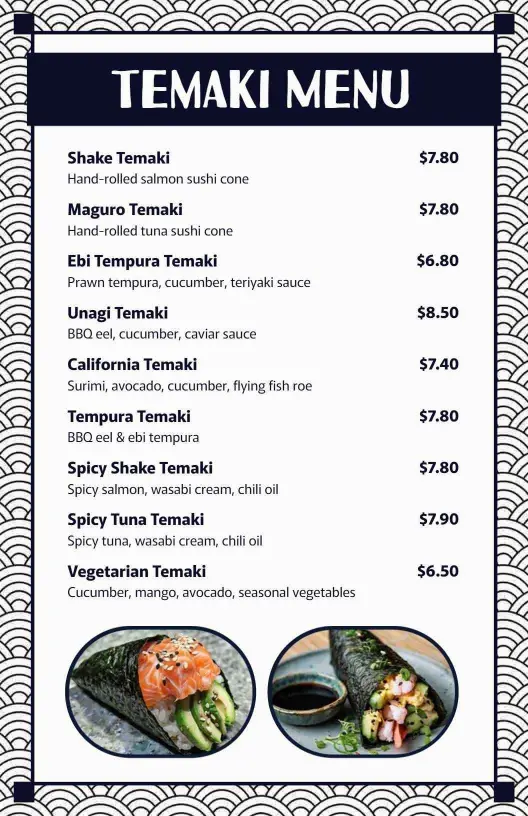
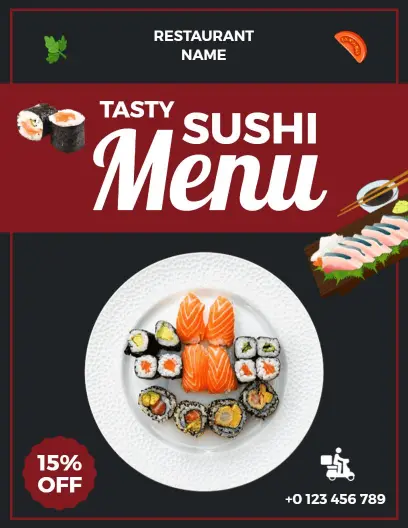
Start with a layout that matches your sushi service style, then organize rolls, nigiri, sashimi, and platters into clear sections customers can scan quickly.
1. Pick the right layout
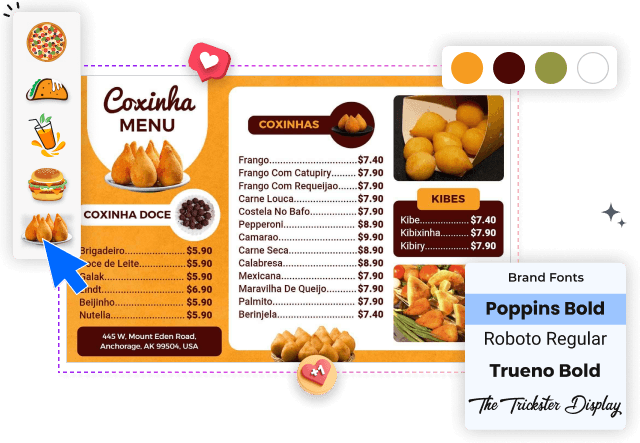
Choose a single-page layout for a focused sushi list. Use a folded or multi-panel layout if you need room for platters, specialty rolls, appetizers, or lunch sets.
2. Group the menu by dish type
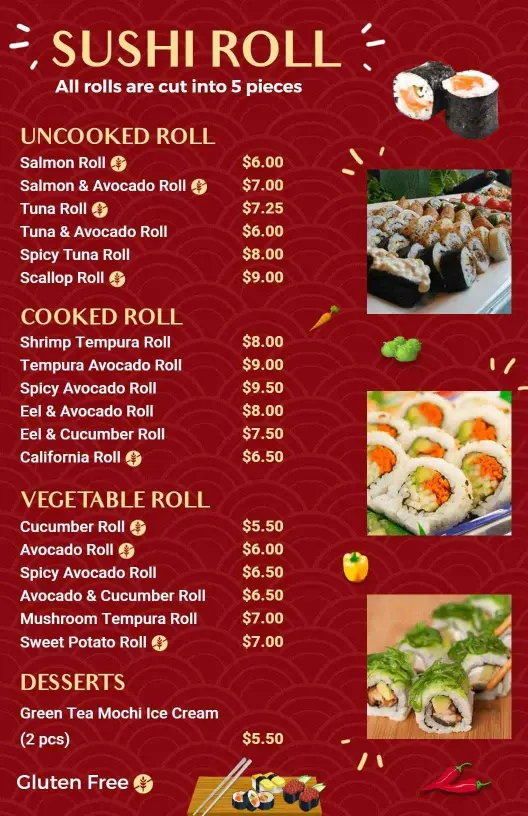
Place rolls, nigiri, sashimi, hand rolls, and platters into separate sections. If you serve cooked dishes too, keep those in a different section so the sushi items stay easy to scan.
3. Add useful menu details
List prices beside each item and add short notes for fish type, piece count, or raw and cooked preparation when relevant. Keep item names short so they stay easy to read on the page or phone screen.
4. Check readability
Use clean fonts, high contrast, and clear spacing. Test on phone and print before publishing. Export print menus as PDF (300 DPI) and digital menus as PNG.
5. Export and share
Save a PDF for print and a PNG for digital use. Use the print file for table menus, counter signs, and takeout handouts. Use the image version for QR ordering, social posts, and mobile menus.
Trusted by Thousands
 Tata Consultancy Services
 Boston Consulting
 AT&T
AT&T
 Avelo Airlines
 Procter & Gamble
 Ministry Of Health, Malaysia
 Veterans Affairs
 Detroit Government
 New York University
 Texas A&M University
 Decathlon America
 Warby Parker
Tata Consultancy Services
Boston Consulting
AT&T
Avelo Airlines
Procter & Gamble
Ministry Of Health, Malaysia
Veterans Affairs
Detroit Government
New York University
Texas A&M University
Decathlon America
Warby Parker
Warby Parker
Tata Consultancy Services
Boston Consulting
AT&T
Avelo Airlines
Procter & Gamble
Ministry Of Health, Malaysia
Veterans Affairs
Detroit Government
New York University
Texas A&M University
Decathlon America
Warby Parker



Other Menu templates
Sushi menu templates for sushi bars, restaurants, and takeout
Sushi menu templates help restaurants present rolls, nigiri, sashimi, hand rolls, and platters in a format guests can read quickly. DesignWiz keeps the layout focused on menu clarity, clean hierarchy, and easy updates, which matters when the menu is used at a sushi bar, in a dine-in restaurant, or in takeout packaging.
Sushi bars and specialty counters
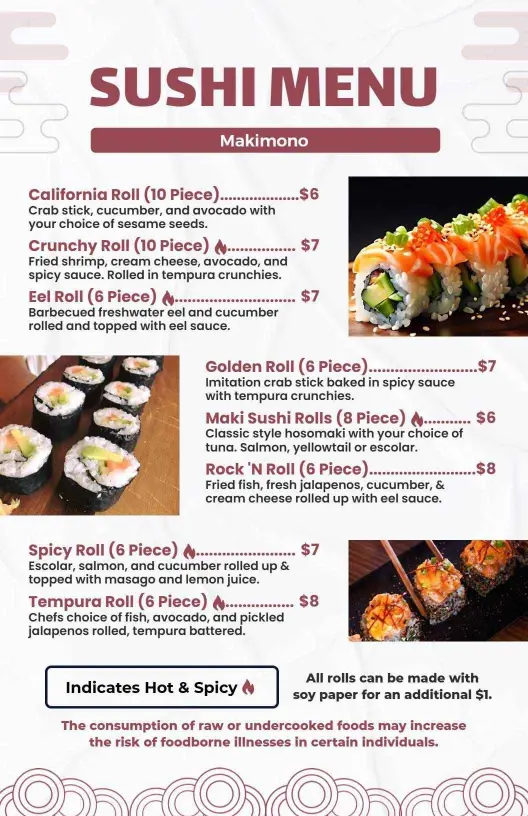
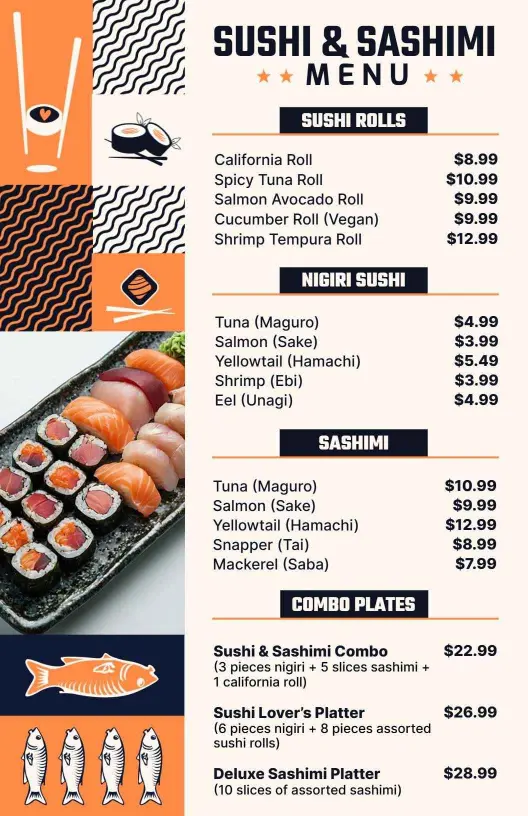
Sushi bars need menus that separate rolls, nigiri, sashimi, and chef specials without looking crowded. Keep signature items near the top and use short notes for fish type, serving count, or special sauces. The sushi rolls and nigiri layout works well when the page needs a refined seafood-first structure.
Restaurants with broad Japanese menus
Restaurants serving sushi alongside appetizers, rice bowls, and cooked dishes need a layout that balances variety without losing clarity. Keep raw and cooked items in separate sections so guests can scan the menu faster and feel more confident ordering. Use the raw and cooked varieties layout when the menu needs more balance between classic sushi and cooked options.
Takeout counters and delivery-friendly sushi menus
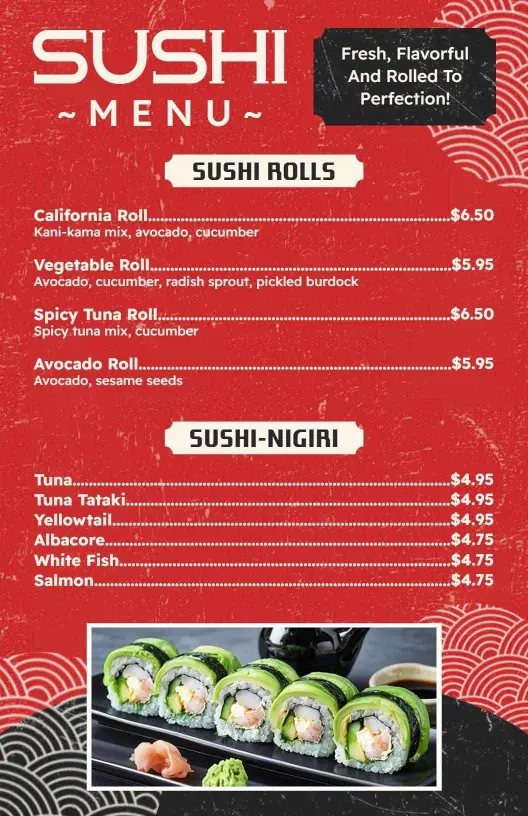
Takeout sushi menus need clear pricing, short item names, and fast scanning so staff can handle phone orders without confusion. Keep rolls, sashimi, platters, and lunch sets organized in a short list and avoid long descriptions that slow the order flow. The tuna and salmon layout works well when the page needs to support pickup and delivery.
Restaurants that want a polished presentation
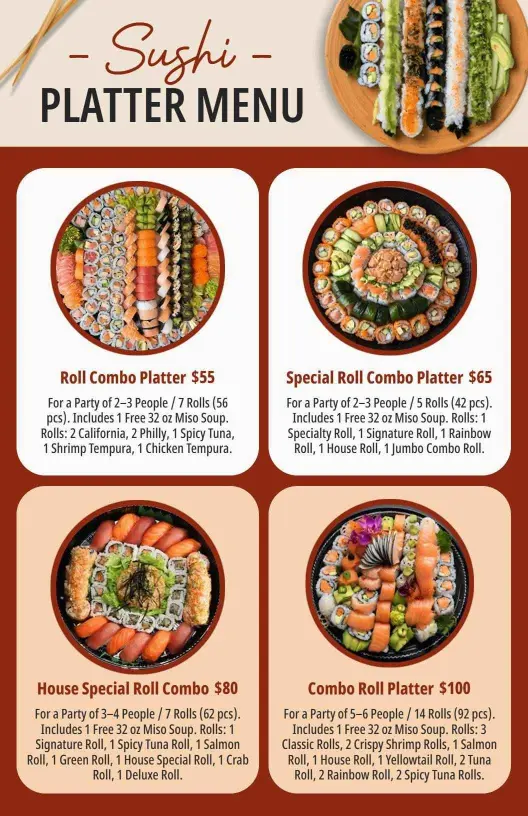
Some sushi businesses want a more elevated, presentation-led menu for premium sets, seasonal specials, or platter service. Use a layout that gives extra space to chef selections, signature rolls, and platter options so the menu feels intentional and easy to navigate. The sushi platter layout works well when the page needs a more premium restaurant feel.
Sushi menus work best when they are calm, precise, and easy to scan. The content should help guests find the right roll, set, or bowl quickly while matching the clean presentation that sushi service is known for.