


Ramen Menu Templates
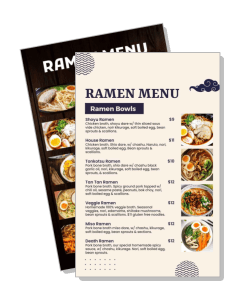
Ramen menu templates help ramen shops, Japanese restaurants, and takeout counters present broth styles, toppings, noodle bowls, and prices in a layout that is easy to scan, easy to edit, and ready for print or digital sharing.
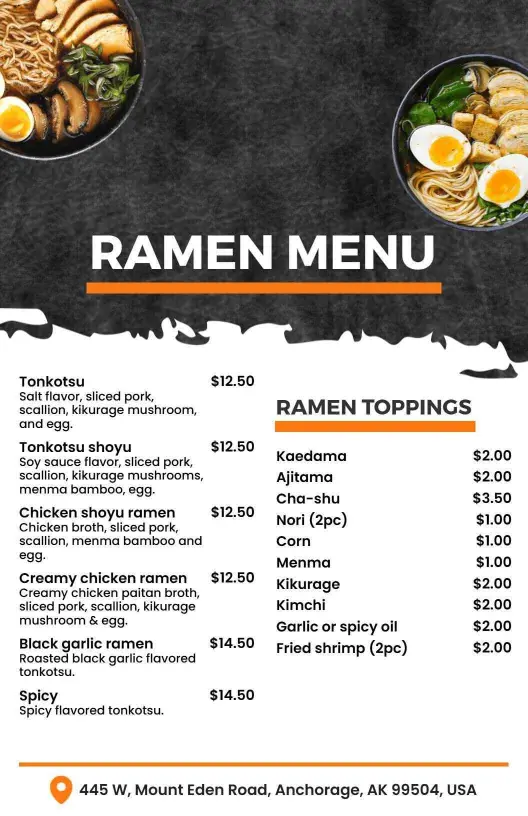
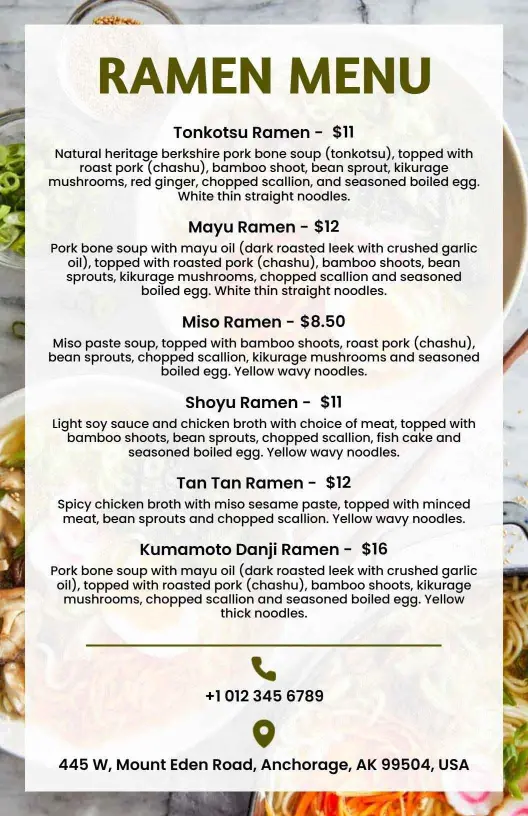
How to make a ramen menu
Start with the service style your guests will use most, then organize the menu so classic bowls, specialty ramen, broths, and toppings are easy to compare on paper or on a phone.
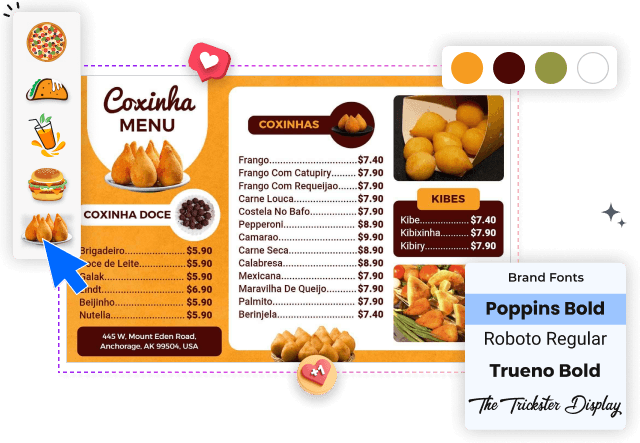
1. Choose the right layout
Pick a layout based on how the menu will be used. A shorter ramen offer can stay compact, while a full noodle shop menu may need more space for sections, pricing, and service notes.
2. Group dishes by category
Separate classic bowls, specialty ramen, broth options, toppings, and add-ons so guests can scan the page in a natural order. If you have combo offers, keep those labels obvious and consistent.
3. Add prices and helpful labels
Put prices beside each item and add short labels for spice level, noodle choice, or topping choice when those details help people decide faster. Keep the wording brief so the page stays clean.
4. Check readability on phone and in print
Review the design on a phone and on a printed copy before you publish it. Make sure the fonts stay clear, and the menu still reads well in bright dining-room light or low counter lighting.
5. Export and reuse
Save a print-ready PDF for tables, counters, or handouts, then export a digital version for QR ordering or social sharing. Reusing one clean structure makes price or menu updates much easier.
Trusted by Thousands
 Tata Consultancy Services
 Boston Consulting
 AT&T
AT&T
 Avelo Airlines
 Procter & Gamble
 Ministry Of Health, Malaysia
 Veterans Affairs
 Detroit Government
 New York University
 Texas A&M University
 Decathlon America
 Warby Parker
Tata Consultancy Services
Boston Consulting
AT&T
Avelo Airlines
Procter & Gamble
Ministry Of Health, Malaysia
Veterans Affairs
Detroit Government
New York University
Texas A&M University
Decathlon America
Warby Parker
Warby Parker
Tata Consultancy Services
Boston Consulting
AT&T
Avelo Airlines
Procter & Gamble
Ministry Of Health, Malaysia
Veterans Affairs
Detroit Government
New York University
Texas A&M University
Decathlon America
Warby Parker



Other Menu templates
Ramen menu templates for noodle shops, Japanese restaurants, and takeout
Ramen menus work best when guests can move from broths to noodles, toppings, and add-ons without losing the thread of the page. DesignWiz keeps the layout practical for small businesses that need a clean way to present menu variety, pricing, and service details in a format that stays readable on paper or on a phone.
Classic ramen shops and quick-service counters
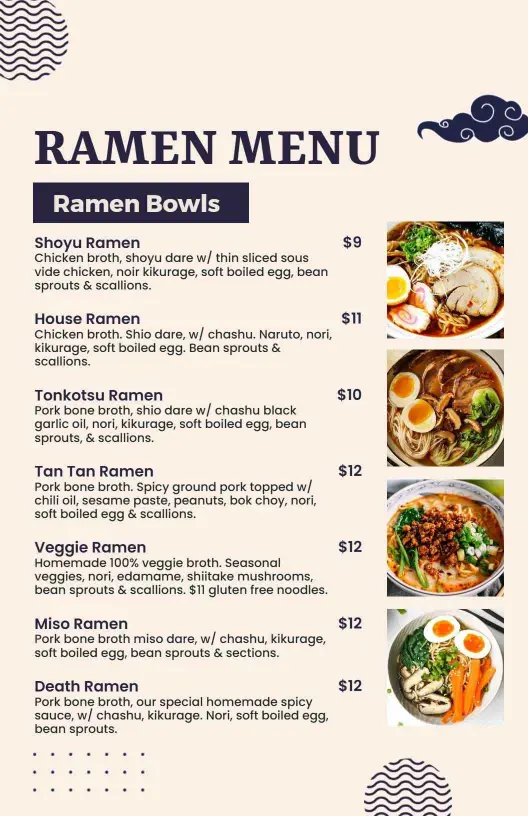
For ramen shops and counter service, the menu should make tonkotsu, miso, shoyu, and other everyday bowls easy to compare at a glance. Keep the most ordered bowls near the top and use short notes for spice level or noodle choice when they help guests decide faster. The Elegant Japanese Ramen Menu Template is a good fit when you want a familiar, easy-to-scan layout that still feels polished.
Broths, savory soups, and topping-focused pages
Broth-heavy pages work best when the menu separates soup styles, toppings, and special add-ons into clear blocks. That helps guests understand the offer quickly and makes it easier for staff to update seasonal specials or featured ingredients. The Authentic Japanese Ramen with Variety of Toppings Menu Template and the Traditional Ingredients and Savory Soups Ramen Menu Template both support that kind of service flow.
Seasonal specials and style-led presentations
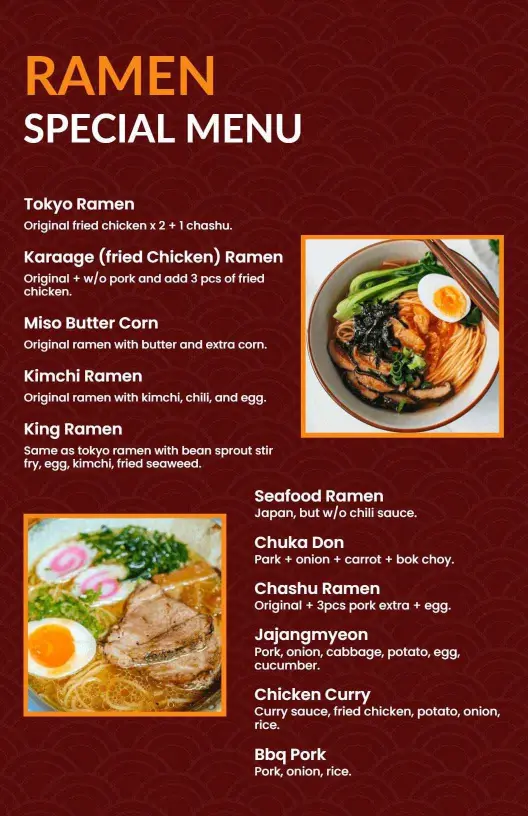
If the menu includes special ramen bowls or a more styled presentation, keep those items grouped so the page feels fresh and easy to navigate. A compact structure helps guests compare bowls, toppings, and portion sizes without scanning the full page. The Elegant Red Ramen Special Menu Template works well when those dishes need their own spotlight.
Rustic and premium ramen pages
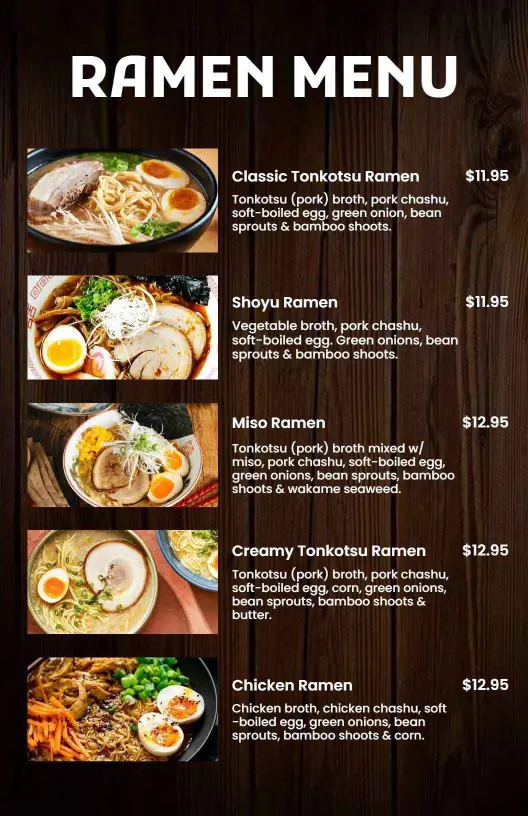
If your ramen offer leans into a rustic or premium look, give those bowls enough space to feel deliberate instead of crowded. That makes the page easier to update and easier for diners to browse when they are comparing styles or signature bowls. The Rustic Wood Background Ramen Menu Template works well when the menu needs a warmer, more grounded presentation.
A strong ramen menu should feel clear, flexible, and practical. The layout should help your team present the bowls clearly while giving diners a quick way to understand the broths, toppings, prices, and service style.