


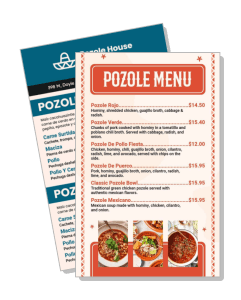
Pozole Menu Templates
Pozole Menu Templates help restaurants, food vendors, and caterers present traditional pozole varieties, toppings, sides, and prices in a clear, inviting format.
How to create a pozole menu
Plan the dish structure first, then customize the layout so customers can compare varieties, prices, toppings, and ordering options without confusion.
1. List your pozole offerings
Write down every available style, protein, portion, price, and serving schedule. Group rojo, verde, blanco, and specialty bowls before placing them into the design.
2. Choose a suitable layout
Select a format with enough room for dish names, short descriptions, prices, and extras. Match the visual style to your restaurant, food stall, or catering service.
3. Add clear dish descriptions
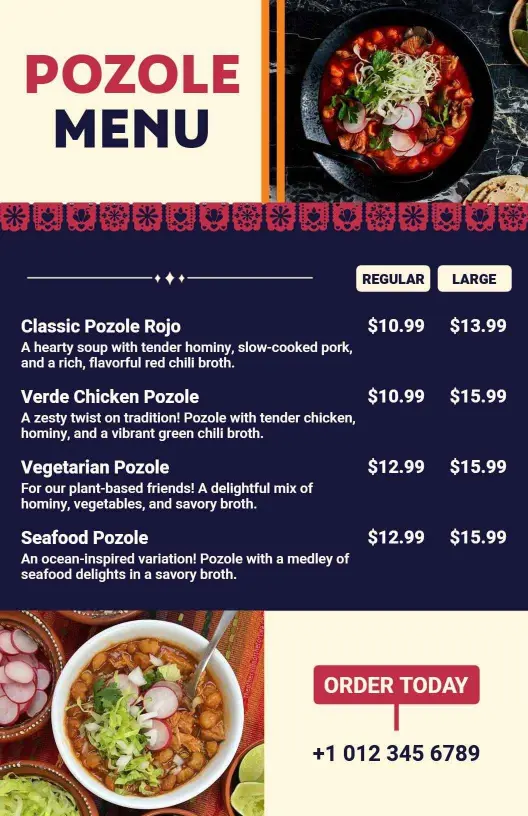
Describe the broth, protein, spice level, and included garnishes in one concise line. Avoid long ingredient lists that make customers work harder to compare bowls.
4. Separate toppings and sides
Create a distinct section for radish, cabbage, onion, lime, oregano, tostadas, avocado, drinks, and add-ons so guests understand what is included or optional.
5. Review and export the menu
Check spelling, prices, alignment, contrast, and contact details at the final display size. Export versions suited to printing, counter screens, and social sharing.
Trusted by Thousands
 Tata Consultancy Services
 Boston Consulting
 AT&T
AT&T
 Avelo Airlines
 Procter & Gamble
 Ministry Of Health, Malaysia
 Veterans Affairs
 Detroit Government
 New York University
 Texas A&M University
 Decathlon America
 Warby Parker
Tata Consultancy Services
Boston Consulting
AT&T
Avelo Airlines
Procter & Gamble
Ministry Of Health, Malaysia
Veterans Affairs
Detroit Government
New York University
Texas A&M University
Decathlon America
Warby Parker
Warby Parker
Tata Consultancy Services
Boston Consulting
AT&T
Avelo Airlines
Procter & Gamble
Ministry Of Health, Malaysia
Veterans Affairs
Detroit Government
New York University
Texas A&M University
Decathlon America
Warby Parker



Other Menu templates
Build a pozole menu that makes every bowl easy to choose
A focused pozole menu helps customers compare broth styles, proteins, portions, garnishes, and extras without searching through a crowded restaurant menu. Use clear sections for rojo, verde, and blanco options, then keep prices and short descriptions close to each dish so ordering feels simple in print or on a screen.
Show traditional varieties with useful details
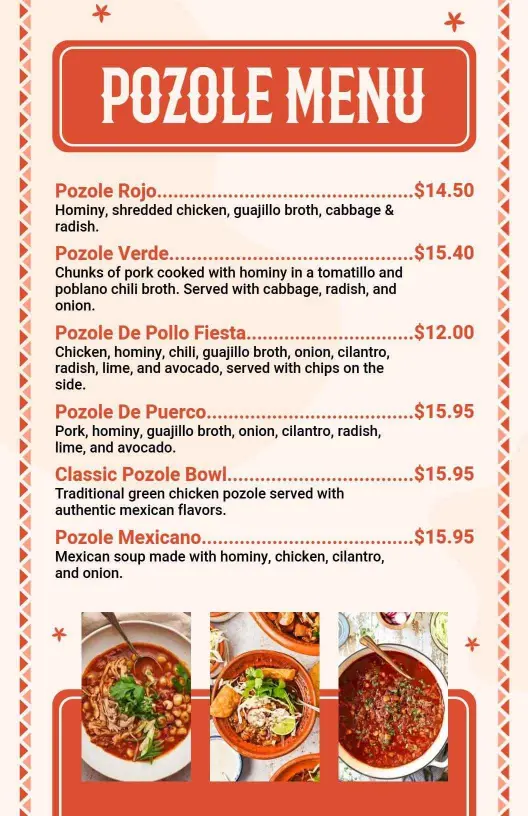
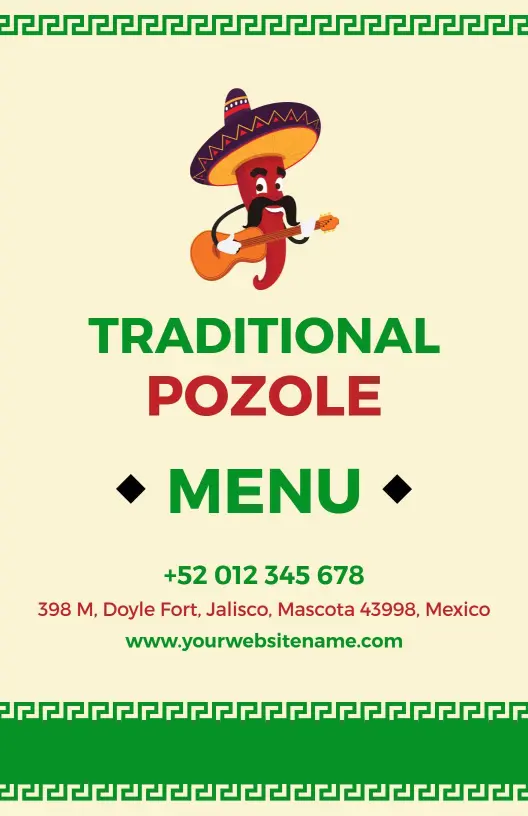
Give each bowl a distinct name and explain the broth, protein, spice level, and included garnishes in one concise line. The Traditional Mexican Flavors with Classic Pozole Varieties Menu Template offers a practical structure for separating classic selections while keeping prices easy to scan.
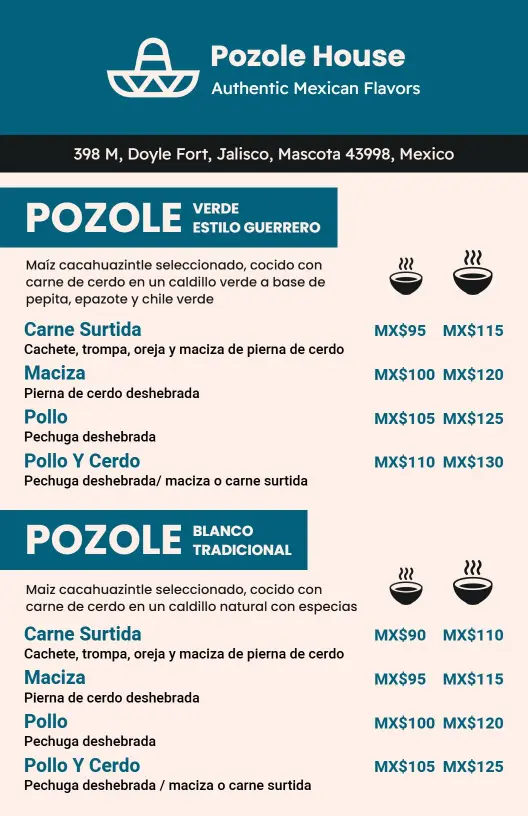
For a menu centered on red and green preparations, the Plantilla De Menú De Auténtico Pozole Mexicano Rojo Y Verde supports a clear comparison between regional styles, extras, and serving choices.
Organize proteins, portions, toppings, and add-ons
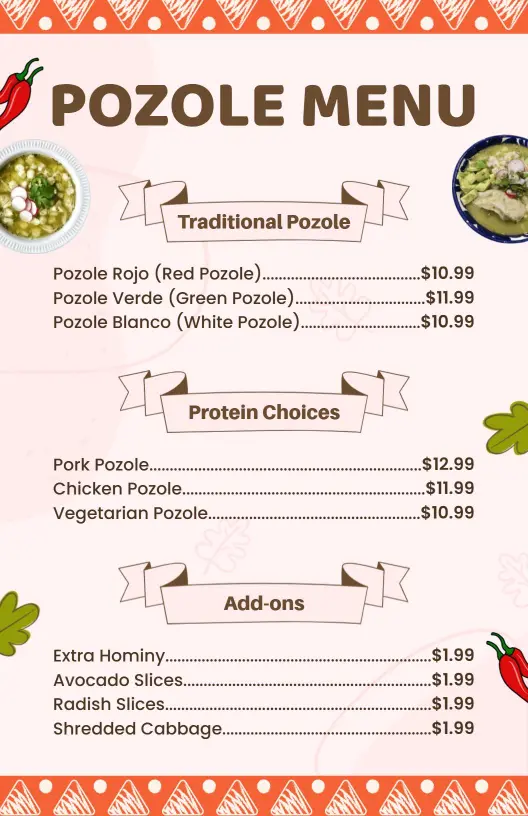
Customers often need to know whether a bowl includes pork, chicken, vegetarian ingredients, or another protein. The Authentic Traditional Pozole Culinary Selection Menu Template gives restaurants room to group dish choices while preserving a strong visual hierarchy.
Use a separate block for cabbage, radish, onion, lime, oregano, tostadas, avocado, and other additions. The Authentic Mexican Pozole with Flavorful Ingredients Menu Template is suited to menus that need to explain toppings and flavor options without overwhelming the main dishes.
Match the layout to your restaurant atmosphere
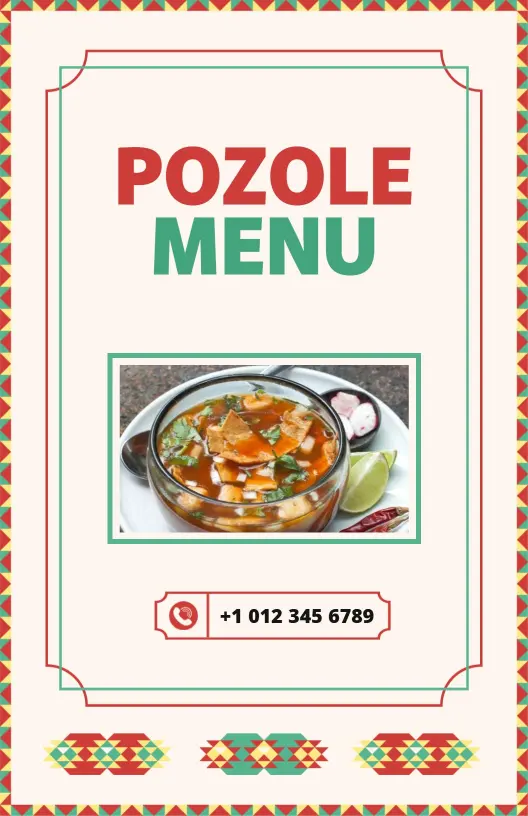
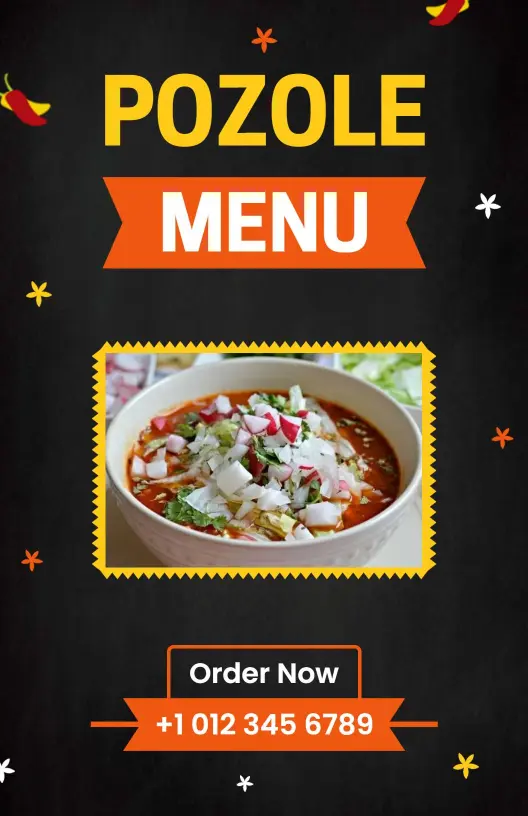
A traditional dining room may benefit from warm colors, restrained ornament, and familiar Mexican motifs, while a casual food stall can use brighter accents and larger prices. The Rustic Mexican Homestyle Pozole Selection Menu Template creates a homestyle feel with space for sides, extras, and drinks.
Keep the menu useful across print and digital channels
Review the menu at its final size before publishing. Dish names, prices, ordering notes, and contact details should remain readable on a counter display, printed handout, social post, or mobile screen. A consistent structure also makes seasonal price or ingredient updates faster to apply.