


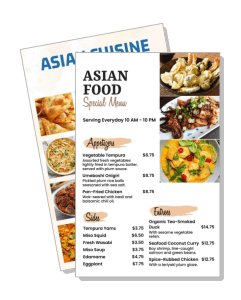
Asian Menu Templates
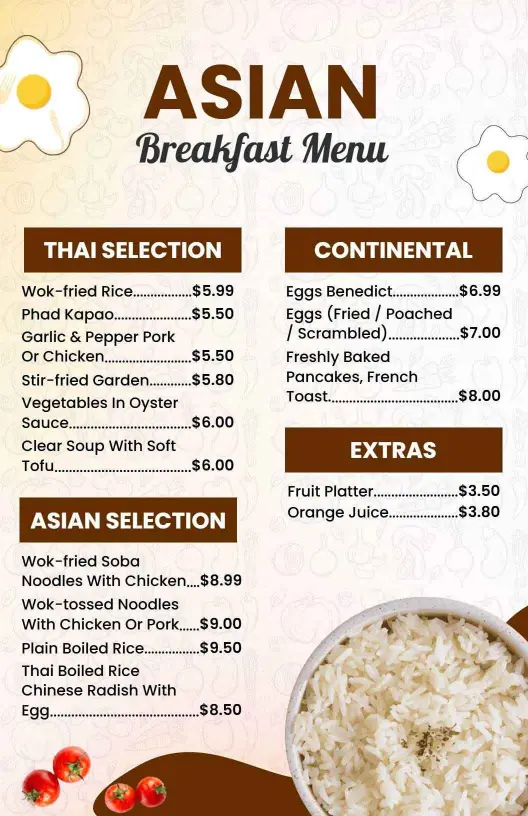
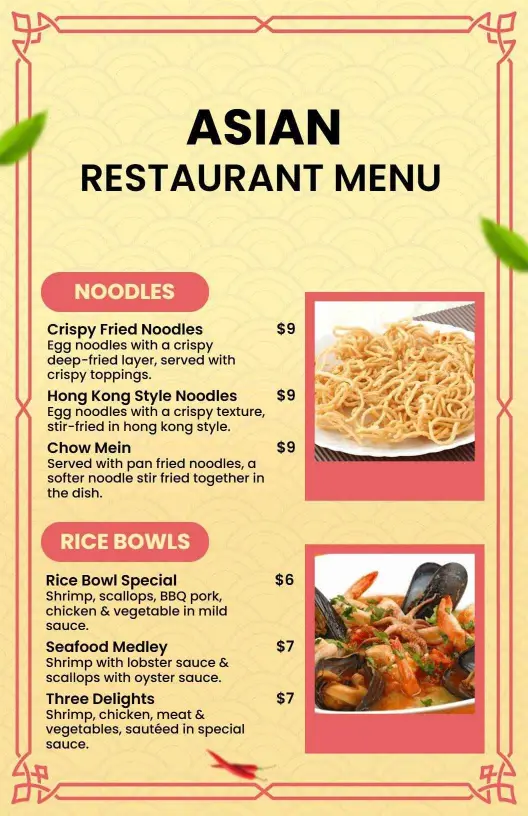
Asian Menu templates help restaurants, cafes, and catering teams present Chinese, Japanese, Thai, Indian, and fusion dishes in a layout customers can scan quickly. Use them for print menus, counter boards, or QR ordering when you want the page to stay clear and easy to edit.
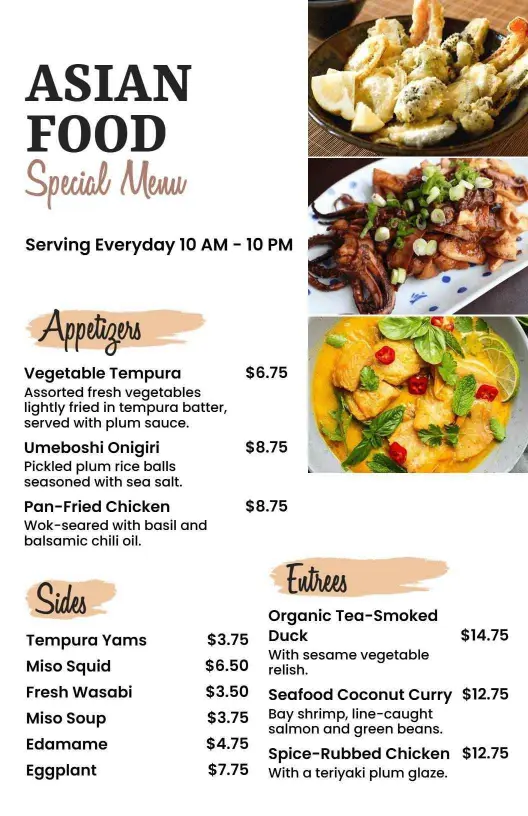
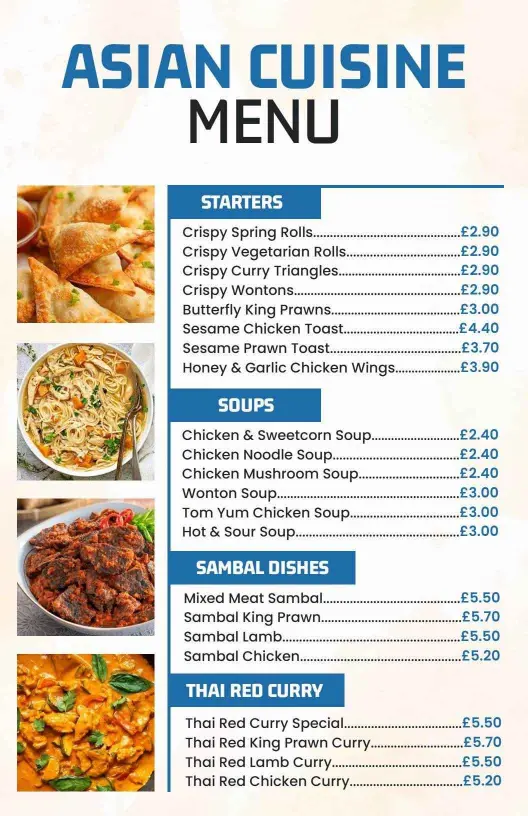
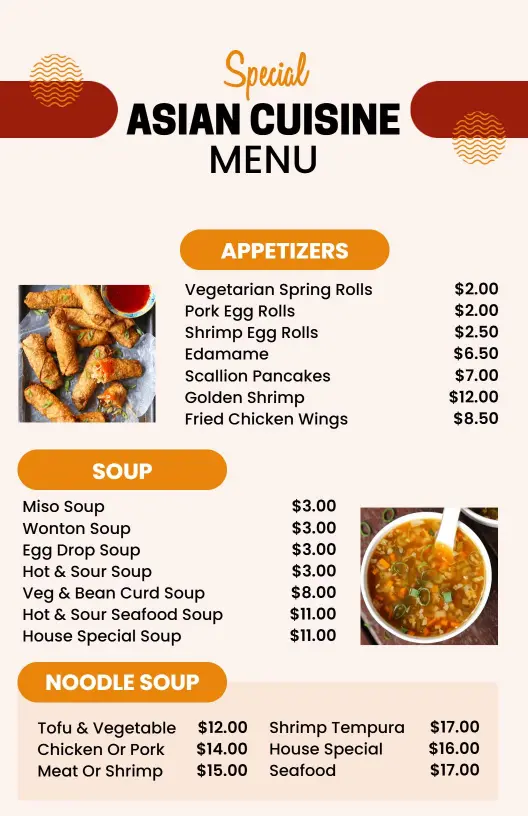
How to make an Asian menu
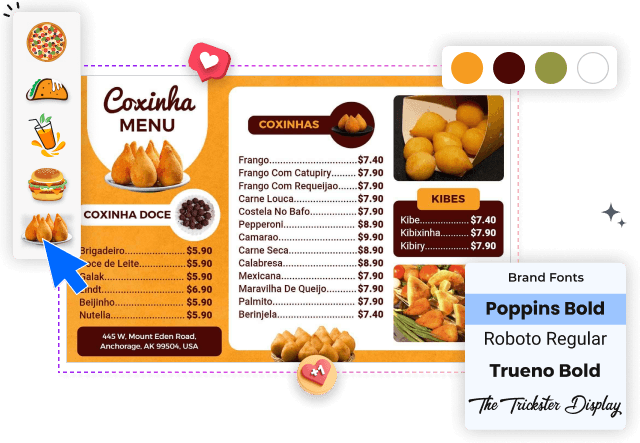
Start with the cuisine groups and dishes you already serve, then build a layout that stays easy to read in print, on a board, or on a phone.
1. Choose the menu structure
Start by deciding whether the menu should follow cuisine, course, or meal type. A clear structure makes it easier for guests to find the dishes they want quickly.
2. List the core dishes first
Add your most popular items before anything else, then place specialty dishes underneath them. This keeps the menu focused and helps customers scan the familiar options fast.
3. Add prices and short labels
Place prices in one consistent spot and use brief labels for spice level, portion size, or dietary notes. That keeps the page practical without making it feel crowded.
4. Review the layout at real size
Preview the menu on paper and on a phone to confirm that spacing, contrast, and section order still work. If the design feels too busy, simplify it before exporting.
5. Save the final versions
Export a print-ready file and a digital copy, then reuse the same layout when prices or dishes change. That makes future menu updates faster and more consistent.
Trusted by Thousands
 Tata Consultancy Services
 Boston Consulting
 AT&T
AT&T
 Avelo Airlines
 Procter & Gamble
 Ministry Of Health, Malaysia
 Veterans Affairs
 Detroit Government
 New York University
 Texas A&M University
 Decathlon America
 Warby Parker
Tata Consultancy Services
Boston Consulting
AT&T
Avelo Airlines
Procter & Gamble
Ministry Of Health, Malaysia
Veterans Affairs
Detroit Government
New York University
Texas A&M University
Decathlon America
Warby Parker
Warby Parker
Tata Consultancy Services
Boston Consulting
AT&T
Avelo Airlines
Procter & Gamble
Ministry Of Health, Malaysia
Veterans Affairs
Detroit Government
New York University
Texas A&M University
Decathlon America
Warby Parker



Other Menu templates
Asian menu templates for restaurants, cafes, and catering services
Asian menu templates make it easier to organize a menu with different cuisines, spice levels, and service styles. Keep the structure focused on the dishes people order most often, then add short notes for ingredients, portion size, or heat level so guests can make a choice faster.
Restaurants with regional dishes and full meal sections
Restaurants often need a menu that can show appetizers, mains, noodles, rice plates, and desserts without feeling crowded. Group items by cuisine or course so the page stays easy to browse and staff can update it when the menu changes. The Traditional Asian Cuisine Menu Template is a strong fit when you want a more classic presentation for dine-in service.
Cafes and casual dining with lighter menu boards
Casual cafes and small dining rooms need layouts that stay readable at a glance, especially when the menu includes soups, bowls, and quick bites. Keep drinks, snacks, and mains separate so customers can move through the page without scanning every line. The Simple Asian Cuisine Menu Template works well when you want a clean, uncomplicated layout.
Food events and catering menus with flexible sections
Catering menus benefit from a structure that can hold set meals, family-style platters, and buffet items in one place. That makes it easier to plan orders and show what is included in each package. The Vibrant Asian Food Menu Template is useful when your menu needs a stronger visual presence for events or pop-ups.
Fusion menus with mixed flavors and modern styling
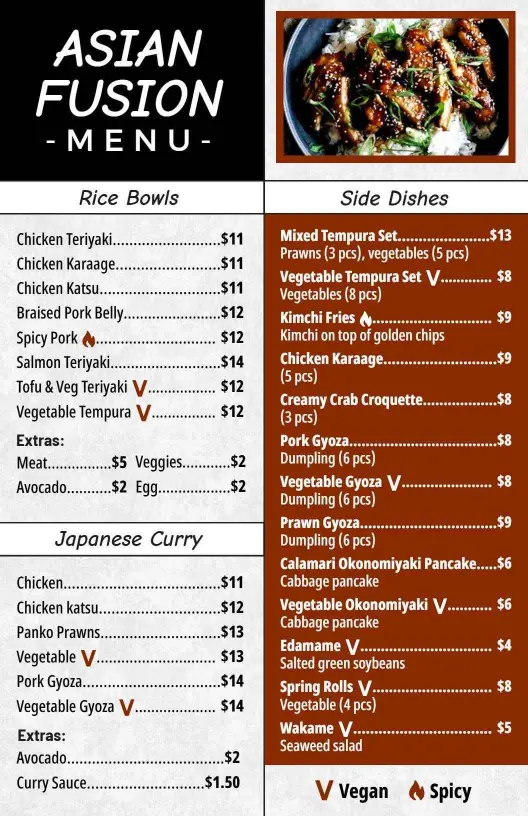
If your menu blends Asian flavors with modern service formats, a flexible layout helps you balance authenticity and convenience. Use clean spacing and simple section labels so the menu still feels premium even when the dishes change often. The Minimalist Brown and White Asian Menu Template is a good option for a restrained look, while the Rustic Asian Fusion Culinary Menu Template fits menus that lean more contemporary and mixed-style.
A useful Asian menu should help guests compare dishes quickly, keep the page easy to edit, and support both printed and digital ordering.