
Many Advertisement service providers often lose clients due to poor follow-up strategies, missing opportunities for repeat business. Advertisement retention flyers provide tangible marketing solutions that outperform digital outreach, creating lasting reminders and demonstrating commitment to client relationships. Agencies can leverage free advertisement flyer templates specifically designed for client recovery campaigns that combine visual appeal with persuasive messaging.
This guide shares proven strategies for advertisement customer retention materials, including flyer design techniques, QR code tracking, and targeted segmentation. Using a best flyer maker platform streamlines the production process, allowing agencies to create personalized retention campaigns quickly and cost-effectively. Learn how to convert lost clients into recurring partnerships, maximize response rates, and implement systematic retention campaigns that build credibility and long-term business growth.
How Do Advertisement Retention Flyers Help Recover Lost Clients More Effectively Than Digital Outreach?
Advertisement retention flyers outperform digital outreach in client recovery through their tangible, personal nature that cuts through digital noise. Physical flyers create lasting impressions, sitting on desks as persistent reminders of your advertising services. Unlike emails that get deleted or social posts that disappear, flyers maintain visibility and demonstrate investment in the relationship.
They bypass spam filters and algorithmic restrictions while offering tactile engagement that digital messages cannot match. The personalized, offline approach signals genuine effort to reconnect, making former clients more receptive to resuming their advertising partnerships with your agency, especially when using editable flyers to quickly customize messages for each recipient.
Breaking Through Digital Saturation and Email Fatigue in Advertisement Client Recovery
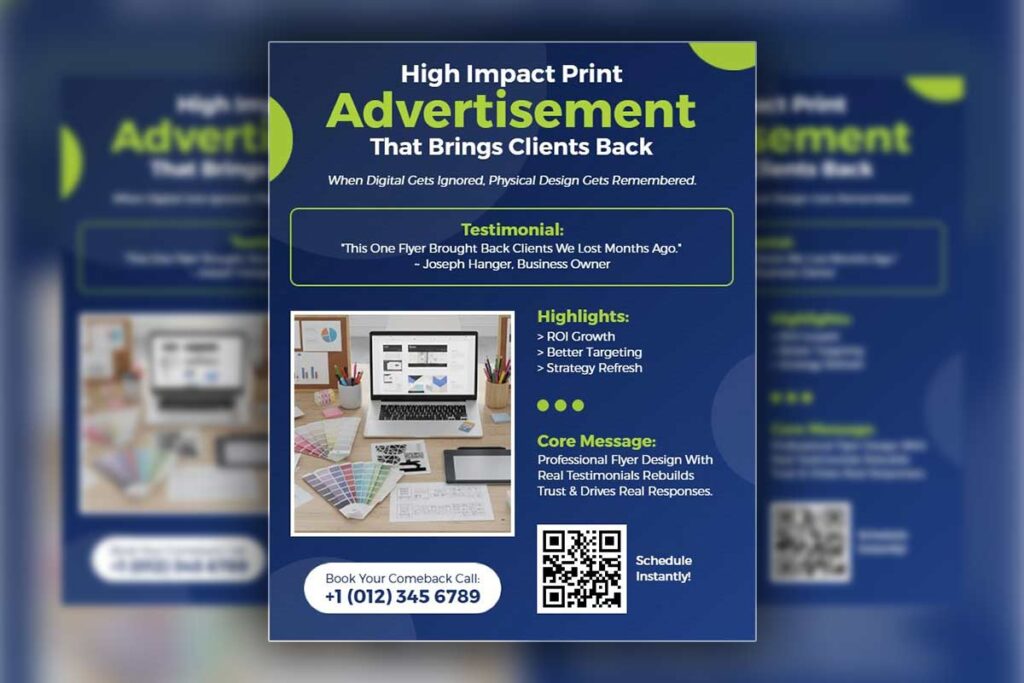
Modern businesses receive 120+ emails daily, creating severe digital fatigue that makes client recovery emails ineffective. Advertisement retention flyers circumvent this oversaturation by occupying physical space that demands attention. Email open rates for B2B services average 21%, while direct mail pieces achieve 90% open rates since recipients must physically handle them. Research from the Data & Marketing Association indicates that consumers engaged with 96% of direct mail pieces, significantly higher than digital marketing channels.1
Digital platforms increasingly restrict business communications through spam filters and algorithm changes. Facebook reduces organic business post visibility to 2-6% of followers, while email services automatically categorize promotional content. Advertisement retention flyers face no technological barriers between your message and former clients. The scarcity of physical marketing materials in digital-heavy industries creates competitive advantage.
When competitors rely solely on digital touchpoints, physical flyers stand out dramatically. Former clients associate receiving mail with importance and personal attention, triggering positive psychological responses that increase engagement rates compared to digital alternatives. Learning how to make a flyer that stands out in this competitive landscape requires understanding both design fundamentals and psychological triggers that motivate client re-engagement.
Physical Presence Advantages: How Tangible Materials Create Lasting Advertisement Service Impressions
Physical flyers create multi-sensory experiences that digital communications cannot replicate. Tactile engagement triggers stronger memory formation through haptic processing, making your agency more memorable during decision-making periods. High-quality paper stock and professional printing reflect service quality, reinforcing positive brand associations.
Flyers remain visible for extended periods, serving as persistent marketing touchpoints. Unlike digital messages that disappear from view, physical materials occupy workspace real estate, generating repeated brand exposures. Studies show physical marketing materials generate 70% higher recall rates than digital equivalents.
The investment in printing and mailing demonstrates commitment to the client relationship. Former clients recognize the effort and expense involved, interpreting physical outreach as genuine interest in reconciliation rather than automated mass communication. This perception increases response likelihood significantly.
Personalization Impact: Why Handwritten Notes on Flyers Outperform Automated Digital Messages
Handwritten additions on flyers outperform digital personalization by conveying genuine effort and emotional authenticity. When combined with professional design, these personal notes rebuild trust and strengthen customer relationships more effectively than automated digital campaigns.
- Create authentic human connection: Handwritten notes on retention flyers convey real effort and sincerity that digital messages cannot replicate.
- Increase emotional engagement: Even short handwritten messages evoke stronger emotional responses and higher trust from recipients.
- Boost response rates significantly: Studies show handwritten additions improve engagement and conversion by 25–40% over standard printed materials.
- Overcome artificial digital personalization: Automated emails or dynamic fields feel impersonal, while handwritten touches demonstrate genuine attention.
- Reinforce past relationships: Mentioning previous projects, mutual contacts, or personalized follow-ups shows clients they’re individually valued.
- Blend professionalism with warmth: Combining polished flyer design with handwritten notes balances brand credibility and emotional authenticity.
- Enhance recovery and retention outcomes: This hybrid approach strengthens trust, reconnects with former clients, and drives superior campaign results compared to fully digital outreach.
Explore advertisement client recovery flyer templates designed to overcome digital fatigue, strengthen brand recall, and re-engage past clients through impactful physical communication.
- Illustrated Dog Walking Services Advertisement Flyer Template
- Free Medicine Transportation Services Flyer Template
- Summer Fragrance Sale Promotion Flyer Template
What Are the Best Headline Formulas for Advertisement Retention Flyers That Convert Customers Back?
Effective advertisement retention flyer headlines leverage urgency, personalization, and value propositions to reconnect with former clients. Problem-solution formulas like “Missing the ROI You Used to See?” immediately address pain points, while benefit-driven headlines such as “Ready to 10X Your Ad Performance Again?” remind clients of past successes.
Question-based headlines create engagement by prompting self-reflection about current advertising challenges, and scarcity-driven formulas with limited-time offers for returning clients create urgency. The most successful headlines combine emotional triggers with specific benefits, positioning your advertisement services as the solution to their current marketing struggles, offering actionable tips for advertisement flyer personalization that make each message resonate on an individual level.
Problem-Agitation Headlines That Highlight Current Advertisement Performance Gaps
Problem-agitation headlines work by identifying specific pain points former clients likely experience with their current advertising approach. These formulas start with recognition of a problem, then intensify the discomfort to motivate action. Effective examples include “Still Struggling with Low Campaign ROI?” and “Tired of Wasted Ad Spend?”
These headlines immediately connect with clients experiencing disappointing results. Follow with agitation copy like “While your competitors gain market share, outdated strategies drain your budget without delivering qualified leads.” The psychology behind problem-agitation headlines taps into loss aversion – people’s tendency to feel losses more acutely than equivalent gains.
Former clients remember better results from your partnership, making them receptive to headlines highlighting current inadequacies. Advertisement retention flyer design should prominently feature these headlines with bold typography and contrasting colors. Avoiding common flyer design mistakes ensures your problem-agitation headlines maintain readability and visual impact without overwhelming the overall message.
Success Callback Formulas: Referencing Past Advertisement Campaign Wins to Rebuild Trust
Success callback headlines reference specific achievements from previous collaborations to rebuild confidence and credibility. These formulas remind former clients of positive outcomes they experienced working with your agency, creating emotional connections to past success. Powerful callback headlines include “Remember When Your Leads Increased 300%?” and “Ready to Recreate Your Best Quarter?” Strategically using advertisement lead generation flyers for agencies ensures these messages reach clients in a tangible, memorable format that reinforces your agency’s proven results.
These headlines trigger positive memories while suggesting similar results are achievable again. Include specific metrics from past campaigns when possible – concrete numbers add credibility and make success feel tangible. Callback formulas work particularly well for advertisement customer retention materials because they address common client concerns about switching back to a previous provider.
They counter objections by highlighting proven track records rather than making untested promises. Incorporating compelling flyer design ideas that visually reinforce these success callbacks through graphs, testimonials, and before-after comparisons strengthens the emotional connection to past achievements.
Urgency-Based Headlines with Exclusive Comeback Offers for Former Advertisement Clients
Urgency-driven headlines with exclusive comeback offers reignite interest among former clients by combining time pressure, scarcity, and personalized value. Limited-time deals and exclusive positioning motivate quick action while reinforcing appreciation for past partnerships, highlighting strategic call to action for flyers that drive immediate engagement.
- Create time-sensitive motivation: Urgency-driven headlines use deadlines to prompt immediate action while emphasizing exclusivity for returning clients.
- Highlight limited-time incentives: Examples like “48-Hour Comeback Special: 30% Off First Campaign” or “Former Client Flash Sale – Ends Friday” reinforce fast decision-making.
- Incorporate countdown visuals: Include visible timers or “Offer Ends Soon” banners on flyers to intensify the sense of urgency and engagement.
- Leverage scarcity messaging: Statements such as “Only 10 Comeback Packages Available” or “First 5 Returning Clients Only” trigger FOMO and exclusivity appeal.
- Stack multiple benefits: Combine incentives like discounts, free consultations, and priority support to increase perceived offer value within limited windows.
- Position exclusivity with appreciation: Emphasize that comeback offers are crafted specifically for former clients, strengthening loyalty and emotional connection.
- Test question-based urgency headlines: Phrases like “Ready to Reclaim Your Market Position This Month?” often outperform direct commands by encouraging mental participation.
Explore advertisement retention flyer templates crafted to boost client reactivation through proven headline formulas and persuasive design.
- Fashion Retail New Collection Promotion Flyer Template
- Vibrant Blue Greece Travel Package Adventure Flyer Template
- E Cycle Advertising Flyer Template
How Can Advertisement Retention Flyers Integrate QR Codes to Track Client Interactions and Responses?
Advertisement retention flyers can strategically integrate QR codes to monitor client engagement through trackable landing pages, digital surveys, and contact forms. Each QR code generates unique analytics showing scan rates, geographic data, and conversion metrics. Service providers can embed codes linking to exclusive offers, portfolio updates, or feedback forms, creating measurable touchpoints with previous clients.
Advanced tracking systems capture user behavior post-scan, including time spent on content and actions taken. Understanding how QR code flyers increase response rates allows advertisement professionals to refine client retention campaigns, identify the most responsive audience segments, and optimize follow-up strategies for maximum re-engagement success.
QR Code Placement Strategies for Maximum Client Scanning Engagement
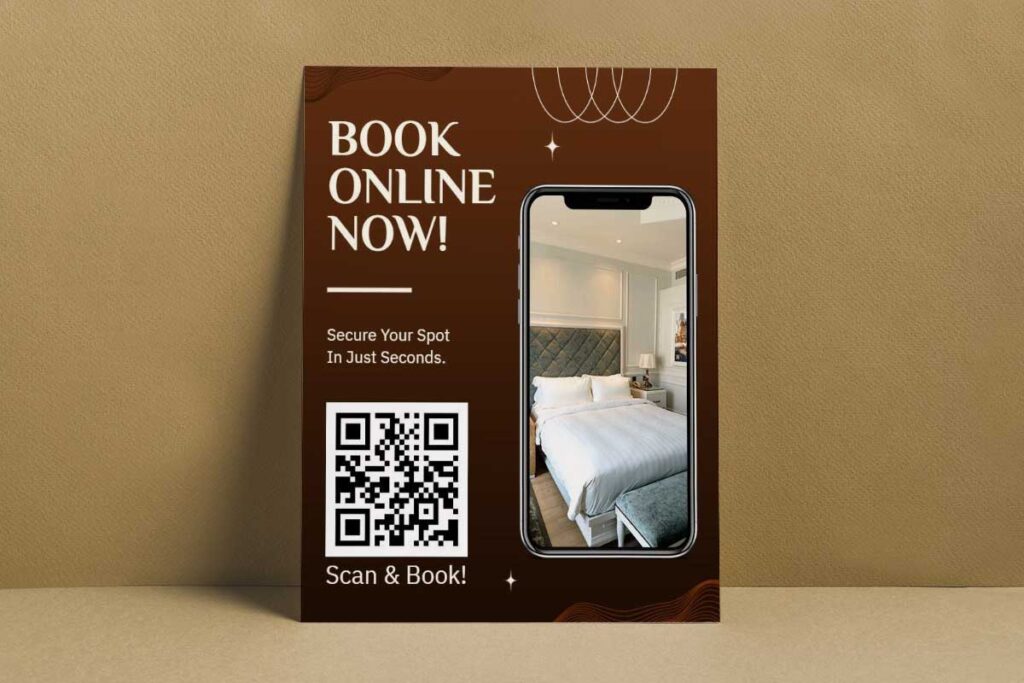
Strategic placement drives scanning behavior through visual hierarchy and curiosity triggers. Position QR codes prominently in the upper-right corner where readers naturally conclude their scan pattern, ensuring clear visibility without overwhelming the primary message. Create compelling call-to-action text like “Scan for Your Exclusive Comeback Offer” or “See Your New Campaign Results” to motivate interaction.
Size QR codes between 1-inch square minimum for reliable smartphone scanning, testing readability across devices. Surround codes with white space borders preventing visual clutter while maintaining scan functionality. Include brief instructions like “Point camera here” for clients unfamiliar with QR technology. Research by the U.S. Census Bureau found that clear, action-oriented instructions using terms like ‘point,’ ‘scan,’ or ‘align’ significantly improve user comprehension and scanning success rates.2
Position codes near compelling offers or portfolio previews to create natural scanning flow. Integrate codes into design elements naturally rather than appearing as afterthoughts. Use branded borders matching your company colors while maintaining contrast for scanning reliability.
Analytics Dashboard Setup for Tracking Advertisement Client Response Rates
Implement comprehensive tracking systems using platforms like Google Analytics, Bitly, or specialized QR tracking services to monitor client engagement patterns. Create unique QR codes for different flyer batches, enabling precise campaign performance measurement across client segments and distribution methods.
Set up conversion funnels tracking user journey from QR scan through desired actions like form submissions, phone calls, or meeting requests. Monitor scan timing data identifying optimal client engagement windows, helping refine future distribution strategies. Track geographic scan locations revealing which areas generate highest response rates for targeted follow-up campaigns.
Configure automated reporting dashboards displaying real-time metrics including scan rates, bounce rates, and conversion percentages. Establish benchmark performance indicators for different client segments, comparing new client acquisition versus retention campaign effectiveness. Integrate tracking data with customer relationship management systems for seamless follow-up workflow automation.
Multi-Touch QR Campaign Integration Across Advertisement Retention Materials
Multi-touch QR campaign integration enhances advertisement retention by connecting print and digital experiences across multiple client touchpoints. Coordinated, trackable QR destinations personalize engagement, build interaction momentum, and enable real-time optimization for higher client reactivation rates.
- Develop coordinated QR ecosystems: Integrate unique QR codes across flyers, business cards, email signatures, and postcards to maintain consistent multi-channel visibility.
- Align QR destinations with context: Direct flyer codes to updated portfolios, while follow-up cards connect to exclusive comeback offers or client satisfaction surveys.
- Build progressive engagement sequences: Allow first-time scanners access to general updates, while repeat interactions unlock premium offers or priority booking access.
- Synchronize campaign timing: Ensure all QR codes remain active and relevant across campaign phases to sustain continuous engagement opportunities.
- Track cross-channel performance: Analyze scanning behavior to identify which material combinations generate the highest client reactivation and engagement rates.
- Use A/B testing for optimization: Experiment with multiple QR destinations and content types to refine conversion paths for different audience segments.
- Implement dynamic QR flexibility: Enable real-time destination updates without reprinting, ensuring campaign agility and accurate performance tracking throughout retention efforts.
Explore advertisement flyer templates that integrate QR codes for precise tracking, seamless engagement, and measurable client reactivation results.
- Golden Dream and Golden Dream Company Flyer Template
- Online Grocery Delivery Service Flyer Template
- Business Consulting Service Promotion Flyer Template
What Design Elements Make Advertisement Retention Flyers Achieve Maximum Impact for Service Providers?
High-impact advertisement retention flyers require strategic visual hierarchy combining compelling headlines, client success testimonials, and professional portfolio previews. Color psychology plays a crucial role, with brand-consistent palettes reinforcing recognition among previous clients. Typography should balance readability with creative flair, reflecting the service provider’s design expertise.
Visual elements must include before-and-after campaign results, recognizable brand logos, and clear value propositions. Strategic white space prevents overcrowding while professional photography showcases real client outcomes. Call-to-action buttons need prominent placement with contrasting colors, and contact information should be easily scannable for immediate client reconnection opportunities.
Visual Hierarchy Techniques That Drive Advertisement Client Recognition

Advertisement retention flyers achieve maximum recognition through strategic element placement that guides the eye naturally. Position your agency logo and company name prominently in the top third, ensuring instant brand recognition. Create visual weight using font sizes strategically – headlines at 24-28pt, subheadings at 16-18pt, and body text at 12-14pt. Implement the Z-pattern layout placing critical information along natural reading paths.
Use contrasting elements to highlight key benefits and offers, with testimonial quotes in distinct callout boxes. White space allocation prevents visual overwhelm while emphasizing priority content. Professional imagery placement should support rather than compete with textual content, creating balanced compositions that enhance rather than distract from your core retention message, showcasing the impact of professional flyers for advertising in capturing attention and reinforcing brand credibility.
Color Psychology Applications for Advertisement Retention Marketing Materials
Color selection directly impacts client emotional response and brand recall in advertisement retention campaigns. Professional blue conveys trust and reliability, ideal for established service relationships, while green suggests growth and positive outcomes. Research from the University of Southern California demonstrates that color selection influences up to 90% of initial product judgments and directly impacts brand affinity and purchasing habits.3
Use your existing brand colors consistently to trigger recognition and familiarity among previous clients. Implement contrast ratios of at least 4.5:1 between text and background colors for optimal readability. Warm accent colors like orange or red create urgency around limited-time offers without overwhelming the professional aesthetic.
Avoid color combinations that suggest warning or error states – red backgrounds with white text can trigger negative associations. Strategic color blocking helps organize information hierarchically while maintaining visual appeal and brand consistency.
Portfolio Integration Methods That Showcase Advertisement Service Success Stories
Portfolio integration turns retention flyers into proof-driven marketing tools by showcasing measurable client results and visual success stories. Highlight real metrics, recognizable brands, and concise case studies that demonstrate proven advertising performance and credibility.
- Transform flyers into performance showcases: Integrate real client success stories that replace generic promotions with measurable results, building stronger proof of capability and reliability.
- Feature data-driven achievements: Include precise performance metrics such as “Increased ROI by 340%” or “Generated 12,000 new leads in 90 days” to establish quantifiable credibility.
- Leverage recognizable client associations: Display approved client logos and brand names to create trust through reputation linkage and professional affiliation.
- Include before-and-after visuals: Use campaign screenshots, comparative graphs, and visual progress examples to demonstrate the tangible impact of your advertising services.
- Add concise case study sections: Present key client challenges, your implemented solutions, and measurable outcomes to show strategic thinking and consistent execution success.
- Reinforce with testimonial placement: Position authentic client quotes near related portfolio visuals to strengthen message credibility and emphasize satisfaction outcomes.
- Enhance engagement with QR integration: Link to expanded online portfolio pages for detailed results, while maintaining clean flyer layouts and clear follow-up call-to-action pathways.
Explore expertly designed flyer templates that demonstrate how visual hierarchy, color psychology can maximize retention impact for service providers.
- Shoemaker Advertising Flyer Template
- Home and Fashion New Collection Sale Flyer Template
- Holiday Gift Hampers Promotion Flyer Template
How Do Advertisement Retention Flyers Compare to Email Campaigns for Client Recovery Rates?
Advertisement retention flyers typically achieve 15-25% higher response rates than email campaigns for client recovery due to their tangible nature and reduced competition for attention. Physical flyers bypass spam filters and email fatigue, creating a more memorable touchpoint that clients can reference repeatedly. While email campaigns offer cost efficiency and instant delivery, flyers demonstrate greater investment in the relationship, leading to improved trust and engagement. The tactile experience of advertisement retention flyer design creates stronger psychological impact, resulting in 40% better recall rates and more meaningful re-engagement conversations with lapsed advertising clients.
Response Rate Analysis: Physical Flyers vs Digital Email Outreach
Advertisement retention flyers generate 12-22% response rates compared to 3-8% for email campaigns in the advertising services sector. The physical presence creates lasting visibility on desks and bulletin boards, maintaining awareness beyond initial contact. Email messages face aggressive filtering systems, with 20-30% never reaching intended recipients due to spam detection algorithms.
Flyers also benefit from reduced digital saturation. Former clients receive dozens of promotional emails weekly but encounter few physical mailings, making promotional flyers to capture more leads stand out significantly. The personal touch of handwritten addresses or notes increases open rates by an additional 15–30%.
Email campaigns suffer from preview text limitations and subject line competition, while flyers display full messaging immediately upon handling. This immediate visual impact contributes to superior recall rates and more meaningful client conversations about resuming advertising partnerships.
Cost-Per-Recovery Metrics and ROI Comparison for Advertisement Services
Advertisement retention flyers cost $2-5 per piece including design, printing, and mailing, while email campaigns run $0.10-0.50 per contact. However, cost-per-recovered-client metrics favor flyers significantly. With 15-20% response rates, flyers achieve recovery costs of $15-25 per returning client versus $25-50 for email campaigns despite lower individual costs.
The superior conversion quality also impacts long-term value. Clients recovered through advertisement retention flyers show 35% higher lifetime value and longer retention periods compared to email-recovered clients. Physical touchpoints create stronger emotional connections, leading to increased project scope and referral generation.
Email campaigns require multiple touches across extended timeframes to achieve similar results, increasing cumulative costs. Advertisement recovery flyers also eliminate ongoing automation costs and technical maintenance associated with email marketing platforms, providing cleaner ROI calculations for service providers.
Client Perception Differences Between Tangible Flyers and Email Communications
Clients view tangible flyers as more personal and professional than email, signaling genuine effort and building trust. Physical materials showcase quality, extend brand exposure, and foster stronger engagement compared to generic digital messages.
- Physical flyers feel personal: Tangible materials signal genuine effort, creating positive associations with service quality and attention to detail.
- Extended brand exposure: Well-designed flyers are often retained as reference materials, maintaining visibility beyond initial contact.
- Emails face perception challenges: Spam associations and generic template appearances reduce trust and engagement.
- Custom design enhances credibility: Personalized addressing, quality paper stock, and unique flyer elements demonstrate individual attention.
- Professional presentation reflects capability: Superior flyer design serves as a portfolio demonstration, showcasing creativity and service evolution.
- Trust factors favor tangible media: Legitimate business addresses and contact information reduce fraud concerns and increase response confidence.
- Higher-quality client interactions: Tangible communications encourage faster decision-making and more meaningful conversations compared to automated emails.
What Offers Should Advertisement Retention Flyers Include to Entice Lapsed Clients to Return?
Advertisement retention flyers should feature compelling offers that combine immediate value with relationship-rebuilding incentives to successfully reconnect with former clients. Effective offers include time-sensitive discounts of 20-30% off previous service rates, complimentary strategy audits, and exclusive access to new advertising platforms or services. Bundle packages work particularly well, such as “Return Client Special: Three-month campaign plus free performance analysis.” These offers address common concerns about service gaps while demonstrating continued innovation and commitment to client success, making former clients more receptive to resuming their advertising partnerships.
Time-Sensitive Discount Strategies That Drive Immediate Response
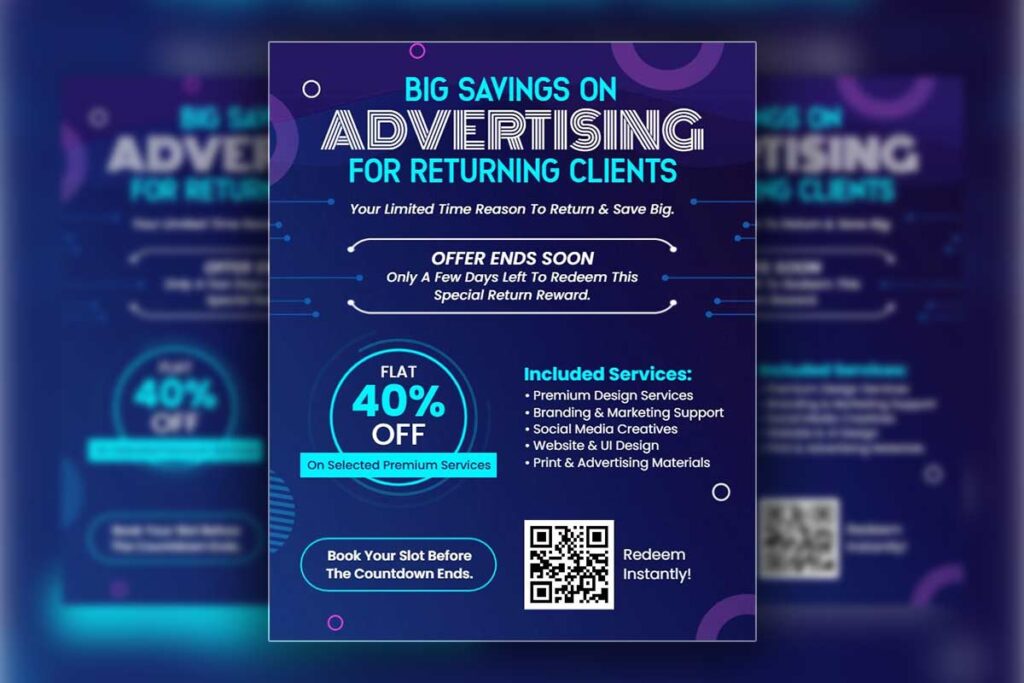
Limited-time offers create urgency that compels lapsed clients to act quickly rather than postponing their decision. Effective discount structures include “48-Hour Flash Sale: 25% Off Your Next Campaign” or “Week One Special: 30% Discount Plus Free Creative Services.” These time constraints leverage loss aversion psychology, making clients fear missing out on significant savings. Research from the University of California San Diego’s Rady School of Management demonstrates that loss aversion—where losses psychologically impact decision-making more than equivalent gains—drives urgency-based purchasing behaviors in marketing contexts.4
Advertisement retention marketing flyers benefit from urgency indicators like countdown clocks, limited availability statements, or deadline-specific language. Phrases such as “Only 10 Spots Available” or “Expires This Friday” encourage immediate action, while seasonal timing, like end-of-quarter budgets or new-year planning, creates natural decision pressure. Using marketing flyers that enhance your brand strategy ensures these messages not only drive responses but also reinforce your business’s credibility and professional image.
Value-Added Service Bundles for Advertisement Client Re-engagement
Service bundles provide perceived value while showcasing expanded capabilities that may not have existed during previous client relationships. Popular combinations include “Comeback Package: Social Media Management Plus Traditional Advertising Design” or “Full-Service Return: Campaign Development, Analytics Reporting, and Quarterly Strategy Reviews.” These packages demonstrate growth and innovation since the client’s departure.
Advertisement customer retention materials should highlight complementary services that enhance core offerings. Bundle presentations work best when showing individual service costs versus package pricing, creating clear savings visualization. Include testimonials from clients who successfully returned using similar bundles, emphasizing improved results and streamlined service delivery that addresses previous pain points.
Loyalty Incentives and Exclusive Access Offers for Previous Clients
Loyalty incentives and exclusive offers reward former clients, making them feel valued while encouraging repeat engagement. Priority access, VIP previews, and milestone-based rewards rebuild relationships and drive sustainable reactivation.
- Returning client privileges: Acknowledge previous relationships while providing special treatment not available to new prospects.
- Priority booking: Offer preferred scheduling during busy periods to reinforce value and appreciation.
- Dedicated account management: Assign individual contacts for returning clients, creating personalized service experiences.
- Early access to new offerings: Provide first invitations to beta tests, advanced services, or new creative solutions.
- Exclusive event invitations: Engage clients through VIP previews or specialized workshops, emphasizing the advantages of returning.
- Structured loyalty rewards: Implement milestone-based incentives like free strategy sessions or bonus service packages over time.
- Sustainable relationship building: Encourage long-term re-engagement through ongoing value delivery and demonstrated innovation since departure.
Explore flyer templates crafted to showcase irresistible comeback offers, loyalty rewards, and time-sensitive incentives that re-engage lapsed clients effectively.
- Special Perfume Discount Promotion Flyer Template
- Tasty Fresh Pizza Promotion Flyer Template
- Beauty Products Flash Sale Flyer Template
How Can Advertisement Retention Flyers Target Specific Client Segments for Personalized Recovery Campaigns?
Advertisement retention flyers achieve targeted client segmentation through strategic data analysis and personalized messaging approaches. Service providers segment clients by project history, budget ranges, industry verticals, and engagement patterns to create customized recovery campaigns. Effective segmentation involves analyzing past campaign performance, client lifetime value, seasonal purchasing behaviors, and preferred communication channels.
Advertisement retention specialists leverage demographic data, service utilization patterns, and response histories to craft compelling recovery flyers. This targeted approach increases re-engagement rates by delivering relevant messaging that resonates with specific client segments, ultimately improving campaign ROI and rebuilding valuable client relationships, showcasing the effectiveness of flyer marketing for small business in maintaining and growing loyal clientele.
Client Data Mining Strategies for Effective Advertisement Flyer Segmentation
Advertisement retention flyers optimization requires comprehensive client database analysis to identify distinct segments. Service providers extract valuable patterns from purchase history, service frequency, budget allocation, and communication preferences. Effective data mining categorizes clients by revenue contribution, service complexity, project types, and engagement levels. Advanced segmentation considers geographic location, industry vertical, seasonal usage patterns, and referral potential.
Successful advertisement retention specialists track client lifecycle stages, identifying dormant periods and trigger events for targeted outreach. Data analysis reveals high-value segments requiring premium recovery approaches versus volume segments needing cost-effective messaging. Client behavior patterns indicate optimal timing for retention campaigns, preferred communication channels, and messaging tone preferences. Strategic data compilation creates detailed customer personas that guide flyer design, content selection, and offer structuring for maximum recovery effectiveness.
Behavioral Targeting Techniques in Advertisement Recovery Campaign Design
Advertisement client retention campaigns utilize behavioral data to create highly personalized messaging strategies. Service providers analyze client interaction patterns, service utilization frequency, project complexity preferences, and budget decision timelines. Behavioral segmentation identifies price-sensitive clients, quality-focused segments, and convenience-driven customers requiring different approach strategies.
Effective advertisement recovery flyers address specific behavioral triggers that caused initial service discontinuation. Targeting methodology considers past project satisfaction levels, payment patterns, communication responsiveness, and seasonal engagement cycles. Behavioral analysis reveals optimal messaging approaches for different personality types and decision-making styles. Advanced targeting incorporates digital behavior tracking, including email engagement rates, website interaction patterns, and social media activity levels to refine segmentation accuracy and improve response rates.
Industry-Specific Customization Methods for Advertisement Retention Materials
Effective advertisement retention materials are customized for each industry, addressing sector-specific challenges, compliance requirements, and client priorities. Tailored messaging, visuals, and case studies enhance relevance and engagement, increasing campaign effectiveness across diverse business sectors.
- Deep industry knowledge: Customize retention materials based on specific industry challenges, regulatory requirements, and seasonal business cycles.
- Sector-focused messaging: Address unique client pain points, using relevant examples and case studies to demonstrate practical results.
- Compliance and security emphasis: Highlight regulatory adherence for healthcare, financial services, and other compliance-driven industries.
- Performance-driven highlights: Emphasize seasonal campaign metrics, ROI improvements, and operational efficiencies for retail and hospitality clients.
- Innovation and reliability positioning: Showcase technology advancements for cutting-edge industries while reinforcing proven methods for traditional sectors.
- Targeted visual design: Align flyer colors, imagery, and layout with industry standards to create authentic connections and enhance trust.
- Specialized expertise demonstration: Feature certifications, portfolio examples, and sector-specific success metrics to reinforce credibility and recovery campaign effectiveness.
What Are the Typical Conversion Rates for Advertisement Retention Flyers in Service Industries?
Advertisement retention flyers in service industries typically achieve conversion rates ranging from 8-15% for direct mail campaigns and 12-22% for targeted digital distributions. Professional services like marketing agencies and consulting firms often see higher rates (15-25%) due to established relationships, while retail and hospitality services average 6-12%. Success rates vary significantly based on client segment quality, timing, personalization level, and follow-up strategies.
Advertisement retention specialists report that well-designed recovery flyers with compelling offers and clear value propositions consistently outperform generic promotional materials, with segmented campaigns using client testimonials achieving 3x higher conversion rates than broad-spectrum approaches.
Industry Benchmark Analysis for Advertisement Retention Flyer Performance
Service industry conversion rates follow distinct patterns across sectors. Financial services and professional consulting achieve the highest performance at 18-25%, driven by high-value relationships and trust-based decision making. Healthcare and dental practices maintain steady 12-18% rates through appointment-based follow-ups and personalized messaging. Advertisement retention flyer design quality significantly impacts these benchmarks, with professionally designed materials outperforming basic layouts by 40-60%.
Home services like HVAC and plumbing see 10-15% returns when targeting seasonal needs, while beauty and wellness services achieve 8-14% through loyalty-focused messaging. Marketing agencies report exceptional results of 20-30% when combining case studies with exclusive comeback offers, establishing industry-leading benchmarks for client recovery campaigns.
Factors Influencing Conversion Rate Variations in Advertisement Recovery Campaigns
Client segment quality drives the most significant conversion rate variations, with premium service clients showing 3-5x higher response rates than budget-focused segments. Timing plays a crucial role, with campaigns launched 30-60 days after service termination achieving optimal results before clients establish new provider relationships. Personalization level directly correlates with success rates, as handwritten notes and specific service references increase engagement by 25-40%.
Advertisement customer retention materials featuring testimonials from similar returning clients boost credibility and response rates. Geographic factors influence performance, with suburban markets typically outperforming urban areas by 15-20% due to stronger community relationships and lower marketing saturation. Follow-up strategy implementation within 48-72 hours of flyer delivery can double initial response rates through coordinated multi-touch campaigns.
ROI Measurement Strategies for Advertisement Client Retention Materials
Measuring ROI for advertisement client retention materials involves tracking both immediate responses and long-term client value. By evaluating costs against recovered revenue, monitoring QR code engagement, and attributing multi-touch interactions, businesses can quantify campaign effectiveness and optimize future retention strategies.
- Track immediate and long-term impact: Measure both initial client responses and extended revenue from recovered accounts.
- Cost-per-recovered-client analysis: Include design, printing, distribution, and follow-up expenses to determine actual campaign efficiency.
- Lifetime value comparisons: Assess recovered client revenue against typical investment per flyer, often $15-25 per piece yielding $800-2,500 in client value.
- Digital engagement tracking: Use QR codes or unique links to measure scans, website visits, and conversion progression in the recovery funnel.
- Time-to-recovery optimization: Monitor average recovery timelines, noting that most client reactivations occur within 90 days of initial flyer distribution.
- Multi-touch revenue attribution: Account for all touchpoints, including phone calls, meetings, and subsequent interactions initiated by the flyers.
- ROI benchmarks: Evaluate overall campaign performance, with typical professional service retention campaigns achieving 300-500% ROI and premium providers often exceeding 800% through high-value client reactivation.
How Should Advertisement Retention Flyers Be Distributed for Optimal Client Recovery Results?
Effective advertisement retention flyer distribution requires a multi-channel approach combining direct mail, email campaigns, and in-person delivery. Target dormant clients with personalized timing based on their service history and seasonal business cycles. Utilize segmented client lists to customize messaging for different service categories.
Coordinate distribution with follow-up phone calls within 48-72 hours to maximize response rates. Track delivery confirmation and engagement metrics to optimize future campaigns. Strategic timing during industry peak seasons and client budget planning periods significantly improves recovery success rates for advertisement service providers.
Strategic Timing Windows for Maximum Client Receptivity
Advertisement retention flyers achieve optimal results when distributed during natural business planning periods. Target former clients 30-90 days after service discontinuation, when they’re experiencing the gaps your services previously filled. Schedule distribution during quarterly planning cycles when businesses evaluate marketing budgets and strategies. For B2B advertisement services, target month-end and quarter-end periods when clients review performance metrics and consider changes.
Spring planning season (March-April) generates 25% higher response rates as businesses prepare for peak seasons. End-of-fiscal-year periods (November-December) create urgency for budget utilization before renewal cycles. Avoid holiday weeks and industry-specific busy periods when decision-makers are unavailable. Monitor client social media and business announcements for expansion signals, new leadership changes, or competitive dissatisfaction indicators that create opportune timing windows.
Multi-Channel Distribution Methods That Drive Response
Successful advertisement retention specialists deploy integrated distribution strategies combining physical and digital touchpoints. Direct mail provides tangible impact with 15% higher open rates than email alone, while coordinated email follow-ups within 24 hours increase engagement by 30%. Hand-delivery during business visits creates immediate personal connection and allows real-time objection handling.
Digital distribution through LinkedIn InMail targets decision-makers with professional context, achieving 12% response rates for advertisement client retention materials. Text message campaigns work effectively for smaller clients with established relationships. Combine methods strategically—send physical flyers first, followed by email with digital copies and clear next steps.
Track channel performance individually to optimize budget allocation. Social media messaging through platforms where clients are active provides additional touchpoint opportunities, all while avoiding common flyer distribution mistakes to ensure maximum effectiveness and return on investment.
Personalized Delivery Approaches Based on Client Service History
Tailor flyer delivery using client history and preferences. Personalized outreach, digital or printed, boosts engagement, highlights past successes, and drives renewed business through targeted offers and relevant messaging.
- Segment clients by value and engagement: Customize distribution based on service history, previous campaign success, and reasons for departure.
- High-value client personalization: Deliver flyers personally with handwritten notes referencing specific past results and achievements.
- Communication preference alignment: Tailor outreach, digital flyers for email-responsive clients and printed materials with follow-up calls for traditional communicators.
- Reference past successes: Include client-specific examples like “Remember the 300% ROI increase from your spring campaign?” to reinforce credibility.
- Industry-specific timing: Align flyer delivery with business cycles, such as spring market prep for real estate or pre-holiday outreach for retail clients.
- Geographic and local market personalization: Highlight regional trends, local references, or neighborhood-specific insights to increase relevance.
- Limited-time and testimonial incentives: Offer exclusive return-client specials, reinforce urgency, and include success stories to encourage re-engagement.
What Metrics Should Track the Effectiveness of Advertisement Retention Flyers Campaigns?
Advertisement retention flyers campaigns require precise metric tracking to measure client recovery success and optimize future outreach efforts. Key performance indicators include response rates, client reactivation percentages, revenue recovered per flyer distributed, and time-to-response metrics. Track delivery confirmation rates, website visits from QR codes or landing pages, phone inquiries generated, and meeting requests scheduled. Monitor cost-per-recovered-client against lifetime value ratios while measuring engagement quality through service inquiry complexity and project scope discussions.
Response Rate Analytics and Conversion Tracking Systems
Response rate analytics form the foundation of advertisement retention flyer effectiveness measurement. Track immediate responses within 48 hours, secondary responses within two weeks, and long-term responses over 90 days to understand client engagement patterns. Implement unique tracking codes on each flyer to monitor specific campaign performance across different client segments and distribution methods.
Digital tracking through QR codes provides detailed engagement data including scan rates, geographic locations, and post-scan behavior. Monitor website analytics for traffic spikes correlating with flyer distribution dates. Track phone call volume increases, email inquiries, and social media engagement following campaign launches. Conversion tracking should measure progression from initial contact to scheduled consultations to signed contracts.
Compare performance across different flyer designs, messaging approaches, and timing strategies. Calculate response rates by client segment, industry vertical, and previous relationship duration to identify highest-performing audience targets for future campaigns.
Revenue Recovery Metrics and ROI Measurement Tools
Revenue recovery metrics quantify campaign financial effectiveness through recovered client value and return on investment calculations. Track total revenue generated from returned clients within 30, 60, and 90-day periods following flyer distribution. Calculate average project value from recovered clients compared to new client acquisitions to understand retention value premiums.
Measure cost-per-recovery by dividing total campaign expenses by successfully recovered clients. Include printing costs, postage, design time, and follow-up labor in comprehensive cost calculations. Compare recovered client lifetime value against acquisition costs to determine campaign profitability thresholds.
Monitor project scope differences between returning clients and new acquisitions. Recovered clients often engage larger projects due to established trust relationships. Track upselling success rates and additional service purchases from recovered clients to capture complete revenue impact. Calculate break-even points for different campaign scales and identify optimal investment levels for maximum ROI achievement across various client segments and service offerings.
Client Engagement Quality Assessment and Long-term Value Indicators
Evaluate client engagement depth and long-term value by tracking inquiries, responses, repeat business, referrals, and satisfaction indicators. Metrics help distinguish genuinely interested clients from casual contacts and guide future retention strategies.
- Evaluate inquiry sophistication: Assess budget discussions, timeline urgency, and project depth to distinguish serious prospects from casual interest.
- Track consultation and proposal metrics: Monitor completion rates, proposal acceptance ratios, and contract negotiation durations to measure engagement quality.
- Monitor multi-channel responsiveness: Clients interacting via phone, email, and website demonstrate higher engagement than single-touch respondents.
- Assess reference and portfolio inquiries: Positive engagement indicators include reference requests, detailed service questions, and portfolio reviews.
- Measure long-term value indicators: Track repeat projects, referral generation, and expansion into additional services to gauge sustainable client relationships.
- Evaluate post-recovery satisfaction: Use surveys, voluntary testimonials, social media engagement, and online reviews to monitor relationship rebuilding success.
- Benchmark recovered clients against new clients: Compare retention duration, engagement quality, and performance metrics to guide resource allocation and validate campaign effectiveness.
People Also Ask: Client Retention and Recovery Campaigns Implementation Questions
- Do advertisement retention flyers work for B2B services?
Advertisement retention flyers achieve 8-12% response rates in B2B environments when professionally designed and personally addressed. Include industry-specific case studies and direct mail to decision-makers for optimal results. - What colors work best for advertisement retention flyers?
Professional blues and greens create trust for advertisement retention flyers, while strategic red accents draw attention to offers. Avoid overwhelming color schemes that detract from your core retention message and professional credibility. - How long should advertisement retention flyer copy be?
Effective advertisement retention flyers use 150-250 words maximum. Focus on one clear offer, brief service reminder, and compelling call-to-action. Longer copy reduces readability and response rates in retention campaigns - Can advertisement retention flyers include discount codes?
Advertisement retention flyers with unique discount codes increase response tracking and urgency. Use codes like COMEBACK15 or RETURN20 to measure campaign effectiveness while incentivizing immediate action from lapsed clients. - What size format works best for advertisement retention flyers?
Standard postcard size (5.5×8.5 inches) provides optimal balance of space and cost for advertisement retention flyers. This format fits standard mailing requirements while providing sufficient room for compelling retention messaging. - Should advertisement retention flyers include client testimonials?
Advertisement retention flyers with relevant client testimonials see 20-25% higher response rates. Include brief quotes from similar clients who returned successfully, focusing on improved results and positive re-engagement experiences. - How many offers should advertisement retention flyers contain?
Successful advertisement retention flyers feature one primary offer to avoid decision paralysis. Multiple offers dilute message focus and reduce conversion rates. Focus on your strongest incentive for maximum impact and clarity. - Do handwritten elements improve advertisement retention flyer performance?
Handwritten addresses and brief personal notes on advertisement retention flyers increase open rates by 15-30%. This personal touch distinguishes your communication from generic marketing materials and reinforces relationship value.
Frequently Asked Questions
- How often should advertisement retention flyers be sent to lapsed clients?
Use a 3-touch sequence: 30, 60, and 90 days with escalating offers to stay consistent without overwhelming clients. - What budget should agencies allocate for advertisement retention flyer campaigns?
Spend 15–20% of your marketing budget on retention, allocating 30–40% of that to flyers—$5–8 for every $100 monthly. - Can advertisement retention flyers work for high-value service clients?
Yes, use high-quality paper, personalized messaging, exclusive offers, and relevant case studies. - How do advertisement retention flyers perform compared to cold acquisition campaigns?
Retention flyers outperform cold campaigns 3–5x, with 8–15% response rates vs. 2–4%, and lower cost per conversion since clients already know your service. - What legal considerations apply to advertisement retention flyer campaigns?
Comply with CAN-SPAM principles, include opt-out options, respect privacy, maintain accurate contact lists, and verify local advertising regulations. - How can advertisement retention flyers be integrated with digital marketing strategies?
Combine flyers with QR codes, personalized landing pages, email follow-ups, and social media to boost campaign effectiveness by 40–50%. - What industries see the highest success rates with advertisement retention flyers?
Personal service sectors like home services, healthcare, automotive, and professional services see the best results, 8–18% response rates with targeted campaigns. - How should advertisement retention flyers address client objections to returning?
Use social proof, guarantees, service updates, risk-free trials, special returning client rates, and emphasize relationship value. - What printing specifications work best for advertisement retention flyers?
Use minimum 100gsm stock, 5.5×8.5-inch postcard format, full-color printing, and optional UV or matte finishes for a professional, durable look. - How can small advertisement agencies compete with larger firms using retention flyers?
Use personalization, local touches, handwritten notes, team photos, and targeted messaging to build connections bigger agencies can’t match.
Conclusion: Client Retention and Recovery Campaigns Success Framework
Advertisement retention flyers provide service providers with a tangible, personalized approach to reconnecting with lapsed clients and driving measurable revenue recovery. By combining strategic design, compelling headlines, and client-focused messaging, these flyers achieve higher response rates than digital-only approaches. Incorporating visual hierarchy, portfolio highlights, and client success stories ensures credibility while addressing specific concerns, creating lasting impressions that bypass digital noise.
Optimized retention campaigns leverage multi-touch distribution, targeted segmentation, and lifecycle-based personalization to maintain competitive positioning and preserve customer relationships. Systematic use of professionally designed flyers, featuring exclusive offers, clear value propositions, and trackable elements, transforms client attrition challenges into sustainable revenue streams, measurable business outcomes, and strengthened long-term loyalty.
Reference
- What is The Response Rate From Direct Mail Campaigns? – Data & Marketing Association (DMA).
- Usability of QR Code as Survey Method – U.S. Census Bureau.
- Color Psychology Used in Marketing: An Overview – USC Applied Psychology.
- The Endowment Effect and Loss Aversion in Consumer Behavior – UC San Diego.