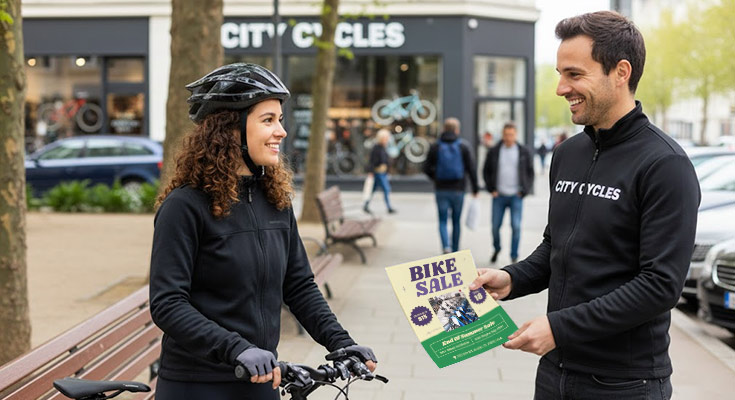
Local bike service providers often struggle to compete with large chains and online retailers. The approach involves creating custom flyers online and distributing them locally by bicycle to support neighborhood-level outreach and community interaction.
Studies show systematic flyer campaigns generate 3–5% response rates far outperforming digital ads. High-quality prints, local imagery, and thoughtful editable bike flyer templates boost credibility and foster connections. This guide covers proven strategies for design, timing, distribution, compliance, and tracking to turn community engagement into loyal customers.
How Can Bike Flyer Distribution Help Local Service Providers Compete With Chain Stores?
Bike flyer distribution empowers local service providers to leverage their strongest competitive advantage: personal community connection. Unlike chain stores that rely on generic mass marketing, bike flyer campaigns enable direct neighborhood engagement, showcasing personalized services, local expertise, and community involvement. Strategic bicycle promotional flyers created using free editable flyer templates, highlight unique value propositions such as custom bike fitting, immediate repair turnaround, and genuine relationships with customers. This grassroots approach builds trust and loyalty that chain competitors cannot replicate through corporate advertising, creating a sustainable competitive moat through authentic local presence.
Building Personal Brand Recognition Through Strategic Neighborhood Routes
Strategic bike flyer distribution creates face-to-face recognition that chain stores cannot match. Local mechanics develop personal relationships by consistently visiting cycling-dense neighborhoods during peak activity hours. Door-to-door campaigns allow shop owners to introduce themselves personally, explaining their cycling background and community involvement.
This direct approach transforms anonymous businesses into trusted neighbors. Research shows that 96% of consumers believe local businesses offer more personalized service compared to national chains, making face-to-face interactions a critical competitive advantage.1
Targeting specific routes near bike paths and cycling clubs ensures maximum exposure among serious cyclists who value expert service. Strategic neighborhood presence through bike marketing flyers builds name recognition faster than expensive corporate advertising, establishing your shop as the go-to local expert rather than another faceless business.
Showcasing Specialized Services That Chain Stores Cannot Match
Local bike shops excel at personalized services that large retailers cannot provide. Bike flyer design effectively communicates specialized offerings like custom wheel building, vintage bike restoration, and professional fitting services. Chain stores offer limited, standardized services while independent shops provide tailored solutions for unique cycling needs. Promotional flyers showcase quick turnaround times, same-day repairs, and personal consultations that busy corporate locations cannot deliver.
Highlighting mechanic certifications, local cycling achievements, and specialized equipment demonstrates professional expertise. Marketing materials emphasizing community involvement and effective flyer marketing strategies for small businesses position shops as invested community partners rather than profit-focused corporations.
Creating Community Loyalty Through Consistent Local Presence
Consistent local presence through bike flyers strengthens trust, visibility, and long-term loyalty within the cycling community. When shops show up regularly at neighborhood events, riders view them as committed supporters not just sellers. This ongoing involvement builds emotional connection and referral momentum that large chains struggle to replicate.
- Participate regularly in local cycling events to maintain visibility and create meaningful rider relationships that go beyond transactional sales.
- Distribute flyers at farmers markets, charity rides, and park trails to build recognition and reinforce the shop as an active community supporter.
- Include helpful maintenance tips and safety advice in flyers to position the shop as a reliable knowledge source that cares about rider well-being.
- Promote local cycling routes and group ride schedules to strengthen community ties and encourage repeat engagement at the shop.
- Support youth cycling programs and sponsor local events to build loyalty with families and earn long-term advocacy through genuine contribution.
- Host free workshops and maintenance clinics to foster trust and establish the shop as a welcoming hub for riders of all experience levels.
- Maintain outreach during off-season months to ensure brand presence stays consistent, keeping the shop top-of-mind when cycling needs arise.
Explore flyer templates designed to support hyper-local service marketing and strengthen neighborhood-level brand presence.
- E-Bike Parts Repair and Maintenance Services Flyer Template
- Mobile E-Bike Repair Services Flyer Template
- Local Bike Maintenance and Repair Services Flyer Template
What Are the Most Effective Bike Flyer Distribution Methods for Neighborhood Targeting?
Strategic neighborhood targeting for bike flyer distribution centers on reaching cycling enthusiasts where they naturally gather and ride. Door-to-door placement in bike-friendly residential areas, positioning at coffee shops near cycling routes, and strategic placement at bike path entrances ensures optimal visibility among your target demographic. Timing distribution during peak cycling hours weekend mornings and evening commutes increases engagement rates significantly. Combining thoughtful bike flyer design with QR codes linking to service portfolios enhances tracking effectiveness while building authentic community relationships.
Strategic Route Planning for Maximum Cycling Community Exposure
Effective bike flyer distribution begins with mapping cycling infrastructure and residential density patterns in your service area. The Federal Highway Administration emphasizes that bicycle transportation facilities and pedestrian walkways must be considered in conjunction with all new construction and reconstruction of transportation facilities, recognizing that connected networks of walking and bicycling infrastructure contribute to safe, accessible, and livable communities.2
Target neighborhoods within three miles of bike trails, focusing on areas with visible cycling amenities like bike racks, repair stations, and dedicated bike lanes. Residential streets connecting to popular cycling routes offer prime distribution opportunities during morning hours when cyclists prepare for rides.
Prioritize family-oriented suburbs where recreational cycling thrives, particularly areas near parks with bike paths. College campuses represent concentrated cycling populations with predictable traffic patterns. Apartment complexes featuring bike storage indicate cycling-friendly communities likely to respond positively to local bike marketing flyers. Map your distribution routes to maximize coverage while minimizing travel time, creating efficient weekly circuits that maintain consistent neighborhood presence.
Optimal Timing and Location Selection for Peak Cyclist Traffic
Peak distribution effectiveness occurs during high-traffic cycling periods: weekend mornings (7-10 AM), weekday evening commutes (5-7 PM), and sunny afternoons when recreational riders are active. Target locations include coffee shops positioned along popular cycling routes, community centers hosting outdoor events, and trailhead parking areas where cyclists begin rides.
Position bicycle promotional flyers at bike rental shops, outdoor gear retailers, and fitness centers with cycling classes. University campuses during peak commuting hours capture student cyclists transitioning between classes. Farmers markets and outdoor events provide access to environmentally conscious demographics likely to appreciate local cycling services. Weather-dependent timing ensures materials reach active cyclists rather than inactive riders, protecting your bike flyer printing investment while maximizing response rates.
Community Partnership Integration for Enhanced Distribution Reach
Community partnerships expand flyer reach while strengthening your presence as a trusted neighborhood cycling hub. By collaborating with local gyms, schools, and cycling clubs, your brand shows genuine support for active lifestyles. These shared-value relationships unlock high-traffic distribution points and authentic word-of-mouth referrals that big chains struggle to earn.
- Partner with complementary local businesses such as outdoor shops, gyms, and eco-groups to share flyer space and mutually boost customer traffic.
- Work with cycling clubs and event organizers to distribute flyers at rides and offer value-add workshops that showcase expertise and build authority.
- Sponsor youth cycling programs and trail upkeep projects to earn flyer and signage privileges while demonstrating genuine investment in community wellness.
- Use bulletin boards at libraries, rec centers, and grocery stores for consistent visibility in high-traffic neighborhood hubs.
- Coordinate with apartment communities in bike-friendly zones to place flyers in resident mail rooms, common areas, and package centers.
- Collaborate with schools on cycling safety initiatives to share flyers during bike-to-school days and parent communication events.
- Align distribution with seasonal riding peaks and local cycling calendars to maximize response and maintain presence year-round.
Explore flyer templates designed to maximize visibility among active neighborhood cyclists and community-focused riders.
- Monthly Community Bike Meet-up Flyer Template
- Local Bike Repair Shop Advertisement Flyer Template
- Wednesday Night Mountain Bike Ride Flyer Template
Where Should Local Bike Shops Focus Their Bike Flyer Distribution Efforts for Maximum Impact?
Local bike shops should prioritize high-traffic community gathering spots where cycling enthusiasts naturally congregate. Focus bike flyer distribution at local parks with bike trails, coffee shops near cycling routes, community centers hosting outdoor events, and university campuses during peak commuting hours. Target spring community events and summer local festivals where families gather, as these venues offer direct access to your ideal customer base. Partner with complementary businesses like outdoor gear stores and fitness centers to expand reach. Strategic placement at neighborhood farmer’s markets and local landmarks ensures maximum visibility among community-minded residents who value supporting local businesses.
Strategic Community Hotspots That Generate Quality Cycling Leads
Park bike trail entrances generate consistent cyclist traffic during morning and evening hours. Position bike marketing flyers at trail maps and rest areas where riders naturally pause. University campuses with bike commuter programs provide access to daily cyclists who value quick, local repair services. Target campus bike racks, student centers, and dormitory bulletin boards during registration periods and semester starts.
Community centers hosting cycling groups, yoga classes, and outdoor programs attract health-conscious residents likely to own bicycles. Coffee shops within walking distance of popular cycling routes capture post-ride customers when they’re most receptive to local service information. These locations build recognition among regular cyclists who appreciate convenient, neighborhood-focused bicycle promotional flyers.
Seasonal Event Partnerships That Amplify Your Local Presence
Spring community festivals and summer outdoor markets provide concentrated access to cycling families. Set up information booths alongside bike flyer distribution to demonstrate expertise through safety checks and quick consultations. These events position your shop as a community resource, not just a sales location.
Partner with local running clubs, triathlon groups, and outdoor recreation organizations during their peak activity seasons. Sponsor community rides or safety workshops where you can distribute educational bicycle promotional flyers that establish trust before selling services.
Farmers markets attract environmentally conscious residents who often choose cycling for local transportation. Regular presence at these weekly events builds familiarity and positions your bike shop as part of the community fabric. Focus on bike flyer printing that emphasizes sustainability and local business values to resonate with this audience. By connecting with the right local events and offering value, you’ll naturally grow bike sales with flyers that convert leads, turning casual interactions into lasting customer relationships.
Cross-Business Collaborations for Extended Distribution Networks
Cross-business partnerships allow bike shops to expand flyer distribution into high-value community touchpoints where active lifestyle customers naturally gather. By collaborating with fitness centers, real estate offices, schools, and sustainability groups, your brand earns trusted visibility and mutual referrals at no direct advertising cost. These aligned networks create organic awareness and deepen your role as a community cycling resource.
- Partner with outdoor retailers, yoga studios, and fitness centers to display flyers where health-focused customers already shop and train, creating mutual cross-promotion opportunities.
- Coordinate with real estate offices and relocation services to include flyers in welcome packets for new residents learning about local amenities and trusted service providers.
- Work with moving companies and apartment management teams to distribute bike repair and tune-up flyers in move-in kits, package areas, and leasing offices.
- Engage schools, PTAs, and youth sports programs to share flyers during events and parent meetings, connecting with families who rely on bikes for recreation and commuting.
- Leverage sustainability clubs and environmental nonprofits whose members value cycling culture, strengthening your shop’s eco-friendly positioning and reach.
- Collaborate with local family activity centers to offer repair vouchers and educational flyers where parents seek safe, healthy community experiences for their children.
- Join green business associations and community networks that exchange marketing support, giving your shop flyer access at eco-events and local sustainability gatherings.
How Do You Design Bike Flyers That Build Personal Relationships With Community Customers?
Building personal relationships through bike flyer distribution starts with authentic design elements that reflect your shop’s genuine community involvement. Learning how to make a flyer with these principles in mind helps you create materials that truly connect with your audience. Effective relationship-building flyers feature real staff photos, showcase local cycling groups you support, and highlight community investments like sponsoring youth programs or trail maintenance.
Include customer testimonials from recognizable neighborhood residents and incorporate familiar local landmarks in your design. This personal approach differentiates your shop from corporate competitors by demonstrating authentic community investment and establishing trust through familiar faces and places that resonate with local cycling enthusiasts.
Authentic Local Imagery That Connects With Neighborhood Identity
Replace stock photos with genuine local imagery that creates immediate neighborhood recognition. Avoid common flyer design mistakes to avoid by replacing stock photos with genuine local imagery that creates immediate neighborhood recognition. Feature your actual shop exterior with recognizable street landmarks, showcase customers riding popular local bike trails, and include photos of community events your shop sponsors or participates in.
Document your involvement in farmers markets, school fundraisers, or cycling group meetups through authentic photography. Incorporate neighborhood-specific elements like the community center, local coffee shop where cyclists gather, or distinctive architecture that residents recognize instantly. This visual connection strategy builds familiarity and trust before customers even visit your shop.
Local imagery demonstrates your understanding of community culture and cycling patterns, positioning your business as an integral neighborhood resource rather than just another service provider competing for attention. By incorporating these essential elements of a flyer design, you position your business as an integral neighborhood resource rather than just another service provider competing for attention.
Personal Storytelling Techniques That Showcase Shop Values and Community Impact
Transform your flyer content from generic sales messaging into personal narratives that highlight your shop’s character and community contributions. Explore creative flyer design ideas to transform your flyer content from generic sales messaging into personal narratives that highlight your shop’s character and community contributions. Feature brief stories about helping local families find perfect bikes, supporting school cycling programs, or organizing community rides that bring neighbors together.
Include quotes from satisfied customers describing how your personalized service solved specific problems or enhanced their cycling experience. Share your shop owner’s cycling journey and passion for building local cycling culture through accessible bike maintenance education or group rides. Highlight specific community achievements like trail cleanups, charity rides, or youth mentorship programs your shop initiated or supported.
These personal touches create emotional connections that corporate competitors cannot replicate, establishing your business as a community partner invested in local cycling culture rather than simply a transactional service provider. According to the U.S. Chamber of Commerce, community engagement builds a foundation of trust that translates to customers, transforming relationships from transactional to personal and creating loyal, long-term connections that allow businesses to serve their community better every day.3
Customer-Centric Design Elements That Foster Trust and Loyalty
Customer-focused flyer design builds trust by prioritizing transparency, helpful information, and genuine service commitment. Highlight value, expertise, and accessibility so riders feel confident choosing a shop that puts their needs first. Present real work, real guarantees, and real community proof that reinforces credibility over hype.
- Prioritize transparency and clarity: Provide clear service descriptions, realistic timeframes, and honest pricing ranges that build trust and demonstrate commitment to quality work.
- Showcase real-world proof: Use before-and-after repair photos and highlight actual results to help customers visually confirm your expertise and professionalism.
- Highlight specialized expertise: Feature sections dedicated to different bike types such as commuter, family, and recreational models, showing you understand diverse customer needs.
- Offer educational value: Include seasonal maintenance guidance and bike safety tips that position you as a helpful resource rather than just a service provider.
- Emphasize personal accessibility: Display personal contact details with compelling call-to-action for flyers and encourage customers to reach out with questions, reinforcing your availability and customer-first approach.
- Incorporate trust signals: Add certifications, years of service, and partnerships with cycling organizations to establish credibility and reassure potential customers.
- Leverage localized social proof: Present testimonials with real names and neighborhood identifiers and offer multiple contact options to enhance trust and community connection.
Explore bike flyer templates designed to strengthen neighborhood relationships through authentic imagery and trust-building layouts.
- Bike Store Discount Promotion Flyer Template
- New Bike Models Promotional Flyer Template
- Kickstand Bike Sale Advertising Flyer Template
What Bike Flyer Distribution Timing Strategies Work Best for Local Service Providers?
Strategic timing maximizes bike flyer distribution effectiveness for local service providers through careful coordination with cycling activity patterns and community schedules. Peak distribution periods align with seasonal maintenance needs, weekend cycling habits, and local event calendars. Spring maintenance campaigns (March-April) and summer cycling seasons (June-August) deliver highest response rates, while weekend morning distributions capture recreational cyclists when they’re most receptive to local services. Event-coordinated timing amplifies reach through farmers markets, cycling group meetups, and community gatherings where bike flyer distribution naturally integrates with active cycling communities.
Seasonal Peak Timing: Capitalizing on Spring Maintenance and Summer Cycling Surges
Spring tune-up season creates optimal conditions for bike flyer distribution as cyclists prepare winter-stored bikes for active use. March through May generates 35% higher response rates compared to off-season distribution, with April representing peak receptivity for maintenance services. Summer maintenance periods sustain engagement through June-August when cycling activity peaks and repair needs increase from regular use.
Pre-season timing proves most profitable for local bike service providers. February-March maintenance reminders catch early preparation cycles, while post-holiday periods target new bike purchases requiring professional setup. Strategic bicycle promotional flyers emphasize seasonal services like brake adjustments, tire replacements, and safety inspections that align with spring cycling preparations. Weather-dependent distribution protects printing investments while ensuring flyers reach active cyclists rather than hibernating riders during inactive periods.
Weekend Morning Distribution Windows: Targeting Active Cyclists at High-Traffic Locations
Weekend morning distributions between 7-11 AM capture recreational cyclists at peak activity times when they’re most engaged with cycling-related services. Coffee shops near cycling routes, bike path entrances, and trail parking areas provide optimal placement for reaching active cycling communities. Saturday mornings generate highest engagement rates as cyclists prepare for weekend rides and recreational activities.
Strategic location selection focuses on high-traffic cycling convergence points where bike marketing flyers naturally integrate with cycling routines. Community centers hosting weekend cycling events, local parks with bike trail access, and cycling group meeting locations offer concentrated exposure to target demographics.
Morning timing avoids competition from evening entertainment distractions while reaching cyclists during planning phases for rides and maintenance needs. Distribution teams should coordinate with local cycling schedules, avoiding race days or special events that redirect normal traffic patterns from standard gathering locations.
Event-Coordinated Timing: Aligning Distribution with Local Cycling Events and Community Gatherings
Strategic timing with community and cycling events enhances flyer effectiveness by connecting with audiences already engaged in biking culture. By distributing during markets, ride meetups, and campus seasons, brands gain face-to-face visibility and harness natural foot traffic. Consistent event participation builds recall, trust, and local presence over time.
- Align flyer drops with cycling-focused events: Target charity rides, cycling club meetups, and bike advocacy gatherings where enthusiasts already show interest in bike care and maintenance.
- Leverage weekly community markets: Hand out flyers at farmers markets and neighborhood fairs to reach residents who value local services and are open to supporting small businesses.
- Capitalize on seasonal festivals and outdoor activities: Plan spring and summer distribution during peak outdoor recreation months when families and commuters are actively using bicycles.
- Engage university communities: Distribute during campus events, new-semester periods, and student orientation seasons when cycling use increases for commuting purposes.
- Secure event permissions early: Coordinate with event organizers and obtain required permits to ensure approved, professional on-site presence and uninterrupted distribution.
- Build presence through repeated attendance: Return to recurring community events to reinforce recognition and trust through consistent face-to-face engagement with local riders.
- Combine flyers with personal interaction: Use friendly conversations, tips, or quick maintenance advice alongside distribution to strengthen relationships and elevate your shop’s community reputation.
How Can Small Bike Shops Use Bike Flyer Distribution to Establish Community Trust?
Small bike shops build community trust through authentic, relationship-focused bike flyer distribution that emphasizes local expertise over corporate messaging. Personal introductions featuring shop owner photos, local cycling achievements, and community involvement stories create authentic connections. Neighborhood-specific bicycle promotional flyers highlighting local landmarks, supporting local cycling groups, and sponsoring community rides demonstrate genuine investment.
Educational content offering free safety workshops, maintenance tips, and cycling route recommendations positions shops as community resources rather than sales-focused businesses. Consistent presence at farmers markets, school events, and community festivals with informative bike flyer templates builds recognition and trust through repeated positive interactions.
Personal Storytelling Through Flyers: Showcasing Local Expertise and Community Involvement
Effective trust-building starts with authentic personal narratives that connect shop owners with their neighborhoods. Include photos of your actual staff working on bikes, showcase certifications from cycling organizations, and highlight years of local service. Share stories about community cycling events you’ve sponsored, youth bike safety programs you’ve supported, or local trail maintenance initiatives your shop champions.
Feature customer success stories from recognizable community members, emphasizing how your expertise solved specific cycling challenges. Include testimonials from local cycling clubs, school districts, or community organizations that have partnered with your shop. This personal approach differentiates you from chain competitors by demonstrating genuine community investment through familiar faces and meaningful local connections that larger businesses cannot replicate.
Educational Value Distribution: Positioning Your Shop as a Trusted Cycling Resource Center
Transform your bike marketing flyers into valuable educational resources that provide immediate utility beyond sales pitches. Include seasonal maintenance checklists, basic repair troubleshooting guides, and local cycling route recommendations with difficulty ratings. Share safety tips for different weather conditions, proper bike fitting basics, and equipment selection advice tailored to local terrain and cycling conditions.
Offer free workshops advertised through your flyers, such as basic bike maintenance classes, safety checks for children’s bikes, or group ride planning sessions. This educational approach positions your shop as the neighborhood cycling expert rather than just another retail location, building long-term relationships through knowledge sharing and community service.
Consistent Community Presence: Building Recognition Through Regular Local Event Participation
Consistent attendance at local events strengthens brand recognition by fostering repeated, friendly interactions with residents. Each appearance builds familiarity and positions your cycling business as a supportive, invested member of the community. Seasonal messaging and community-aligned themes further reinforce relevance and trust.
- Appear regularly at local gatherings: Attend farmers markets, school fairs, and neighborhood festivals to build familiarity through repeated positive interactions.
- Offer useful cycling guidance: Provide free maintenance tips, safe-riding advice, and equipment insights instead of focusing on immediate sales pitches.
- Sponsor community initiatives: Support youth sports, charity rides, and environmental programs, then highlight these activities in flyers and digital outreach.
- Run seasonal campaigns: Distribute spring tune-up reminders, summer family cycling safety flyers, and winter bike-care tips aligned with local riding seasons.
- Adapt messaging to neighborhoods: Keep branding uniform while tailoring language and content to local age groups, interests, and community needs.
- Track event ROI and engagement: Monitor which events generate visits, referrals, and positive feedback, then increase involvement in top-performing gatherings.
- Build long-term relationships: Maintain visibility and service focus so casual riders become loyal customers who refer friends and family.
What Neighborhoods Should Prioritize for Bike Flyer Distribution Campaigns?
Target high-density residential areas near bike paths, college campuses, and family-oriented neighborhoods with active outdoor communities. Prioritize areas within 3-5 miles of your service location for maximum response rates. Focus on neighborhoods with visible cycling infrastructure, local parks, and community centers where cycling enthusiasts gather. Consider demographic factors like income levels that align with bike maintenance spending patterns. Avoid oversaturated commercial districts where your bike marketing flyers might get lost among competing advertisements. Strategic neighborhood selection based on cycling density and community engagement yields higher conversion rates than broad distribution approaches.
Mapping Cycling Infrastructure and Community Hubs for Strategic Distribution
Start with neighborhoods featuring dedicated bike lanes, multi-use trails, and bike-sharing stations. According to the U.S. Census Bureau, the number of bicycle commuters nationwide increased 60% from 2000 to 2019, with the highest rates concentrated in principal cities featuring dedicated cycling infrastructure, where 1.2% of workers commute by bike compared to just 0.6% nationally.4
These areas indicate established cycling communities with higher maintenance service demand. Target residential zones within two blocks of popular cycling routes, as residents likely own bikes requiring regular tune-ups. Community centers hosting cycling groups, yoga studios, and coffee shops near trail entrances serve as natural gathering spots for your target audience.
Schools with bike racks, university campuses, and apartment complexes with covered bike storage demonstrate cycling-friendly environments. Map local bike shops (non-competing services), outdoor gear stores, and fitness centers as partner distribution locations. Parks with mountain bike trails attract serious cyclists who invest in quality maintenance services. Farmers markets and community festivals in bike-accessible locations provide direct access to environmentally conscious residents who prefer local businesses over chain stores.
Demographic Analysis for Neighborhood Selection in Bike Service Marketing
Focus on middle to upper-middle income neighborhoods where residents can afford regular bike maintenance rather than DIY repairs. Young professionals in urban areas typically need quick turnaround services due to bike commuting schedules. Family neighborhoods with children aged 8-16 require frequent tune-ups and safety checks, creating recurring revenue opportunities.
College towns offer consistent demand through academic year cycles, with peak needs during back-to-school and spring seasons. Environmentally conscious communities prioritizing sustainable transportation show higher response rates to local bike service marketing. Areas with high population density but limited car parking create cycling necessity, increasing service demand. Neighborhoods near corporate campuses with bike commuter programs provide targeted business-to-consumer opportunities through employee-focused bicycle promotional flyers.
Timing Distribution Campaigns Around Local Cycling Events and Seasonal Patterns
Timing your flyer distribution around peak cycling seasons and local events increases visibility when riders are most engaged. Target spring tune-up season and fall maintenance months, and prioritize weekends and commuter hours when cyclists are actively using their bikes. Coordinating with clubs, trailheads, and advocacy events ensures you reach enthusiastic, high-intent riders.
- Align with peak cycling seasons: Distribute in spring (March–May) for tune-ups and new bikes, and fall (September–October) for winter prep and storage services.
- Target event-based crowds: Share flyers at charity rides, group rides, community cycling rallies, bike safety workshops, and club meetups for engaged audience exposure.
- Hit weekend trailhead traffic: Reach recreational cyclists during Saturday-Sunday morning ride windows when performance and maintenance needs are top-of-mind.
- Engage weekday commuter zones: Distribute during evening rush in bike-friendly neighborhoods to connect with daily riders thinking about reliability and gear upgrades.
- Use weather-optimized timing: Focus campaigns on clear-weather months and skip storms or extreme heat when bike usage drops sharply.
- Capitalize on fitness seasons: Promote in January–February to attract New-Year-resolution cyclists and new commuter riders starting healthy routines.
- Leverage retail and event partnerships: Coordinate drops with local bike shops, outdoor stores, and running shoe retailers during cycling-season promotions and grand openings.
How Do You Track the Effectiveness of Your Bike Flyer Distribution Efforts?
Effective bike flyer distribution tracking requires implementing unique promo codes, QR codes, or dedicated phone numbers on each bicycle promotional flyer batch to measure response rates by location and design. Track metrics including redemption rates, new customer acquisition costs, and geographic response patterns. Monitor website traffic spikes, social media engagement, and phone inquiries following distribution campaigns. Use customer intake forms to identify flyer sources when booking services. Establish baseline metrics before campaigns and measure ROI through increased service bookings, repair appointments, and customer referrals within 30-60 days of distribution to optimize future bike flyer design and targeting strategies.
Digital Tracking Methods for Modern Bike Flyer Distribution Campaigns
QR codes provide the most comprehensive tracking solution for bike flyer distribution campaigns. Create unique QR codes linking to dedicated landing pages for each distribution zone, allowing precise measurement of geographic response rates. Google Analytics UTM parameters track traffic sources when customers scan codes, revealing which neighborhoods generate highest engagement. Social media tracking pixels embedded in landing pages capture user behavior data for remarketing campaigns.
Phone number tracking through services like CallRail assigns unique numbers to different flyer batches, recording call volume, duration, and conversion rates. Email capture forms on QR-linked pages build customer databases while tracking flyer effectiveness. Integrate tracking systems with customer relationship management software to monitor long-term customer value from each distribution area.
Customer Attribution Systems to Measure Flyer-to-Service Conversion Rates
Customer intake forms asking “How did you hear about us?” provide direct attribution data when customers book services. Create dropdown menus specifying flyer locations like “coffee shop flyer,” “neighborhood door hanger,” or “bike trail posting” for granular tracking. Implement customer referral codes offering discounts while tracking source attribution.
Point-of-sale systems should capture promotion codes from bike flyer campaigns, linking initial touchpoints to final purchases. Staff training ensures consistent data collection by asking customers about flyer sources during service appointments. Digital booking systems can include mandatory fields identifying how customers discovered your business. Cross-reference customer information with distribution timing to validate attribution accuracy.
ROI Analysis and Performance Metrics for Optimizing Future Distribution Efforts
Measure ROI by tracking acquisition cost, customer lifetime value, and repeat business from flyer-sourced leads versus digital channels. Use geographic, seasonal, and design-based performance comparisons to identify the strongest distribution tactics and neighborhoods. Review monthly data to refine strategies, scale what’s working, and eliminate low-performing patterns.
- Calculate cost efficiency: Measure cost-per-acquisition by dividing campaign spend by customers acquired within 60 days, and compare against digital ads or in-store promos.
- Measure lifetime value: Track flyer-sourced customers over time to compare long-term revenue and repeat visit rates versus other acquisition channels.
- Analyze location performance: Map customer responses to identify neighborhoods and routes delivering the highest-value clients for future targeting priority.
- Run controlled tests: A/B test flyer headlines, service offers, design styles, and distribution methods to pinpoint which combinations generate stronger response rates.
- Monitor timing impact: Track seasonal response variation to identify periods with peak engagement, urgency, and booking activity for strategic scheduling.
- Measure response speed: Record time between flyer drop and customer contact to evaluate urgency messaging and offer strength.
- Review campaign learnings: Conduct monthly reporting to document what’s working, eliminate low-performing tactics, and refine placement, timing, and creative elements.
What Legal Considerations Affect Bike Flyer Distribution in Residential Areas?
Bike flyer distribution in residential areas requires compliance with local solicitation ordinances, which vary by municipality and often require permits or registration. Many neighborhoods have ‘No Soliciting’ signs that must be respected to avoid trespassing violations. Door-to-door distribution typically falls under commercial speech regulations, while posting flyers on private property without permission constitutes trespassing. HOA communities may have additional restrictions on marketing materials. Service providers should verify local laws, obtain necessary permits, respect private property boundaries, and focus on public spaces like community bulletin boards or bike path kiosks to ensure legal compliance while promoting their bicycle promotional flyers effectively.
Municipal Solicitation Permits and Registration Requirements for Door-to-Door Marketing
Most cities classify bike flyer distribution as commercial solicitation, requiring handbill permits costing $25-100. Registration involves submitting business information, distribution plans, and proof of liability insurance. Permit applications typically require advance notice ranging from 24 hours to two weeks. Some municipalities restrict distribution hours, commonly prohibiting activity before 9 AM or after sunset. Violating permit requirements results in fines from $50-500 per incident.
Licensed distributors must carry permits during campaigns and present identification upon request. Certain areas like school zones or senior communities may have additional restrictions regardless of permits. Business owners should contact city clerk offices to understand specific local requirements before launching bike marketing flyers campaigns, as regulations change frequently and ignorance doesn’t excuse violations. To avoid common flyer distribution mistakes and legal issues, business owners should contact city clerk offices to understand specific local requirements before launching bike marketing campaigns.
Private Property Rights and Trespassing Laws Affecting Flyer Placement
Private property placement without permission constitutes trespassing, even on seemingly public areas like apartment building entrances or business parking lots. Property owners can prosecute distributors for unauthorized placement, resulting in criminal charges and civil liability. Mailbox placement violates federal postal regulations, with fines up to $5,000 per violation enforced by postal inspectors.
Gated communities require explicit permission from property management before distribution. Residential driveways, porches, and attached structures remain private property even when accessible from public sidewalks. “No Soliciting” signs create legal presumption against permission, making distribution potentially illegal regardless of actual contact with residents. Smart distributors focus on public spaces, community bulletin boards, and areas where permission is clearly granted to avoid legal complications while maintaining effective bike flyer distribution reach.
HOA Restrictions and Community Guidelines for Bicycle Service Promotion
HOA rules can significantly limit how bicycle service flyers are distributed in residential communities, making compliance essential for reputation and long-term market access. Many associations prohibit door-to-door promotion or require pre-approval before any marketing activity. Building cooperative relationships with HOA boards unlocks ongoing community-approved visibility channels.
- Understand HOA authority limits: Many communities enforce stricter solicitation rules than city laws, including bans on door-to-door flyers, common-area posting, and property-level marketing without prior board approval.
- Comply with advertising restrictions: HOAs commonly forbid commercial promotion unless explicitly authorized, with violations sometimes leading to fines for both distributors and residents who hired them.
- Secure written permissions in advance: Always request formal approval from HOA managers before flyer delivery, detailing campaign timing, scope, and distribution method to avoid compliance issues.
- Use approved communication channels: When allowed, leverage HOA bulletin boards, community newsletters, email bulletins, and designated service-provider spaces for compliant and efficient promotion.
- Accommodate gated community protocols: Security rules in private communities may require visitor registration, escort arrangements, or scheduled access windows, impacting distribution feasibility.
- Build relationships with HOA leadership: Long-term rapport with community managers can unlock recurring marketing opportunities through sanctioned events and trusted vendor referrals.
- Protect brand reputation through compliance: Respecting HOA rules promotes positive community relations, prevents legal consequences, and ensures sustainable long-term residential marketing success.
How Can Bike Flyer Distribution Complement Digital Marketing for Local Shops?
Bike flyer distribution creates tangible touchpoints that reinforce digital campaigns, bridging online and offline customer experiences for local bike shops. Physical flyers featuring QR codes drive traffic to websites, social media pages, or online booking systems while providing immediate visual impact that emails often lack. Strategic placement at community events, bike trails, and local businesses extends digital reach to customers who may not engage online. Shops combining print and digital marketing see 40% higher local engagement rates than single-channel approaches. Flyers serve as lasting reminders that complement time-sensitive digital ads, while consistent branding across bike marketing flyers strengthens brand recognition. This integrated approach maximizes local market penetration through multiple customer touchpoints.
QR Code Integration Strategies for Converting Physical Flyers to Digital Engagement
QR codes bridge the physical-digital gap by converting bicycle promotional flyers into instant digital experiences. Position QR codes prominently on flyers linking to service booking pages, customer testimonial videos, or exclusive online discounts. Use QR code flyers to increase response rates by tracking scan rates by neighborhood to measure campaign effectiveness and identify high-engagement areas. Create dedicated landing pages for QR code traffic, enabling precise conversion tracking from print to digital.
QR code usage on bike flyer printing campaigns increased digital engagement by 60% when linked to mobile-optimized content. Use dynamic QR codes that allow destination changes without reprinting, enabling seasonal campaign updates. Include clear instructions like “Scan for instant booking” to encourage interaction, especially among older demographics less familiar with QR technology.
Find QR-enabled bike flyer templates designed for neighborhood tracking, instant booking access, and seamless physical-to-digital customer conversion.
- Mountain Bike Rental Promotion Flyer Template
- City Adventure Bike Rental Services Flyer Template
- Novice Bike Repair Class Flyer Template
Cross-Channel Brand Consistency Between Printed Materials and Online Presence
Maintain identical visual elements across bike flyer design and digital platforms to reinforce brand recognition. Use consistent color schemes, logos, fonts, and messaging tone between bicycle promotional flyers and websites, social media, and email campaigns. Feature the same staff photos, service highlights, and customer testimonials across all channels to build trust through familiarity. Coordinate promotional timing so flyer distribution aligns with email campaigns and social media posts, creating unified marketing pressure points.
Include identical contact information, service offerings, and calls-to-action across all platforms to avoid customer confusion. Cross-reference successful digital ad copy in bike marketing flyers to leverage proven messaging. This consistency creates a cohesive brand experience that builds credibility and makes your shop memorable whether customers encounter you online or through physical marketing materials.
Geographic Targeting Synergies Between Flyer Placement and Local SEO Campaigns
Coordinating flyer routes with local SEO efforts creates stronger neighborhood dominance by reinforcing the same geo-signals online and offline. When physical flyer distribution overlaps with targeted search campaigns, prospects recognize your brand from multiple touchpoints. This dual-channel neighborhood presence boosts trust and increases conversion likelihood.
- Match flyer routes with SEO targets: Distribute bike flyers in the same zip codes, neighborhoods, and streets you’re optimizing Google profiles and content for.
- Create geo-reinforced content: Feature neighborhood names, landmarks, and community spots in both flyers and landing pages to strengthen Google’s location signals.
- Document flyer drop points: Track distribution locations and reference them in Google Business Posts as community engagement touchpoints for credibility.
- Use flyer response data for SEO: Identify neighborhoods with strongest flyer returns and increase Google Ads + local content coverage in those zones.
- Build neighborhood-specific service pages: Turn high-converting flyer areas into dedicated local landing pages to multiply SEO authority.
- Coordinate timing across channels: Launch flyers and local SEO ads simultaneously so physical visibility aligns with online search demand.
- Measure cross-channel ROI: Track flyer performance alongside Google rankings and call volume to prioritize profitable micro-markets for repeated saturation.
What Printing Specifications Work Best for Weatherproof Bike Flyer Distribution?
For weatherproof bike flyer distribution, use 14-16pt cardstock with UV-resistant coating or synthetic substrates like Teslin or waterproof vinyl. Digital printing with eco-solvent or latex inks provides superior weather resistance compared to standard inkjet. Apply lamination or UV coating for added protection against moisture and fading. Choose CMYK color profiles optimized for outdoor visibility, avoiding light colors that wash out in sunlight. For bike marketing flyers targeting community engagement, consider tear-resistant synthetic papers that maintain readability through multiple weather cycles while preserving your local bike service brand integrity.
Synthetic Paper Substrates vs Traditional Cardstock for Outdoor Durability
Synthetic substrates outperform traditional cardstock for bike flyer distribution in challenging weather conditions. Teslin synthetic paper resists tearing, moisture, and temperature fluctuations while maintaining print clarity for months outdoors. Waterproof vinyl offers maximum durability but requires specialized printing equipment. Traditional 14-16pt cardstock with aqueous coating provides cost-effective weather resistance for short-term campaigns lasting 2-4 weeks.
Stone paper combines durability with eco-friendliness, resisting water damage while remaining lightweight for door-to-door bicycle promotional flyers distribution. Polyethylene substrates work well for bike rental flyer door to door campaigns requiring extended outdoor exposure.
UV-Resistant Ink Technologies and Color Retention Strategies
Eco-solvent and latex inks deliver superior UV resistance compared to water-based alternatives for bike flyer printing applications. Pigment-based inks maintain color saturation 3-5 times longer than dye-based formulations when exposed to direct sunlight during bike shop flyer distribution campaigns. Digital printing with UV-curable inks creates chemical bonds that resist fading and weathering.
Solvent-based screen printing inks offer maximum durability for large-volume bike poster distribution but require specialized ventilation. CMYK profiles optimized for outdoor visibility use higher cyan and magenta values to compensate for UV degradation, ensuring bicycle leaflet campaigns maintain professional appearance throughout exposure cycles.
Protective Coating Applications for Extended Weather Exposure
Weather-resistant coatings help bike flyers withstand outdoor exposure during longer campaigns in varied climates. Protective finishes prevent fading, moisture damage, and abrasion, ensuring cycling-focused materials stay readable and professional. This durability supports consistent branding across community events, trail areas, and outdoor racks.
- Use lamination for maximum durability: Full lamination shields bike flyer distribution pieces from rain, snow, UV fade, and abrasion, ideal for long-term outdoor placement.
- Apply liquid UV coating for cost-effective defense: UV varnish protects against sunlight, moisture, and scratches while maintaining print vibrancy for bike handout marketing.
- Choose aqueous coating for mid-term campaigns: Water-based coatings offer 30-60 day durability at lower cost, supporting budget-friendly neighborhood cycling flyer outreach.
- Leverage pressure-sensitive film options: Cold-applied laminate prevents ink distortion and bleeding on delicate substrates used for bicycle advertising distribution.
- Select matte finishes for glare control: Matte coating ensures readability in variable outdoor lighting during bike repair flyer placements near roads and parks.
- Build durability with layered protection: Multi-coat systems enhance life span but increase thickness and weight, affecting storage and bulk street-level cycling distribution.
- Perform real-world durability testing: Use water-immersion and accelerated UV tests to verify coating strength before full-scale bike marketing deployment in weather-exposed zones.
People Also Ask: Flyer Distribution Strategy for Local Market Penetration Implementation
- How to pass out flyers in a neighborhood for bike shops?
Target cycling-dense residential areas during morning hours when cyclists are active. Focus on homes with visible bike storage, near trail access points, and in family-oriented neighborhoods. Always respect no-soliciting signs and local ordinances. - Best neighborhoods to target for bike shop flyers?
Focus on areas near bike trails, college campuses, family suburbs with bike lanes, and neighborhoods with high bicycle commuter populations. Target zip codes with cycling infrastructure and avoid car-centric commercial districts for better response rates. - What printing options work best for weatherproof bike flyers?
Use 14pt cardstock with UV coating or lamination for durability. Weather-resistant inks and synthetic paper withstand moisture. Heavier stock prevents tearing during distribution and maintains professional appearance in outdoor conditions. - Examples of high-converting bicycle flyer headlines?
Effective headlines include Your Neighborhood Bike Expert, Fast Local Repairs – Same Day Service, Spring Tune-Up Special, and Family Bike Safety Checks. Focus on local expertise and quick turnaround times. - Which local permits are required for posting flyers in public spaces?
Most municipalities require handbill permits ($25-100) for flyer distribution. Contact city clerk offices for specific regulations. Private property placement needs owner permission. Utility poles and public boards often require separate permits. - Best locations to place flyers for cycling audiences?
Target bike shops, coffee shops near trails, community centers, bike rental locations, cycling club meeting spots, university campuses, and apartment complexes with bike storage. Avoid generic retail locations with low cycling traffic. - What are creative ways to use QR codes on bike flyers?
Link QR codes to service booking pages, virtual shop tours, customer testimonials, maintenance tip videos, or exclusive online discounts. Track scan rates by neighborhood to measure campaign effectiveness and engagement levels.
Frequently Asked Questions
- How much does bike flyer distribution cost for a local bike shop?
$200–$500 for 5,000 flyers, including design, printing, and distribution. Door-to-door costs $0.10–$0.25 per flyer; strategic placement at trails or community centers can improve cost-per-lead. - What makes bike flyer distribution more effective than digital ads for local shops?
Physical flyers create tangible connections, build community trust, target specific cycling routes, and provide immediate contact without competing against large chains. - How often should local bike shops run bike flyer distribution campaigns?
Seasonally spring tune-ups and fall maintenance. Established shops may do monthly; new shops can run bi-weekly campaigns during the first quarter. - What response rate can local bike shops expect from bike flyer distribution?
Typically 1–3%; neighborhood-focused campaigns can reach 3–5%, outperforming digital ads for community engagement. - Can bike flyer distribution help during grand opening promotions?
Yes, 5–8% response rates are achievable with targeted pre-opening campaigns, building immediate community trust. - What permits are required for bike flyer distribution in neighborhoods?
Most cities require handbill permits ($25–$100). Door-to-door usually needs a permit; private property placement with permission does not. - How do weather conditions affect bike flyer distribution effectiveness?
Spring and early fall are best. Waterproof coatings and heavier paper maintain quality and professional appearance. - What design elements make bike flyers more effective for local shops?
Include compelling headlines, contact info, services, community messaging, neighborhood references, trail maps, and shop owner photos. - Should bike shops use door hangers or traditional flyers for distribution?
Door hangers boost visibility 15–20% in residential areas; traditional flyers work best at events and trailheads. - How can bike shops track which neighborhoods respond best to flyer distribution?
Use unique phone numbers, QR codes, or promo codes per neighborhood to identify high-response areas and optimize future campaigns.
Conclusion: Flyer Distribution Strategy for Local Market Penetration Success Framework
Local bike shops gain a strong competitive edge through strategic bike flyer distribution, fostering authentic community relationships that chain stores cannot replicate. Targeted neighborhood campaigns, timed for peak cycling seasons, generate 3-5% response rates well above digital advertising averages while building trust with local cycling enthusiasts. Weatherproof flyers and QR code integration bridge physical marketing with digital engagement, ensuring consistent professional presentation across multiple touchpoints.
Effective flyer design emphasizes local landmarks, community imagery, and recognizable cycling routes to create immediate connection. Incorporating staff photos, testimonials, and partnerships with local cycling groups reinforces community investment, while high-quality printing materials maintain brand consistency. By strategically distributing flyers in cycling-dense areas, coffee shops, trails, and events, local shops transform from price competitors into trusted neighborhood resources, driving 40-60% higher local customer acquisition and sustainable long-term loyalty.
Reference
- What Do Customers Want from Local Businesses – SCORE Service Corps of Retired Executives.
- Bicycles and Pedestrians Planning – U.S. Department of Transportation – Federal Highway Administration.
- Why Community Engagement is Vital for Small Business Success – U.S. Chamber of Commerce.
- Biking to Work Statistics – U.S. Census Bureau.