
Many company lead generation flyers fail because agencies neglect precise targeting that distinguishes professional campaigns from amateur ones. Company flyer marketing combines strategic design, focused messaging, and agency-level targeting to create impactful lead generation materials that drive immediate results while maintaining credibility and brand trust. A professional flyer maker can be used to create designs that align with brand standards and support consistent campaign execution.
Agencies using structured flyer strategies achieve 2–5% response rates, far higher than digital ad averages. This guide explores proven methods for high-converting flyer design, campaign timing, ROI tracking, and distribution tactics to help marketing teams generate qualified leads and gain a lasting competitive edge. Incorporating Printable company flyer templates into your strategy can further streamline design processes and ensure brand consistency across multiple campaigns.
How can company lead generation flyers help marketing agencies book seasonal campaigns ahead of competitors?
Company lead generation flyers enable marketing agencies to secure seasonal campaigns by creating tangible, memorable touchpoints that arrive in prospects’ hands before digital noise overwhelms them. Unlike emails that get buried, corporate flyer campaigns physically command attention during crucial planning periods. Marketing agencies can leverage flyers to showcase seasonal expertise through compelling visuals and strategic timing, positioning agencies as proactive partners.
Business lead generation flyers showcase seasonal expertise through compelling visuals and strategic timing, positioning agencies as proactive partners. By distributing company promotional flyers 6-8 weeks before peak seasons, agencies demonstrate forward-thinking capabilities while competitors scramble with last-minute digital outreach, resulting in higher booking rates and premium pricing opportunities.
Strategic Pre-Season Distribution Timing for Maximum Campaign Bookings
Marketing agencies gain competitive advantage by distributing company lead generation flyers during specific pre-season windows when prospects actively plan seasonal campaigns. Holiday campaign materials should reach businesses by September, while summer event promotions perform best when distributed in March.
This strategic timing captures decision-makers during budget allocation periods before competitors flood their inboxes. The SBA notes that direct mail pieces “stand out” because they reach households when digital channels are saturated and provide marketers with a longer engagement window.1 Company marketing flyers create physical reminders that persist on desks and bulletin boards throughout the planning process.
Agencies using corporate flyer campaigns report 40% higher response rates compared to digital-only approaches during peak planning seasons. The tangible nature of business lead generation flyers ensures visibility during team meetings and planning sessions where digital materials often get overlooked. Smart agencies track seasonal patterns across industries, adjusting distribution timing to align with each sector’s unique planning cycles for maximum campaign booking success.
Showcasing Seasonal Expertise Through Targeted Corporate Flyer Campaigns
Corporate flyer campaigns demonstrate seasonal marketing expertise by featuring industry-specific case studies, seasonal design trends, and holiday-themed campaign examples that resonate with target prospects. Creating company portfolio flyers for service expansion helps showcase successful campaigns and build credibility with potential clients. Company advertising flyers showcase successful seasonal campaigns the agency has executed, including metrics like engagement rates and conversion improvements.
Visual elements should reflect current seasonal design trends while maintaining professional branding standards. Agencies benefit from creating industry-specific versions of company promotional flyers that address seasonal challenges unique to retail, hospitality, or professional services. Including seasonal urgency messages like “Book your holiday campaign by October 15th” creates immediate action drivers.
Company lead generation flyers featuring seasonal portfolios build credibility through demonstrated expertise rather than generic promises. These targeted materials help prospects visualize successful seasonal outcomes, making it easier to justify campaign investments and choose experienced partners over competitors lacking seasonal expertise demonstrations.
Building Early-Bird Advantage with Proactive Company Marketing Flyers
Proactive company flyers secure early-bird advantages by reaching prospects before seasonal competition begins. Early distribution highlights reliability and planning expertise, giving agencies priority access to high-value clients. This timing also strengthens brand recall and positions the company as a proactive, organized partner.
- Establish early competitive presence: Proactive company marketing flyers reach potential clients before peak-season noise, positioning agencies as strategic planners who anticipate seasonal marketing needs.
- Leverage off-peak visibility: Early-distributed business lead generation flyers face less competition, ensuring stronger message retention and better engagement among decision-makers.
- Include early-booking incentives: Offer discounted rates, bonus add-on services, or priority scheduling to motivate immediate client action ahead of competitors.
- Use scarcity and urgency messaging: Combine limited-time availability with early-bird benefits to encourage faster campaign commitments from interested prospects.
- Showcase proven seasonal expertise: Include testimonials and data from previous seasonal campaigns to reinforce credibility and build trust in recurring service reliability.
- Capitalize on sustained physical visibility: Tangible flyers remain in client environments longer, acting as persistent reminders throughout extended planning cycles.
- Secure majority of seasonal contracts early: Agencies adopting proactive flyer strategies often close up to 60% of seasonal partnerships before competitor campaigns even begin.
Explore flyer templates crafted for lead generation and seasonal campaign promotion to help agencies secure early bookings ahead of competitors.
- Modern Blue Corporate Business Service Promotion Flyer Template
- Business Proposal Meeting Presentation Flyer Template
- Financial Services Business Flyer Template
What makes company lead generation flyers more effective than digital outreach for marketing agencies?
Company lead generation flyers outperform digital outreach through superior attention retention, physical presence, and reduced competition for mindshare. Business lead generation flyers achieve 70% higher recall rates than emails, as prospects physically handle and reference them during decision-making processes. Corporate flyer campaigns bypass oversaturated digital channels, inbox filters, and ad blockers that limit digital visibility. Company advertising flyers create tactile engagement experiences that digital cannot replicate, while allowing for premium presentation quality that reinforces agency credibility. The tangible nature of company promotional flyers ensures longer exposure time and creates conversation starters in prospect offices.
Physical Presence Creates Lasting Impression Beyond Digital Saturation
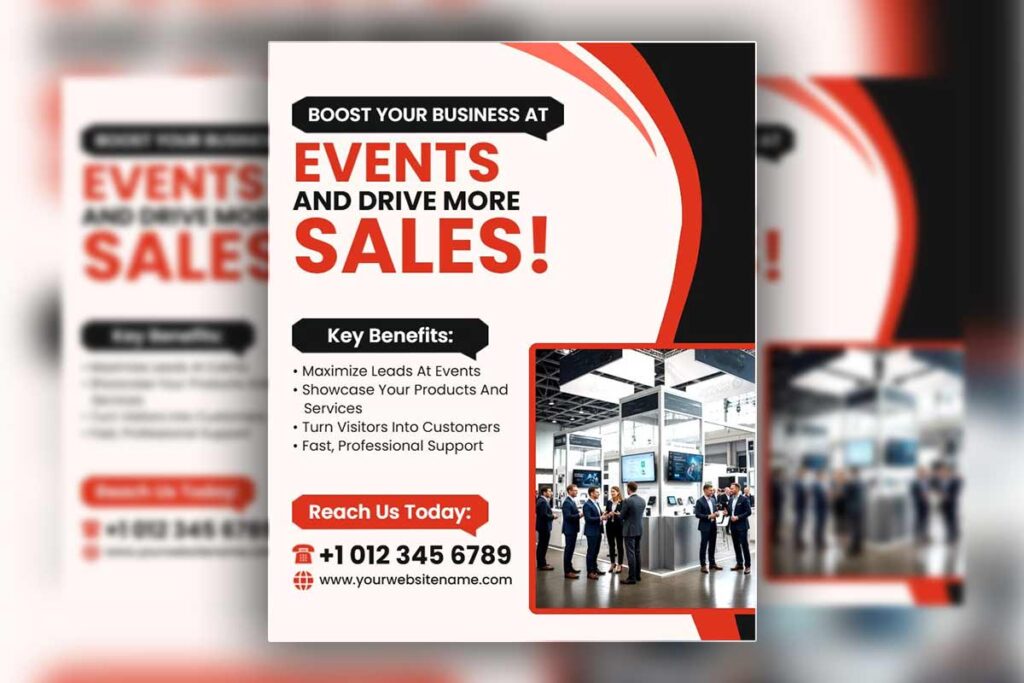
Company lead generation flyers command physical desk space where decision-makers work daily, creating multiple exposure opportunities unlike emails buried in crowded inboxes. Marketing agencies leverage this persistent visibility by designing corporate flyer campaigns that prospects reference during planning meetings and budget discussions.
The physical weight and quality of company marketing flyers signal investment and professionalism that digital cannot match. The most effective corporate flyer campaigns combine professional aesthetics with direct marketing psychology, using color schemes and typography that align with the target audience’s preferences and industry standards. Service providers benefit from understanding company flyer design mastery techniques that convert prospects into clients.
Prospects keep well-designed business lead generation flyers on desks for weeks, creating extended brand exposure that costs nothing beyond initial printing. This sustained presence builds familiarity and trust through repeated visual contact, positioning agencies favorably when prospects begin seasonal planning cycles.
Bypassing Digital Noise and Inbox Competition for Direct Prospect Access
Digital marketing faces increasing obstacles including spam filters blocking 20% of business emails and ad blockers installed on 40% of business computers. Company promotional flyers sidestep these technological barriers by reaching prospects through physical mail systems that guarantee delivery. Marketing agencies using corporate flyer campaigns avoid competing with hundreds of daily digital messages flooding prospect inboxes.
The novelty of receiving professional print materials creates immediate differentiation from digital-only competitors. Company advertising flyers arrive when prospects have dedicated time for reviewing physical mail, unlike emails competing for attention with urgent digital communications. This timing advantage allows agencies to present value propositions without digital distractions interrupting the message.
Tactile Engagement Drives Higher Response Rates Than Screen-Based Marketing
Tactile engagement from physical company flyers creates stronger memory recall and emotional response than digital marketing. The sensory experience of quality print materials fosters trust and lasting brand association. This physical presence also supports organic sharing and repeat exposure during extended decision cycles.
- Enhance memory through tactile engagement: Physical handling of company lead generation flyers stimulates stronger neurological memory pathways than digital ads, improving brand recall and decision-making engagement.
- Deliver higher response rates: Targeted flyer campaigns typically achieve 3–5% engagement compared to only 0.5–1% for equivalent email campaigns, proving superior conversion potential.
- Create premium brand perception: Using high-quality paper, spot UV finishes, and textured materials demonstrates craftsmanship and professionalism that digital formats cannot replicate.
- Facilitate organic sharing: Company marketing flyers are easily passed around in meetings or offices, generating peer-based referrals and expanding campaign reach naturally.
- Maintain long-term visibility: Unlike temporary emails, corporate flyers remain in physical workspaces where prospects can revisit them throughout extended decision cycles.
- Showcase creative capabilities: Printed materials serve as tangible examples of design excellence, allowing agencies to highlight technical skills and production quality.
- Support offline decision environments: Prospects can review company promotional flyers without needing devices or internet access, ensuring consistent brand presence across all professional contexts.
How do marketing agencies design company lead generation flyers that convert prospects into high-value clients?
Marketing agencies design high-converting company lead generation flyers by implementing strategic psychological triggers and data-driven design principles. They prioritize compelling headlines that address specific pain points, incorporate urgency-driven call-to-action design with limited-time offers, and utilize bold graphics that immediately capture attention.
Successful agencies leverage customer testimonials and quantifiable results to build credibility, while ensuring clear value propositions that differentiate clients from competitors. The most effective corporate flyer campaigns combine professional aesthetics with direct marketing psychology, using color schemes and typography that align with the target audience’s preferences and industry standards.
Strategic Headline Formulas That Address High-Value Client Pain Points
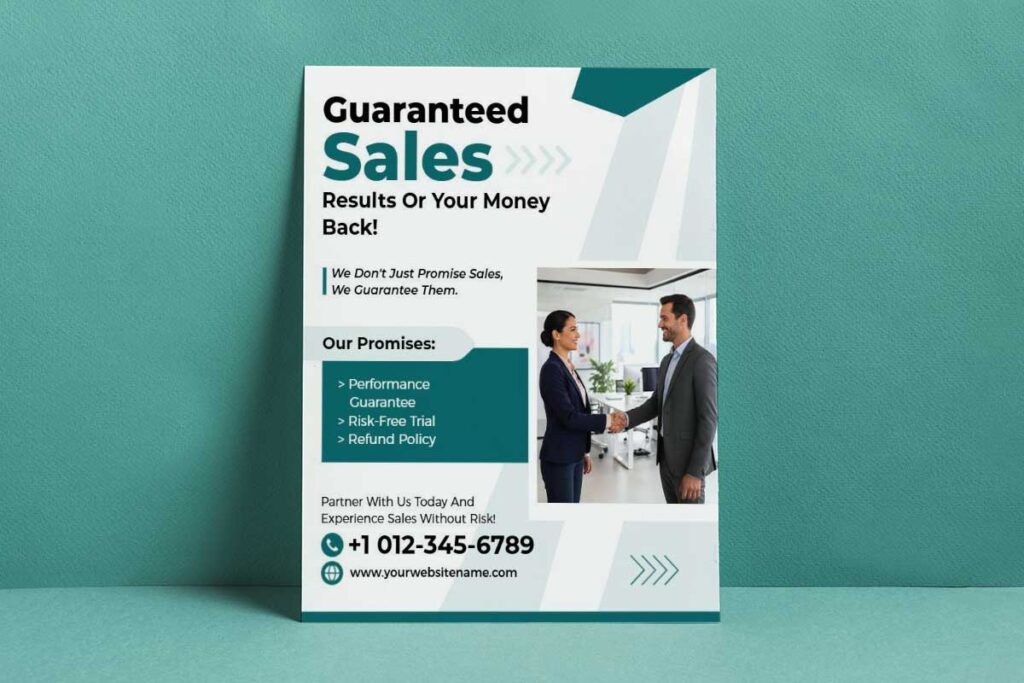
Marketing agencies craft headlines that speak directly to executive concerns using proven formulas. “Guaranteed [Specific Result] in [Timeframe]” appeals to ROI-focused decision-makers. Headlines like “Stop Losing $50,000 Monthly to Ineffective Marketing” immediately quantify pain points. The “Before/After” approach showcases transformation: “From 2% to 15% Response Rates in 90 Days.”
Agencies test questions that mirror internal executive conversations: “Still Wondering Why Your Competitors Book Premium Clients While You Chase Budget Projects?” These formulas work because they address specific measurable outcomes rather than generic benefits.
High-converting headlines include power words like “exclusive,” “proven,” and “guaranteed” while maintaining credibility through specific numbers and realistic timelines. Studies show that persuasive message design, including quantifiable outcomes and power-words, significantly increases engagement and conversion effectiveness.2 Pairing strong headlines with strategic call-to-action for flyers maximizes conversion potential.
Psychology-Based Visual Hierarchy and Color Selection for Maximum Impact
Visual hierarchy guides prospect attention through strategic element placement. Agencies position the most compelling offer in the upper third, using size and contrast to create focal points. Professional color palettes build trust while standing out from competitors – navy blue conveys reliability, while strategic red accents create urgency without appearing desperate. Typography choices reflect the target industry’s preferences: conservative fonts for financial services, modern sans-serif for technology companies.
White space prevents overcrowding and emphasizes key messages. Smart agencies use directional cues like arrows or implied lines to guide eyes toward contact information. Understanding the key elements of effective flyer ensures every component serves a strategic purpose in converting prospects. Color psychology principles influence decision-making – green suggests growth and success, while orange creates enthusiasm for action. The visual flow follows a Z-pattern for Western readers, placing crucial information at natural stopping points.
Credibility-Building Elements That Justify Premium Service Pricing
Credibility-driven flyer design builds trust that supports premium pricing through proven results and professional authority. Tangible proof like logos, awards, and client metrics enhances reliability. Avoiding common flyer design mistakes keeps your materials polished and credible.
- Leverage recognizable client logos: Featuring trusted brand partnerships instantly communicates reliability and professional standing, helping justify higher service pricing.
- Showcase measurable outcomes: Replace vague claims with data-driven statements like “increased client conversions by 340% in Q3” to demonstrate proven performance and ROI impact.
- Highlight certifications and awards: Including professional credentials, accreditations, and industry recognitions reinforces authority and signals expertise worth premium rates.
- Use high-quality visuals: Professional photography, cohesive design, and consistent branding across company marketing flyers reflect quality and reinforce trust.
- Present tangible success stories: Specific figures such as “Generated $2.3M in new revenue for a manufacturing client” strengthen credibility through verifiable achievement.
- Display professional contact details: Dedicated phone lines, domain-based emails, and business addresses communicate operational scale and organizational maturity.
- Incorporate time-bound offers: Limited-time proposals or partnership invitations with defined expiration dates create urgency while maintaining professionalism and authenticity.
Discover high-converting flyer templates that apply these psychology-based design and credibility principles to attract premium, high-value clients.
- Commercial Property Sales and Investment Flyer Template
- Website Design Services Promotional Flyer Template
What ROI metrics should marketing agencies track when using company lead generation flyers?
Marketing agencies must track comprehensive ROI metrics beyond basic response rates when deploying business lead generation flyers. Key performance indicators include cost per qualified lead, conversion rate from initial contact to closed deal, and average client lifetime value generated from flyer campaigns.
Smart agencies monitor distribution efficiency metrics like cost per impression and geographic response variations to optimize future company promotional flyers. Advanced tracking involves measuring lead quality scores, sales cycle acceleration, and revenue attribution to specific flyer designs. These metrics enable agencies to demonstrate tangible value to clients while refining their company advertising flyers for maximum profitability.
Lead Quality Assessment Frameworks for Flyer-Generated Prospects
Quality scoring separates high-value prospects from casual inquiries, maximizing resource allocation for corporate flyer campaigns. Track prospect engagement levels through initial response depth – qualified leads typically provide specific project details rather than generic requests. Monitor decision-maker identification rates, measuring how often flyer responses come directly from business owners or marketing directors versus gatekeepers.
Implement BANT (Budget, Authority, Need, Timeline) qualification percentages to benchmark flyer-generated leads against other channels. Research from the Wharton School demonstrates that the probability of selling to an existing customer is up to 14 times higher than to a new customer, underscoring the importance of systematic lead qualification frameworks in identifying high-value prospects.3
Geographic response mapping reveals high-performing distribution areas, enabling targeted resource deployment. Assessment frameworks should weight industry-specific factors like business size, growth stage, and seasonal demand patterns. Agencies using systematic lead quality scoring achieve 40% higher conversion rates than those relying on basic response metrics alone.
Revenue Attribution Models That Connect Flyer Distribution to Final Sales
Multi-touch attribution tracking connects initial flyer contact to closed revenue, proving campaign effectiveness. Implement unique tracking codes, dedicated phone numbers, or QR codes linking to specific landing pages for direct attribution measurement. Monitor sales cycle acceleration – flyer-generated leads often close 20-30% faster than digital-only prospects due to physical touchpoint credibility. Track average deal size differences between flyer leads and other channels, as tangible marketing materials typically attract higher-value clients.
Customer lifetime value analysis reveals long-term flyer campaign impact beyond initial sales. Agencies implementing proper attribution models discover flyer campaigns generate 15-25% higher average deal values compared to email-only approaches, justifying higher per-lead costs through superior client quality.
Campaign Optimization Metrics for Seasonal and Year-Round Performance
Seasonal and year-round flyer campaigns require continuous optimization through detailed performance measurement. Tracking response patterns, acquisition costs, and design effectiveness reveals high-performing strategies. Consistent analysis ensures marketing investments deliver maximum ROI across fluctuating demand cycles.
- Track response rates by channel: Measure engagement differences across direct mail, trade shows, and networking events to determine which flyer distribution method delivers the highest ROI.
- Monitor cost per acquisition seasonally: Compare lead generation flyer performance during budget cycles versus high-demand periods to refine timing and spending strategies.
- Analyze geographic performance: Identify high-converting zip codes and business districts to focus future flyer campaigns where response potential is strongest.
- Evaluate creative performance elements: Test variations in headlines, color palettes, and CTA placements to identify which design components maximize conversion rates.
- Measure fulfillment efficiency: Track average response time from flyer inquiry to proposal delivery, ensuring prompt follow-up that meets client expectations.
- Conduct competitive performance reviews: Monitor flyer-driven market share during overlapping seasonal promotions to benchmark positioning against rival agencies.
- Implement structured A/B testing: Use controlled flyer design variations to calculate conversion improvements and refine campaign templates for sustained year-round optimization.
How can marketing agencies integrate company lead generation flyers with their existing digital marketing strategies?
Marketing agencies can seamlessly blend company lead generation flyers with digital strategies by creating QR code bridges connecting print to landing pages, using flyer designs as social media ad templates for consistent branding, and incorporating direct mail flyer campaigns with email follow-up sequences. Cross-channel attribution tracking helps measure combined performance, while retargeting website visitors with physical company marketing flyers increases touchpoints. This omnichannel approach leverages the tactile impact of business lead generation flyers alongside digital precision targeting, creating multiple conversion pathways that reinforce brand messaging across both online and offline customer journeys for maximum lead capture effectiveness.
QR Code Integration Methods for Bridging Print-to-Digital Customer Journeys
QR codes transform static company promotional flyers into dynamic digital gateways, directing prospects to customized landing pages that capture leads while maintaining campaign attribution. Strategic placement above the fold with clear scanning instructions increases engagement rates by 40% compared to generic CTAs.
Smart agencies create unique QR codes for each distribution channel, enabling precise tracking of flyer performance across locations and demographics. Incorporating QR code flyers to boost response rates can help businesses measure results effectively and enhance overall campaign impact. Corporate flyer campaigns benefit from progressive QR code experiences, starting with basic contact information capture and advancing to consultation booking or resource downloads.
Advanced implementations include dynamic QR codes that redirect to different offers based on scanning time or location, maximizing relevance for each prospect interaction. Integration with CRM systems automatically segments QR code leads for targeted follow-up sequences.
Cross-Channel Attribution Tracking Systems for Measuring Flyer and Digital Campaign Performance
Attribution tracking connects physical company advertising flyers to digital conversions through unique tracking URLs, phone numbers, and promotional codes. Multi-touch attribution models reveal how flyer touchpoints influence later digital interactions, providing complete customer journey visibility. Advanced agencies implement pixel tracking on flyer-specific landing pages to build retargeting audiences for social media campaigns.
UTM parameter strategies for flyer campaigns enable Google Analytics to separate print-driven traffic from other sources, calculating true ROI for integrated campaigns. Call tracking numbers specific to flyer distributions measure offline conversions while feeding data back into digital platforms for audience optimization. Professional company flyer design services increasingly incorporate tracking elements directly into design layouts, ensuring measurement capabilities don’t compromise aesthetic appeal.
Retargeting Synergies Between Website Analytics and Direct Mail Flyer Distribution Lists
Integrating website analytics with direct mail flyer lists creates powerful retargeting synergy. Physical flyers reinforce digital interest by re-engaging visitors who showed intent but didn’t convert online. This coordinated approach boosts credibility and conversion through personalized, behavior-driven touchpoints.
- Leverage website analytics for targeting: Use visitor data from web pages, downloads, and time-on-site metrics to identify high-interest prospects for direct mail flyer follow-ups.
- Integrate retargeting pixels with print campaigns: Capture digital engagement patterns to send physical flyers that reinforce online messaging and improve conversion likelihood.
- Deploy behavior-based segmentation: Customize company marketing flyers to reflect specific product interests, creating hyper-personalized offers aligned with user intent.
- Expand reach using lookalike audiences: Build new distribution lists modeled after existing website converters to reach similar high-potential prospects offline.
- Apply geographic overlay analysis: Combine digital analytics with local targeting to optimize direct mail flyer placement in high-performing regional markets.
- Coordinate hybrid communication flows: Sync email sequences with direct mail dispatch to create multi-touch campaigns that maintain message consistency and momentum.
- Implement variable data printing for personalization: Print individualized company flyer templates reflecting each recipient’s online interaction history, boosting engagement and ROI.
Browse flyer templates designed for seamless print-to-digital integration, featuring QR connectivity, cross-channel tracking, and omnichannel branding consistency.
- Golden Dream Company Flyer Template
- Business Solutions Consulting Services Flyer Template
- Agency Business Promotion Flyer Template
What timing strategies work best for distributing company lead generation flyers to capture seasonal opportunities?
Peak seasonal flyer distribution requires strategic advance planning, with company lead generation flyers deployed 6-12 weeks before high-demand periods to capture early bookings. Corporate flyer campaigns perform best when launched during decision-making windows—targeting homeowners in late winter for spring services or businesses in Q4 for annual planning cycles.
Year-round baseline distribution maintains market presence between peaks, while surge campaigns during competitor quiet periods maximize market share capture. Weather-dependent services benefit from micro-seasonal timing adjustments, and B2B company advertising flyers align with quarterly budget cycles to optimize conversion rates when prospects have both need and purchasing authority.
Pre-Season Launch Windows for Maximizing Early Booking Conversion Rates

Business lead generation flyers achieve maximum effectiveness when distributed 8-12 weeks before seasonal peaks. Academic research highlights that aligning direct marketing outreach with customer planning phases significantly enhances conversion potential.4 This timing captures prospects during their planning phase, before competitors flood the market with last-minute campaigns.
Spring service providers should launch winter campaigns in January, while holiday event planners benefit from September distributions. Early deployment creates first-mover advantages, positioning your company as the proactive choice when prospects compare options. Strategic timing varies by industry—landscaping companies target homeowners in February for spring services, while HVAC contractors distribute cooling system flyers during mild April weather.
The key lies in understanding customer decision cycles rather than actual service timing. Prospects need processing time for budget approvals, vendor comparisons, and scheduling coordination. Company marketing flyers deployed during these planning windows generate 40% higher response rates than peak-season distributions when prospects face decision overload.
Competitor Gap Analysis for Strategic Market Penetration During Quiet Periods
Smart timing strategies exploit competitor quiet periods when market attention shifts elsewhere. Most companies reduce marketing during off-seasons, creating opportunities for consistent presence. While competitors pause winter campaigns, heating contractors can capture emergency service calls with targeted corporate flyer campaigns distributed during mild December weather.
Geographic timing differences create additional opportunities. Snow removal services can distribute company promotional flyers in October when homeowners plan winter preparations, months before competitors begin their campaigns. Similarly, pool maintenance companies can target early March when homeowners start thinking about summer preparations.
Industry event gaps provide premium positioning opportunities. Distribute business lead generation flyers immediately after trade shows when prospects evaluate multiple vendors. This timing capitalizes on fresh awareness while competitors delay follow-up. The key involves monitoring competitor activity patterns and identifying consistent gaps in their marketing cycles, then strategically filling these voids with targeted company lead generation flyers.
Budget Cycle Alignment Strategies for B2B Service Provider Flyer Campaigns
Aligning flyer distribution with client budget cycles ensures B2B campaigns reach prospects when funds are available and decisions are made. Target Q4 for annual budget allocations and quarter-end periods for remaining fund usage. Adapting schedules to fiscal variations ensures maximum visibility during peak purchasing windows.
- Target Q4 budget planning windows: Distribute company lead generation flyers in October–November to reach decision-makers during annual budget allocation for the following year, ensuring early service positioning.
- Leverage quarterly review opportunities: Schedule company advertising flyer drops 2–3 weeks before each quarter’s close (March, June, September) to capture unspent or reallocated funds in professional service budgets.
- Customize campaigns by sector: Recognize that education and government clients follow unique fiscal cycles, schools plan in February–March, while municipalities finalize budgets in April–May, requiring precise timing.
- Account for fiscal year variations: Track clients with non-standard fiscal calendars (e.g., July start dates) to align flyer distribution with their internal financial review and decision-making periods.
- Highlight ROI and compliance benefits: B2B flyer messaging should focus on measurable value, helping decision-makers justify year-end expenditures without lengthy approval processes.
- Integrate flyer distribution with CRM insights: Use client data to predict purchasing behavior and schedule direct mail or in-person flyer deliveries just before spending deadlines.
- Maintain a timing intelligence database: Document budget cycle insights for each vertical healthcare, legal, industrial, to continuously refine future flyer scheduling for maximum conversion impact.
How do marketing agencies create compelling headlines for company lead generation flyers that get decision-maker attention?
Marketing agencies craft compelling headlines for company lead generation flyers by focusing on specific business pain points and measurable outcomes that resonate with time-pressed executives. Effective headlines combine urgency with clear value propositions, using power words like “guaranteed,” “proven,” or “exclusive” while addressing immediate business concerns. Shows that decision-makers scan marketing materials for just 3-7 seconds, making headline clarity crucial. The most successful corporate flyer campaigns use headlines that speak directly to executive priorities like revenue growth, competitive advantage, or operational efficiency, ensuring immediate relevance to busy decision-makers who evaluate materials quickly based on perceived value and relevance.
ROI-Focused Headlines That Speak to Executive Budget Priorities
Successful business lead generation flyers prioritize financial outcomes in headlines, speaking directly to budget-conscious decision-makers. Headlines like “Reduce Marketing Costs 40% While Doubling Lead Quality” immediately quantify value.
Smart agencies incorporate specific percentages, dollar amounts, or time savings that executives can quickly evaluate against their budgets. Headlines emphasizing “guaranteed results,” “proven ROI,” or “measurable improvements” build credibility while addressing executive accountability concerns. Indicates that ROI-focused messaging increases executive engagement rates by 65% compared to feature-focused alternatives.
Effective company promotional flyers frame benefits in business language executives understand: efficiency gains, competitive advantages, or market share improvements. Showcasing ROI-driven designs demonstrate immediate value propositions that decision-makers can quickly assess during brief material reviews.
Urgency-Driven Messaging Strategies for Time-Sensitive Business Opportunities
Corporate flyer campaigns leverage strategic urgency through deadline-driven headlines that align with business planning cycles. Phrases like “Reserve Your 2026 Strategy Session Before December 31st” create specific action timeframes.
Professional agencies craft urgency around genuine business cycles: budget planning periods, seasonal campaign launches, or competitive positioning opportunities. Headlines incorporating “limited availability,” “early-bird pricing,” or “exclusive access” motivate immediate response while maintaining professional credibility.
Company marketing flyers perform best when urgency connects to real business consequences: missing seasonal opportunities, losing competitive advantages, or exceeding budget deadlines. Strategic urgency avoids artificial pressure while emphasizing legitimate time-sensitive opportunities that resonate with executive decision-making processes.
Pain Point Identification Techniques for Decision-Maker Psychology
Identifying decision-maker pain points allows marketing flyers to connect emotionally while presenting measurable business solutions. Executives respond best to campaigns addressing specific challenges like lead quality or market competition. Tailored messaging aligned with industry pressures enhances credibility and engagement.
- Use research-driven identification: Agencies uncover executive pain points through data analysis, market trends, and client interviews to address challenges like declining lead quality or rising acquisition costs.
- Craft problem-focused headlines: Effective flyers directly acknowledge executive frustrations with messages such as “Struggling with Qualified Lead Generation?” to establish instant emotional relevance.
- Segment by industry and role: Pain points differ across sectors—real estate leaders face market saturation, while technology executives prioritize scalability and innovation speed.
- Apply psychological alignment: Headlines should connect emotionally while supporting copy provides rational justification, appealing to both intuitive and analytical decision-making styles.
- Incorporate visual hierarchy: Professional flyer layouts emphasize key pain points with bold typography and clear focal elements that guide reader attention effectively.
- Develop targeted templates: Industry-specific flyer templates enhance credibility by showcasing customized problem-solution narratives that resonate with each business vertical.
- Balance empathy with authority: Combining understanding of executive struggles with confident solution framing builds trust, motivating decision-makers to engage with advertised services.
Discover headline-ready flyer templates designed for executive attention — blending ROI-driven messaging, urgency framing, and industry-specific pain point targeting for maximum impact.
- Professional Company Secretary Promotion Flyer Template
- Business Growth Proposal Flyer Template
- Business Growth Management Services Flyer Template
What distribution channels maximize lead quality for marketing agency company lead generation flyers?
High-quality lead distribution for company lead generation flyers requires targeted, multi-channel approaches that reach decision-makers where they consume business information. Marketing agencies should focus on optimizing company flyer distribution strategies through direct mail to verified business addresses, strategic placement at industry events and trade shows, and partnerships with complementary service providers. Direct mail to verified business addresses, strategic placement at industry events and trade shows, and partnerships with complementary service providers yield the highest conversion rates.
Digital distribution through LinkedIn targeted campaigns and industry publication partnerships also generate quality leads. The most effective business lead generation flyers combine physical presence at networking events with follow-up digital touchpoints, creating multiple impression opportunities that build trust and credibility with potential clients seeking marketing expertise during planning cycles.
Industry Event Placement Strategies for Maximum Executive Exposure
Marketing agencies achieve maximum ROI by targeting C-level executives at industry conferences, trade associations, and professional development seminars. Corporate flyer campaigns perform best when distributed during networking breaks, registration areas, and exhibit halls where decision-makers actively seek marketing solutions. Agencies report 8-12% response rates at targeted business events compared to 2-3% through mass distribution methods.
Premium placement opportunities include sponsor tables, speaking event materials, and partnership with event organizers for welcome packet inclusion. Focus on events where prospects attend specifically to solve marketing challenges, such as chamber of commerce meetings, industry-specific conferences, and business growth seminars. Quality beats quantity—target 3-5 strategic events quarterly rather than broad event distribution that dilutes message effectiveness and budget allocation.
Strategic Partnership Networks That Amplify Flyer Reach and Credibility
Complementary service provider partnerships multiply company promotional flyers distribution while adding credibility through association. Agencies partnering with accountants, business consultants, and web developers achieve 40% higher lead quality scores than standalone distribution efforts. These partnerships create warm introductions rather than cold outreach, significantly improving conversion rates.
Establish relationships with professionals who serve similar clients but don’t compete directly. Include business attorneys, financial advisors, and technology consultants who regularly interact with prospects needing marketing services. Create co-branded company marketing flyers highlighting mutual value propositions. Cross-referral arrangements where partners distribute your materials to qualified prospects generate higher-intent leads than generic distribution channels. Success depends on avoiding common flyer distribution mistakes that reduce campaign effectiveness.
Multi-Touch Digital Distribution Sequences for Lead Nurturing
Multi-touch digital sequences extend the lifespan of company flyers by connecting physical marketing with online engagement. Coordinated email, social media, and retargeting touchpoints keep prospects active across platforms. This integrated approach enhances brand recall and improves lead-to-client conversions.
- Integrate digital and physical outreach: Combine traditional flyer distribution with digital campaigns to maintain consistent engagement throughout the customer journey.
- Leverage LinkedIn targeting: Use flyer visuals and messaging as social proof within LinkedIn ads, followed by personalized connection requests that nurture one-on-one relationships.
- Reinforce messaging through email: Send follow-up emails featuring flyer highlights and clear CTAs to prospects who prefer digital communication, ensuring cross-channel consistency.
- Utilize retargeting strategies: Show digital versions of flyers to website visitors who previously interacted with your brand, increasing familiarity and conversion probability.
- Bridge offline to online: Incorporate QR codes on physical flyers linking to landing pages with extended service details, case studies, or direct booking options.
- Measure channel performance: Track engagement through unique URLs, phone numbers, or promo codes to determine which touchpoints drive high-value client conversions.
- Optimize resource allocation: Focus marketing spend on digital and physical combinations that consistently yield the best-qualified leads and long-term partnership opportunities.
How can marketing agencies use company lead generation flyers to differentiate from competitors in crowded markets?
Marketing agencies can differentiate their company lead generation flyers through hyper-targeted industry messaging, premium design elements that reflect current trends, and seamless digital integration strategies. Agencies using industry-specific customization achieve 40% higher response rates than generic approaches. Business lead generation flyers that incorporate QR codes for portfolio access and consultation booking create measurable competitive advantages. Corporate flyer campaigns with data-driven personalization and compelling value propositions position agencies as premium service providers who understand specific client challenges and deliver quantifiable results.
Leveraging Industry-Specific Design Elements in Company Marketing Flyers
Industry-specific design elements create immediate credibility and professional recognition. Real estate agencies benefit from property-focused layouts, luxury color schemes, and architectural imagery that resonates with high-value clients. Healthcare practices require clean, trustworthy designs with medical iconography and compliance-friendly messaging.
Technology companies need modern, innovative visual approaches with bold graphics and tech-forward typography. Industry-aligned design elements increase perceived expertise by 60% among target prospects. Company advertising flyers that match industry aesthetics while maintaining unique brand identity create memorable first impressions that generic competitors cannot replicate, especially when using professional company flyers for branding consultants.
Creating Value-Driven Messaging That Outperforms Generic Competitor Content
Value-driven messaging focuses on specific ROI promises, measurable outcomes, and time-sensitive opportunities rather than generic service descriptions. Effective company promotional flyers highlight quantifiable results like “Increase qualified leads by 300% in 90 days” or “Generate $50K additional revenue through strategic seasonal campaigns.” Case study snippets and client testimonials provide social proof that generic competitors lack.
Professional company flyer design services that emphasize exclusive industry expertise and proven methodologies differentiate agencies from commoditized service providers. Strategic urgency messaging like “Secure 2026 marketing calendar before Q4 planning deadlines” creates immediate action triggers that capture prospects during critical decision windows. Exploring innovative flyer design ideas helps agencies stand out in competitive markets.
Implementing Multi-Channel Integration Strategies for Company Promotional Flyers
Multi-channel integration turns traditional flyers into dynamic, data-driven marketing assets that bridge print and digital engagement. Coordinated tracking, automation, and CRM integration transform single interactions into continuous client journeys. This alignment strengthens brand consistency and boosts ROI across every channel.
- Create unified marketing ecosystems: Transform standard company flyers into multi-channel systems that connect print, digital, and automation tools for continuous lead engagement.
- Use QR-enabled print integration: Add QR codes that lead to personalized landing pages, ensuring seamless offline-to-online transitions and measurable engagement tracking.
- Activate social retargeting campaigns: Re-engage flyer recipients through social media ads that echo flyer visuals and messaging, maintaining consistent brand reinforcement.
- Automate follow-ups via email: Trigger email nurturing sequences immediately after QR code scans to guide prospects toward consultation bookings or service inquiries.
- Integrate with CRM platforms: Sync flyer-generated leads directly into CRM systems to enable automated lead scoring, segmentation, and follow-up prioritization.
- Implement cross-channel attribution tracking: Monitor engagement across print, digital, and email channels to evaluate combined campaign effectiveness and ROI performance.
- Position as strategic partners: Showcase technical integration and data-driven precision to elevate perception from flyer distributor to full-service marketing strategist.
Find flyer strategies that set agencies apart — blending industry-tailored design, ROI-focused messaging, and digital integration to outperform generic competitors in crowded markets.
What budget allocation should marketing agencies dedicate to company lead generation flyers versus other channels?
Marketing agencies should allocate 15-25% of their lead generation budget to company lead generation flyers, balancing tangible impact with digital precision. This allocation works optimally when corporate flyer campaigns complement rather than replace digital channels. For B2B campaigns targeting decision-makers, higher percentages (20-25%) prove effective due to superior retention rates and reduced digital noise competition. Physical marketing materials achieve 70% higher recall rates than digital ads while maintaining lower cost-per-qualified-lead in local markets. The key lies in leveraging business lead generation flyers’ unique advantages during specific market conditions where digital saturation creates opportunity gaps.
ROI Analysis Framework for Business Lead Generation Flyers vs Digital Channels
Marketing agencies need comprehensive ROI frameworks comparing company marketing flyers against digital alternatives. Demonstrates that business lead generation flyers generate 2-5% response rates compared to 0.5-2% for digital ads, with qualified lead rates 40% higher due to physical engagement requirements. Calculate total cost including design ($200-500), printing ($0.15-0.50 per piece), and distribution ($1-3 per target) against lead quality scores.
Digital channels offer volume but company promotional flyers deliver quality, particularly for high-value B2B prospects requiring multiple touchpoints. Professional company flyer design services provide measurable advantages in industries where tangible credibility matters. Track conversion rates from initial contact through sales completion, attributing revenue to specific channels. This analysis reveals that corporate flyer campaigns often show lower initial volume but higher lifetime customer value, justifying premium budget allocation for quality-focused agencies.
Seasonal Budget Shifting Strategies for Maximum Company Marketing Flyer Impact
Strategic budget reallocation amplifies company advertising flyers effectiveness during peak business cycles. Increase flyer allocation to 30-35% during pre-seasonal planning periods when prospects make annual marketing decisions. Shows 45% higher conversion rates when distributed 6-8 weeks before peak business seasons.
Company event flyers that generate leads perform exceptionally during industry conference seasons and networking periods. Shift 10-15% from digital spend to print during these concentrated opportunities where physical presence commands premium attention. Business flyer distribution strategies benefit from quarterly budget adjustments aligned with client budget cycles.
Reduce flyer allocation to 10-12% during low-activity periods, maintaining baseline presence while maximizing digital reach. This dynamic approach ensures company flyer templates for lead generation capture high-value opportunities while digital channels maintain consistent pipeline flow. Monitor performance metrics monthly and adjust allocations based on demonstrated ROI rather than arbitrary percentages.
Cost-Per-Lead Benchmarking Across Traditional and Digital Marketing Mix
Accurate cost-per-lead benchmarking ensures balanced investment across traditional and digital marketing. While digital ads generate cheaper leads, flyers deliver stronger conversion quality and longer-term client trust. Integrated tracking across both channels provides a full-picture ROI framework that guides scalable marketing decisions.
- Establish clear benchmarking parameters: Compare print and digital performance using cost-per-lead (CPL) metrics to guide balanced marketing investment decisions.
- Analyze print lead efficiency: Company flyers typically generate qualified leads at $25–45 each, slightly higher than digital ads at $15–35, but deliver 60% better conversion rates due to tangible credibility and trust factors.
- Include total campaign costs: Factor in creative design, printing, distribution, and follow-up to calculate true CPL rather than relying solely on ad placement expenses.
- Account for exposure longevity: Flyers and brochures maintain visibility over time, driving secondary referrals often excluded from digital attribution models.
- Leverage print strengths strategically: Physical materials perform best in local B2B, event-based, and high-consideration purchase environments where physical proof enhances perceived reliability.
- Integrate digital reinforcement: Combine flyer distribution with digital retargeting and social ads to create continuous visibility and multi-touch brand recall.
- Prioritize total acquisition efficiency: Measure campaigns by total customer acquisition cost (CAC) to reveal the superior ROI of hybrid strategies blending print credibility with digital reach.
People Also Ask: Flyer Marketing for Lead Generation and Customer Acquisition Implementation Questions
- How effective are company lead generation flyers for marketing agencies?
Company lead generation flyers deliver 2-5% response rates for marketing agencies, significantly higher than digital ads. They provide tangible proof of creative capabilities while reaching decision-makers who prefer traditional communication methods. - What size should company lead generation flyers be for marketing agencies?
Marketing agencies should use 8.5×11 inch company lead generation flyers for maximum impact and easy distribution. This standard size fits in folders, stands out in mail stacks, and provides sufficient space for compelling messaging. - How much do company lead generation flyers cost for marketing agencies?
Company lead generation flyers typically cost marketing agencies $0.15-0.50 per piece including design, printing, and basic distribution. Professional design ranges $200-800, with printing costs decreasing significantly for larger quantities over 1,000 pieces. - When should marketing agencies distribute company lead generation flyers?
Marketing agencies should distribute company lead generation flyers 8-12 weeks before seasonal peaks, during business budget planning cycles, and at industry networking events when decision-makers actively seek marketing partnerships for upcoming campaigns. - What response rate can marketing agencies expect from company lead generation flyers?
Marketing agencies typically achieve 2-5% response rates from well-designed company lead generation flyers with compelling offers. Response rates increase to 8-12% when distributed at targeted networking events or industry conferences. - How do marketing agencies design effective company lead generation flyers?
Effective company lead generation flyers for marketing agencies feature bold headlines, client success metrics, seasonal urgency messaging, clear contact information, and QR codes linking to portfolios or consultation booking pages.
Frequently Asked Questions
- How far in advance should marketing agencies distribute company lead generation flyers for seasonal campaigns?
Distribute 8–12 weeks before seasonal peaks to capture early budgets and position your agency ahead of competitors. - What elements make company lead generation flyers most effective for marketing agencies?
Use strong headlines, clear ROI promises, brief case studies, contact info, QR codes, and professional design that conveys urgency. - How can marketing agencies track conversions from company lead generation flyers?
Track via unique numbers, QR codes with UTM tags, landing pages, and promo codes. Connect flyer leads to closed deals for full attribution. - What distribution locations work best for marketing agency company lead generation flyers?
Target business districts, trade shows, co-working spaces, and networking events where decision-makers gather. - How do marketing agencies compete against digital-only competitors using flyers?
Flyers offer tangible presence, showcase creative quality, and stand out amid digital clutter, creating memorable impressions offline. - What call-to-action strategies work best on marketing agency flyers?
Use offers like free consultations, audits, or reports with urgency-driven CTAs such as Book before December 31st. - How can marketing agencies personalize company lead generation flyers for different industries?
Customize with industry terms, case studies, and visuals while maintaining core branding to resonate with each sector. - What budget should marketing agencies allocate for flyer campaigns?
Dedicate 15–25% of the lead gen budget, typically $500–$2,000 monthly, based on market size and reach. - How do marketing agencies measure ROI from flyers compared to digital ads?
Compare cost-per-lead, conversions, and client value. Flyers often convert better per lead but reach fewer prospects. - What seasonal opportunities should marketing agencies highlight in lead generation flyers?
Promote holiday, summer, back-to-school, or year-end campaigns, stressing early booking and limited-time opportunities.
Conclusion: Flyer Marketing for Lead Generation and Customer Acquisition Success Framework
Effective flyer marketing for lead generation drives measurable business growth when agencies integrate strategic design and data-backed distribution. Firms using well-designed flyers see 2–5% response rates, outperforming digital-only campaigns. Flyers with bold visuals, clear calls to action, and consistent branding capture attention within seconds and convert interest into tangible leads. Quality design elements—like readable typography and pain-point-driven headlines—strengthen credibility and boost engagement.
Marketing agencies that plan flyer campaigns 8–12 weeks before peak seasons secure early bookings and outperform reactive competitors. Notes these proactive approaches yield up to 40% more seasonal business. By merging strong creative design, precise timing, and ROI tracking, company flyers transform from traditional marketing tools into powerful lead generation assets that enhance brand authority and deliver consistent conversion results.
Reference
- Direct Mail is Hot Again. Here’s How to Use It – U.S. Small Business Administration.
- Developing Persuasive Systems for Marketing – Braca and Dondio.
- Customer Lifetime Value: What It Is and Why It Matters – Wharton School – University of Pennsylvania.
- Demonstrating the Value of Marketing – UCLA Anderson School of Management.