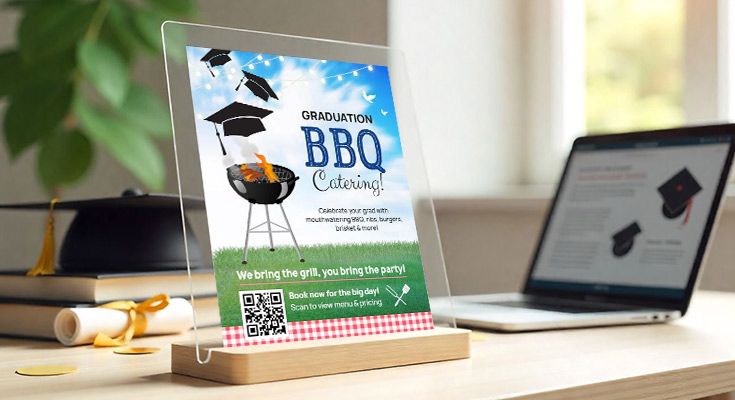
The graduation flyer design guide helps new service providers build professional credibility through strategic visual branding and consistent design systems. It emphasizes modern layouts, professional typography, and color psychology to create impactful graduation ceremony, party, and announcement flyers. Using editable graduation flyer templates, businesses can maintain brand consistency, enhance client engagement, and compete effectively with established providers through polished, high-quality visual marketing materials that reflect professionalism and trust.
How Can Graduation Flyer Design Help New Service Providers Establish Professional Brand Recognition?
Graduation flyer design serves as a powerful brand-building tool for new service providers by creating memorable visual touchpoints that communicate professionalism and expertise. Using an online flyer maker allows designers to craft well-structured graduation ceremony flyers and party invitations that showcase design capabilities while establishing consistent brand elements such as color schemes, typography, and logo placement.
These designs function as portfolio pieces that demonstrate creative range across graduation announcement flyers and invitation formats. By incorporating a flyer design template, service providers can showcase consistency and flexibility in design presentation. When clients see cohesive, polished graduation-specific materials, they immediately associate the service provider with quality and reliability, accelerating brand recognition in competitive markets.
Building Brand Consistency Through Graduation-Specific Color Palettes and Typography
Strategic color palette development creates instant brand recognition across all graduation materials. New service providers should establish signature color combinations that reflect both celebratory moments and professional competence—navy blue with gold accents conveys academic achievement, while sage green with cream suggests contemporary elegance. Typography selections reinforce brand personality through consistent font pairings that work across graduation party flyers and formal ceremony announcements.
Consistent application of these elements across every graduation flyer design builds visual familiarity with potential clients. When prospects encounter your branded materials repeatedly—whether viewing graduation invitation flyers or browsing portfolio samples—they develop trust through recognition. This systematic approach to visual identity positions new providers as established professionals rather than startup services. Strategic brand consistency eliminates the guesswork clients feel when choosing unfamiliar providers, as your cohesive design language signals reliability and attention to detail that established competitors often lack.
- Medical School Graduation Ceremony Invitation Flyer Template
- Charming Hand-Drawn Graduation Celebration Flyer Template
- Graduation Celebration Party Event Flyer Template
Leveraging Graduation Party Flyers as Portfolio Showcases for Creative Excellence
Graduation party flyers offer unique opportunities to demonstrate creative versatility while maintaining professional standards. These designs allow providers to showcase personality-driven layouts, playful typography combinations, and innovative visual elements that distinguish their services from generic template offerings. Creative graduation announcement flyers become conversation starters that generate word-of-mouth referrals.
Portfolio diversification through varied graduation themes proves adaptability to different client preferences—from minimalist academic celebrations to vibrant milestone parties. Each design demonstrates problem-solving abilities specific to graduation event requirements, including information hierarchy management, photo integration techniques, and celebratory visual elements. Potential clients reviewing these portfolio pieces understand your capacity to customize designs for their specific graduation needs.
Strategic portfolio presentation positions graduation materials as flagship examples of your creative capabilities, encouraging clients to trust your expertise for other design projects beyond graduation events.
Establishing Market Credibility Through Professional Graduation Ceremony Design Standards
Adhering to professional graduation design standards helps new service providers establish credibility and compete with established firms. Sophisticated, formal design execution communicates respect for academic traditions and signals readiness to handle institutional-level projects.
- Design Excellence and Formality – Use structured layouts, balanced white space, and refined color palettes that convey dignity and professionalism. Proper hierarchy of text and imagery ensures clarity while maintaining the ceremonial tone expected in graduation materials.
- Academic Convention Adherence – Follow recognized formatting and terminology standards, including degree listings, ceremonial language, and appropriate photo styling. This respect for academic traditions demonstrates cultural awareness and earns trust from schools, universities, and families.
- Consistency and Quality Assurance – Implement strict proofing and organization systems to maintain uniformity across all materials. Reliable quality control builds client confidence and supports referrals, positioning new providers as credible, professional alternatives in the market.
Mastery of formal graduation design standards not only enhances perceived service value but also enables new providers to command premium pricing through professionalism, precision, and respect for tradition.
- Middle School Graduation Ceremony Invitation Flyer Template
- Kindergarten Graduation Ceremony Announcement Flyer Template
- Law School Graduation Ceremony Flyer Template
What Are the Essential Design Elements Every Graduation Flyer Design Should Include for Maximum Impact?
Effective graduation flyer design requires strategic placement of key visual and informational elements that capture attention while maintaining clarity. Understanding the key elements of a flyer provides the foundation for creating impactful graduation materials. Essential components include compelling headline typography, high-quality imagery showcasing graduation themes, clear event details with readable fonts, and strategic white space for visual balance.
Color schemes should reflect celebratory yet sophisticated tones, while incorporating school colors when appropriate. Call-to-action elements must be prominently positioned, and contact information clearly visible. Modern layouts benefit from geometric elements, elegant borders, and professional photography that resonates with graduation milestone emotions while supporting the overall design hierarchy. Learn more strategies for engaging students with effective graduation flyers that capture attention and drive action.
Strategic Typography Hierarchy for Graduation Announcement Clarity and Impact
Typography hierarchy is essential for crafting clear, professional graduation flyers that balance formality with celebration. Proper font sizing and structure guide the reader’s eye naturally, ensuring that key details—such as the graduate’s name and event information—stand out effectively.
- Defined Font Scaling – Use clear size distinctions to create visual order: 28–36 pt for main headlines, 18–24 pt for subheadings, and 12–14 pt for body text. Serif fonts such as Times New Roman work best for formal ceremony announcements, while sans-serif options such as Helvetica enhance modern party invitations.
- Consistent Spacing and Emphasis – Maintain uniform spacing between text sections to prevent clutter and preserve flow. Highlight graduate names with bold weights or contrasting colors, and separate event details with ample white space for quick readability.
- Cohesive Font Pairing – Limit designs to two complementary font families to ensure consistency. Balance decorative flourishes with readability, allowing contact and RSVP details to remain visible without overpowering the overall design.
A strategic typography hierarchy transforms graduation announcements into visually balanced, easy-to-navigate designs that communicate significance and style with equal clarity.
Visual Balance Techniques Using Photography and Geometric Design Elements
Visual balance in graduation invitation flyers combines strategic photography placement with geometric elements for professional impact. Geometric elements enhance balance, drawing from core principles of alignment and proximity in visual design.1 High-quality graduate portraits anchor the design while maintaining appropriate proportions relative to text blocks. Background imagery should complement rather than compete with essential information, using subtle opacity adjustments when necessary for text legibility.
Geometric elements including borders, frames, and dividing lines create structure without overwhelming content. Rule-of-thirds principles position key elements along intersection points for natural visual flow. Symmetric layouts work effectively for formal graduation ceremony flyers, while asymmetric designs suit celebratory party invitations. Color-coordinated geometric accents tie design elements together while maintaining readability standards.
White space management prevents cluttered appearances while directing attention to priority information. Professional photography enhances credibility for service providers’ marketing materials, demonstrating design capabilities to potential clients seeking sophisticated graduation promotional design solutions.
- Black Kids Graduation Celebration Event Flyer Template
- Graduation Celebration Dinner Party Flyer Template
- Middle School Graduation Ceremony Flyer Template
Color Psychology Applications for Graduation Celebration Emotional Connection
Color psychology plays a vital role in graduation flyer design by shaping emotional response and reinforcing the theme of achievement. Thoughtful palette selection ensures each flyer communicates both celebration and credibility.
- Academic Tradition and Authority – Classic tones such as navy blue, burgundy, and forest green evoke trust, respect, and accomplishment. These colors suit formal graduation ceremony flyers that require dignity and academic professionalism, resonating well with parents and institutions.
- Celebratory Energy and Recognition – Graduation party flyers benefit from brighter tones balanced with sophistication. Gold accents highlight success, while school colors strengthen personal and institutional identity. Combining energy with elegance creates emotional engagement without losing refinement.
- Readability and Consistency – Maintain clarity with high contrast—light backgrounds and dark text—for accessibility and visual balance. Limit accent colors to about 20% of the design to avoid distraction, and test color consistency across print formats. For professional providers, a consistent color palette reinforces brand recognition and design credibility.
Effective use of color psychology transforms graduation flyers into emotionally resonant, visually cohesive materials that reflect both academic pride and design excellence.
How Do You Choose the Right Color Palette for Graduation Flyer Design That Builds Trust?
Trust-building color palettes for graduation flyer design combine traditional academic colors with strategic psychology principles to establish credibility. Professional service providers should start with a foundation of deep blues, rich burgundies, or forest greens paired with neutral grays or cream tones using the 60-30-10 distribution rule.
Incorporate school colors when possible while ensuring sufficient contrast for readability across both digital displays and print materials. Test color combinations thoroughly and maintain consistency across all graduation materials to build client confidence through polished, authoritative design choices.
Traditional Academic Color Schemes That Convey Educational Authority
Classic academic colors instantly communicate educational legitimacy and formal achievement. Navy and burgundy mirror institutional palettes, fostering authority in educational materials.2 Navy blue represents stability and trustworthiness, making it ideal for graduation ceremony flyers and formal announcements. Burgundy conveys sophistication and achievement, perfect for higher education celebrations. Forest green suggests growth and academic progress, while gold accents highlight accomplishment without appearing ostentatious.
These traditional palettes work effectively because they mirror established institutional branding found in academic regalia and university materials. When designing graduation party flyers, soften these formal colors with cream or pearl tones rather than stark white to maintain elegance. Avoid trending colors that may appear dated quickly or seem unprofessional. Professional service providers can create signature variations of these classics by adjusting saturation levels—deeper tones for formal ceremonies, lighter variations for celebration events.
- Vibrant Gradient Graduation Party Celebration Flyer Template
- Three Course Graduation Dinner Celebration Menu Flyer Template
- Playful Black and White Graduation Ceremony Invitation Flyer Template
Color Psychology Principles for Professional Graduation Service Branding
Color psychology directly influences trust perception and brand credibility. Research confirms blues enhance perceived reliability in service branding.3 Blue generates feelings of reliability and competence, explaining why it dominates professional service branding. Research shows warm grays paired with blues increase perceived expertise, while pure whites can appear sterile or unfinished in graduation contexts.
Avoid colors that undermine professional perception: bright oranges suggest playfulness over competence, while pure blacks can appear somber for celebratory events. Purple works well for creative graduations but should be deeper shades rather than bright variants. Red demands careful application—burgundy suggests prestige while bright red may appear aggressive or urgent.
Successful graduation service branding requires consistent color application across all materials. Create brand guidelines specifying exact color codes (PMS, CMYK, RGB, and HEX) to ensure consistency from business cards to large-format ceremony banners. This systematic approach builds recognition and reinforces professional credibility through visual consistency.
Digital vs Print Color Considerations for Multi-Platform Graduation Materials
Accurate color reproduction is critical for maintaining brand consistency across both digital and printed graduation flyers. Understanding how RGB and CMYK color modes differ helps ensure that colors appear professional, consistent, and true to brand intent in every medium.
- Optimizing for Digital Displays – Use RGB color mode for digital graduation invitation flyers, enhancing saturation slightly to balance screen variations. Test designs across multiple devices—phones, tablets, and laptops—to ensure consistent color presentation. When distributing via email, use web-safe colors that display reliably across different email clients.
- Preparing for Print Accuracy – Design print graduation flyers in CMYK color mode with at least 300 DPI resolution. Include bleed margins, avoid edge-heavy color designs, and print test samples on intended paper stock. Note that textured papers may absorb ink differently, subtly changing tone and brightness.
- Maintaining Cross-Media Consistency – Create a CMYK master file for print, then convert duplicates to RGB for digital versions. Document precise color codes for both modes to ensure reliable reproduction across platforms. Regular testing and adjustment preserve brand consistency in all graduation marketing materials.
Consistent color management across print and digital formats strengthens brand professionalism and ensures every graduation flyer reflects the same high-quality visual identity.
- Graduation Celebration Party Invitation Flyer Template
- Graduation Dinner Menu Event Flyer Template
- School Graduation Ceremony Invitation Flyer Template
What Graduation Flyer Design Layouts Work Best for Ceremony Versus Celebration Events?
Ceremony layouts prioritize formality with vertical orientations, centered hierarchical text, and generous white space to convey dignity and importance. Use classical typography, structured grid systems, and minimal decorative elements.
Celebration layouts embrace horizontal formats with dynamic asymmetrical designs, playful typography mixing, and vibrant visual elements such as photo collages or festive graphics. Ceremony flyers focus on essential information (date, time, location, dress code) while celebration designs emphasize excitement through bold colors, creative layouts, and engaging imagery.
Formal Ceremony Layout Principles for Academic Gravitas and Respect
Graduation ceremony flyers should convey dignity, tradition, and academic excellence through refined design choices. Formal layouts emphasize structure, balance, and restraint to reflect the seriousness of the occasion.
- Classical Structure and Typography – Use vertical layouts with center-aligned text for symmetry and order. Learn more about creating professional business flyer layouts that convey authority and credibility. Serif fonts such as Times New Roman or Garamond project institutional authority, while generous white space (over 40%) ensures a calm, dignified presentation.
- Clear Information Hierarchy – Present essential details in descending importance: graduate name, institution, degree, and ceremony information. Employ institutional color palettes—navy, burgundy, or forest green—and limit decorative elements to maintain clarity and respectfulness.
- Refined Visual Balance – Incorporate a single portrait or subtle institutional imagery placed to enhance, not dominate, the composition. Use minimal border lines or soft corner frames for subtle emphasis.
Formal graduation flyer design succeeds when it communicates prestige and tradition through simplicity, balance, and timeless visual order.
Dynamic Celebration Design Strategies for Party Atmosphere Creation
Graduation party flyers utilize horizontal landscapes that accommodate energetic asymmetrical compositions. Mix serif headlines with sans-serif body text to create visual interest while maintaining readability. Discover more flyer design ideas for creating memorable celebration invitations that stand out. Color schemes embrace vibrant combinations – think bright blues with gold accents or coral with navy contrasts that photograph well on social media.
Photo collages work effectively in celebration contexts, showcasing multiple graduation moments or party atmosphere previews. Typography can be more adventurous – combine script fonts for names with bold sans-serif fonts for party details. Layout flexibility allows for creative element placement: diagonal text blocks, overlapping graphics, and scattered decorative elements that convey festive energy.
Call-to-action elements should be prominent and action-oriented: “Join the Celebration!” or “RSVP Now for the Party!” Position these elements in high-contrast color zones to ensure visibility. Party-specific information such as dress code, entertainment, and refreshment details can utilize creative text treatments that align with the celebratory tone while maintaining essential information clarity.
- Graduation Ceremony Event Announcement Flyer Template
- Preschool Graduation Celebration Event Flyer Template
- Elementary School Graduation Celebration Flyer Template
Hybrid Layout Approaches for Combined Ceremony-Reception Event Announcements
Graduation events that include both a formal ceremony and a reception require balanced flyer layouts that present two distinct tones within a unified design. Hybrid layouts ensure professionalism and celebration coexist without visual clutter or confusion.
- Structured Sectioning – Use vertical divisions or soft color blocks to separate ceremony and reception details while maintaining overall cohesion. This approach allows each segment—formal and festive—to retain its identity without overwhelming the design.
- Typography and Color Balance – Apply a serif typeface for formal ceremony details and a clean sans-serif for reception content. Transition from institutional tones (navy, gold, ivory) to brighter hues (silver, teal, coral) to signal the event’s shift from formal recognition to celebration.
- Logical Information Flow – Present ceremony details first, followed by reception information in a clear, timeline-based structure. Pair elegant imagery for the ceremony with more lively graphics for the reception, visually guiding guests through the full day’s experience.
Hybrid graduation layouts communicate sophistication and celebration in equal measure, offering a complete yet polished representation of the event’s dual nature.
How Can Budget-conscious Service Providers Create Professional Graduation Flyer Design Without Expensive Tools?
Budget-conscious graduation service providers can achieve professional flyer designs using free platforms such as DesignWiz, GIMP, and Google Slides combined with strategic resource management. Focus on mastering one primary tool rather than multiple expensive software packages. Utilize free stock photo libraries, establish consistent brand elements across graduation ceremony flyers and graduation party flyers, and create reusable template systems.
Leverage community resources, online tutorials, and free design assets to build a professional portfolio. Smart workflow optimization and template standardization allow new providers to compete effectively against established competitors while maintaining creative excellence and visual branding consistency without significant financial investment.
Free Design Platform Mastery for Graduation Service Excellence
DesignWiz offers graduation-specific templates with professional layouts that require minimal customization time. Master its drag-and-drop functionality for consistent brand application across different graduation announcement flyers and graduation invitation flyers. If you’re just starting out, review the complete guide on how to make a flyer from concept to completion. GIMP provides advanced photo editing capabilities for custom graphics creation, while Google Slides enables collaborative design work with clients. Focus intensive learning on one platform initially rather than spreading efforts across multiple tools.
Free typography resources such as Google Fonts provide professional typeface options that establish credibility. Unsplash and Pexels supply high-quality graduation imagery without licensing costs. Create standardized color palettes using online generators to maintain visual consistency across all client projects. Document your design process to replicate successful approaches efficiently.
Building Reusable Graduation Flyer Template Systems on Zero Budget
Develop base template frameworks that accommodate multiple graduation events through strategic layout planning. Create modular design elements – headers, text blocks, image placeholders – that adapt across different graduation ceremony flyers and celebration announcements. This systematic approach reduces design time per project while maintaining customization flexibility.
Establish brand consistency guidelines including specific fonts, color schemes, and spacing standards. Save template variations for different graduation levels – high school, college, graduate school – with appropriate tone adjustments. Build a library of graphic elements such as borders, icons, and decorative accents for quick project enhancement.
Version control becomes crucial when managing multiple template variations. Organize files systematically with clear naming conventions and backup procedures to prevent work loss.
Strategic Resource Allocation for Professional Visual Branding Results
Achieving professional visual branding doesn’t always require costly tools—strategic use of time, community resources, and partnerships can produce equally polished results. Focusing on skill growth and quality control ensures consistent, credible design outcomes.
- Focused Skill Development – Prioritize consistent time investment over expensive software. Dedicate weekly hours to YouTube tutorials or design blogs centered on graduation marketing materials. Practicing through personal projects builds confidence and refines technique before client assignments.
- Leveraging Community Knowledge – Engage in design forums, Facebook groups, and Reddit communities where professionals share insights and critiques. Active participation offers access to free tutorials, templates, and feedback that accelerate learning while expanding your professional network.
- Quality and Partnership Efficiency – Maintain high visual standards with structured checklists, proofreading routines, and print testing. Form partnerships with local printers who may provide software access, training, or design support in exchange for referrals, minimizing costs while strengthening business relationships.
Strategic resource allocation transforms limited budgets into professional branding advantages by investing in learning, collaboration, and smart partnerships.
What’s the Difference Between Graduation Invitation and Announcement Flyer Design Approaches?
Graduation invitation flyers require action-oriented design focusing on event details, RSVP information, and attendance logistics with clear calls-to-action and venue specifics. Graduation announcement flyers celebrate achievements with emphasis on accomplishments, photos, and commemorative messaging without requiring recipient response.
Invitation designs prioritize functional information hierarchy and urgency, while announcement designs emphasize emotional storytelling and milestone celebration. Service providers must understand these distinct purposes to create appropriate graduation ceremony flyers versus graduation party flyers that effectively serve their intended communication goals.
Action-Driven Design Elements for Graduation Invitation Effectiveness
Graduation invitation flyers must balance celebration with clarity, ensuring recipients can easily identify key event information and respond promptly. Strategic design choices transform invitations from decorative pieces into actionable communication tools.
- Prioritized Information Layout – Place essential details—date, time, location, and dress code—at the top, using bold typography and clear hierarchy. Maintain ample white space to prevent clutter and ensure readability. Dedicated RSVP sections with clear contact methods and deadlines encourage timely responses.
- Guided Recipient Actions – Use action-oriented phrases such as “Please Confirm Attendance” or “Join Us to Celebrate” to prompt engagement. Master the art of creating compelling call-to-action for flyers that convert viewers into attendees. Vertical layouts accommodate structured information while retaining aesthetic balance. Integrating QR codes linking to RSVP pages or event details simplifies participation. Discover how QR code flyers increase response rates and streamline event coordination for graduation ceremonies.
- Balanced Visual Appeal – Incorporate school colors selectively to support branding without overwhelming the design. Keep color contrasts high for readability and use professional tones to reflect the event’s significance. Decorative elements should complement, not compete with, core content.
Action-focused graduation invitation flyers communicate importance, inspire attendance, and provide recipients with clear next steps—achieving both elegance and functional effectiveness.
- Red and Blue Dots Graduation Ceremony Flyer Template
- Pre-K Graduation Ceremony Celebration Flyer Template
- Eighth Grade Graduation Celebration Flyer Template
Celebratory Visual Storytelling in Graduation Achievement Announcements
Graduation announcement flyers prioritize visual impact through photography, achievement highlights, and commemorative design elements that capture the milestone’s emotional significance. Unlike invitations, announcements showcase the graduate’s journey with photos, academic honors, and future plans as central design elements. Typography choices lean toward elegant script fonts paired with classic serif options that convey prestige and accomplishment.
Color palettes for graduation party flyers in announcement format embrace richer, more celebratory tones including gold foiling effects, deep school colors, and sophisticated gradients. Layout flexibility allows creative arrangements of photos, quotes, and achievement details since space constraints differ from invitation requirements. Visual storytelling elements include timeline graphics showing educational progression, award symbols, and inspirational quotes that reflect the graduate’s journey and future aspirations.
Content Hierarchy Strategies for Different Graduation Communication Goals
Effective graduation communication design depends on clearly structured content hierarchy tailored to purpose—whether inviting participation or announcing achievement. Tailored hierarchies ensure purpose alignment, per publication guidelines.4 Distinct layout and messaging approaches ensure recipients immediately grasp intent and respond appropriately.
- Invitation Hierarchy – Prioritize actionable information such as date, time, and venue at the top, followed by celebratory messaging and secondary details such as parking or gift preferences. Keep content concise and scannable so guests can quickly confirm attendance. Action-driven phrasing such as “Join us” or “Please attend” reinforces participation focus.
- Announcement Hierarchy – Lead with recognition and achievement rather than logistics. Emphasize the graduate’s name, accomplishment, and milestone significance using prominent visuals or photography. Event details, if included, appear later. This structure favors visual storytelling, celebrating success over coordination.
- Design and Messaging Alignment – Match typography, color, and layout to the communication goal. Invitations use clear hierarchy and readable fonts to drive response, while announcements use elegant typography and image balance to convey pride. Consistent visual logic ensures recipients instantly understand whether to act or simply celebrate.
By differentiating structure and tone between invitations and announcements, graduation designers create purpose-driven materials that engage audiences while maintaining professional clarity and polish.
- Graduation Brunch Celebration Flyer Template
- Floral Graduation Celebration Invitation Flyer Template
- Kids Graduation Ceremony Invitation Flyer Template
How Do You Size Graduation Flyer Design Correctly for Both Print and Digital Distribution?
Proper graduation flyer sizing requires strategic planning for dual-format distribution. Start with standard print dimensions such as 8.5×11 inches or 5.5×8.5 inches, ensuring 300 DPI resolution with 0.125-inch bleed margins. For digital versions, create complementary sizes at 72 DPI including social media formats (1080x1080px for Instagram), email-friendly dimensions (600x800px), and web display versions.
Design elements should remain readable across all formats, with text sized appropriately for both close reading and screen viewing. Maintain consistent branding elements while adapting layouts to optimize visibility for each distribution method’s specific viewing context and technical requirements. Implement effective distribution strategies for flyers to ensure your graduation materials reach your target audience through the right channels.
Standard Print Dimensions and Bleed Requirements for Professional Graduation Announcements
Professional graduation flyer design demands precise print specifications to ensure quality output. Standard letter-size (8.5×11 inches) works best for detailed ceremony programs, while half-letter (5.5×8.5 inches) suits graduation party flyers perfectly. Include 0.125-inch bleed on all sides to prevent white edges during cutting.
Set resolution to 300 DPI minimum for sharp text and graphics. Use CMYK color mode rather than RGB to ensure accurate color reproduction. Text should be minimum 12-point size for body content, with headlines at 24-36 points for optimal readability.
Consider paper weight when designing—heavier cardstock (110lb+) conveys premium quality for formal graduation announcements. Test print colors on actual paper stock since monitor displays differ from printed results. Keep important design elements at least 0.25 inches from trim edges to avoid cutting issues.
Digital Format Specifications for Social Media and Email Distribution
Digital graduation flyers require different sizing strategies for each platform. Instagram posts perform best at 1080×1080 pixels square format, while Instagram Stories need 1080×1920 pixels vertical dimensions. Facebook posts work optimally at 1200×630 pixels for maximum engagement.
Email marketing demands width restrictions—design at 600 pixels maximum width to ensure proper display across email clients. Use 72 DPI for web graphics to optimize loading speed while maintaining visual quality.
Design text at larger sizes for mobile viewing—minimum 18-point fonts ensure readability on smartphones. Consider thumb-stopping visual elements for social media feeds where users scroll quickly past content.
Test designs across multiple devices and platforms before finalizing. Also be aware of common flyer distribution mistakes that can limit your graduation materials’ reach and effectiveness. Social media platforms often compress images, so design with slightly oversaturated colors that maintain vibrancy after processing.
- Graduation Celebration Dinner Invitation Flyer Template
- Pre School Graduation Invitation Flyer Template
- Congratulations Graduation Ceremony Invitation Flyer Template
Cross-Platform Design Scalability for Multi-Channel Graduation Marketing
Effective graduation marketing relies on flyer designs that adapt seamlessly across print and digital platforms. Scalable design architecture maintains visual consistency, readability, and brand integrity across every channel.
- Flexible Template Architecture – Build master templates with vector graphics to ensure sharpness at any size. Adjust layout proportions for each platform—flyers, social posts, or email headers—while keeping consistent visual identity and hierarchy.
- Information Hierarchy and Readability – Protect key content areas containing the graduate’s name, ceremony date, and venue. Ensure these elements remain visible and legible whether displayed on large posters or compact social media previews.
- Typography and Color Management – Choose fonts that retain clarity when resized, favoring sans-serif for digital and serif for print. Manage colors carefully across CMYK, RGB, and Pantone formats to preserve consistency and prevent display mismatches.
Cross-platform scalability turns a single flyer design into a unified campaign asset, strengthening brand presentation and ensuring professional quality across every graduation marketing touchpoint.
What Typography Choices Make Graduation Flyer Design Look More Established and Credible?
Professional graduation flyer design typography combines classic serif fonts with modern sans-serif options to convey academic credibility and contemporary appeal. Established fonts such as Times New Roman, Garamond, or Minion Pro create institutional authority, while Helvetica, Futura, or Proxima Nova add professional polish.
Implement clear hierarchy using 24-36pt headlines with 14-18pt body text, maintaining consistent spacing and strategic font pairing. Limit designs to two complementary typefaces maximum, avoiding decorative fonts for primary content. Proper kerning, leading, and contrast ratios ensure readability while projecting the sophisticated appearance graduation service providers need to compete with established competitors.
Classic Serif and Modern Sans-Serif Combinations for Academic Authority
Successful graduation flyer design relies on font combinations that balance tradition with modernity. Pair serif fonts such as Garamond or Georgia for headlines with sans-serif fonts such as Open Sans or Montserrat for body text. This creates visual hierarchy while maintaining academic gravitas essential for graduation ceremony flyers and graduation announcement flyers.
Serif fonts communicate educational authority and institutional trust, making them ideal for graduate names, degree information, and formal ceremony details. Sans-serif typography provides clarity for venue addresses, RSVP information, and contact details. This combination approach helps new graduation service providers establish credibility through design choices that mirror established educational institutions.
Test font combinations across different sizes to ensure readability at both large headline formats and small detail text. Consider school-specific typography traditions when designing custom graduation party flyers and graduation invitation flyers for institutional clients.
- Graduation Reception Event Invitation Flyer Template
- Kids Graduation Ceremony Event Flyer Template
- Graduation Workshop Event Invitation Flyer Template
Font Hierarchy Systems That Enhance Graduation Ceremony Announcements
Effective typography hierarchy guides readers through graduation flyer design content systematically. Establish primary headlines at 28-36 points, secondary information at 18-24 points, and body text at 14-16 points. Use font weight variations rather than size changes when space is limited.
Create visual emphasis through strategic font weight application: bold for graduate names and degree titles, regular weight for ceremony details, and light weight for supplementary information. This systematic approach helps graduation ceremony flyers maintain professional appearance while ensuring essential information receives appropriate emphasis.
Consistent spacing between typography elements prevents crowded layouts that diminish credibility. Apply 1.5x line spacing for body text and 1.2x for headlines to optimize readability across both digital and print formats.
Professional Typography Standards for Graduation Invitation Credibility
Strong typography establishes trust and professionalism in graduation invitation and flyer design. Adhering to technical and visual standards ensures clarity, readability, and brand consistency across all materials.
- Technical Readability Standards – Use a minimum 12-point font size for legibility and maintain a 4.5:1 color contrast ratio to ensure accessibility. Consistent alignment and spacing throughout the layout signal precision and professional attention to detail.
- Avoid Common Mistakes – Limit font combinations to two complementary styles and maintain adequate white space. Inconsistent sizing, low contrast, or overcrowded text weaken credibility. Avoid these common flyer design mistakes that can undermine your professional appearance. Develop a reusable typography style guide to maintain consistency across multiple graduation flyer projects.
- Print and Format Considerations – Choose fonts that perform well in both print and digital environments. Sans-serif options such as Arial or Calibri offer clarity and versatility, while decorative fonts should be used sparingly for headers or accents. Always test typography in its final format to ensure consistent quality.
Professional typography transforms graduation flyers from basic announcements into credible, polished designs. Moreover, consistent application of standards therefore strengthens brand perception and client confidence in your design expertise.
- Graduation and Awards Ceremony Announcement Flyer Template
- University Graduation Ceremony Invitation Flyer Template
- Midyear Graduation Celebration Event Flyer Template
How Can New Graduation Service Providers Use Graduation Flyer Design to Compete With Established Businesses?
New graduation service providers can leverage strategic graduation flyer design to establish credibility and differentiate from competitors by developing distinctive visual branding that showcases professionalism. Focus on creating graduation party flyers and graduation ceremony flyers with modern layouts that reflect current design trends while maintaining consistency across all materials.
Emphasize unique service offerings through creative graduation announcement flyers that highlight your specialized approach. Build a compelling portfolio demonstrating versatility in graduation invitation flyers, positioning your brand as innovative yet trustworthy to attract clients seeking fresh alternatives to established providers.
Developing Signature Design Elements That Set Your Graduation Services Apart
Create distinctive visual elements that immediately identify your graduation flyer designs. Develop a signature color palette combining traditional academic colors with contemporary accents that reflect your brand personality. Establish consistent typography using professional font combinations that convey both authority and innovation. Design unique layout structures featuring creative geometric elements, custom borders, or distinctive photo treatment styles.
These signature elements should appear across all graduation ceremony flyers and party invitations, creating instant brand recognition. Implement consistent logo placement and sizing standards that maintain visibility without overwhelming the design. Your signature style should balance professionalism with creative flair, helping potential clients distinguish your work from established competitors who may rely on outdated or generic design approaches.
Building Client Trust Through Consistent Visual Identity Across All Graduation Materials
Establish trust by maintaining unwavering consistency across every graduation flyer design you create. Use identical color schemes, typography, and spacing standards whether designing graduation announcement flyers or party invitations. This consistency signals professionalism and reliability to potential clients evaluating your services. Create standardized templates for different graduation events while allowing customization within your established brand guidelines.
Document your design standards in a style guide that ensures every project maintains quality consistency. Include your business information prominently and consistently on all materials, reinforcing your brand presence. Consistent visual identity makes new service providers appear more established and experienced than their actual tenure might suggest. Clients associate visual consistency with business stability and professional competence, essential factors when competing against providers with longer market presence. Apply proven flyer marketing strategies for small businesses to maximize your graduation service visibility and client acquisition.
- Elegant Gold Graduation Invitation Celebration Flyer Template
- Graduation Dance Celebration Event Flyer Template
- High School Graduation Celebration Flyer Template
Leveraging Portfolio-Driven Marketing to Showcase Your Creative Graduation Design Capabilities
A well-curated portfolio is one of the most powerful marketing tools for creative professionals. For graduation flyer designers, it not only displays visual talent but also demonstrates problem-solving skills, customization expertise, and measurable client results.
- Show Process and Results – Present before-and-after examples and short case studies to highlight how your designs address real client challenges such as limited budgets, tight timelines, or unique venues. This transforms your portfolio from a visual gallery into proof of strategic thinking and adaptability.
- Organize for Client Relevance – Structure your portfolio by graduation level, event type, or design style to help potential clients quickly find examples that match their needs. Additionally, pair each design with a brief project summary and a testimonial, thereby building credibility through real-world satisfaction stories.
- Promote Across Platforms – Display your best work on social media, your website, and printed materials. Use your portfolio as a discussion tool during consultations to showcase originality and customization—key differentiators from competitors using generic templates.
An evolving, client-focused portfolio signals active expertise and creative growth, positioning your graduation design services as both professional and innovative.
What Free Resources Can Enhance Graduation Flyer Design Quality for Service Providers?
Service providers can significantly enhance their graduation flyer design quality using free design platforms such as DesignWiz and GIMP for professional layouts, while accessing royalty-free stock photography from Unsplash and Pexels for graduation-themed imagery. Utilize Google Fonts for typography variety in graduation party flyers and graduation ceremony flyers.
Free design education through YouTube tutorials and design blogs improves technical skills. Color palette generators help create cohesive graduation announcement flyers and graduation invitation flyers. These resources enable professional-quality designs without expensive software investments, allowing new providers to compete effectively.
Essential Free Design Software and Platforms for Professional Graduation Flyer Creation
DesignWiz leads free design platforms with graduation-specific templates and drag-and-drop functionality. Its extensive library includes graduation ceremony layouts and customizable elements for professional results. GIMP provides advanced photo editing capabilities comparable to expensive software, perfect for detailed graduation flyer customization. Adobe Express offers simplified design tools with cloud storage integration.
PowerPoint serves as an unexpected design tool for service providers familiar with its interface. Google Slides enables collaborative design work and automatic cloud saving. Figma’s free tier supports vector-based graduation flyer design with professional-grade features. These platforms eliminate software costs while maintaining design quality standards essential for graduation flyer design success.
Accessing High-Quality Stock Resources and Typography for Graduation Marketing Materials
Unsplash and Pexels provide high-resolution graduation photography without licensing fees. Search terms such as “graduation cap,” “diploma,” and “celebration” yield professional imagery suitable for graduation announcement flyers. Pixabay offers additional graduation-themed graphics and vectors for diverse design needs.
Google Fonts delivers professional typography options including serif fonts such as Playfair Display for formal graduation ceremony flyers and sans-serif options such as Open Sans for modern graduation party flyers. Font Squirrel provides curated free fonts with commercial licenses.
Color palette generators such as DesignWiz and Adobe Color create cohesive graduation flyer color schemes. These tools help service providers develop consistent branding across graduation marketing materials while maintaining professional appearance standards.
- Sponsor a Senior Graduation Event Flyer Template
- High School Graduation Dance Celebration Flyer Template
- Dental Graduation Ceremony Invitation Flyer Template
Educational Resources and Skill Development Tools for Advancing Your Design Expertise
Expanding design skills requires consistent learning through trusted educational platforms and creative communities. Accessing these resources helps professionals refine their expertise, stay current with design trends, and create impactful graduation flyer designs.
- Video Tutorials and Learning Channels – Platforms such as DesignWiz and GIMP Tutorials offer practical, step-by-step guidance for creating graduation flyers. From mastering basic layout principles to exploring advanced visual techniques, these channels provide accessible, visual learning experiences for all skill levels.
- Blogs and Online Courses – Follow design blogs such as DesignWiz’s Design Blog and Creative Bloq for ongoing insights into design trends and best practices. Complement this with free online courses from Coursera or edX to strengthen graphic design fundamentals applicable to graduation announcements and invitations.
- Practice and Community Engagement – Join design communities such as Dribbble, Behance, and Reddit’s design groups to study professional work, share your own, and receive feedback. Participating in design challenges builds portfolio diversity and hones technical skills critical for thriving in the competitive graduation services market.
Moreover, leveraging these educational tools and creative communities accelerates professional growth, thereby transforming design proficiency into lasting creative confidence.
People Also Ask:
- What size should graduation flyer design be for printing?
Standard graduation flyer design sizes include 8.5×11 inches (letter size) for detailed information or 5.5×8.5 inches for compact invitations. Always design with 0.125-inch bleed for professional printing results. - How much does professional graduation flyer design cost?
Professional graduation flyer design ranges from $50-200 per design. New service providers can reduce costs using templates and design tools while maintaining quality that competes with established providers. - What fonts work best for graduation flyer design?
Classic serif fonts such as Times New Roman or Georgia work well for formal graduation flyers. For modern looks, try Montserrat or Open Sans. Avoid decorative fonts for body text. - How do I make graduation flyer design stand out?
Create distinctive graduation flyer designs using unique color combinations, quality photography, and creative layouts while maintaining readability. Consistent branding helps new service providers build recognition and credibility. - Can I use free images in graduation flyer design?
Yes, use royalty-free images from Unsplash, Pexels, or Pixabay for graduation flyer design. Always verify licensing and consider investing in premium stock photos for professional service provider portfolios. - What’s the difference between digital and print graduation flyer design?
Digital graduation flyers use RGB color mode and 72 DPI, while print versions require CMYK and 300 DPI. Design dimensions also differ based on intended platform or paper size requirements.
Frequently Asked Questions:
- What makes graduation flyer design effective for new service providers?
Effective graduation flyer design combines consistent branding elements, professional typography, and strategic color choices. New graduation service providers should focus on clean layouts that showcase their professionalism while including essential event details. Quality design builds immediate credibility and helps differentiate your services from established competitors in the graduation market. - How do I establish visual identity through graduation flyer design?
Establish visual identity by creating consistent design elements across all graduation flyer designs. Use the same color palette, fonts, and logo placement for every project. This repetition builds brand recognition and makes your graduation service business appear more established and professional to potential clients seeking reliable providers. - What budget-friendly tools work best for graduation flyer design?
DesignWiz, Adobe Express, and GIMP offer excellent graduation flyer design capabilities for new service providers. These platforms provide professional templates, free stock images, and typography options without expensive software investments. Many include graduation-specific templates that can be customized to match your brand identity and client requirements. - How can graduation flyer design help me compete with established providers?
Professional graduation flyer design levels the playing field by showcasing your attention to detail and design capabilities. Quality visual materials demonstrate competence and reliability that clients associate with established businesses. Consistent, well-designed flyers build trust and can help new providers win clients from competitors with superior presentation. - What color schemes work best for graduation flyer design?
Traditional graduation colors such as navy blue, gold, and burgundy convey formality and achievement. For celebration events, consider brighter palettes with school colors. New service providers should choose colors that photograph well and maintain readability across different printing methods while reflecting the appropriate tone for each graduation event. - How do I ensure my graduation flyer design looks professional?
Professional graduation flyer design requires proper hierarchy, consistent spacing, and quality imagery. Use no more than three fonts, ensure adequate white space, and maintain alignment throughout. Include your business contact information prominently and use high-resolution images. These elements signal professionalism and help new providers appear established. - What information must be included in graduation flyer design?
Essential graduation flyer design elements include graduate’s name, degree/school, ceremony date and time, venue address, and RSVP details. For service providers, add your business logo and contact information subtly. Balance required information with visual appeal to create functional designs that also serve as marketing tools for your services.
Conclusion:
Graduation flyer design mastery empowers new service providers to build credibility through strategic visual branding and consistent quality. By integrating academic symbolism with modern design principles, these flyers achieve both celebration and sophistication. Thoughtful use of typography, color palettes, and structured layouts ensures professional appeal across graduation announcements, invitations, and ceremonies. Moreover, consistency across digital and print materials enhances recognition and trust, thereby reinforcing a unified brand identity that communicates excellence and reliability.
For emerging graduation service providers, success depends on portfolio-driven marketing, systematic template development, and adherence to professional presentation standards. Implementing structured workflows, quality control measures, and continuous improvement practices supports both creativity and operational efficiency. In the long run, this balanced approach allows new businesses to compete effectively with established firms, thereby delivering superior design execution, maintaining client satisfaction, and fostering sustainable long-term growth through strategic branding and exceptional service delivery.
Reference:
- Four design principles to live Retrived from Tulane University School of Professional Advancement.
- The central principles of design. Retrived from Ohio University.
- The impact of color psychology in graphic design Retrived from University of Applied Science and Technology.
- Graphic brand standard and style guide. Retrived from Washington State Department of Transportation.