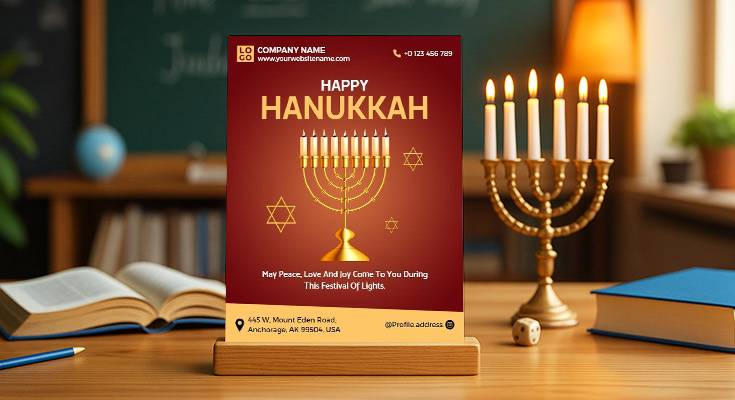
Educational service providers often spend excessive time creating Hanukkah flyer content that fails to convey their expertise, while price-focused competitors attract families with generic holiday materials. Effective Hanukkah flyer content strategically highlights certified credentials, cultural authenticity, and learning outcomes. Using high-quality printable hanukkah flyer templates ensures designs emphasize instructor qualifications and program depth, helping providers communicate value, maintain credibility, and attract families seeking meaningful educational experiences rather than superficial entertainment.
How Can Educational Hanukkah Service Providers Use Flyer Content to Showcase Their Credentials and Training?
Educational Hanukkah service providers can transform their Hanukkah flyer content into powerful trust-building tools by strategically highlighting certifications, experience, and specialized training. An online flyer maker can be used to create layouts that include dedicated credential sections featuring educational backgrounds, years of Jewish cultural education experience, and relevant certifications in religious studies or early childhood development. Feature testimonials from synagogues, schools, and community organizations validating expertise to further enhance credibility.
Use professional headshots with brief educator bios to establish personal connections. Display logos from accrediting bodies, Jewish educational institutions, or cultural organizations. Structure your Hanukkah celebration flyer design that include prominent credential callouts, making qualifications immediately visible to parents seeking qualified providers who understand both educational methodology and cultural authenticity.
Professional Certification Displays That Build Immediate Trust
Create visually striking certification badges prominently positioned in flyer headers or sidebars. Learning how to design a flyer equips educators with the essential skills to craft meaningful and visually balanced Hanukkah educational materials. Display specific credentials such as Jewish Studies degrees, Early Childhood Education certificates, or Hebrew language proficiency certifications using professional badge graphics. Include certification numbers and expiration dates when applicable to demonstrate current standing. Position safety certifications such as background checks, CPR certification, and child protection training badges near contact information for immediate parent reassurance.
Incorporate continuing education achievements such as recent workshops in Jewish pedagogy or cultural sensitivity training. Use visual hierarchy with larger badges for primary qualifications and smaller indicators for supplementary training. Festival of Lights flyer content should emphasize culturally relevant credentials such as synagogue teaching experience or rabbinical endorsements. Add membership badges from professional Jewish educator associations or early childhood development organizations. Incorporating QR code flyer integration techniques enables parents to instantly verify credentials and access detailed background information. Include QR codes linking to credential verification pages for tech-savvy parents who want detailed background information.
Experience Storytelling Through Client Success Narratives
Transform years of experience into compelling success stories that demonstrate real educational outcomes. Feature specific testimonials highlighting children’s cultural learning progress, increased Hebrew vocabulary, or deeper understanding of Jewish traditions. Include quantifiable achievements such as “helped 200+ children learn Hanukkah history” or “conducted educational programs for 15 synagogues.”
Create before-and-after learning scenarios showing how your instruction transforms children’s cultural knowledge. Hanukkah marketing flyer ideas should include parent quotes emphasizing educational value rather than entertainment aspects. Feature institutional endorsements from religious schools, community centers, or cultural organizations that validate your educational approach. Endorsements from Boston College’s DevTech group highlight Hanukkah’s role in interactive family learning outcomes.1 Include brief case studies showing how your culturally authentic programming creates meaningful learning experiences that extend beyond the immediate celebration, building lasting connections to Jewish heritage and traditions.
Visual Credential Hierarchy for Maximum Impact
Effective credential presentation transforms Hanukkah event flyers into trust-building tools that highlight professionalism and expertise. A clear visual hierarchy ensures parents immediately recognize the most relevant qualifications without feeling overwhelmed by excessive details.
- Prioritize Key Credentials – Display top-tier qualifications such as a Master’s in Jewish Studies or Early Childhood Education prominently with larger typography and visual emphasis. Use secondary tiers for specialized certifications such as Montessori or Hebrew language training, ensuring clear visual distinction through size and placement. Implementing proven professional flyer layout principles ensures Hanukkah educational flyers maintain visual hierarchy while showcasing credentials effectively.
- Structured Visual Differentiation – Apply color coding to organize credentials—educational achievements in blue, safety certifications in green, and cultural recognitions in traditional Jewish tones. Incorporate credential timelines to illustrate professional growth and ongoing learning, reinforcing long-term dedication to quality education.
- Balance Credibility and Readability – Highlight institutional affiliations, community partnerships, and awards in dedicated sections that build trust without clutter. Use comparison charts sparingly to emphasize unique expertise while maintaining clean, parent-friendly design with generous white space for visual comfort.
A well-structured credential hierarchy not only enhances flyer readability but also strengthens perceived authority, helping Hanukkah event organizers convey both cultural authenticity and educational excellence. Creative agencies benefit from mastering Hanukkah flyer design expertise to create culturally authentic materials for educational clients.
What Hanukkah Flyer Content Elements Help Customers Understand the Value of Qualified Educational Services?
Effective Hanukkah flyer content elements that communicate service value include detailed program descriptions explaining educational methodology, clear outcome statements showing student engagement results, and pricing structures justifying costs through included services. Feature before-and-after scenarios demonstrating student learning progression, incorporate specific curriculum details highlighting educational depth, and include parent feedback focusing on educational impact rather than satisfaction.
Use Hanukkah event flyer templates that emphasize learning objectives, cultural authenticity, and age-appropriate content delivery. Incorporating all essential flyer components ensures Hanukkah educational materials communicate value and expertise effectively. Structure your Hanukkah marketing flyer ideas around educational benefits, showing how qualified instruction creates meaningful cultural experiences versus basic entertainment.
Educational Outcome Documentation and Student Progress Indicators
Hanukkah flyer content must showcase measurable learning outcomes through specific achievement indicators. Include sections highlighting student progress metrics such as Hebrew vocabulary retention, cultural knowledge assessments, and engagement level improvements throughout eight-night programming. Feature testimonials from parents describing their children’s increased cultural awareness and religious understanding. Document learning objectives aligned with educational standards, showing how programming develops both cognitive and cultural competencies. Display certificates or badges students earn through participation, demonstrating tangible educational achievements. Include photos of students engaged in meaningful learning activities rather than passive entertainment.
Present quantifiable results such as “95% of students can explain Hanukkah’s historical significance” or “Students learn 20+ Hebrew terms.” These specific metrics help parents understand the educational depth distinguishing professional services from basic holiday activities.
Comprehensive Service Breakdown With Learning Justification
Structure Hanukkah flyer content to detail every educational component included in programming costs. Break down curriculum elements such as historical storytelling sessions, hands-on menorah crafting with cultural context, traditional song instruction with meaning explanations, and age-appropriate Torah study segments. Justify pricing by explaining instructor preparation time, educational material costs, and ongoing cultural competency training requirements. Compare service components to what competitors typically exclude, showing value through comprehensive coverage.
Include explanations such as “certified Jewish educators spend 10+ hours preparing culturally authentic lesson plans” or “includes take-home educational materials reinforcing learning.” This transparency helps parents understand why quality educational services cost more than entertainment-focused alternatives. Transparency in breakdowns, per EdWeek’s resources, justifies Hanukkah program investments for Jewish students.2 Emphasize ongoing instructor development and cultural authenticity verification processes that ensure accurate knowledge transmission.
Cultural Authenticity Markers That Demonstrate Educational Depth
Authentic Hanukkah flyer design builds trust and engagement among Jewish families by reflecting deep respect for cultural and religious traditions. Genuine representation extends beyond decorative symbols, focusing on accuracy, context, and educational value.
- Linguistic and Religious Accuracy – Incorporate Hebrew terms with correct transliteration and concise English explanations. Reference Torah passages or historical events with proper context, ensuring information aligns with established Jewish teachings. Endorsements from rabbis or recognized Jewish educational institutions reinforce authenticity.
- Educator and Organizational Credibility – Highlight instructor backgrounds in Jewish studies, Hebrew proficiency, or related cultural education credentials. Showcase affiliations with synagogues, Jewish schools, or cultural organizations to convey community trust and legitimacy.
- Meaningful Symbolism and Context – Present traditional elements such as menorahs, dreidels, or olive oil with clear explanations of their spiritual and historical importance. This demonstrates educational depth and differentiates authentic programming from superficial holiday acknowledgment.
Authentic, well-contextualized content fosters meaningful connections, helping families recognize the program’s sincerity and educational commitment.
How Should Educational Providers Structure Hanukkah Flyer Content to Differentiate From Price-only Competitors?
Educational providers should structure their Hanukkah flyer content by leading with cultural expertise credentials, featuring detailed program descriptions that highlight educational outcomes, and showcasing testimonials from families and institutions. Position educational value propositions prominently above pricing information, emphasizing comprehensive program depth that justifies premium service investment.
Include sections dedicated to curriculum standards alignment, age-appropriate learning objectives, and certified educator profiles to differentiate from basic holiday entertainment offerings. Comprehensive Hanukkah marketing flyer strategies for new providers help educational services establish credibility and differentiate from competitors.
Credential-Forward Header Design That Establishes Educational Authority
Create headers that immediately establish professional credibility through prominent certification displays and educational background showcases. Feature teaching licenses, Jewish education certifications, and professional association memberships in visually distinct badge formats within the top third of your Hanukkah celebration flyer design. Include specific years of experience and advanced degrees in religious studies or education to differentiate from amateur providers.
Position staff photos alongside brief biographical highlights emphasizing cultural expertise and educational training. Use professional headshots with caption formatting that includes relevant credentials such as “Sarah Cohen, M.Ed. Jewish Studies, 15 years synagogue education experience.” This credential-forward approach signals quality immediately, contrasting sharply with price-focused competitors who lead with cost information. Visual hierarchy should emphasize expertise before services, establishing trust through demonstrated qualifications that justify premium pricing structures. Avoiding common flyer design errors to avoid ensures Hanukkah flyers maintain professional credibility and cultural sensitivity.
Program Depth Storytelling Through Structured Learning Outcomes
Structure program descriptions around measurable educational outcomes rather than basic activity lists. Detail specific learning objectives such as “Students will understand the historical significance of the Maccabean revolt” or “Children will demonstrate proper menorah lighting procedures.” Include curriculum alignment with educational standards and age-appropriate developmental goals to showcase professional program design.
Feature before-and-after student engagement examples demonstrating cultural knowledge acquisition. Use structured formatting such as “Week 1: Historical Context → Week 2: Cultural Traditions → Week 3: Modern Applications” to illustrate comprehensive programming depth. Include assessment methods and progress tracking that amateur providers typically omit. Incorporate parent testimonials focusing on educational impact: “My daughter now explains Hanukkah traditions to her friends with confidence and accuracy.” This storytelling approach demonstrates value through documented learning outcomes rather than entertainment promises. Storytelling reflects Yale’s puppetry curriculum for Hanukkah depth.3
- Hanukkah Celebration Candle Lighting Event Flyer Template
- Hanukkah Celebration Dinner Event Flyer Template
Community Partnership Validation and Cultural Endorsement Display
Establishing credibility within Jewish educational and cultural spaces requires visible, authentic community validation. Strategic partnerships and endorsements demonstrate respect for tradition, alignment with community standards, and long-term trustworthiness.
- Visible Endorsements and Partnerships – Feature synagogue partnerships, rabbinic endorsements, and affiliations with Jewish cultural organizations prominently on marketing materials. Use direct quotes such as “Temple Beth El proudly recommends this culturally accurate and educationally sound programming,” supported by letters from religious leaders underscoring educational integrity.
- Collaborative Community Engagement – Highlight active collaboration with Hebrew schools, Jewish education programs, and community centers. Showcase participation in professional development events and continuing education initiatives through recognized Jewish organizations to reinforce credibility and demonstrate commitment to authentic practice.
- Cultural Integration and Transparency – Dedicate space to community involvement achievements, such as contributions to Jewish education conferences or curriculum development projects. Present transparent pricing tied to partnership-backed quality assurance, clearly showing that cultural authenticity and verified programming merit premium value.
Strong community partnerships and visible endorsements transform educational initiatives into trusted, culturally grounded programs recognized for integrity and excellence.
What Specific Hanukkah Flyer Content Communicates Expertise in Educational Programming and Cultural Authenticity?
Expert Hanukkah flyer content should include specific Torah references and Hebrew terminology with proper translations, detailed explanations of the eight nights’ historical significance, and age-specific learning objectives aligned with educational standards. Feature certified Jewish educator bios, partnerships with synagogues or Jewish cultural centers, and curriculum samples showing depth beyond basic holiday activities.
Include testimonials highlighting children’s cultural learning outcomes, display relevant certifications in Jewish studies or early childhood education, and showcase authentic ritual elements such as proper menorah lighting procedures and traditional songs with cultural context explanations.
Torah-Based Content Integration and Historical Accuracy Verification
Professional Hanukkah flyer content distinguishes qualified educators through accurate historical narratives and proper Hebrew integration. Include the Maccabee victory story with correct dates (167-160 BCE), explain the Temple rededication significance, and reference specific Torah portions such as Parashat Vayeshev connections. Use Hebrew terms correctly: “Chanukkah” with proper transliteration, “shamash” for helper candle, and “Hanukkiah” for eight-branched menorah.
Quote traditional blessings with English translations, cite Talmudic sources for miracle oil lasting eight days, and explain historical context of Antiochus IV’s persecution. Avoid commercialized interpretations that diminish religious significance. Reference primary sources such as Books of Maccabees and rabbinic literature to establish scholarly credibility that parents recognize.
Educator Certification Showcase and Jewish Studies Credentials
Display specific qualifications that validate cultural expertise and educational competence. Feature Jewish education certificates from recognized institutions such as Hebrew Union College, Jewish Theological Seminary, or local rabbinical colleges. Highlight degrees in Jewish studies, Hebrew language fluency certifications, and continuing education in Jewish pedagogy. Include years of experience teaching Jewish children, synagogue education director roles, and Hebrew school leadership positions.
Showcase endorsements from rabbis, Jewish community leaders, and established educational institutions. List memberships in professional organizations such as Association of Jewish Libraries or Coalition for Jewish Education. Memberships support Hanukkah teaching, per Reform Judaism’s educator guidelines.4 Present testimonials from Jewish families emphasizing cultural learning outcomes rather than entertainment satisfaction, demonstrating understanding of educational priorities.
Authentic Ritual Demonstration and Traditional Practice Explanations
Effective Hanukkah flyer content should balance cultural accuracy with accessibility, helping readers understand both the religious depth and joyful celebration of the holiday. Authentic representation builds trust with diverse audiences while honoring Jewish heritage and practice.
- Accurate Ritual Guidance – Clearly outline menorah lighting practices: begin with one candle on the first night, adding one each subsequent evening while always lighting the shamash first. Explain placement (candles right to left, lighting left to right) and timing (after sunset, minimum 30-minute burn). Include transliterated blessings with short meaning summaries to guide respectful participation.
- Cultural and Culinary Significance – Highlight symbolic foods such as latkes representing the oil miracle, sufganiyot as Sephardic tradition, and dairy dishes honoring Judith’s courage. Flyers featuring these foods with brief historical context make cultural practices relatable while maintaining authenticity.
- Educational and Family Engagement – Introduce traditional games such as dreidel, explaining Hebrew letter meanings—Nes Gadol Haya Sham (“A great miracle happened there”). Add modern elements such as thoughtful gift exchanges framed as expressions of gratitude and unity rather than commercial focus.
By blending historical context with practical observance details, Hanukkah flyers educate, inspire, and promote authentic participation across generations.
- Hanukkah Celebration Menorah Lighting Flyer Template
- Festive Hanukkah Dinner Invitation Flyer Template
How Can Hanukkah Flyer Content for Educational Services Highlight Proper Certification and Experience?
Educational providers should structure their Hanukkah flyer content by prominently featuring educator credentials through visual badges, certification logos, and experience testimonials. Include specific qualifications such as teaching licenses, Jewish education certifications, and years of experience in bold sections. Showcase awards, continuing education participation, and professional affiliations with educational organizations.
Use Hanukkah celebration flyer design elements to frame credential displays attractively. Create dedicated sections for staff backgrounds, training achievements, and student success stories. Position certification information near service descriptions to build immediate trust and differentiate from price-only competitors.
Strategic Placement of Educational Credentials and Professional Badges
Position educational credentials in the header section using professional badge graphics and certification seals. Create a dedicated “Our Expert Educators” section featuring headshots alongside teaching licenses, Jewish studies certifications, and years of experience. Use Hanukkah flyer content optimization through visual hierarchy that makes qualifications immediately visible. Include specific credentials such as “Certified Jewish Educator (CJE)” or “20+ Years Hebrew School Experience” in larger fonts.
Display certification logos from recognized educational institutions or Jewish educational organizations prominently. Incorporate trust symbols such as “Licensed Teacher” or “Rabbinically Endorsed” near contact information. Use color-coded credential categories to help parents quickly identify relevant qualifications. Position these elements above pricing information to establish value before cost considerations.
Building Trust Through Staff Background Showcases and Training Highlights
Feature individual educator profiles with professional photographs, educational backgrounds, and specialized training in Jewish cultural education. Include specific details such as “Hebrew University Graduate” or “Montessori-Certified Jewish Educator” to demonstrate qualified instruction. Highlight ongoing professional development through conference attendance, workshop participation, and continuing education credits.
Incorporate student success stories and learning outcome testimonials that reference specific instructor expertise. Use quotes from parents highlighting educational quality: “Rabbi Sarah’s deep knowledge made Hanukkah traditions meaningful for our children.” Create visual timelines showing instructor experience progression and additional training achievements.
Include safety certifications, background check confirmations, and child protection training completion. Display these qualifications using professional formatting that maintains cultural authenticity while conveying modern educational standards.
Leveraging Community Endorsements and Institutional Partnerships for Credibility
Community-backed credibility strengthens trust and reinforces authenticity for Jewish educational or cultural programs. By aligning with respected institutions and leaders, organizations demonstrate both cultural integrity and professional legitimacy.
- Institutional Partnerships – Display logos and official endorsements from synagogues, Jewish community centers, and schools. Use validation quotes from rabbis, directors, or community leaders to affirm quality and authenticity. Statements such as “Endorsed by Temple Beth Shalom’s Education Committee” build immediate trust among prospective participants.
- Awards and Professional Recognition – Highlight certifications, awards, or memberships from credible associations such as the Association for Jewish Studies or local cultural councils. Include a “Community Trust” section featuring years of service and commitment to Jewish education and values.
- Collaborative Impact Evidence – Present referral statistics and partnership metrics (e.g., “Trusted by 15 Local Synagogues”) to illustrate community reach. Showcase examples of co-hosted events or joint programs that reflect active institutional confidence in your offerings.
Strategic inclusion of endorsements and partnerships transforms your promotional materials into credible representations of community trust, ensuring long-term engagement and sustained reputation.
- Hanukkah Celebration Festival Of Lights Flyer Template
- Festive Blue Passover Celebration with Menorah Flyer Template
What Messaging in Hanukkah Flyer Content Helps Parents Choose Quality Educational Providers Over Cheaper Alternatives?
Effective Hanukkah flyer content emphasizes value over cost through outcome-focused messaging that highlights comprehensive Jewish education, personalized attention ratios, and proven learning methodologies. Strategic messaging positions premium pricing as investment in children’s futures, using testimonials that showcase transformation rather than price satisfaction.
Successful educational providers frame their services through long-term benefits such as cultural knowledge depth, college preparation success, and lasting Jewish identity formation. This approach helps parents understand the distinction between basic holiday entertainment and professionally-designed educational experiences that provide meaningful learning outcomes. Adapting small business flyer marketing strategies helps educational providers compete effectively against price-only competitors.
Outcome-Based Value Propositions That Justify Premium Educational Investment
Educational providers must highlight measurable outcomes that justify higher costs through specific achievement metrics. Include data such as “Students advance two grade levels in Hebrew reading” or “95% of graduates continue Jewish studies through high school.” Feature concrete learning objectives such as Torah portion comprehension, holiday tradition mastery, and cultural identity development.
Position educational methodology prominently by explaining how certified instructors create personalized learning plans addressing individual student needs. Emphasize curriculum depth with statements such as “Our 8-week program covers 400 years of Jewish history” versus competitors offering basic holiday crafts. Include professional development commitments showing instructors receive ongoing training in Jewish pedagogy and child development. Frame premium pricing through phrases such as “educational excellence investment” and “lasting Jewish identity formation” to help parents understand the long-term value proposition beyond immediate costs.
Parent Testimonial Integration Highlighting Long-Term Student Success Stories
Authentic parent testimonials should focus on transformation outcomes rather than general satisfaction. Include specific quotes such as “Sarah now leads our family’s Shabbat prayers confidently” or “David chose Hebrew as his high school foreign language because of his foundation here.” Feature testimonials addressing quality concerns directly with statements such as “The difference between this program and others was immediately apparent in Jacob’s understanding of Jewish values.”
Showcase multi-generational impact through testimonials such as “Our son now teaches his younger sister Hebrew songs he learned.” Include testimonials from families who initially chose cheaper alternatives but switched to your program, explaining the educational gaps they discovered. Highlight community integration outcomes such as “Emma now volunteers as a junior teacher during synagogue events” to demonstrate how quality education creates lasting community engagement beyond the immediate program experience.
Cost Comparison Strategies That Reveal Hidden Expenses of Inferior Programs
Transparent cost comparison strategies help parents recognize the long-term financial and educational impact of choosing lower-quality programs. Clear value framing transforms price discussions into informed investment decisions rather than surface-level cost evaluations.
- Transparent Comparison Frameworks – Create side-by-side charts that show inclusions and exclusions between premium and budget programs. Highlight distinctions such as “Certified Jewish educator vs. untrained volunteer” or “Comprehensive curriculum vs. basic activities” to illustrate quality differences clearly.
- Value and Time Calculations – Present cost-per-hour breakdowns showing the true value of expert-led instruction. Example: “Our $300 program delivers 40 hours of certified instruction ($7.50/hour) plus materials, while $150 programs offer 20 hours of basic activities without educational resources.” This data-driven approach clarifies value rather than just price.
- Long-Term and Hidden Costs – Address unseen expenses such as remedial tutoring (“average $500 annually”) and quality risks such as inaccurate teaching or cultural misrepresentation. Use opportunity-cost messaging: “One year of quality Jewish education builds lifelong identity; one year of inadequate instruction creates gaps that take years to fix.”
By reframing cost comparisons around value, outcomes, and long-term implications, parents see quality education as an investment rather than an expense.
How Do Successful Educational Hanukkah Service Providers Use Flyer Content to Build Trust With Families?
Successful educational Hanukkah service providers build family trust through flyer content by prominently featuring educator credentials, safety certifications, and testimonials from previous participants. They include detailed program descriptions highlighting age-appropriate learning objectives, cultural authenticity, and educational outcomes. Trust-building elements include clear pricing structures, cancellation policies, and contact information for program directors.
Visual elements showcase professional teaching environments, diverse participant engagement, and traditional Hanukkah celebration activities. Providers also emphasize their experience with Jewish education, community partnerships with local synagogues, and commitment to creating meaningful, educational experiences that honor Hanukkah traditions while engaging children effectively.
Credential Showcase: Highlighting Jewish Education Expertise and Safety Certifications in Hanukkah Programming
Professional educators position credentials prominently on their Hanukkah flyer content through dedicated credential sections featuring teaching licenses, Jewish studies certifications, and years of experience. Effective layouts include certification badges, professional headshots, and brief bios highlighting relevant training in cultural education and child development.
Safety certifications receive equal prominence through visual badges displaying CPR certification, background check completion, and child protection training. Providers showcase continuing education participation and professional association memberships to demonstrate ongoing commitment to excellence.
The most effective credential presentations combine visual appeal with specific details, using Hanukkah celebration flyer design elements to frame professional qualifications attractively while maintaining cultural sensitivity and educational authority that distinguishes qualified providers from amateur alternatives.
Family Testimonial Integration: Leveraging Parent Reviews and Student Success Stories in Educational Flyer Design
Strategic testimonial placement focuses on educational outcomes rather than generic satisfaction, featuring specific quotes about children’s cultural learning and engagement improvements. Successful providers highlight testimonials mentioning instructor expertise, program quality, and meaningful educational experiences that justify premium pricing over basic entertainment options.
Effective testimonial design includes parent names, child ages, and specific program details to build authenticity. Providers showcase diverse family backgrounds and various program experiences, demonstrating inclusive programming that serves different knowledge levels within the Jewish community.
Visual testimonial integration uses professional photography of families participating in previous programs, combined with written feedback that addresses common parent concerns about choosing qualified educational providers over cheaper alternatives.
Transparency Elements: Clear Program Structure and Pricing Information That Reassures Families
Transparent communication builds trust and confidence among families considering educational Hanukkah programs. Clearly defined program structures and straightforward pricing help parents understand the full value of services while reducing uncertainty.
- Comprehensive Pricing Breakdown – Provide detailed listings of what tuition includes, such as materials, instruction hours, and cultural activities. Highlight instructor qualifications and program credentials to justify costs and distinguish premium educational experiences from basic holiday activities.
- Accessible Contact and Policy Details – Include direct communication options such as phone numbers, emails, and program director access for personalized consultations. Clearly outline cancellation, rescheduling, and emergency procedures to demonstrate professionalism and care for family needs.
- Structured Program Presentation – Specify age groupings, staff-to-child ratios, and sample curriculum elements to illustrate quality and individualized attention. Incorporate cultural authenticity through community partnerships or rabbinical endorsements. Use well-designed Hanukkah event flyer templates to present this information in organized, visually engaging sections. Understanding digital versus print flyer considerations helps educational providers optimize Hanukkah promotional materials across multiple channels.
Clear, transparent presentation of structure and pricing reassures families, strengthens credibility, and supports confident enrollment decisions.
What Hanukkah Flyer Content Strategies Work Best for Synagogue Educational Programming and Community Events?
Successful synagogue Hanukkah flyer content emphasizes community connection, multi-generational programming, and cultural learning opportunities. Effective Hanukkah flyer content includes rabbi endorsements, volunteer opportunities, and connections to broader Jewish education initiatives. Flyers should highlight interactive elements such as menorah lighting ceremonies, traditional food preparation, and storytelling sessions.
Visual strategies incorporate Hebrew text, traditional symbols, and community photography. Content emphasizes inclusivity for families at different knowledge levels, positioning individual celebration participation as pathways to broader synagogue membership and ongoing religious education programs throughout the year. Combining authentic content with targeted flyer distribution strategies ensures Hanukkah educational materials reach families seeking quality cultural education.
Multi-Generational Appeal: Designing Hanukkah Event Flyer Templates That Engage All Age Groups
Synagogue Hanukkah flyer content succeeds through age-inclusive programming that connects generations. Effective Hanukkah event flyer templates feature large, readable fonts for elderly participants while incorporating colorful graphics that attract children. Content sections address specific age groups: toddler Hanukkah craft stations, teen volunteer leadership roles, and adult educational discussions about historical significance. Visual hierarchies use traditional blue and gold color schemes with modern design elements. Incorporating contemporary flyer design trends helps Hanukkah flyers appeal to diverse age groups while maintaining cultural authenticity.
Programming descriptions highlight family learning opportunities where grandparents share stories while children create art projects. Successful flyers include timing information accommodating different attention spans, such as 30-minute children’s programs followed by extended adult discussions. Interactive elements such as “Family Recipe Exchange” and “Multi-Generation Menorah Lighting” create shared experiences across age groups. Content emphasizes how different generations contribute unique perspectives to Hanukkah celebrations, positioning synagogue events as community-wide educational experiences rather than age-segregated activities.
Cultural Education Focus: Incorporating Traditional Learning Elements and Hebrew Language in Community Flyers
Effective Hanukkah community flyer content incorporates authentic Hebrew terminology with clear English translations, demonstrating cultural authenticity while maintaining accessibility. Educational elements include brief Torah references explaining Hanukkah’s historical significance, proper blessings for menorah lighting, and traditional song lyrics with phonetic pronunciations. Visual design integrates Hebrew characters alongside English text, creating culturally rich layouts that honor tradition. Exploring creative flyer design concepts helps educational providers develop unique Hanukkah materials that balance tradition with contemporary appeal.
Content highlights educational outcomes: children learning Hebrew blessings, families understanding Maccabee history, and participants gaining knowledge of ritual significance. Programming descriptions emphasize learning objectives beyond celebration, such as “Explore the Talmudic Origins of Hanukkah Traditions” or “Master Traditional Dreidel Rules and Meanings.” Successful flyers position synagogue educators as cultural authorities through credential displays and rabbinical endorsements. Educational content differentiates synagogue programming from secular celebrations by emphasizing spiritual growth, cultural transmission, and authentic religious practice rather than generic holiday activities.
Membership Connection Strategy: Linking Hanukkah Events to Ongoing Synagogue Programming and Religious Education
Effective synagogue Hanukkah flyers serve as bridges between seasonal celebration and sustained community involvement. By connecting event participation to long-term programs, they transform one-time attendees into active, year-round members.
- Gateway to Deeper Involvement – Position Hanukkah celebrations as introductions to broader synagogue life. Include “Next Steps” sections that guide families toward Hebrew school enrollment, adult education, or volunteer programs, reinforcing the message that Hanukkah participation is the start of a lasting connection.
- Community Testimonials and Learning Pathways – Feature stories of families who began with Hanukkah events and became active members. Link holiday themes to ongoing educational opportunities—such as “Continue Your Family’s Learning Journey” or “Explore Advanced Hebrew Studies”—to demonstrate clear progression from celebration to continued engagement.
- Visual and Call-to-Action Integration – Use images highlighting classrooms, services, and community gatherings to illustrate synagogue vibrancy beyond the holiday. Include direct calls-to-action for membership consultations, program tours, and educational sign-ups to convert festive participation into enduring community ties.
By transforming Hanukkah events into gateways for deeper spiritual and educational involvement, synagogues can strengthen membership continuity and nurture lifelong engagement within their congregations.
How Can Educational Providers Use Hanukkah Flyer Content to Explain the Importance of Culturally Appropriate Instruction?
Educational providers can leverage Hanukkah flyer content as powerful teaching tools that demonstrate respectful cultural representation, accurate historical context, and inclusive design principles. Well-crafted Hanukkah celebration flyer design showcases proper terminology, authentic imagery, and culturally sensitive messaging that honors Jewish traditions.
These materials serve as practical examples of how educational content should respectfully acknowledge diverse backgrounds while avoiding stereotypes or oversimplification. By analyzing effective Hanukkah promotional flyer examples, educators can illustrate the difference between superficial holiday recognition and meaningful cultural education that builds understanding and respect among diverse student populations. Understanding common flyer distribution pitfalls ensures Hanukkah educational materials reach appropriate audiences through respectful channels.
Using Hanukkah Flyer Examples to Teach Cultural Sensitivity Best Practices
Professional Hanukkah flyer content demonstrates cultural sensitivity through accurate Hebrew translations, proper religious symbol placement, and respectful historical references. Educators can examine high-quality flyers that correctly explain the eight-night celebration without reducing it to generic “winter holiday” messaging. These materials show appropriate use of traditional colors, symbols such as the menorah and dreidel, and culturally accurate terminology rather than commercialized interpretations.
Effective examples include flyers that acknowledge Hanukkah’s historical significance as the Festival of Lights while avoiding Christmas-centric language or imagery. Quality Hanukkah community flyer content maintains authenticity by consulting Jewish cultural sources and avoiding assumptions about religious practices. Educational providers can use these materials to train staff on recognizing the difference between respectful cultural acknowledgment and tokenistic holiday decoration, helping create truly inclusive educational environments that honor diverse traditions appropriately.
Demonstrating Authentic Representation Through Professional Hanukkah Marketing Materials
Professional Hanukkah marketing flyer ideas showcase authentic representation through careful attention to religious accuracy, appropriate imagery selection, and respectful community engagement. Quality materials feature diverse Jewish families celebrating traditions rather than stereotypical representations, demonstrate proper menorah lighting procedures, and include accurate explanations of traditional foods and customs.
Educational providers can analyze how effective flyers incorporate Hebrew text with proper translations, feature age-appropriate explanations of Hanukkah’s historical context, and maintain dignity while remaining accessible to non-Jewish audiences. These materials avoid common mistakes such as conflating Hanukkah with Christmas or oversimplifying complex religious concepts.
The best Hanukkah flyer content for retail stores demonstrates how commercial materials can remain culturally respectful while serving business purposes, providing educators with examples of maintaining authenticity across different contexts and helping students understand how cultural representation varies across professional applications.
Building Inclusive Curriculum Models from Quality Hanukkah Community Flyer Content
Quality Hanukkah community flyers serve as strong foundations for developing inclusive curriculum models that blend cultural authenticity with broad accessibility. These materials demonstrate how education around traditions can celebrate heritage while remaining approachable for diverse audiences.
- Cultural Accuracy with Accessibility – Professional Hanukkah flyers showcase how to balance respect for Jewish traditions with inclusive language and explanations. By offering multi-generational programming and context for cultural practices, they model how to create learning materials that welcome all participants without oversimplifying religious meaning.
- Curriculum Design Principles – Educators can derive frameworks from well-structured flyer content that integrates historical background, symbolic meaning, and contemporary relevance. These examples show how to present cultural education without appropriation—promoting understanding and empathy among students from varied backgrounds.
- Inclusive Learning Strategies – Effective flyers emphasize universal values such as community, gratitude, and reflection, making them adaptable for broader educational goals. They include clear learning objectives, accessible visual design, and opportunities for inquiry-based learning that respect both faith and curiosity.
Quality Hanukkah flyer templates illustrate how thoughtful communication design can inspire inclusive education models, helping schools and community programs foster cultural literacy and meaningful intercultural dialogue.
What Call-to-action Elements in Hanukkah Flyer Content Drive Enrollment for Quality Educational Services?
Effective Hanukkah flyer content incorporates trust-building call-to-action elements that emphasize educational credentials, cultural expertise, and authentic program experiences. Strategic placement of enrollment incentives such as “Reserve Your Family’s Spot in Our Certified Cultural Education Program” or “Join Expert-Led Hanukkah Learning Experiences” drives qualified inquiries.
Successful Hanukkah event flyer templates combine urgency with value propositions, highlighting instructor qualifications, small class sizes, and comprehensive cultural education approaches. These elements help families understand the distinction between basic holiday activities and professionally-designed educational experiences that provide lasting cultural understanding and meaningful learning outcomes. Implementing proven effective call-to-action strategies ensures Hanukkah educational flyers convert interest into enrollment.
Credential-Focused Call-to-Actions That Highlight Educational Expertise
Educational providers maximize enrollment through CTAs that immediately communicate qualifications and expertise. Phrases such as “Learn from Certified Jewish Educators” or “Enroll with Licensed Cultural Specialists” establish credibility before families consider price. Effective Hanukkah flyer content positions credentials prominently within action statements: “Reserve Your Child’s Place with Our Master’s-Level Instructors” or “Join Programs Led by Synagogue-Endorsed Teachers.”
Visual hierarchy places educational qualifications above standard enrollment buttons. Position certification logos directly adjacent to CTAs, creating immediate association between action and expertise. Use specific credential details such as “15+ Years Jewish Education Experience” or “Hebrew University Graduate” within call-to-action sections. This approach differentiates professional services from amateur alternatives while building parent confidence in educational investment decisions.
Value-Driven Enrollment Messages in Professional Hanukkah Marketing Flyer Ideas
Convert price-conscious families through value-focused messaging that justifies premium educational services. CTAs should emphasize outcomes over costs: “Invest in Your Child’s Jewish Identity” or “Secure Comprehensive Cultural Learning.” Frame enrollment as investment in long-term educational benefits rather than seasonal entertainment expense.
Include specific value indicators within action statements. “Join Programs with 10:1 Student-Teacher Ratios” or “Access Curriculum Aligned with Hebrew School Standards” communicate quality through concrete details. Position testimonials adjacent to enrollment CTAs, reinforcing value propositions with parent experiences. Use progressive disclosure techniques where initial CTA leads to detailed program information before final enrollment commitment. Effective messaging connects immediate enrollment action to broader educational goals families value.
Trust-Building Action Elements That Convert Browsers into Enrolled Families
Effective enrollment conversion begins with eliminating uncertainty and building trust through transparent, reassurance-focused call-to-action (CTA) design. Families engage when they perceive safety, credibility, and personalized support in every step of the process.
- Risk-Free Enrollment Messaging – Use CTAs that reduce hesitation and emphasize confidence, such as “Enroll with Confidence – Satisfaction Guaranteed” or “Try Your First Session Free.” These phrases communicate security and show commitment to family satisfaction without pressure.
- Social Proof and Accountability – Strengthen CTAs with credibility signals such as parent testimonials, endorsements, or community affiliations: “Join 200+ Satisfied Families” or “Recommended by Rabbi Cohen.” Add time-bound commitments, e.g., “Call Today – Speak with Our Director Within 24 Hours,” to demonstrate reliability and responsiveness.
- Transparent Next Steps – Clarify the enrollment journey through CTAs that outline timelines and options: “Apply Today – Receive Confirmation Within 48 Hours” or “Request Information Before You Enroll.” Surround CTAs with trust visuals—professional staff photos, certifications, and facility images—to reinforce authenticity and capability.
When executed together, these trust-building action elements transform uncertainty into confidence, converting browsing parents into fully enrolled, loyal families.
People Also Ask:
- What are key elements to include in educational Hanukkah flyer content?
Essential elements include instructor credentials, educational outcomes, program structure, safety protocols, pricing with value explanations, testimonials from families, cultural authenticity assurances, and clear registration processes for quality educational programming. - How can Hanukkah flyer content help parents choose qualified educational providers?
Effective flyer content highlights specific qualifications, training certifications, experience levels, educational methodologies, and outcome measurements. Include testimonials addressing quality concerns and comparison charts showing professional versus amateur service differences. - What messaging in Hanukkah flyer content builds trust with Jewish families?
Build trust through authentic cultural knowledge demonstration, rabbi or community leader endorsements, detailed educational philosophies, transparent pricing with value explanations, and testimonials from respected community members about program quality. - How should educational providers design Hanukkah flyer content for maximum engagement?
Use professional layouts with authentic cultural imagery, clear educational value propositions, testimonial highlights, instructor credential displays, and easy-to-follow registration processes. Maintain cultural sensitivity while conveying modern professionalism and educational expertise. - What call-to-action works best in educational Hanukkah flyer content?
Effective calls-to-action offer consultation scheduling, program information sessions, educational resource downloads, or trial class opportunities. Focus on educational consultation rather than immediate sales to demonstrate professional approach and build trust. - How can Hanukkah flyer content address concerns about service provider qualifications?
Address qualification concerns by prominently displaying certifications, training details, experience summaries, continuing education commitments, and professional association memberships. Include specific examples of successful educational outcomes and cultural competency demonstrations.
Frequently Asked Questions:
- How can educational Hanukkah service providers effectively communicate their qualifications through flyer content?
Educational providers should prominently feature credentials, certifications, and years of experience in Hanukkah flyer content. Include specific training in Jewish education, cultural competency certifications, and testimonials from families. Highlight unique qualifications that distinguish your services from price-focused competitors while emphasizing the long-term educational value. - What design elements in Hanukkah flyer content help parents recognize quality educational programming?
Professional Hanukkah flyer content should include clean layouts, authentic cultural imagery, and clear educational outcomes. Feature photos of properly conducted ceremonies, age-appropriate activities, and learning environments. Use traditional colors and symbols correctly while maintaining modern design standards that convey professionalism and cultural expertise. - How should educational providers price their services transparently in Hanukkah flyer content?
Present pricing in Hanukkah flyer content alongside clear value propositions explaining what’s included. Detail educational materials, certified instruction, cultural authenticity, and follow-up support. Frame costs as investment in quality Jewish education rather than simple service fees, helping parents understand why professional providers cost more than amateur alternatives. - What testimonials work best in Hanukkah flyer content for educational service providers?
Include specific testimonials in Hanukkah flyer content from parents highlighting educational outcomes, cultural learning, and positive experiences. Focus on quotes that mention instructor expertise, program quality, and children’s engagement. Avoid generic praise and instead feature testimonials that address common concerns about choosing qualified providers over cheaper options. - How can educational providers use Hanukkah flyer content to address common misconceptions about professional services?
Address misconceptions directly in Hanukkah flyer content by explaining why professional training matters for cultural education. Include brief educational points about proper traditions, safety considerations, and age-appropriate programming. Help parents understand that quality educational services require expertise, preparation, and ongoing professional development that justify higher costs. - What urgent messaging works in Hanukkah flyer content without compromising educational integrity?
Create appropriate urgency in Hanukkah flyer content by highlighting limited enrollment dates, early registration benefits, or seasonal programming deadlines. Avoid high-pressure sales tactics that compromise educational mission. Instead, emphasize the importance of proper preparation time and the value of securing spots with qualified instructors for meaningful Hanukkah learning experiences. - How should educational Hanukkah service providers handle competitor pricing pressures in flyer content?
Address pricing competition in Hanukkah flyer content by creating comparison sections showing whats included versus excluded in budget options. Highlight risks of unqualified instruction, incomplete programming, or cultural inaccuracies. Position your services as educational investments rather than commodity purchases, emphasizing long-term benefits of proper Jewish education. - What follow-up strategies should educational providers include in Hanukkah flyer content?
Include clear next steps in Hanukkah flyer content such as consultation scheduling, program information sessions, or educational resource sharing. Provide multiple contact methods and response timeframes. Offer initial consultations to discuss family needs, educational goals, and program customization, demonstrating professional approach that justifies premium pricing.
Conclusion:
Effective Hanukkah flyer content enables educational service providers to clearly communicate their expertise, credentials, and cultural authority, addressing the common challenge of customers making decisions based solely on price. By incorporating strategic design elements such as Torah-based content accuracy, certified educator showcases, and traditional practice explanations, flyers establish credibility and differentiate qualified providers from entertainment-focused competitors. Informative layouts that highlight safety certifications, program depth, transparent pricing, and community partnerships reinforce trust while demonstrating the long-term value of quality educational programs.
Outcome-focused messaging helps families understand the value of investing in professional Hanukkah education instead of choosing low-cost, generic entertainment. Adding parent testimonials, program comparisons, and clear progression indicators highlights the impact of qualified instruction. This strategy allows providers to showcase their credentials while guiding clients toward informed choices. It also bridges the gap between cultural expertise and consumer understanding, ensuring high educational standards and meaningful holiday experiences.
Reference:
- Limudei code-esh: Chanukkah curriculum. Retrived from DevTech Research Group, Boston College.
- How teachers can do better by Jewish students this Chanukah. Retrived from Education Week.
- Traditional Jewish holidays come alive through puppetry and storytelling. Retrived from Yale Teachers Institute.
- Who should teach about Hanukkah and what should they be teaching? Retrived from Union for Reform Judaism.