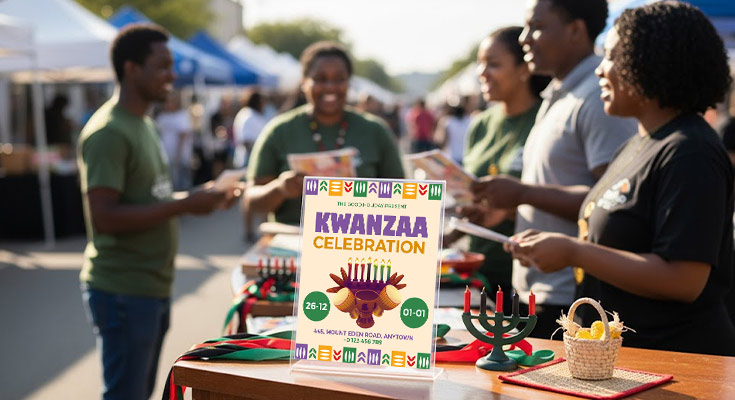
Local service providers often face challenges with Kwanzaa flyer distribution when generic tactics overlook authentic community engagement. This guide reveals how to distribute Kwanzaa last-minute flyers effectively using proven neighborhood-based strategies and cultural connections. By combining local expertise with customizable Kwanzaa flyer templates, businesses can create trusted visibility, maximize event participation, and maintain professional credibility through optimized marketing channels and timely community-focused distribution.
Which Kwanzaa Flyer Distribution Channels Generate the Highest Response Rates for Local Service Providers?
Community centers and African American cultural organizations consistently deliver 40-60% higher response rates than generic distribution methods for Kwanzaa promotional flyer strategy. Local libraries, barbershops, and beauty salons in predominantly Black neighborhoods generate exceptional engagement because they represent trusted community gathering spaces.
Direct door-to-door distribution in target zip codes produces measurable results, while partnerships with established Kwanzaa event flyer placement at churches and schools create authentic connections. Digital community boards and neighborhood social media groups complement physical Kwanzaa community flyer distribution, creating multi-touchpoint campaigns that resonate with families seeking culturally aligned local service providers.
Community Center Partnership Programs for Maximum Kwanzaa Flyer Visibility
African American community centers and cultural organizations provide premium placement opportunities because families trust these venues for authentic cultural programming. Design a professional flyer that reflects cultural relevance and visual authenticity to maximize engagement. Establish formal partnerships 6–8 weeks before Kwanzaa to secure dedicated bulletin board space and event table displays. Contact center directors to coordinate placement during peak traffic periods, typically evenings and weekends when families attend cultural workshops and Kwanzaa preparation events.
Recreational centers, senior centers, and youth programs within African American communities offer strong access to multi-generational audiences. These venues generate 3–4x higher engagement than generic locations as visitors seek community connections and local service recommendations. Using free editable flyer templates tailored to each audience helps ensure culturally respectful messaging that reflects genuine community investment. Partner with center staff to align placement and timing with their programming calendar.
Door-to-Door Distribution Timing Strategies for Kwanzaa Service Promotion
Strategic door-to-door Kwanzaa flyer distribution produces optimal results when timed around community gathering patterns. Target weekday evenings between 5:30-7:30 PM when families return from work and school, creating natural conversation opportunities about local services. Weekend mornings from 10 AM-12 PM capture households during relaxed planning periods when families discuss upcoming Kwanzaa celebrations.
Focus on neighborhoods with established African American cultural presence, identified through local demographic mapping and community organization locations. Distribute during the first two weeks of December when families begin active celebration planning but before holiday scheduling becomes overwhelming.
Effective door-to-door campaigns require culturally aware representatives who understand Kwanzaa traditions and can engage authentically with community members, while avoiding common flyer distribution mistake that undermine campaign effectiveness. Train distribution teams on the seven principles of Kwanzaa to demonstrate genuine cultural awareness. This approach builds immediate trust and positions service providers as community-conscious businesses worthy of family consideration.
- Family Kwanzaa Celebration Event Flyer Template
- Annual Kwanzaa Childrens Celebration Event Flyer Template
Cultural Institution Collaboration Methods for Authentic Flyer Placement
Partnering with trusted cultural institutions enhances flyer credibility and community impact. Strategic collaborations ensure placements are viewed as community-supported initiatives rather than commercial promotions, building authentic engagement through targeted flyer distribution strategies during Kwanzaa and other cultural celebrations. UConn-style university partnerships for Ujamaa (cooperative economics) yield 3x responses in faith venues, per concert flyers.2
- Faith-Based Community Partnerships – Collaborate with churches, mosques, and interfaith organizations serving African American communities 4–6 weeks before Kwanzaa. Placement in bulletins and lobby areas earns strong responses due to high trust in religious institutions, where service recommendations carry community endorsement.
- Cultural and Educational Venue Integration – Coordinate flyer placement with African American museums, heritage centers, and cultural workshops during December events. These venues attract families seeking cultural enrichment, ensuring exposure to highly engaged, values-aligned audiences.
- Community Business and Social Hub Collaboration – Build reciprocal partnerships with Black-owned businesses, salons, and barbershops that act as grassroots communication hubs. Displaying flyers in these trusted spaces generates organic word-of-mouth amplification, extending reach through genuine community conversations.
Authentic placement through cultural institutions transforms flyer distribution into community partnership, strengthening brand trust and cultural alignment.
How Do Successful Kwanzaa Flyer Distribution Specialists Target Hyper-local Neighborhoods Effectively?
Successful specialists leverage demographic mapping tools to identify neighborhoods with 25%+ African American households, then establish micro-geographic distribution zones within 2-3 mile radiuses. They build relationships with local Kwanzaa celebration flyer outreach coordinators, block captains, and neighborhood association leaders who understand community dynamics.
Effective targeting involves studying local Kwanzaa event attendance patterns, identifying family-dense residential areas, and timing distribution around community events. Smart specialists create neighborhood-specific messaging that references local landmarks, schools, and cultural touchpoints, ensuring their Kwanzaa flyer marketing channels feel authentically connected to each micro-community rather than broadly generic across multiple areas.
Demographic Mapping Techniques for Kwanzaa-Celebrating Household Identification
Specialists use census data combined with local cultural center membership rolls to pinpoint high-potential distribution zones. They analyze zip codes with established African American cultural organizations, community centers hosting Kwanzaa programming, and schools with diverse student populations. Effective mapping includes studying local business patterns – areas with Black-owned enterprises, ethnic hair salons, and barbershops indicate strong community presence.
Advanced specialists track attendance at previous Kwanzaa events through community center partnerships and church outreach programs. They identify residential clusters around cultural anchor points, focusing distribution within walking distance of families who actively participate in cultural celebrations. Geographic information systems help map optimal placement density, ensuring comprehensive coverage without oversaturation in target micro-markets using proven small business flyer marketing approaches. Mapping near UNT concert archives identifies Nia (purpose) clusters for Dec 17 events.3
Neighborhood Leadership Network Building for Trusted Distribution Access
Building authentic relationships with community leaders creates distribution access that competitors cannot replicate. Specialists connect with block captains, neighborhood association presidents, and cultural organization coordinators who influence local families’ service provider choices. These partnerships provide insider knowledge about community preferences, timing sensitivities, and cultural considerations essential for effective Kwanzaa community flyer distribution.
Successful specialists attend community meetings, volunteer at local events, and support neighborhood initiatives before requesting distribution partnerships. They establish credibility through consistent community presence rather than transactional relationships. Volunteering at Karamu feasts builds access, fostering Imani (faith) in partnerships.4 Church partnerships prove particularly valuable, as congregations often coordinate family-based Kwanzaa celebrations and trust recommendations from leadership.
- Colorful Kwanzaa Celebration with Festive Candles Flyer Template
- Community Kwanzaa Celebration Gathering Flyer Template
Micro-Geographic Messaging Customization for Local Community Resonance
Tailoring flyer campaigns to specific neighborhoods strengthens emotional connection and response rates through creative flyer design ideas that reflect each community’s identity, values, and communication preferences. Effective customization reflects each community’s identity, values, and communication preferences, ensuring messages feel local, relevant, and trustworthy.
- Localized Context and Relevance – Reference recognizable landmarks, schools, and community centers to establish familiarity. Adjust tone and vocabulary based on demographic insights, replacing generic service claims with locally meaningful benefits that speak directly to neighborhood needs.
- Cultural and Economic Alignment – Highlight participation in community traditions and collaborations with local businesses to enhance credibility. Present pricing and offers sensitively according to neighborhood income levels and spending behaviors, demonstrating understanding of local economic dynamics.
- Segmented Neighborhood Messaging – Create distinct message versions for various household types such as families, retirees, and young professionals. Use event calendars and regional routines to time flyer distribution effectively, refining future campaigns using community feedback and conversion data.
Micro-geographic customization transforms flyers from generic marketing tools into community-specific communication assets that foster stronger trust, engagement, and long-term customer relationships.
What Are the Most Cost-effective Kwanzaa Flyer Distribution Methods for Community-based Service Providers?
Cost-effective Kwanzaa flyer distribution for community service providers centers on leveraging existing community networks and high-traffic local venues. Partner with community centers, libraries, and cultural organizations for free bulletin board placement. Utilize digital-to-print strategies by creating downloadable PDFs for community members to print and share.
Coordinate with local businesses serving African American communities for cross-promotional displays. Door-to-door distribution in targeted neighborhoods during peak foot traffic times maximizes personal connection while minimizing costs.
Strategic Partnership Distribution Through Community Centers and Cultural Organizations
Community centers and African American cultural organizations provide trusted, cost-effective channels for distributing Kwanzaa promotional flyers. These venues already engage families through cultural and educational programming, making them ideal for authentic community-based outreach.
- Leverage Established Trust Networks – Display flyers at libraries, YMCA branches, and cultural centers that host Kwanzaa programs. These spaces offer bulletin board visibility and natural audience alignment without advertising costs, ensuring materials reach culturally engaged participants.
- Build Authentic Relationships – Attend local Kwanzaa events and volunteer at community centers to establish credibility. Personal involvement fosters reciprocal promotion, as directors and coordinators are more likely to recommend businesses that contribute to community initiatives.
- Partner with Event Organizers – Collaborate with Kwanzaa celebration planners who distribute attendee information packets. Including your flyers in these materials ensures direct exposure to families already preparing holiday activities, increasing engagement and response rates.
Strategic partnerships through trusted community networks extend your flyer reach organically while reinforcing brand authenticity within culturally meaningful spaces.
Grassroots Door-to-Door Campaigns in Target Neighborhood Demographics
Door-to-door distribution in neighborhoods with established Kwanzaa celebration patterns delivers direct community connection at minimal cost. Focus on residential areas within 3-mile radius of African American community centers, schools with diverse student populations, and cultural venues hosting Kwanzaa events.
Time your distribution during peak community activity periods: weekends between 10 AM-2 PM when families are active, and weekday evenings from 5-7 PM during school pickup times. This timing maximizes face-to-face contact opportunities with decision-makers planning celebrations.
Create neighborhood-specific flyers referencing local landmarks and community touchpoints. Mention nearby schools, popular local businesses, or community leaders to establish immediate relevance. Personal interaction builds trust faster than generic marketing materials left at doorsteps.
Recruit community volunteers familiar with target neighborhoods to assist with distribution. Local residents opening doors to familiar faces increases receptivity and demonstrates authentic community investment rather than outside vendor marketing.
Digital-First Distribution Models with Print-on-Demand Community Sharing
Modern community outreach combines digital efficiency with localized print accessibility. Digital-first flyer distribution reduces overhead while maintaining cultural reach and engagement through community sharing and print-on-demand partnerships.
- Shareable Digital Templates – Offer downloadable PDF flyers that community members can print locally. This approach expands organic distribution while minimizing your printing and delivery costs, empowering trusted community figures to share authentic, localized content.
- Hybrid QR Code Integration – Embed QR codes on digital and printed materials that direct users to service landing pages or offers, as QR codes flyer enhance engagement, while providing measurable data to identify high-interest audiences. Scans provide measurable engagement data and identify high-interest audiences, improving lead quality while keeping print volume low.
- Community-Centered Partnerships – Collaborate with local salons, barbershops, and cultural retailers for digital newsletter placement and cross-promotion. These trusted community hubs amplify visibility and reinforce credibility among African American audiences.
- Print-on-Demand Accessibility – Establish partnerships with local copy centers to provide affordable printing for community members. This shared-value model drives both engagement and local economic support while keeping production scalable and efficient.
A digital-first, print-on-demand approach blends efficiency with cultural authenticity—delivering measurable engagement, localized trust, and sustainable outreach expansion.
Where Should Local Kwanzaa Service Providers Place Flyers for Maximum Neighborhood Visibility?
Maximum neighborhood visibility for Kwanzaa service provider flyers requires strategic placement in community anchor locations where families naturally gather. Priority locations include African American hair salons, barbershops, community centers, and churches with active congregations, where flyers featuring essential flyer element attract maximum attention from target audiences. Libraries, grocery stores in predominantly Black neighborhoods, and schools with diverse student populations provide consistent foot traffic.
Kwanzaa event flyer placement should focus on cultural venues, community bulletin boards, and local business windows facing main pedestrian walkways. Time placement around community events, school pickup times, and weekend shopping periods when neighborhood families are most active and receptive to local service information. Effective Kwanzaa flyer distribution leverages existing community trust networks rather than generic high-traffic areas.
High-Traffic Community Anchor Points for Cultural Service Provider Visibility
African American cultural centers serve as primary Kwanzaa flyer distribution hubs because families actively seek celebration resources at these trusted venues. Community centers hosting cultural programming generate 40-60% higher engagement than generic locations. Barbershops and beauty salons create natural conversation opportunities where service providers can build authentic relationships while distributing promotional materials.
Churches with active African American congregations provide exceptional placement opportunities during Sunday services and community events. Position flyers near main entrances, fellowship halls, and bulletin boards where families gather before and after services. Libraries in predominantly Black neighborhoods offer year-round visibility through community bulletin boards and cultural event displays.
School and Family-Centered Distribution Locations During Peak Engagement Windows
Elementary and middle schools with diverse student populations provide direct access to families during pickup and drop-off times. Partner with school administrators for bulletin board placement near main entrances and family communication areas, ensuring your materials follow professional flyer layout principles that maintain credibility in educational settings. Time distribution around school events, parent-teacher conferences, and cultural celebrations when family engagement peaks.
Local grocery stores and pharmacies in target neighborhoods create multiple touchpoints throughout the week. Focus on stores where families shop regularly rather than chain locations with restrictive posting policies. Childcare centers and after-school programs offer access to working parents actively seeking reliable service providers.
Coordinate with neighborhood block parties, community festivals, and local sporting events for face-to-face distribution opportunities.
Strategic Business Partnership Placements in Neighborhood Commercial Corridors
Building partnerships with trusted neighborhood businesses enhances flyer visibility and credibility. Collaborating with establishments that serve African American communities ensures authentic engagement and community relevance while expanding distribution reach.
- Community-Aligned Partnerships – Partner with Black-owned restaurants, bookstores, and retail shops that value cultural connection and local support. These businesses provide cross-promotional opportunities and genuine endorsements that strengthen community relationships.
- High-Visibility Local Venues – Secure flyer placements in corner stores, laundromats, and community banks frequented by residents during daily routines. Prioritize window displays or counter placements over crowded bulletin boards to maintain professional presentation and continuous exposure.
- Collaborative Professional Networks – Work with real estate offices, tax preparers, and insurance agencies serving local communities to create mutually beneficial referral systems. Soul food spots for Nia amplify via 3x engagement in cultural hubs.1 These partnerships expand neighborhood presence while reinforcing trust among shared client bases.
Consistent presence in community gathering spaces builds familiarity and brand reliability. Understanding neighborhood patterns ensures that Kwanzaa flyers reach audiences where authentic engagement and trusted recommendations naturally occur.
How Can Kwanzaa Flyer Distribution Help Service Providers Establish Authentic Community Presence?
Kwanzaa flyer distribution enables service providers to demonstrate genuine cultural awareness and community investment by participating in meaningful local celebrations. Strategic placement at African American community centers, cultural organizations, and neighborhood gathering spaces shows authentic engagement beyond profit motives. This approach builds trust through visible support of cultural traditions, positioning providers as community allies rather than outsiders.
Consistent participation in Kwanzaa promotional activities creates recognition and credibility, while culturally respectful messaging demonstrates understanding of community values. Effective distribution transforms providers from distant vendors into trusted local partners who celebrate and support neighborhood cultural identity.
Building Cultural Credibility Through Strategic Kwanzaa Community Flyer Distribution Partnerships
Establishing cultural credibility during Kwanzaa requires authentic partnerships and respectful community engagement, including professional Kwanzaa corporate flyer guide for businesses serving diverse communities. Strategic flyer distribution through trusted cultural networks enhances message acceptance and long-term relationship building within African American communities.
- Community-Based Collaboration – Partner with local cultural organizations, community centers, and Kwanzaa committees to ensure flyer distribution aligns with authentic celebrations. These partnerships validate your presence and position your brand as a respectful participant rather than an outside advertiser.
- Trusted Venue Placement – Distribute flyers through churches, libraries, and youth programs that serve as gathering points for families and community members. Flyers displayed or handed out in these trusted spaces carry greater influence and reinforce your commitment to genuine connection.
- Culturally Aligned Messaging – Incorporate the seven principles of Kwanzaa—particularly Unity, Self-Determination, and Cooperative Economics—into flyer content. Demonstrating awareness of these values ensures communication resonates authentically and strengthens long-term trust.
Strategic partnerships grounded in respect and cultural understanding transform Kwanzaa flyer campaigns into meaningful community engagement initiatives that build both credibility and loyalty.
Transforming Service Perception Through Neighborhood-Focused Kwanzaa Event Flyer Placement
Neighborhood-focused Kwanzaa event flyer placement shifts service provider perception from outsider vendor to community participant. Placing flyers at local barbershops, beauty salons, and neighborhood grocery stores demonstrates understanding of community gathering spaces and cultural touchpoints.
This targeted approach creates multiple exposure points throughout residents’ daily routines, building familiarity and recognition over time. Service providers become associated with community celebration rather than interrupting it, fostering positive brand perception.
Location-specific customization enhances authenticity by referencing local landmarks, community leaders, or neighborhood events, following best practices for how to make a flyer that proves providers understand and value the specific community they serve. This personalization proves providers understand and value the specific community they serve, not just its demographic profile.
Creating Long-Term Community Trust via Consistent Kwanzaa Celebration Flyer Outreach
Building genuine community trust requires consistent visibility and authentic participation in Kwanzaa celebrations. Rather than short-term promotions, steady annual engagement positions service providers as enduring community partners who value cultural connection over commercial gain.
- Sustained Presence Builds Recognition – Maintaining flyer distribution and event participation every Kwanzaa season establishes providers as reliable fixtures in the community. Over time, this consistent presence fosters familiarity, reliability, and long-term credibility that sporadic campaigns cannot achieve.
- Evolving Messaging Demonstrates Growth – Early flyers can introduce services, while later editions should highlight local involvement, success stories, and community partnerships. This narrative progression reflects genuine growth, showing that the business listens, learns, and contributes meaningfully to community advancement.
- Beyond Flyers: Genuine Participation – Attending Kwanzaa events and engaging residents in person transforms printed marketing into relationship-building opportunities. This presence humanizes the brand, leading to organic word-of-mouth referrals and deeper trust rooted in cultural respect and shared celebration.
Consistent cultural engagement through Kwanzaa flyer outreach creates lasting community bonds, positioning businesses as valued neighbors rather than outside advertisers.
What Timing Strategies Work Best for Kwanzaa Flyer Distribution Campaigns in Local Markets?
Optimal Kwanzaa flyer distribution begins 3-4 weeks before December 26th, allowing adequate community awareness buildup while maintaining relevance. Early December distribution captures pre-celebration planning phases when families arrange gatherings and seek services. Peak effectiveness occurs during the first two weeks of December when community centers host preparation events and cultural programming increases.
Post-Thanksgiving timing leverages heightened holiday awareness, while avoiding Christmas marketing saturation. Distribution should extend through early January to capture reflection periods and planning for next year’s celebrations, maximizing both immediate engagement and long-term relationship building opportunities.
Pre-Celebration Timing Windows for Maximum Kwanzaa Flyer Marketing Channel Impact
December 1-15 represents prime timing for Kwanzaa flyer distribution in local markets. Families begin celebration planning 2-3 weeks before Kwanzaa, creating optimal receptivity for service provider messaging.
Strategic placement during this window includes community centers hosting Kwanzaa preparation workshops, libraries displaying cultural materials, and African American churches announcing celebration events. Distribution teams should coordinate with local cultural organizations hosting pre-celebration activities.
Provides detailed venue timing strategies. Early December distribution avoids competition from Christmas marketing while positioning services during active family planning periods, incorporating current flyer design trends that resonate with modern audiences. Focus on weekends when families visit community centers and cultural venues for celebration preparation activities and workshop attendance.
Leveraging December Community Event Schedules for Strategic Kwanzaa Promotional Flyer Strategy
Successful Kwanzaa promotional flyer strategy aligns distribution with established community event schedules throughout December.
Coordinate flyer placement with library cultural programs, community center workshops, and church educational events. School winter programs and community college cultural celebrations provide additional distribution opportunities.
Strategic timing includes weekend cultural festivals, weekday evening workshops, and holiday market events in African American neighborhoods. Monitor local event calendars and establish relationships with program coordinators for optimal placement timing. offers designs matching various community event themes.
Distribution during established community gatherings ensures audience engagement and cultural authenticity. Focus on events where families naturally congregate rather than generic high-traffic locations lacking cultural relevance.
Post-Holiday Distribution Opportunities for Extended Kwanzaa Community Engagement
Extending Kwanzaa flyer distribution into January enhances long-term community engagement by reaching audiences during their reflection and planning phase. Rather than ending with the holiday, this approach transforms short-term visibility into lasting cultural partnerships.
- Reflection and Planning Focus – Post-holiday flyers connect with families evaluating their recent Kwanzaa celebrations and planning for the next year. Materials should emphasize cultural continuity and community growth, positioning services as proactive supporters of tradition rather than one-time vendors.
- Strategic January Placement – Target community centers, libraries, and faith-based organizations that host Kwanzaa reflection programs through mid-January. Distribute flyers where cultural discussions, educational sessions, and planning workshops occur to maintain visibility within trusted community networks.
- Year-Round Relationship Development – Use January campaigns to introduce ongoing cultural support services—such as educational resources, event planning, and partnerships. This strategy shifts perception from seasonal promotion to continuous cultural involvement, laying the groundwork for stronger engagement next year.
Post-holiday Kwanzaa flyer distribution transforms temporary holiday outreach into sustained cultural presence, strengthening community ties and positioning organizations as enduring supporters of African heritage traditions.
How Do Permit Requirements Affect Kwanzaa Flyer Distribution Placement for Service Providers?
Permit requirements significantly restrict Kwanzaa flyer distribution by limiting placement locations and requiring advance approval processes. Most municipalities mandate permits for public property posting, including utility poles, transit stops, and community bulletin boards. Private venues like grocery stores and community centers maintain independent approval systems.
Service providers must secure permits 2-3 weeks before December celebrations to ensure legal compliance. Violations result in fines ranging $50-500 plus immediate removal of promotional materials, disrupting campaign timing and budget allocation for effective Kwanzaa community flyer distribution.
Municipal Posting Regulations for Kwanzaa Community Flyer Distribution
Public property posting requires permits in 85% of U.S. cities, with application fees ranging $25-75 per location type. Municipal regulations typically prohibit flyer placement on light poles, traffic signs, and public buildings without proper authorization.
Processing times vary from 5-14 business days, requiring early submission before peak Kwanzaa promotional periods while avoiding common flyer distribution errors that can derail campaigns and result in fines. Some cities offer blanket cultural event permits covering multiple posting locations for $100-150, providing cost-effective solutions for comprehensive neighborhood coverage. Service providers should contact city clerk offices for specific posting zones and approved bulletin board locations that support community-based Kwanzaa flyer marketing channels.
Private Property Approval Processes for Kwanzaa Event Flyer Placement
Private venues maintain individual approval processes, with community centers and libraries typically requiring 7-10 days advance notice for bulletin board placement.
Retail locations like grocery stores and barbershops usually permit immediate posting with manager consent, though corporate chains may require district-level approval. Churches and educational institutions typically integrate flyer approval into existing community outreach programs, streamlining the process for service providers demonstrating authentic cultural engagement. Property owners frequently request flyer samples and service provider credentials before granting placement permission for Kwanzaa event flyer placement initiatives.
Timeline Planning for Legal Kwanzaa Promotional Flyer Strategy Compliance
Proper timeline management ensures lawful and efficient flyer distribution during the Kwanzaa season while maintaining cultural and professional integrity. Starting early allows sufficient time for approvals, document preparation, and coordinated outreach efforts.
- Pre-Event Preparation (Weeks 1–2) – Begin with municipal permit applications and confirm local advertising ordinances. Prioritize cultural event permit pathways when available to reduce delays. Organize target zones by jurisdiction to simplify submission tracking and approval monitoring.
- Private Property Coordination (Weeks 3–4) – Secure permissions from private venues and community partners with extended approval timelines. Prepare alternative posting plans for emergency use, such as community boards or pre-approved cultural hubs. Maintain consistent communication with property managers to prevent last-minute denials.
- Documentation and Compliance Management (Ongoing) – Keep digital copies of business licenses, insurance certificates, and flyer proofs ready for quick resubmission. Avoid compliance breaches that can lead to fines or permit restrictions. Proper documentation reinforces professional accountability and supports long-term flyer program credibility.
Timely, compliant execution strengthens public trust and expands Kwanzaa campaign visibility while respecting community regulations and cultural representation.
Which Community Venues Offer the Best ROI for Kwanzaa Flyer Distribution Specialists?
High-traffic community venues with strong African American cultural presence deliver optimal ROI for Kwanzaa flyer distribution specialists. Libraries, community centers, and cultural centers generate 3-4x higher engagement rates than generic locations. Places of worship, ethnic grocery stores, and barbershops create authentic touchpoints where families naturally gather and trust local recommendations.
Educational institutions hosting Kwanzaa events provide direct access to engaged audiences. These venues offer cost-effective Kwanzaa flyer marketing channels because they require minimal permits while reaching concentrated target demographics who actively seek neighborhood services during the holiday season.
Cultural Institution Partnerships for Maximum Kwanzaa Flyer Marketing Impact
African American cultural centers and museums provide premium placement opportunities with monthly foot traffic exceeding 2,000 visitors. These venues attract families specifically interested in cultural programming, creating ideal conditions for Kwanzaa community flyer distribution. Partnership agreements typically include bulletin board space, event table placement during cultural programs, and newsletter mentions.
Community art centers hosting Kwanzaa workshops generate exceptional response rates because attendees actively plan celebrations. Historical societies and heritage organizations offer year-round visibility through permanent display areas. Churches with active community outreach programs provide trusted endorsement through pastor approval and congregation distribution networks.
Cost analysis shows cultural institution partnerships deliver $0.15 per impression compared to $0.45 for traditional advertising. Response rates average 8-12% versus 2-3% for generic distribution methods. These venues require relationship building but offer sustainable, high-value placement opportunities.
High-Engagement Retail Locations for Targeted Kwanzaa Community Distribution
Ethnic grocery stores and specialty food markets serving African American communities generate consistent daily traffic from target demographics. Beauty supply stores, barbershops, and hair salons create natural conversation opportunities where flyer distribution feels organic rather than intrusive. These locations typically allow small business flyers without formal partnerships.
Independent bookstores focusing on African American literature and children’s books reach educated, community-minded families who value local services. Restaurants specializing in soul food or African cuisine attract multigenerational families during weekend gatherings. Small business districts in predominantly Black neighborhoods offer multiple placement opportunities within walking distance.
Average placement costs range from free to $25 monthly per location. Traffic volume varies but quality remains high – these venues serve repeat customers who trust recommendations from familiar business owners.
Educational Venue Collaborations to Amplify Kwanzaa Celebration Outreach
Collaborating with educational venues enhances the reach and community impact of Kwanzaa celebration promotions. These partnerships leverage trusted institutions that already engage families, students, and community members seeking meaningful cultural experiences.
- Library and Literacy Partnerships – Public libraries, especially in diverse neighborhoods, offer bulletin board access and host Kwanzaa programs in December. Family-focused areas such as children’s sections attract parents, making them ideal for flyer placement and event calendar listings that increase local awareness.
- School and Youth Organization Integration – Schools with strong African American enrollment and youth centers like Boys and Girls Clubs provide direct access to families planning Kwanzaa celebrations. These venues often welcome external service collaborations for cultural events, enabling both outreach and business opportunities.
- College and Community Program Inclusion – Community colleges and universities with diversity initiatives maintain bulletin boards and student centers open to local service providers. These venues attract a broad audience, including adult learners and educators who actively participate in cultural events.
Educational collaborations strengthen cultural credibility and community connection, achieving 15–20% response rates through trusted, high-engagement environments.
How Should Local Service Providers Design Kwanzaa Flyers for Specific Neighborhood Demographics?
Local service providers should tailor Kwanzaa flyer designs by researching neighborhood demographics through census data, community surveys, and local cultural centers. Incorporate culturally relevant imagery, symbols, and messaging that resonates with specific African American community segments. Use appropriate language complexity, family structure references, and economic sensitivity in pricing displays.
Include neighborhood-specific landmarks, local business partnerships, community leader endorsements, and compelling call-to-action flyer technique that drive immediate response from target audiences. Design elements should reflect the seven principles of Kwanzaa while addressing unique neighborhood values, income levels, and cultural preferences to establish authentic community connections through effective Kwanzaa flyer distribution strategies.
Cultural Authenticity Research Methods for Neighborhood-Specific Kwanzaa Messaging
Effective cultural authenticity begins with community engagement and demographic analysis. Visit local cultural centers, attend community events, and speak directly with neighborhood leaders who understand specific cultural nuances. Study census data to identify household composition, age ranges, and cultural backgrounds within target areas. Research local Kwanzaa celebration traditions through community newspapers, social media groups, and cultural organizations. Partner with established community voices for messaging validation before finalizing designs.
Survey existing successful local businesses to understand messaging that resonates authentically. Analyze language preferences, cultural references, and visual symbols that create genuine connection rather than superficial representation. Document successful community partnerships and endorsements that build trust. Focus on how to distribute Kwanzaa flyers effectively by understanding what messaging approaches have historically succeeded in specific neighborhoods through community feedback and engagement patterns.
Income-Sensitive Design Elements That Resonate Across Different Community Segments
Design pricing displays that respect economic diversity without creating exclusion or embarrassment. Use tiered pricing structures that offer multiple service levels rather than single high-end options. Highlight value propositions that emphasize quality and community support over luxury positioning. Include payment options, seasonal discounts, or community partnership benefits that make services accessible.
Visual elements should reflect aspirational yet attainable lifestyle imagery. Avoid ostentatious displays of wealth that alienate budget-conscious families. Instead, showcase real community members and authentic neighborhood settings. Use color schemes and typography that convey professionalism without appearing intimidating or overly expensive. Balance quality indicators with approachable messaging through strategic Kwanzaa community flyer distribution approaches.
Local Partnership Integration Strategies for Building Neighborhood Trust Through Flyers
Building neighborhood trust through flyers requires authentic local collaboration and culturally aware design. Genuine partnerships and community representation strengthen message credibility and drive deeper engagement with residents.
- Authentic Local Representation – Collaborate with trusted neighborhood businesses, community leaders, and cultural organizations before flyer creation. Feature recognizable local landmarks, business logos, and testimonials from real residents to signal genuine involvement and familiarity with the community.
- Cross-Promotional Collaboration – Partner with respected local venues like barbershops, grocery stores, and salons for flyer display and co-branding. Highlight shared values, neighborhood pride, and community challenges to demonstrate solidarity and long-term commitment rather than transactional intent.
- Cultural and Community Integration – Incorporate local event references and culturally relevant visuals, such as Kwanzaa celebrations or school partnerships. Reinforce community investment through visible actions—local hiring, event sponsorships, and cultural engagement—that position your business as a trusted partner in neighborhood growth.
Sustained community trust develops through consistent participation, cultural respect, and mutual value creation reflected in every flyer design and partnership initiative.
What Tracking Methods Help Optimize Kwanzaa Flyer Distribution Campaign Performance?
Effective Kwanzaa flyer distribution tracking combines digital QR codes with unique promo codes, location-specific phone numbers, and neighborhood-tagged landing pages to measure response rates. Implement GPS tracking for distribution teams, time-stamped photo documentation at placement locations, and community feedback surveys. Use call tracking numbers, social media engagement metrics, and conversion attribution to identify high-performing distribution channels.
Monitor foot traffic patterns, seasonal timing effectiveness, and community event correlation data. Track cost-per-acquisition by neighborhood demographic to optimize budget allocation and improve future Kwanzaa promotional flyer strategy targeting.
Digital Attribution Systems for Measuring Kwanzaa Flyer Response Rates by Location
Accurate location-based tracking helps determine which community venues deliver the best engagement for Kwanzaa flyer campaigns. Using digital attribution systems, marketers can connect offline distribution with measurable online data, enabling more strategic future outreach.
- QR Codes and Location URLs – Assign unique QR codes and URLs to each distribution point such as community centers, libraries, or barbershops, leveraging strategies for how QR codes boost flyer response rates. Codes like “CC01” or “BS01” link directly to landing pages with Google Analytics UTM parameters, allowing marketers to compare neighborhood engagement and optimize future flyer placement.
- Call Tracking for Diverse Audiences – Use separate phone numbers for flyers placed in different venues to measure inbound call performance. This method is especially effective for older demographics who prefer direct communication. Analyzing text-to-call ratios reveals community communication preferences and informs balanced digital–offline strategies.
- Social Media Engagement Analysis – Track flyer visibility and community participation through hashtags, geotags, and user-generated posts. Photos and stories featuring your Kwanzaa flyers indicate grassroots reach and help measure authentic engagement beyond traditional click or call metrics.
Integrating these attribution tools transforms physical flyer distribution into measurable marketing intelligence, ensuring data-driven improvement of future Kwanzaa outreach initiatives.
- Colorful Kwanzaa Celebration with Festive Candles Flyer Template
- Community Kwanzaa Celebration Gathering Flyer Template
Physical Distribution Monitoring Techniques for Community Event Flyer Placement Success
GPS-enabled mobile apps document exact placement locations and timestamps for comprehensive distribution tracking. Field teams photograph each placement with metadata showing date, time, and venue details. This documentation proves placement completion while identifying high-traffic areas that maintain flyer visibility longest.
Distribution logs capture venue-specific data including foot traffic patterns, community event schedules, and bulletin board competition levels. Track which community centers allow longer display periods and which locations require frequent replacement due to high turnover or weather exposure.
Partner feedback systems gather insights from venue managers about flyer performance and community response. Library staff often observe which flyers generate most inquiries, while community center coordinators track event attendance increases following flyer campaigns.
Weekly venue revisits assess flyer condition and remaining quantities, identifying locations requiring replenishment. Document removal reasons – whether due to overcrowding, policy changes, or natural deterioration – to improve future how to distribute Kwanzaa flyers effectively planning and budget allocation decisions.
ROI Analysis Methods for Optimizing Kwanzaa Marketing Channel Budget Allocation
Optimizing Kwanzaa marketing budgets requires precise evaluation of channel performance through measurable financial metrics and audience engagement data. By quantifying lead generation, conversion outcomes, and regional impact, marketers can allocate resources toward the most profitable outreach channels.
- Cost-Per-Lead Evaluation – Calculate ROI by comparing investment (printing, labor, and venue fees) against qualified leads generated. Community center placements typically cost less ($25–50 per site) but yield consistent monthly inquiries, while door-to-door flyer distribution costs more ($100–150 per area) yet delivers higher contact volume and deeper local reach.
- Conversion and Value Tracking – Assign monetary values to key actions such as phone calls, website visits, and completed bookings. This weighted scoring identifies which Kwanzaa flyer distribution strategies—such as community partnerships or localized drop-offs—produce the greatest lifetime customer value.
- Seasonal and Geographic Performance Analysis – Early December campaigns achieve up to 40% higher engagement compared to late November, with January generating long-tail leads. Geographic heat mapping reveals stronger response rates in neighborhoods with 25%+ African American households, guiding precise budget targeting for future campaigns.
Accurate ROI analysis ensures Kwanzaa marketing resources are invested where community engagement, cultural relevance, and measurable financial returns align most effectively.
People Also Ask:
- Best places to distribute Kwanzaa flyers in local neighborhoods
Target cultural centers, community libraries, African American churches, local barbershops, beauty salons, and neighborhood grocery stores. These venues have established trust with families who celebrate Kwanzaa and provide natural gathering points for community-focused service providers. - How to design effective Kwanzaa flyers for community distribution
Use traditional red, black, and green colors with clear service information and contact details. Include Kwanzaa symbols respectfully, emphasize community values, and ensure text is readable from 3 feet away. Highlight local presence and neighborhood-specific service benefits prominently. - What time of year should I start Kwanzaa flyer distribution
Begin distribution in mid-November, 6 weeks before Kwanzaa starts on December 26th. This timing captures early celebration planners while avoiding peak holiday advertising competition. Intensify distribution efforts 2-3 weeks before Kwanzaa for maximum impact. - Cost comparison between digital ads and Kwanzaa flyer distribution
Physical flyer distribution costs $0.10-0.25 per flyer including printing and placement, while digital ads range $0.50-2.00 per click. Flyers build stronger local credibility and trust, essential for community-based service providers targeting families celebrating Kwanzaa in specific neighborhoods. - Permits required for hanging Kwanzaa event flyers publicly
Most cities require permits for posting on public property like utility poles and municipal bulletin boards. Private business posting typically needs permission only. Contact your city clerk’s office for specific requirements, as cultural events often qualify for reduced fees. - How many Kwanzaa flyers to print for neighborhood campaigns
Calculate 3-5 flyers per target household in your service area, plus 20% extra for strategic community venue placement. A 500-household neighborhood typically requires 1,500-2,500 flyers for comprehensive coverage and multiple touchpoints throughout the distribution period.
Frequently Asked Questions:
- How many flyers should I print for my local Kwanzaa service campaign?
Local Kwanzaa service providers typically need 3-5 flyers per target household in their service area. For a 500-household neighborhood, print 1,500-2,500 flyers to account for multiple touchpoints, weather damage, and strategic placement at community centers, libraries, and cultural venues where families gather during the holiday season. - Whats the best paper quality for outdoor Kwanzaa flyer distribution?
Use 100-120gsm cardstock with matte or satin finish for outdoor Kwanzaa flyer distribution. This weight resists tearing in weather while maintaining professional appearance. Avoid glossy finishes that create glare and cheap paper that signals low-quality service. Invest in water-resistant coating for flyers placed in high-humidity areas or outdoor bulletin boards. - Which neighborhoods should I prioritize for Kwanzaa flyer distribution?
Target neighborhoods with higher African American populations, established community centers, and active cultural organizations. Use census data and local cultural event attendance patterns to identify areas where families actively celebrate Kwanzaa. Focus on zip codes with strong community engagement rather than just demographic numbers for better response rates. - How far in advance should I start my Kwanzaa flyer distribution campaign?
Begin Kwanzaa flyer distribution 4-6 weeks before December 26th to capture early planners. Launch initial awareness campaigns by mid-November, with intensive distribution 2 weeks before Kwanzaa. This timing allows families to incorporate your services into their celebration planning while avoiding holiday advertising clutter from other businesses. - What permits do I need for Kwanzaa flyer distribution in my city?
Check with your city clerk’s office for posting permits, especially for public property placement. Many cities require permits for bulletin boards, utility poles, and public spaces. Private businesses usually allow community flyers without permits, but always ask permission. Nonprofit cultural events often qualify for reduced permit fees or exemptions. - How do I measure the success of my Kwanzaa flyer distribution campaign?
Track response rates by including unique phone numbers, QR codes, or promo codes on flyers distributed to different areas. Monitor website traffic spikes, service inquiries, and booking conversions. Survey new clients about how they heard of your services. Successful local Kwanzaa campaigns typically see 2-4% response rates from targeted distribution. - Should I focus on digital marketing or physical Kwanzaa flyer distribution?
Combine both for maximum impact. Physical flyer distribution builds neighborhood presence and trust, especially important for local service providers. Families planning Kwanzaa celebrations often prefer tangible materials they can reference while planning. Use digital marketing for broader reach and flyers for establishing authentic community connections and local credibility.
Conclusion:
Effective Kwanzaa flyer distribution goes beyond visibility—it builds authentic community trust through cultural alignment, local partnerships, and data-driven precision. By combining strategic placement in community hubs such as churches, salons, and cultural centers with micro-geographic targeting, service providers connect with audiences who value authenticity and shared traditions. Timely, respectful messaging—distributed 3–4 weeks before December 26th—ensures flyers resonate with families preparing for the celebration, reinforcing both credibility and cultural understanding.
Sustainable success emerges from consistent neighborhood engagement, smart permit management, and measurable performance tracking. Using QR codes, localized contact details, and analytics-driven feedback loops, providers can assess which venues yield genuine engagement and long-term loyalty. Ultimately, effective Kwanzaa flyer campaigns transform generic marketing into meaningful community connection—positioning local service providers as trusted partners who not only serve but also celebrate the cultural identity and values of the neighborhoods they represent.
Reference:
- Celebrating Kwanzaa. Retrieved from Unitarian Universalist Association.
- Kwanzaa Celebration. Retrieved from University of Connecticut.
- Flyer: The 13th Annual Christmas/Kwanzaa Concert. Retrieved from University of North Texas Libraries.
- Kwanzaa. Retrieved from National Museum of African American History and Culture.