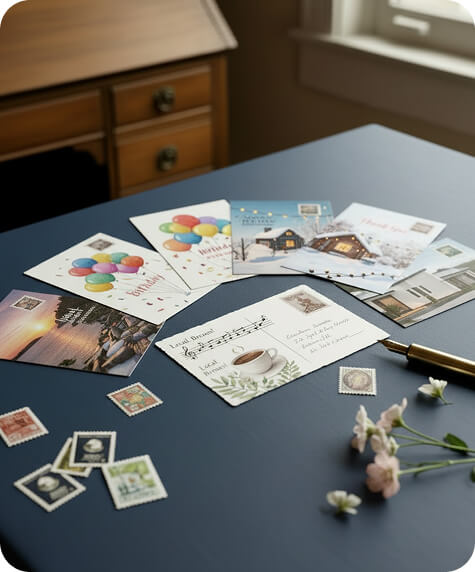


A postcard is a card used to send a short message, share information, promote a business, or capture a memorable moment. Unlike a traditional letter, a postcard is typically designed to communicate visually and quickly, often combining an image, message, and important details in a compact format.
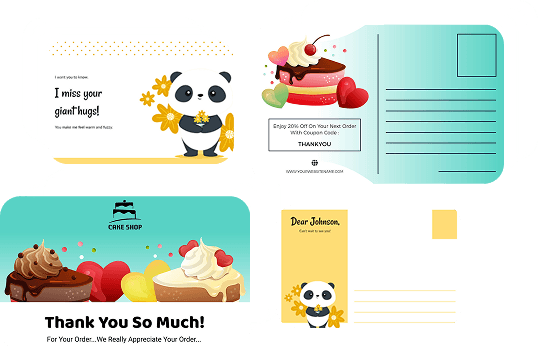
Different types of postcards are created for different occasions, audiences, and purposes.
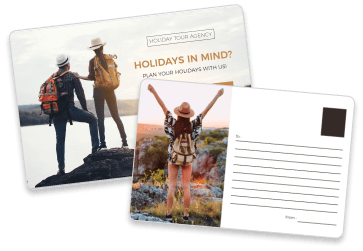
A travel postcard usually features a destination, landmark, landscape, or memorable location. People often use travel postcards to share experiences from places they have visited.
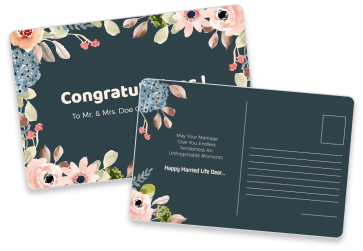
Greeting postcards are used to send personal messages for birthdays, congratulations, thank-you notes, anniversaries, and other occasions.
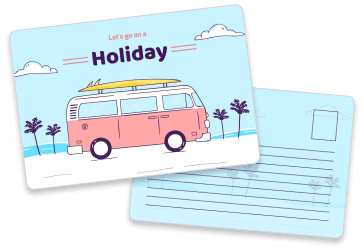
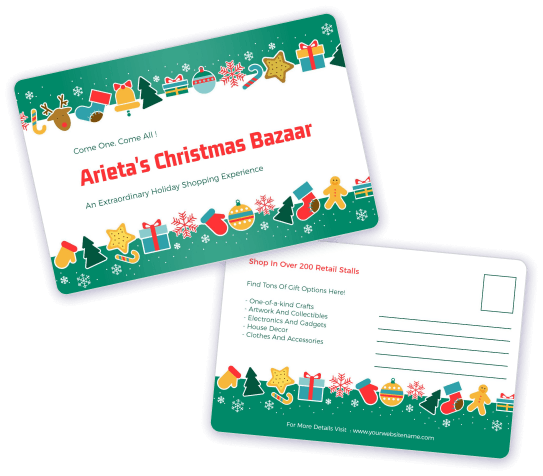
Holiday postcards are created for seasonal celebrations such as Christmas, New Year, Valentine’s Day, Halloween, and other special occasions.
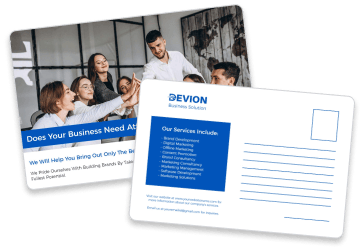
Promotional postcards help businesses advertise products, services, discounts, events, or special offers. They are often designed to attract attention and encourage a specific action.
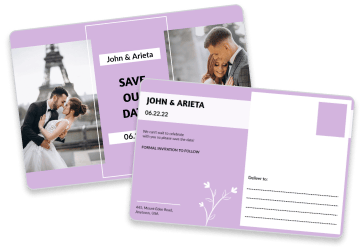
Invitation postcards can be used to invite people to parties, weddings, birthdays, community gatherings, business events, and other occasions.
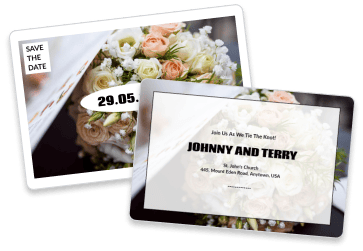
Announcement postcards communicate important news, upcoming events, milestones, business updates, or other information.
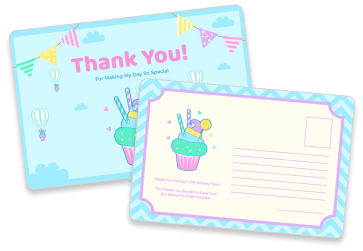
Thank-you postcards provide a simple and personal way to express appreciation to friends, family, customers, clients, employees, or other recipients.
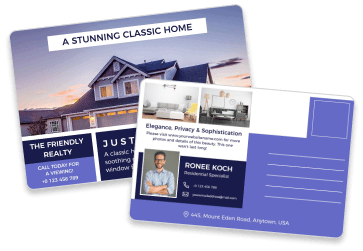
Real estate professionals may use postcards to promote property listings, open houses, recently sold homes, local services, or other marketing messages.
A postcard allows you to communicate a message without requiring a long explanation. The combination of visuals and short text makes information easier to understand quickly.
Personal postcards can make messages feel more thoughtful. A photo, handwritten-style message, or personalized design can help create a stronger connection with the recipient.
Images often play an important role in postcards. A strong photograph, illustration, or design can help the message stand out and remain memorable.
Postcards can be created for personal celebrations, holidays, travel, invitations, announcements, and business communication.
Businesses can use postcards to introduce services, promote offers, announce events, and communicate with customers in a visually direct format.
Depending on how they are created, postcards can be printed, mailed, handed out, or shared digitally.
Postcards are available in different sizes and formats. The right choice depends on how the postcard will be used, printed, or shared.
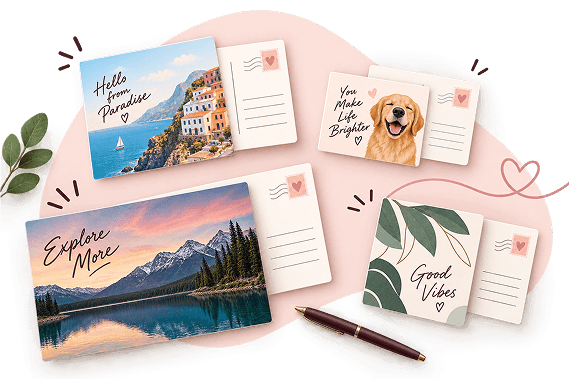
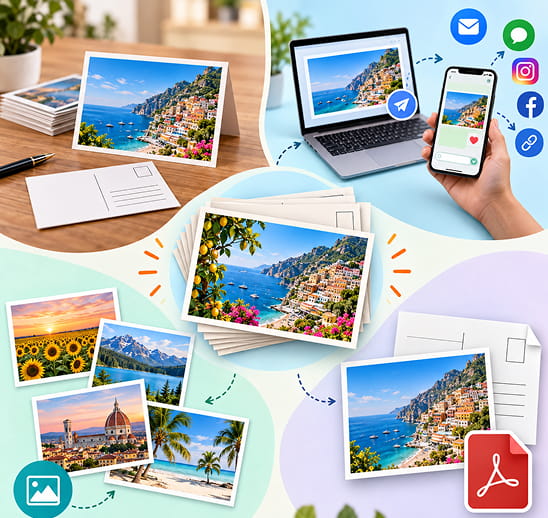
A photograph, illustration, graphic, or other visual often serves as the main focus of a postcard. The visual should support the message or purpose of the design.
A clear headline or message helps the recipient understand what the postcard is about. This could be a greeting, announcement, promotional offer, or event message.
Additional text can provide context or important information. Keep supporting text focused and easy to read.
Personal postcards may include a greeting, note, memory, or message intended for a specific person or group.
Depending on the purpose, a postcard may include dates, locations, event information, contact details, or other relevant information.
Business and promotional postcards may include a clear next step, such as visiting a website, attending an event, contacting a business, or taking advantage of an offer.
Business postcards may include a logo, business name, brand colors, and contact information to help recipients recognize the company.
For postcards sent by mail, include a clearly defined area for the recipient’s name and address, along with space for a postage stamp or postal indicia.
Decide if it's a greeting, invite, promotion, or travel card. A clear goal guides your design.
Choose a size that works for print, mail, or digital without making it feel crowded.
Pick a clear, relevant photo or graphic that supports your message and grabs attention.
Focus on just one key idea. Short text is much more effective than long paragraphs.
Make dates, offers, or locations stand out using spacing and visual hierarchy.
Use readable fonts and high-contrast colors. Avoid too many styles or shades.
For business postcards, include your logo, name, and essential contact details.
Check spelling, layout, and details. Confirm they meet print or postal requirements.
| Postcard | Greeting Card |
|---|---|
| Usually a single card | Often folded |
| Typically contains a short message | May contain a longer personal message |
| Often includes a prominent visual | May focus more on the written message |
| Can be used for personal or business purposes | Primarily used for personal occasions |
| Often used for travel, promotions, and announcements | Commonly used for celebrations and greetings |
| Can be mailed, printed, or shared digitally | Often given or mailed for specific occasions |
A well-designed postcard should be easy to understand and visually appealing. Consider the following practices when creating one:
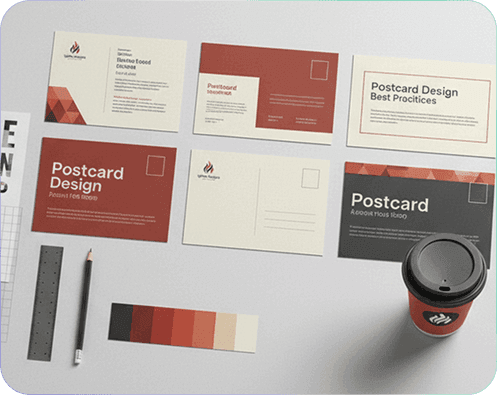
Postcards can be used for many personal and professional purposes.
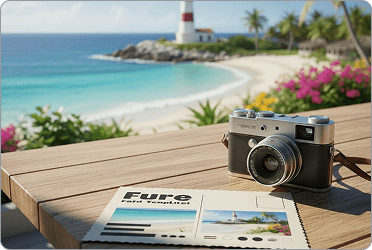
Travelers can use postcards to share destinations, landmarks, experiences, and memorable moments. Tourism-related businesses may also use postcards to promote locations, attractions, hotels, restaurants, or events.
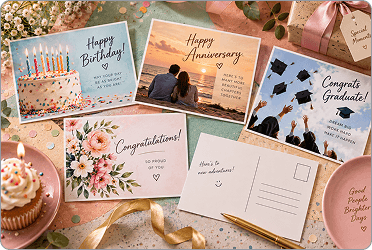
Postcards can be created for birthdays, anniversaries, congratulations, graduations, and other personal milestones. Adding photos and a personal message can make the design more meaningful.
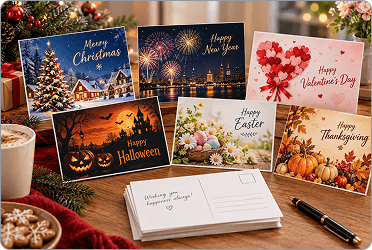
Holiday postcards are useful for sending greetings during Christmas, New Year, Valentine's Day, Halloween, and other seasonal celebrations.
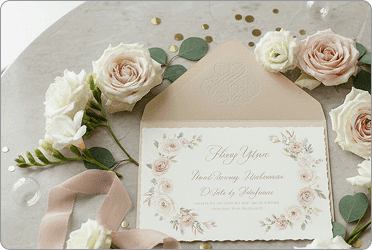
Individuals and organizations can use postcards to invite guests to parties, weddings, community gatherings, fundraisers, business events, and celebrations.
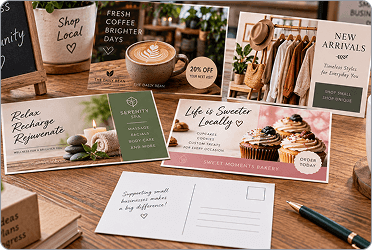
Small businesses can create postcards to introduce their services, promote special offers, announce new products, or communicate important updates.
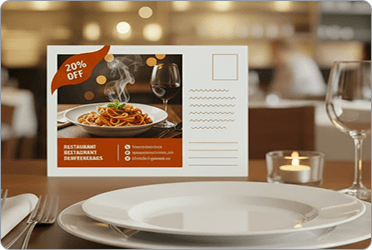
Restaurants, cafes, salons, retail stores, and other local businesses can use postcards to promote new offerings, seasonal campaigns, events, or customer incentives.

Real estate postcards can be used to promote property listings, open houses, recently sold properties, and local services.
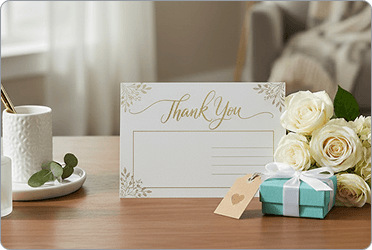
Businesses can send thank-you postcards to customers and clients to show appreciation and strengthen ongoing relationships.
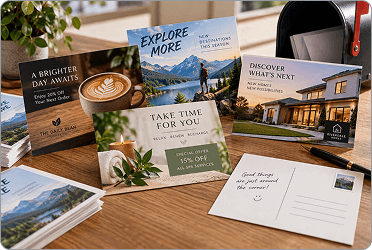
Postcards can promote discounts, limited-time offers, new products, services, and upcoming campaigns.
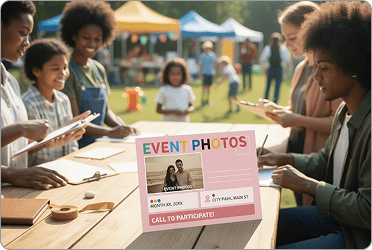
Schools, nonprofits, clubs, and community groups can use postcards to promote activities, share announcements, invite participation, and communicate with members.