


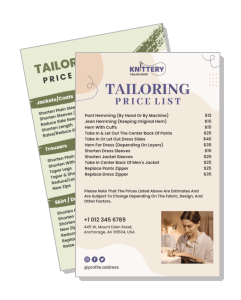
Tailoring Price List Templates
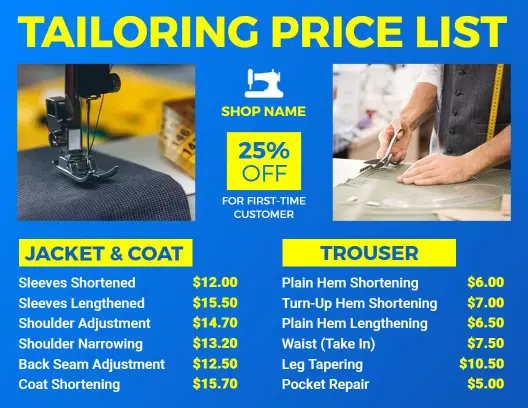
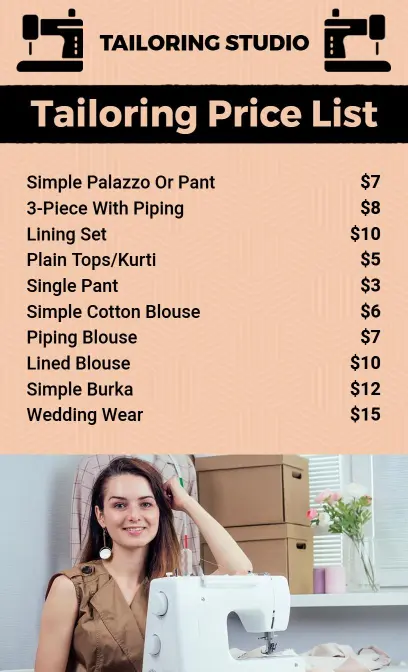
Tailoring Price List Templates help alteration shops, dressmakers, and bespoke studios present garment services, pricing, and important notes in a clear format customers can scan quickly.
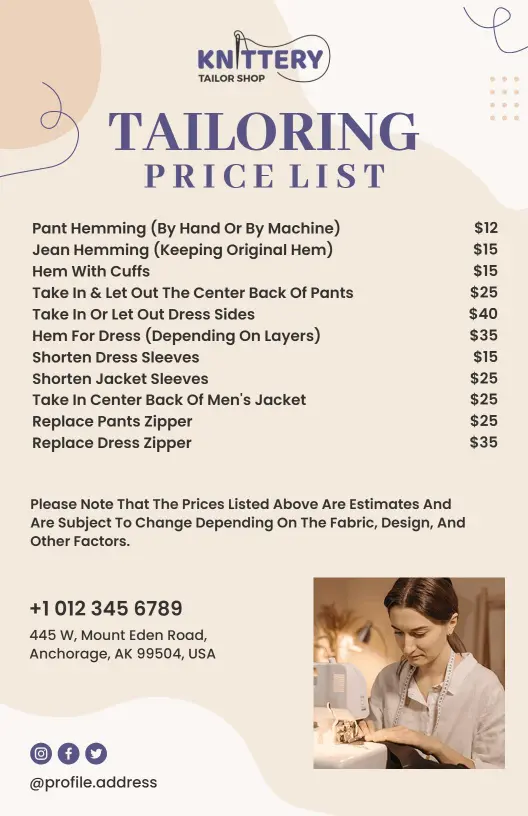
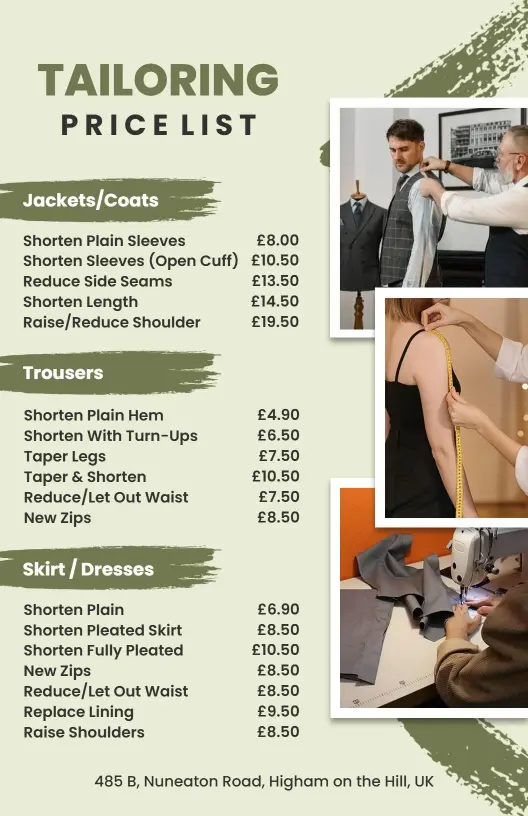
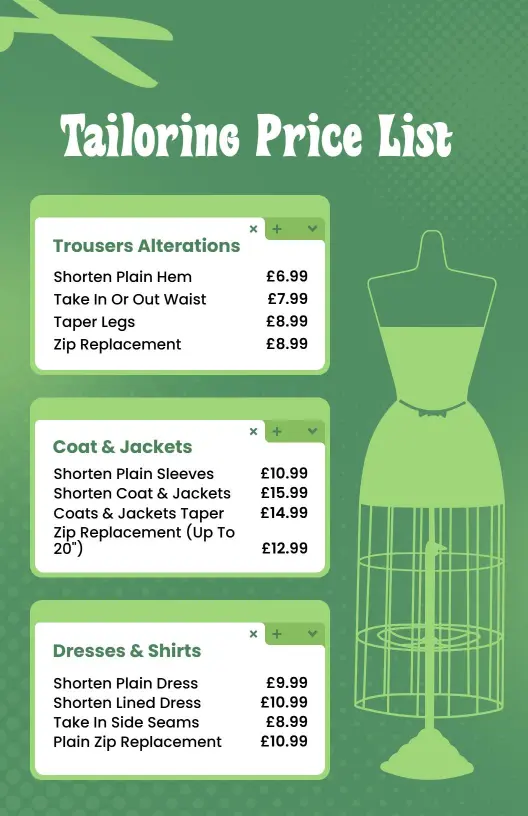
How to create a tailoring price list
Build a clear service menu by choosing the right structure, grouping related alterations, adding accurate pricing notes, and preparing the design for print and digital use.
1. Choose a service-focused layout
Select a tailoring price list layout that matches your services, whether you focus on alterations, bespoke garments, repairs, or fittings. Start with the closest structure.
2. Arrange services into categories
Group related services such as trouser hems, dress adjustments, jacket repairs, and zipper replacements. Clear categories help customers compare options without confusion.
3. Add rates and pricing notes
Replace sample prices with your current rates, then add notes for starting prices, fabric surcharges, rush work, or fitting requirements so customers know what may affect cost.
4. Apply your tailoring brand
Use your brand colors, business name, contact details, and readable fonts. Keep strong contrast between service names and prices so the list remains clear in print and on screens.
5. Review and export both versions
Check every service, price, and policy before exporting. Save one print-ready version for your counter and another digital version for messaging, email, or social sharing.
Trusted by Thousands
 Tata Consultancy Services
 Boston Consulting
 AT&T
AT&T
 Avelo Airlines
 Procter & Gamble
 Ministry Of Health, Malaysia
 Veterans Affairs
 Detroit Government
 New York University
 Texas A&M University
 Decathlon America
 Warby Parker
Tata Consultancy Services
Boston Consulting
AT&T
Avelo Airlines
Procter & Gamble
Ministry Of Health, Malaysia
Veterans Affairs
Detroit Government
New York University
Texas A&M University
Decathlon America
Warby Parker
Warby Parker
Tata Consultancy Services
Boston Consulting
AT&T
Avelo Airlines
Procter & Gamble
Ministry Of Health, Malaysia
Veterans Affairs
Detroit Government
New York University
Texas A&M University
Decathlon America
Warby Parker



Other Menu templates
Make tailoring services and prices easier for customers to compare
Tailoring price list templates give alteration shops, sewing studios, and independent tailors a practical way to organize services without making customers search through dense text. A clear layout can separate garment types, show starting prices, explain common surcharges, and guide clients toward booking a fitting or requesting a quote.
Organize everyday alterations by garment type
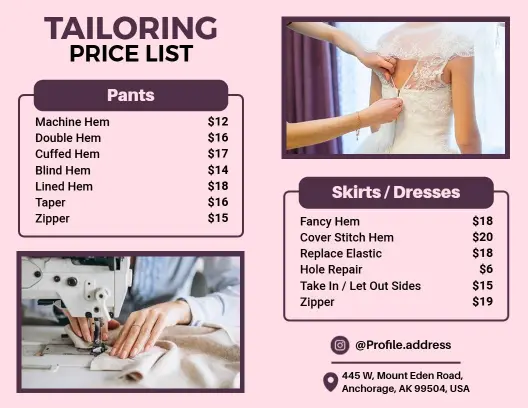
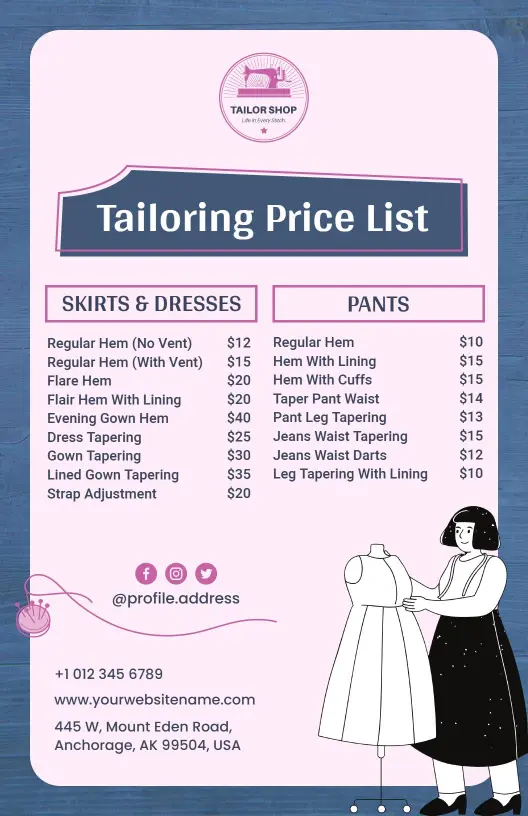
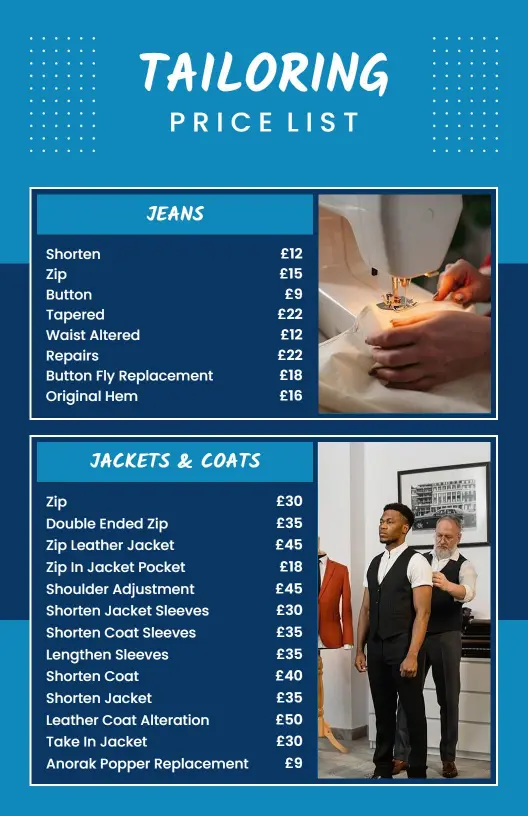
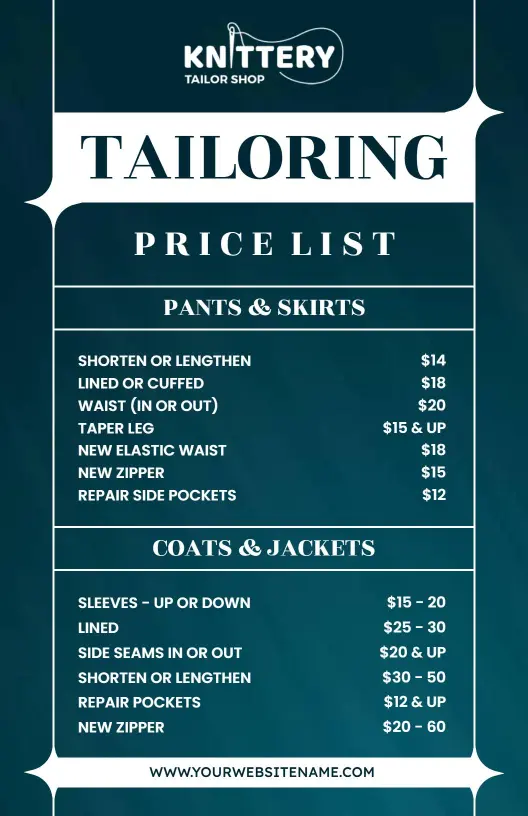
Customers often look for a specific task, such as shortening trousers, adjusting a skirt, replacing a zipper, or repairing a seam. The Professional Alterations and Hemming Services Tailoring Price List Template supports a structured list for frequently requested repair and alteration work.
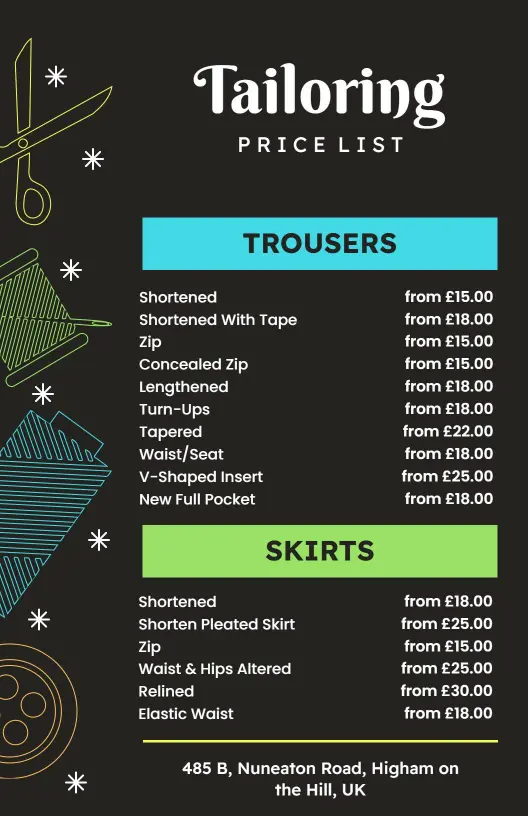
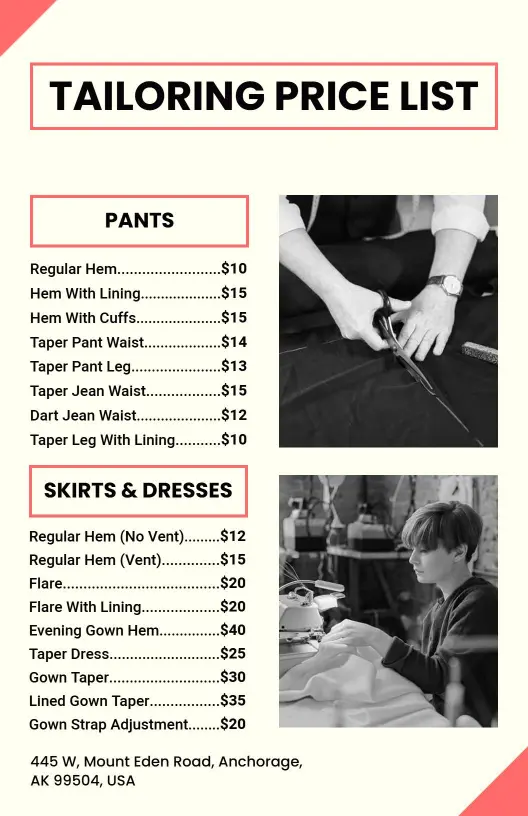
For businesses that want separate sections for different garments, the Detailed Trousers and Skirt Tailoring Price List Template helps customers locate relevant services and compare prices with less effort.
Match the price list to your studio style
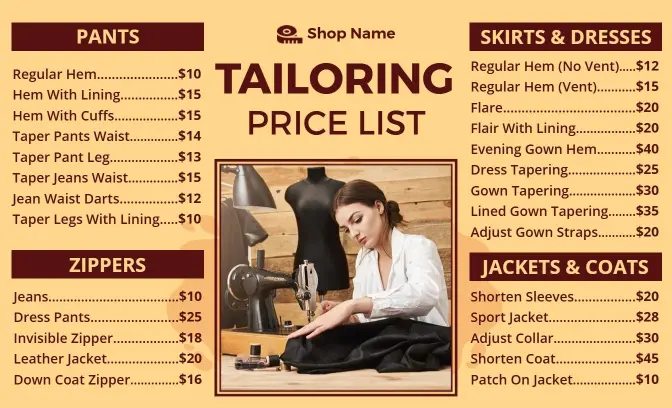
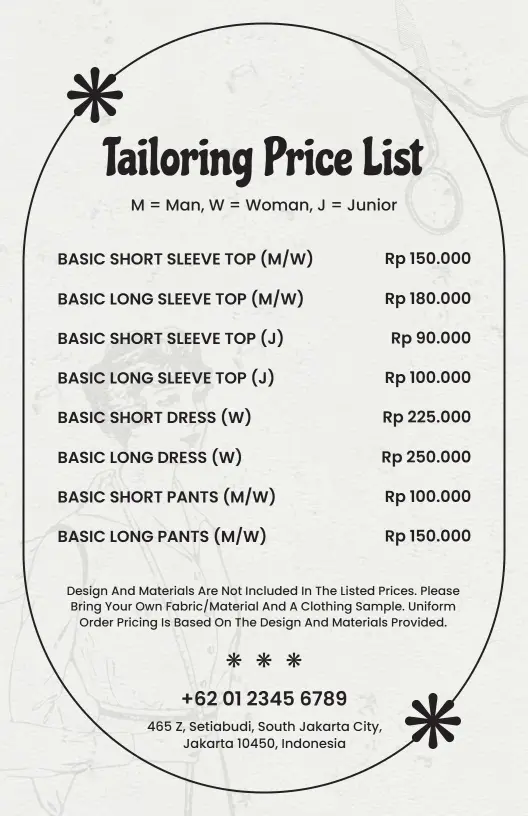
Your service menu should feel consistent with the quality and personality of your tailoring business. The Artistic Tailoring Services Price List Template suits studios that want a more expressive presentation while keeping service categories readable.
A refined visual direction can also work well for formalwear specialists and modern alteration shops. The Chic Black Textile Pattern Tailoring Price List Template uses a fashion-focused look that can complement premium garment services.
Keep pricing clear when work varies by complexity
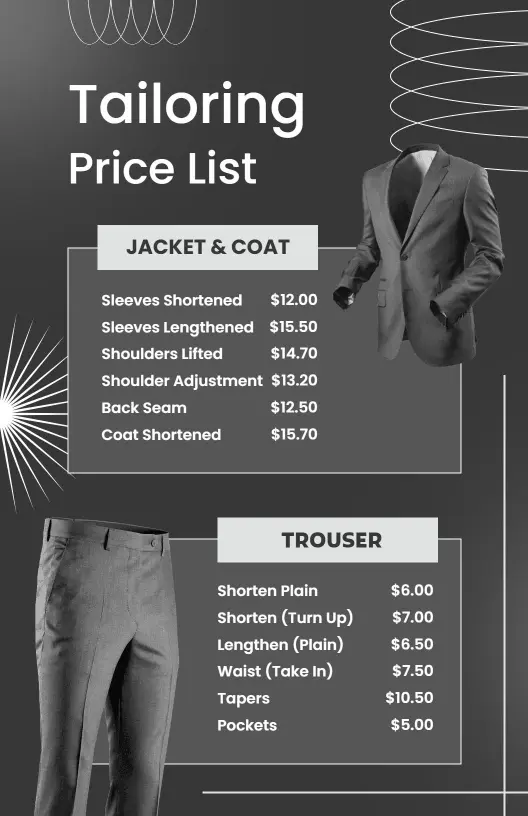
Tailoring costs can change with fabric, lining, construction, fitting time, or rush requirements. Use labels such as starting at, consultation required, or final quote after fitting rather than presenting every service as a fixed price. The Chic Monochrome Tailored Clothing Price List Template provides a clean base for explaining these details without overcrowding the design.
Prepare one layout for print and digital sharing
Keep service names, prices, contact details, and booking instructions large enough to read on a phone and on a printed counter display. Reusing the same organized layout across messaging apps, email, social posts, and in-store materials helps customers receive consistent information.