


French Menu Templates
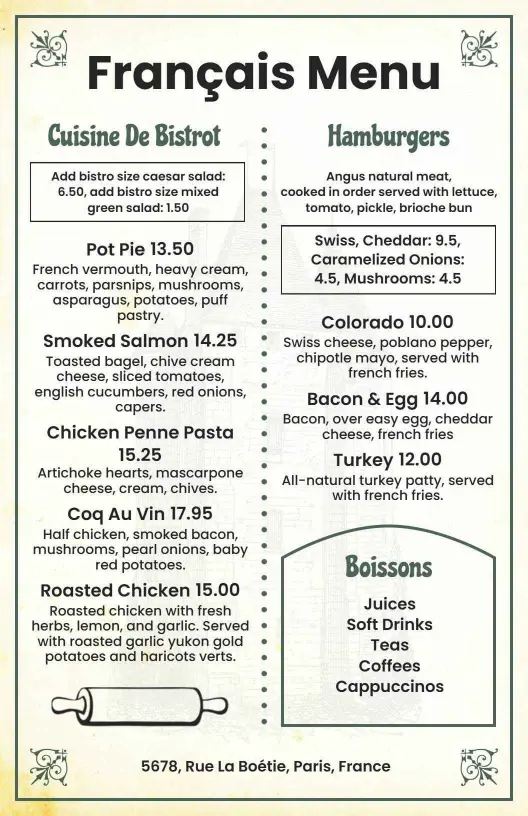
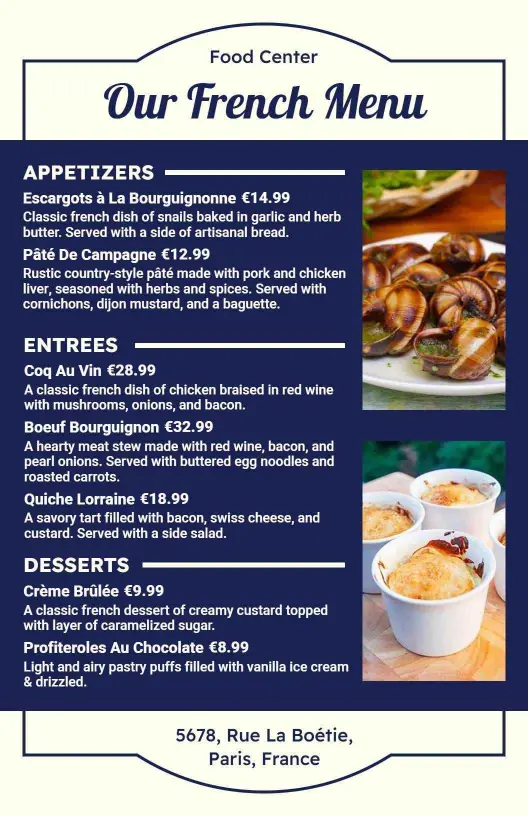
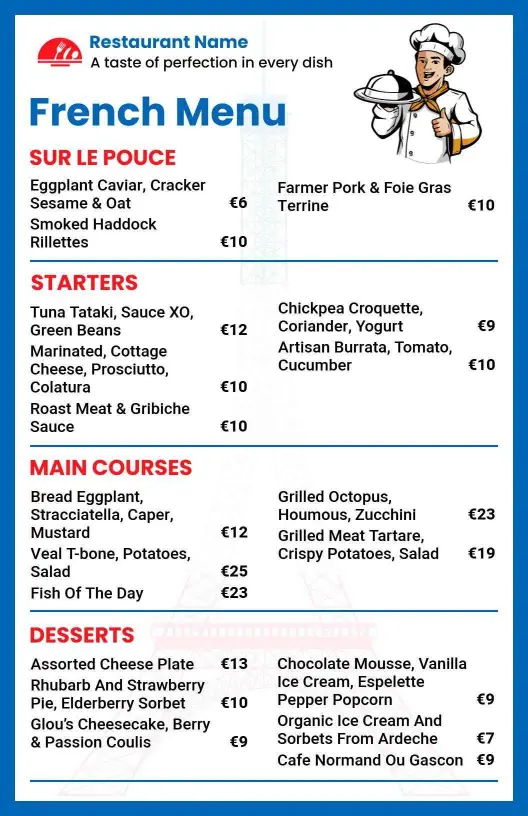
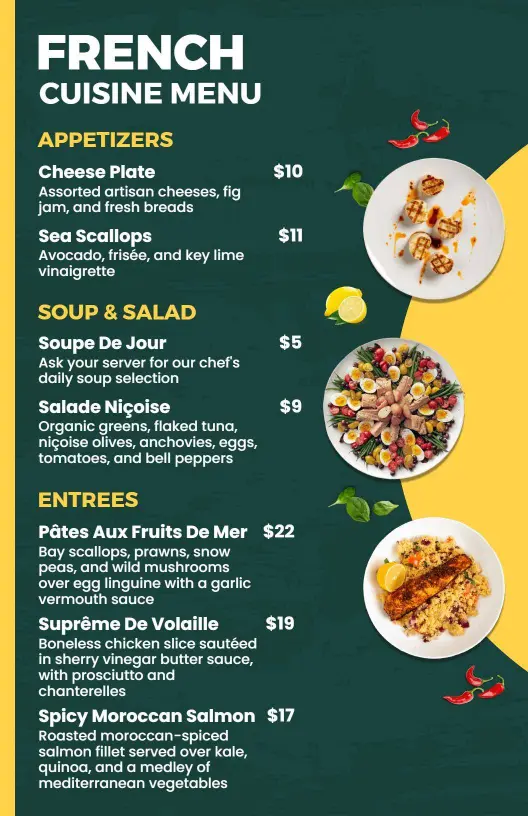
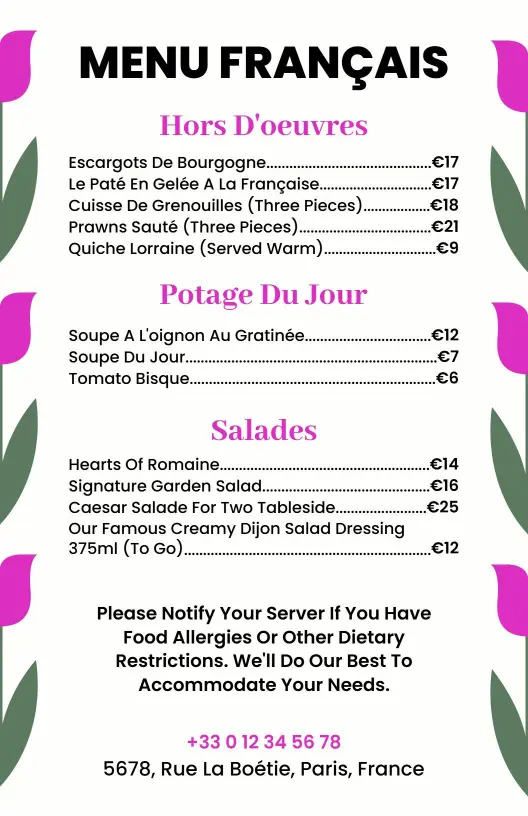
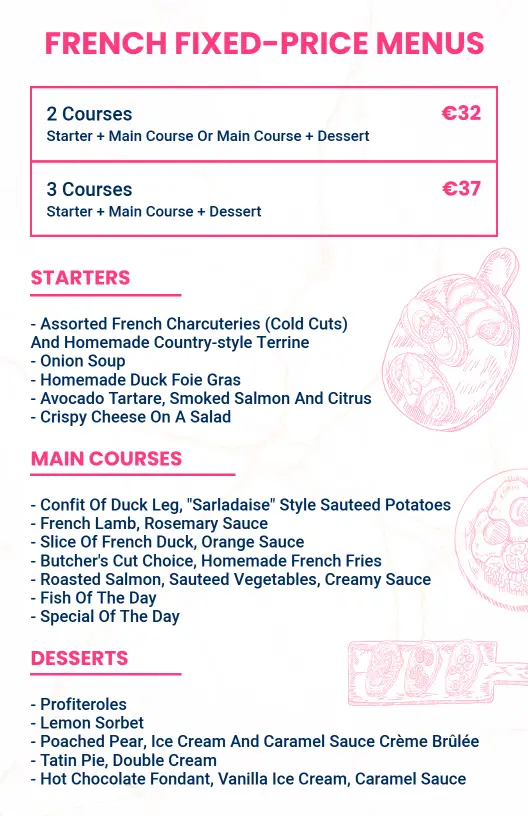
DesignWiz French Menu Templates help you present classic French dishes, restaurant specials, and refined pricing in a clean layout that is easy to edit for dining rooms, cafes, and catering events.
How to customize a French menu
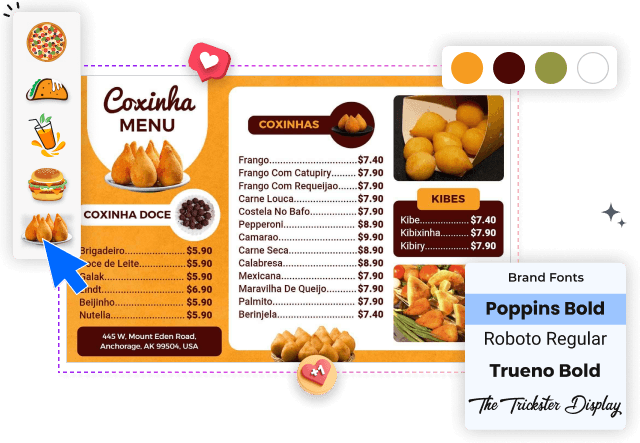
Choose a layout, add the course sections, refine the style, and export a menu that works for print, counter use, and digital sharing.
1. Choose the menu format
Start with the way guests will view it. Pick a format that fits a dining room board, tabletop card, or digital screen, then decide how formal or minimal the layout should feel.
2. Organize the course sections
List starters, entrées, sides, desserts, and drinks in a clear order. Group related items together so the menu stays easy to scan during service.
3. Adjust the visual style
Match the colors, fonts, and spacing to the restaurant without overloading the page. Keep contrast strong and leave room around each section so the design reads cleanly.
4. Add prices and notes
Place prices in one consistent spot and add brief notes only when they help diners decide. Keep those details close to each item so the menu remains neat and practical.
5. Review and export
Check the final menu at actual size before exporting it. Make sure the text stays crisp, the sections line up well, and the layout still works on a phone, at a counter, and on a wall.
Trusted by Thousands
 Tata Consultancy Services
 Boston Consulting
 AT&T
AT&T
 Avelo Airlines
 Procter & Gamble
 Ministry Of Health, Malaysia
 Veterans Affairs
 Detroit Government
 New York University
 Texas A&M University
 Decathlon America
 Warby Parker
Tata Consultancy Services
Boston Consulting
AT&T
Avelo Airlines
Procter & Gamble
Ministry Of Health, Malaysia
Veterans Affairs
Detroit Government
New York University
Texas A&M University
Decathlon America
Warby Parker
Warby Parker
Tata Consultancy Services
Boston Consulting
AT&T
Avelo Airlines
Procter & Gamble
Ministry Of Health, Malaysia
Veterans Affairs
Detroit Government
New York University
Texas A&M University
Decathlon America
Warby Parker



Other Menu templates
Why French menu templates help guests scan courses with less effort
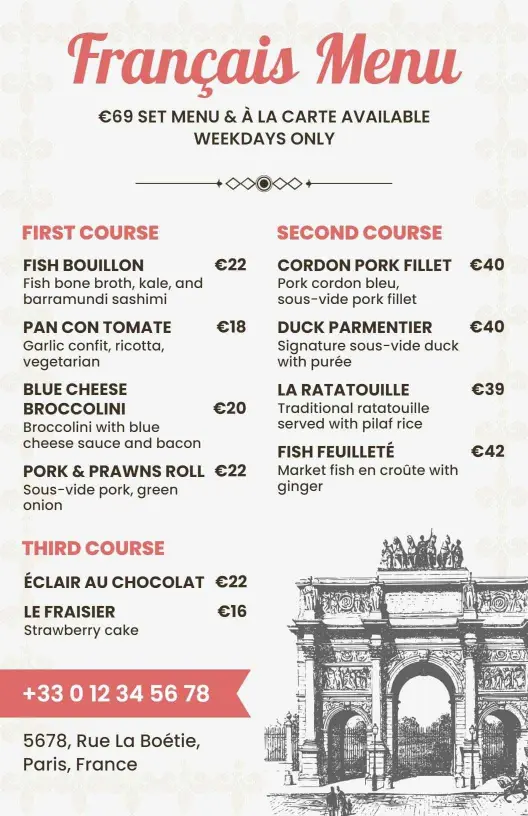
A French menu works best when guests can compare starters, mains, and desserts without reading a crowded page. Keep the layout open, use short course labels, and let the menu breathe so the presentation feels polished and easy to follow. Start with Classic French Dining Experience with Modern Blue Menu Template when you want a clean, balanced layout that still feels refined.
Classic restaurant menus
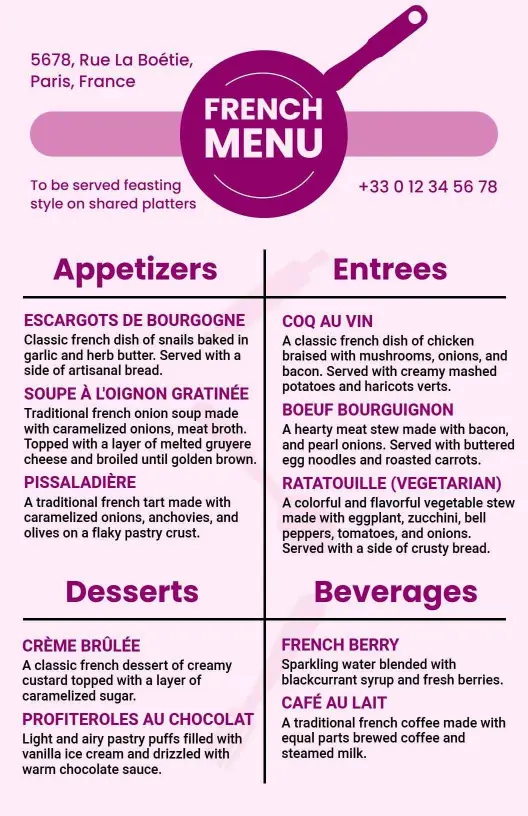
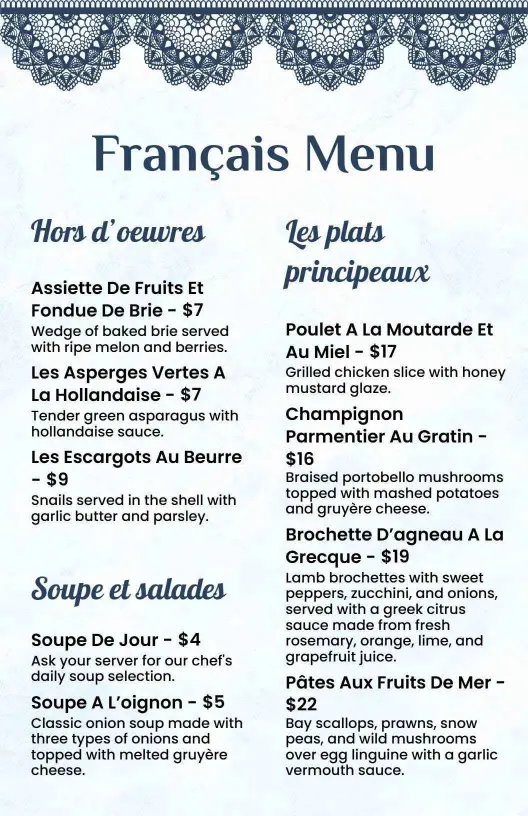
For full-service restaurants, keep the menu structured by course so guests can find what they want quickly. That makes the page easier to use during dinner service and helps the dining room feel more organized. Classic Blue and White Textured French Restaurant Menu Template gives the page a traditional restaurant look, while Classic Purple and White French Restaurant Menu Template offers a different visual tone without losing clarity.
French cuisine with strong entrée focus
If the menu features beef bourguignon, roasted dishes, or other signature entrées, keep those items grouped so the strongest plates are easy to spot. A tidy layout helps the menu feel intentional rather than overdesigned. Delicious Beef Bourguignon and Authentic French Entrees Menu Template is useful when the entrée section is the main selling point.
Catering, events, and premium dining
French menus often need to work for catering packages or special events as well as daily service. Keep the structure flexible so you can update prices or course lists without rebuilding the full design. works well when you want a more vibrant dining style. Savory and Sweet French Delights Menu Template is a strong fit for menus that balance rich dishes and dessert options.
Clean updates for seasonal changes
Seasonal French menus change with ingredients, tasting menus, and special promotions. Keep the layout steady, use consistent spacing, and leave room for quick edits so the template is easy to refresh when the offer changes. That makes it practical for restaurants that update menus often.